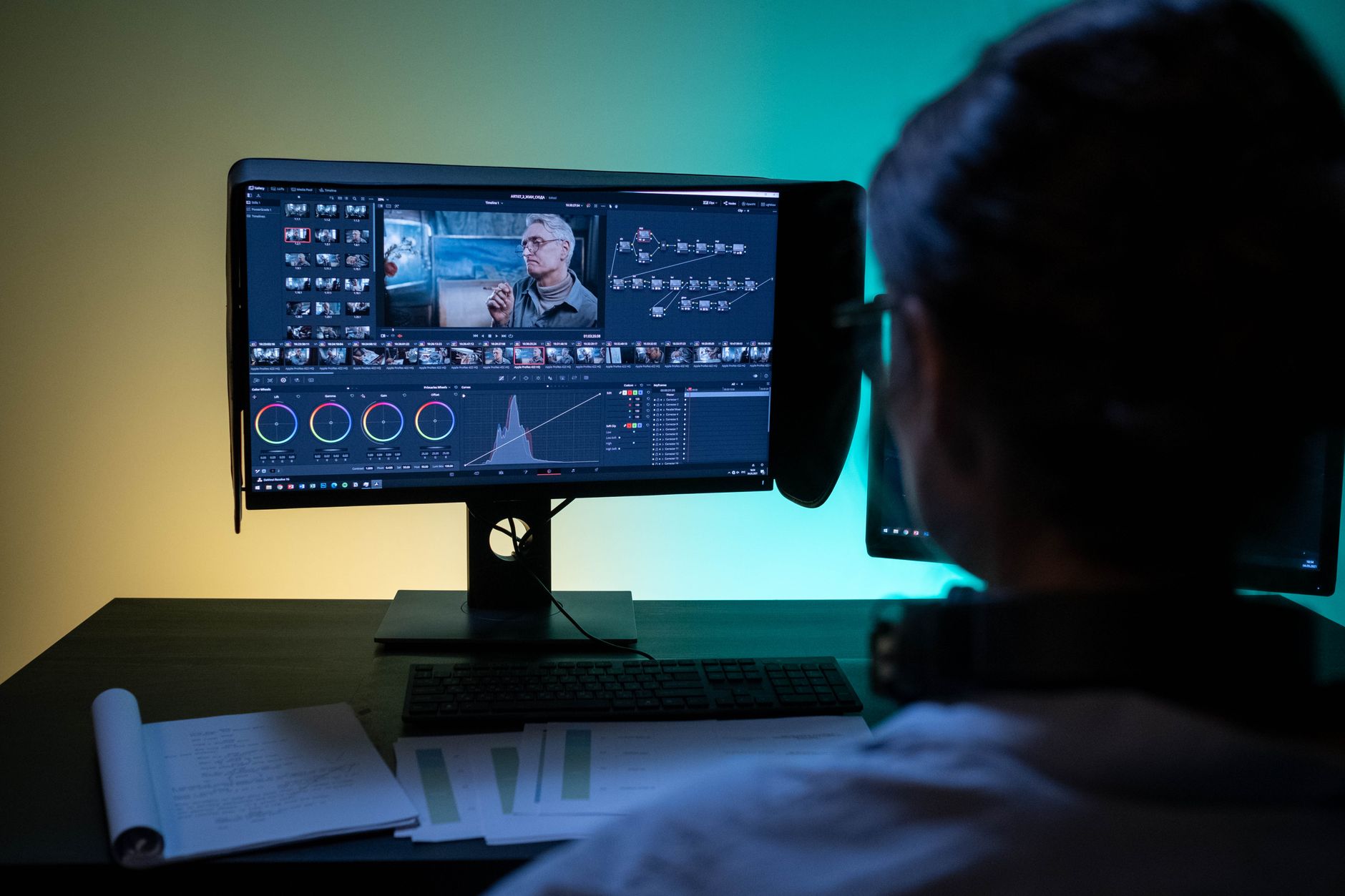
Film editors use nonlinear editing software to assemble shots in any order and revise cuts without destroying prior work. The software stores every clip digitally, so an editor can trim, move, and layer picture and sound while the original footage stays intact.
Nonlinear means nonsequential. An editor can open the ending, swap two lines in the middle, and test a shorter opening within minutes. That freedom shapes the whole workflow, from first assembly to final handoff.
Table of Contents
- What does the timeline let an editor do?
- How do editors organize hours of footage?
- How do picture and sound fit together?
- How does a rough cut become a finished film?
- Where does the software end and judgment begin?
What does the timeline let an editor do?
The timeline is the main workspace, with video tracks stacked above audio tracks. Editors place clips left to right, trim heads and tails, and ripple those changes through the sequence. Each edit remains adjustable until the project is locked.
Editors compare takes by stacking alternates or swapping them into the same slot. They test pacing by lifting frames from a pause, holding a reaction longer, or cutting away earlier. Small trims change how a scene breathes without requiring a rebuild.
How do editors organize hours of footage?
Organization comes before creativity. Editors ingest footage, sync separate picture and sound, and group material into bins by scene, location, or camera angle. They mark strong moments with markers, labels, and subclips.
Selects sequences hold preferred takes for each scene. An editor may build one string of wide shots, another of close-ups, then pull from both. Clear labeling keeps a complex project searchable when hundreds of clips look similar.
How do picture and sound fit together?
Picture editing and sound editing happen in linked tracks. Dialogue, effects, music, and ambience sit on separate lanes, so levels and placement can change independently.
Editors clean dialogue overlaps, add temporary effects, and lay in guide music to judge rhythm. A cut often works because the sound leads it. Hearing a door, a breath, or a line start before the picture changes can smooth a transition.
- Keep dialogue on dedicated tracks for clear level control
- Use separate effects lanes for doors, steps, weather, and impacts
- Place temporary music low enough to hear speech
- Mark sound gaps that need later recording or replacement
How does a rough cut become a finished film?
Editors move from assembly to rough cut to fine cut. The assembly puts the story in order, the rough cut finds structure and length, and the fine cut refines timing, eyelines, and continuity. Versions let directors compare approaches without losing earlier ideas.
Color, titles, and final mix usually happen after picture lock. The editing program exports picture, sound stems, and an edit list for specialists. If a shot changes after lock, the timeline tracks what shifted and what must be updated downstream.
Where does the software end and judgment begin?
Software handles access, speed, and precision. It does not choose which glance feels honest, when to withhold information, or how long to stay on a face. Editors watch cuts at full speed, with fresh eyes, and often with sound off or on to test each layer.
Common limits still require care. Heavy effects, high-resolution files, and long timelines demand storage and backups. An editor protects the cut with autosave, duplicate projects, and clear version names before major changes.