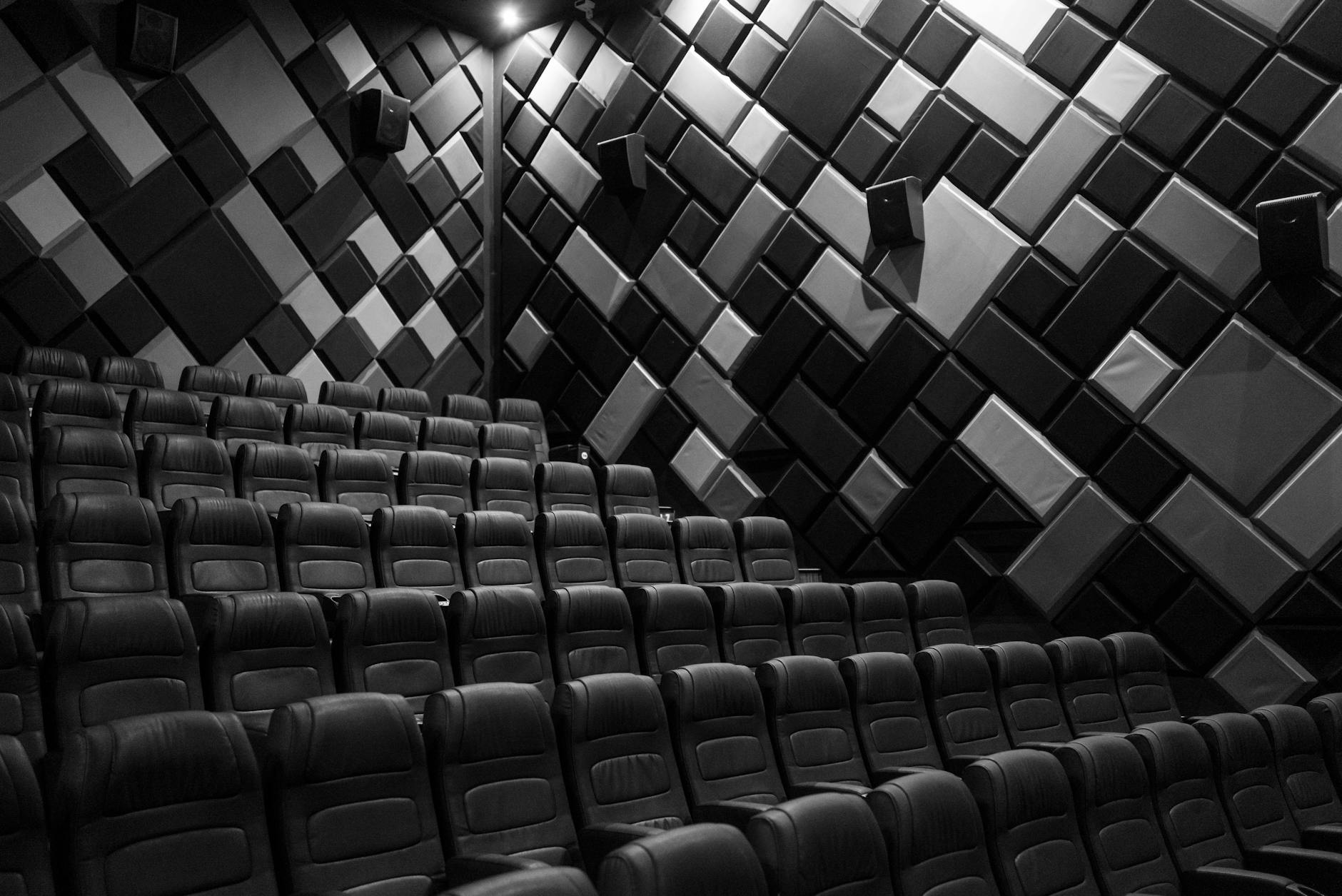
IMAX displays films in one of two primary aspect ratios: a nearly square 1.43:1 format (the original and most immersive) or a wider 1.90:1 format used in modern multiplex theaters.
The 1.43:1 ratio, with its original 15-perf 70mm specification, shows significantly more image area on screen—particularly at the top and bottom—compared to the standard 2.35:1 “scope” format most Hollywood films use.
- Table of Contents
- What Are the Two Main IMAX Aspect Ratios?
- How the 1.43:1 Format Changes Composition and Visual Impact
- The Dark Knight's Revolution—When Hollywood Discovered IMAX Aspect Ratios
- Modern IMAX Aspect Ratios—Open Matte and Digital Mastering
- What Standard Theaters Miss When IMAX Content Is Cropped
- IMAX Laser Projection and Its Effect on Aspect Ratios
- The Future of IMAX Aspect Ratios in Hollywood
- Frequently Asked Questions
- You Might Also Like
When The Dark Knight premiered in 2008, audiences seeing IMAX sequences for the first time experienced this dramatic expansion firsthand: action scenes shot for IMAX filled nearly the entire screen, creating an immersive wall of image that standard theatrical releases simply couldn’t match.
This article explores what makes IMAX aspect ratios unique, why filmmakers choose to shoot for them, and how different movies uses these wider formats. Understanding these ratios explains why the same film can look visually different depending on whether you watch it in a standard theater, an IMAX multiplex, or a true 70mm IMAX presentation.
Table of Contents
- What Are the Two Main IMAX Aspect Ratios?
- How the 1.43:1 Format Changes Composition and Visual Impact
- The Dark Knight’s Revolution—When Hollywood Discovered IMAX Aspect Ratios
- Modern IMAX Aspect Ratios—Open Matte and Digital Mastering
- What Standard Theaters Miss When IMAX Content Is Cropped
- IMAX Laser Projection and Its Effect on Aspect Ratios
- The Future of IMAX Aspect Ratios in Hollywood
- Frequently Asked Questions
What Are the Two Main IMAX Aspect Ratios?
IMAX’s native aspect ratio is 1.43:1, derived from its original 15-perf 70mm film format. This nearly square image stands in sharp contrast to the standard theatrical aspect ratio of 1.85:1 (common in North America) or the scope format of 2.35:1 (the dominant widescreen format).
The 1.43:1 ratio provides extra visual information at the top and bottom of the frame, making it ideal for compositions that emphasize vertical space—a close-up actor’s face fills more of the screen, or a towering building looms more dramatically overhead.
modern multiplex IMAX systems, however, use a 1.90:1 aspect ratio, slightly wider than standard 1.85:1 but narrower than the original 1.43:1 specification.
This compromise emerged because multiplex theaters couldn’t accommodate the enormous 70mm film projection systems required for true 1.43:1 presentation.
The 1.90:1 format became a middle ground: wider than standard theatrical release, more practical than full IMAX 70mm infrastructure, and still capable of showing 26% more picture area in selected sequences compared to standard formats according to IMAX’s own metrics.
The distinction matters because a film shot for 1.90:1 IMAX projection will differ noticeably from a true 1.43:1 70mm IMAX presentation. A multiplex audience sees a wider image than standard theater patrons, but not the full height-enhanced composition that 70mm filmmaking provides.

How the 1.43:1 Format Changes Composition and Visual Impact
Filmmakers composing shots for 1.43:1 IMAX must think vertically. Standard cinematography typically composes for the horizontal expanse of 2.35:1—characters positioned on either side of the frame, landscapes stretching left to right. A 1.43:1 composition reverses this logic. An actor’s performance occupies more of the vertical frame, making facial expressions and upper-body movement more prominent.
Environmental details directly above and below the subject become compositionally important in ways they rarely are in standard formats.
This vertical emphasis makes certain scenes particularly powerful in IMAX. Action sequences benefit dramatically from the extended top and bottom information—a character jumping across a chasm has sky above and ground below filling the screen, enhancing the sense of height and danger.
Close-ups in dialogue-heavy scenes feel more intimate and intense because the actor’s face consumes more screen real estate.
However, this compositional philosophy also creates a practical limitation: films shot open-matte for 1.90:1 IMAX and then cropped to 2.35:1 for standard theatrical release often lose crucial story information at the top or bottom of the frame.
What looked balanced in a widescreen theater can feel awkwardly framed in IMAX projection.
The Dark Knight’s Revolution—When Hollywood Discovered IMAX Aspect Ratios
Before 2008, IMAX was primarily associated with nature documentaries and giant-screen attractions in museums and planetariums.
Director Christopher Nolan changed this perception by shooting specific sequences of The Dark Knight on genuine IMAX 70mm cameras, making it the first mainstream Hollywood film to mix standard 2.35:1 cinematography with 1.43:1 IMAX sequences.
When audiences saw the opening bank heist in IMAX, the image literally expanded—dialogue scenes played in scope suddenly snapped to a nearly square format as the action intensified, and the screen became a towering wall of image. This hybrid approach proved both popular and influential.
Audiences responded powerfully to the visual shift; the IMAX sequences felt like a dramatic escalation of the viewing experience itself. However, the technique also exposed a fundamental challenge: cutting between 1.43:1 and 2.35:1 requires careful editorial planning. The ratio change itself becomes a storytelling tool, signaling that something important is happening.
Nolan used this strategically—the Joker’s scenes and key action beats received the IMAX treatment, emphasizing their importance. The Dark Knight’s success spawned a decade of experimentation with mixed aspect ratios, proving that Hollywood audiences would embrace the format shift rather than find it jarring or confusing.
Modern IMAX Aspect Ratios—Open Matte and Digital Mastering
Contemporary filmmakers increasingly shoot with IMAX in mind from the start, rather than retrofitting certain sequences as Nolan did.
Films like Blade Runner 2049 and Shang-Chi and the Legend of the Ten Rings employ “open matte” cinematography: they film in a full 1.90:1 frame that can be displayed in its entirety on IMAX screens but is cropped to 2.35:1 for standard theatrical and home video release.
This approach eliminates the disruptive aspect-ratio shifts that made The Dark Knight visually striking; instead, viewers in different formats watch the same edited film, just with varying amounts of headroom and floorspace.
Blade Runner 2049’s cinematographer Roger Deakins specifically composed for 1.90:1 IMAX, using the extra vertical space to enhance the film’s vast, desolate desert landscapes. In standard format, viewers miss the sweeping sky above and sand dunes below.
On IMAX screens, the composition breathes—the overwhelming emptiness of the environment becomes part of the emotional experience. Shang-Chi took a different approach, shooting in open matte 1.90:1 for its entire runtime, meaning the IMAX presentation wasn’t just a few spectacular moments but the director’s intended composition throughout.
Black Widow split the difference, using 2.35:1 for standard scenes and expanding to 1.90:1 for action sequences, combining both Nolan’s selective approach and the open-matte efficiency. Each strategy involves tradeoffs. Full open-matte shooting requires more production discipline—cinematographers must compose knowing that extra image information will be cropped away for standard release.
Selective IMAX sequences, like The Dark Knight, create visual spectacle but demand that editors and sound designers account for the format transition.
What Standard Theaters Miss When IMAX Content Is Cropped
When a film shot in 1.90:1 open matte gets theatrical release in 2.35:1, roughly 15-18% of the image information disappears from the top and bottom. This isn’t just a matter of seeing slightly less picture; it fundamentally alters composition.
A filmmaker who composed for the extra vertical space must accept that standard-theater audiences will see a different version of the film. In some cases, this matters little—action and landscapes work in both formats. In others, it becomes a genuine artistic compromise.
The problem intensifies for home video release. Most of Blade Runner 2049’s theatrical run showed the 2.35:1 version; only IMAX screens displayed Deakins’ full compositional intent. When the film arrived on streaming and Blu-ray, even more viewers experienced the cropped version.
This means the majority of people who watch Blade Runner 2049 will never see what cinematographer Deakins actually composed. Similarly, those who watch Black Widow or Shang-Chi outside of IMAX theaters see only a partial version of the director’s vision.
There’s also a reverse problem: some older films shot in 1.85:1 “flat” format look pinched and awkwardly framed when shown on IMAX screens designed for 1.90:1, creating odd pillarboxing (black bars on the sides) that disrupts the immersive experience.

IMAX Laser Projection and Its Effect on Aspect Ratios
In 2014, IMAX introduced 4K laser projectors with dual-laser systems, fundamentally changing how IMAX theaters could display different aspect ratios.
Rather than relying on 70mm film or a single projection mechanism, laser systems offered flexibility: theaters could display 1.43:1 for true native IMAX content, or 1.90:1 for digitally mastered films, switching between formats depending on the film. Laser projection also improved image brightness and color accuracy, which matters enormously for open-matte compositions.
A film composed for 1.90:1 looks more intentional and immersive when projected at high brightness and contrast on a laser system than on older xenon-lamp projectors. The image appears more three-dimensional and detailed, making the compositional choices more apparent to viewers.
However, not all IMAX locations have laser projection; many multiplex IMAX screens still use digital projection systems that may not deliver the same visual impact for native IMAX content.
The Future of IMAX Aspect Ratios in Hollywood
IMAX’s 1.43:1 and 1.90:1 ratios remain relevant as filmmakers continue experimenting with immersive formats. The trend suggests that open-matte shooting—composing for 1.90:1 throughout—will likely become standard practice rather than the exception, as directors embrace the full spectacle IMAX offers while accepting that standard-release viewers will see a cropped version.
Digital cinema projection systems continue to improve, making the distinction between laser and xenon IMAX less pronounced.
Yet true 70mm IMAX projection—with its 1.43:1 native aspect ratio and massive image size—remains rare. Most audiences experience IMAX through 1.90:1 multiplex screens, which still deliver a noticeably wider format than standard theatrical but lack the full vertical immersion that 70mm provides.
This two-tiered system will likely persist: an accessible, high-quality multiplex IMAX standard at 1.90:1, and a premium 70mm experience at 1.43:1 reserved for select locations and specially mastered content.
Frequently Asked Questions
What’s the difference between 1.43:1 and 1.90:1 IMAX aspect ratios?
1.43:1 is IMAX’s original format from 70mm film, nearly square with extra image at the top and bottom. 1.90:1 is the modern multiplex digital IMAX standard, slightly wider but still taller than standard theatrical 2.35:1. True 70mm IMAX showing 1.43:1 is rare; most audiences experience 1.90:1 IMAX in commercial multiplexes.
Do I see the full image when a 1.90:1 IMAX film releases in standard theaters?
No. Standard theatrical releases crop 1.90:1 open-matte films to 2.35:1, removing approximately 15-18% of the image from the top and bottom. You see the same characters and action, but the composition changes—less sky, less ground, less vertical space.
Why did The Dark Knight switch between aspect ratios mid-film?
Christopher Nolan used the aspect-ratio shift as a storytelling device. Standard scenes played in 2.35:1 scope; key action sequences and the Joker’s scenes expanded to 1.43:1 IMAX, visually emphasizing their importance and creating a sense of escalation for audiences.
Which is better for watching films—1.43:1 or 1.90:1 IMAX?
True 1.43:1 70mm IMAX is more immersive due to its nearly square format and larger physical image size, but it’s rarely available. 1.90:1 multiplex IMAX is more accessible and still provides a noticeably wider, taller image than standard theatrical. The “better” experience depends on availability and the filmmaker’s compositional intent.
Does shooting open-matte for 1.90:1 IMAX compromise the standard theatrical release?
Potentially. Cinematographers composing for 1.90:1 must accept that 2.35:1 standard releases will lose the top and bottom of their composition. Some films handle this seamlessly; others lose important visual information or feel awkwardly framed in the cropped version.
When do I actually see the full IMAX image versus a cropped version?
You see the full 1.90:1 IMAX composition only when watching in an actual IMAX theater. Standard theatrical releases, streaming, and home video typically show the 2.35:1 cropped version. Only films specifically shot for and released in IMAX format—or that have IMAX-specific releases—preserve the full compositional intent.
You Might Also Like
For more on Imax Aspect Ratio, see the full breakdown above – the imax aspect ratio details cover what most viewers want to know.
Whether you searched for imax aspect ratio reviews, imax aspect ratio streaming, or imax aspect ratio cast, this guide consolidates the relevant imax aspect ratio facts in one place.
Steve Levine writes FindThisMovie’s Ending Explained breakdowns, best-of lists, and scene-identification guides — drawing on 20+ years of watching (and re-watching) far too many films. More about Steve →