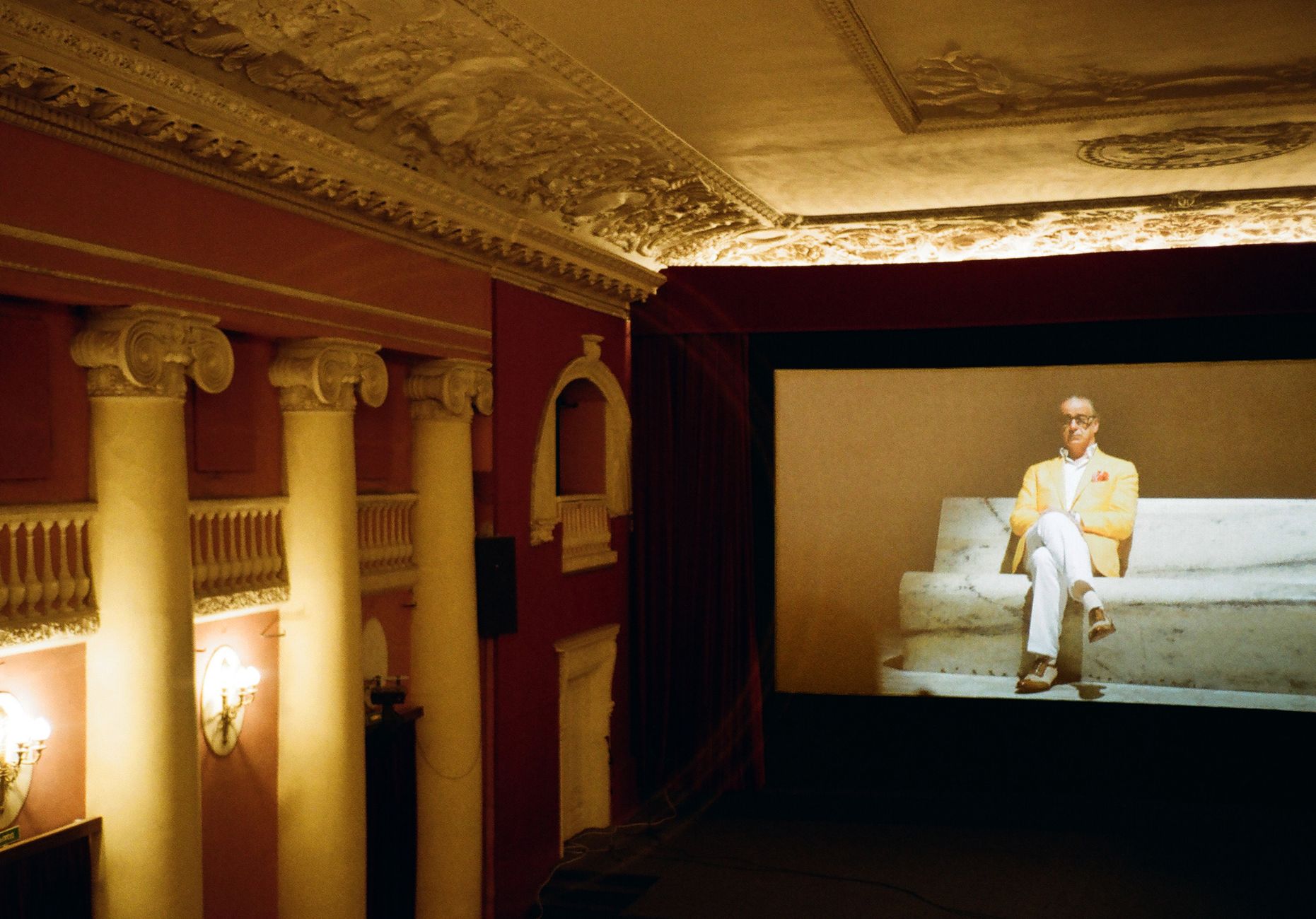
A frame narrative in a movie ending is the closing of an outer story that surrounds the main plot. The film returns to the narrator, listener, or present moment shown at the start.
Think of an older character telling a memory, then reappearing after the tale ends. The middle holds the main events. The final scene shows who survived, who remembers, and why the story mattered.
Table of Contents
- How Does the Structure Work?
- Why Do Films Return to the Frame?
- How Can You Spot One?
- What Are Its Limits and Risks?
- Frame Ending or Twist Ending?
- Frequently Asked Questions
How Does the Structure Work?
The outer story is the frame. The inner story is the long flashback, tale, or reenactment inside it. A film often opens in the present, shifts to the past for most of the running time, then returns to the present. The narrator may speak directly, answer questions, or simply watch.
The closing frame settles the narrator's situation. In The Princess Bride, a grandfather reads to his sick grandson. The adventure fills the middle. The ending returns to the bedroom, where the bond between them has changed.
Why Do Films Return to the Frame?
Filmmakers use the return to give the inner story weight. It answers who is telling this story and why it is being told now. The ending can confirm survival, loss, or change. It can show grief, pride, relief, or resolve.
That reaction guides the viewer's own response. In Titanic, the older survivor's memory frames the voyage. Her final gesture closes a personal account rather than only a disaster. In Saving Private Ryan, the older veteran at the cemetery frames the war story as memory and debt.
How Can You Spot One?
Look for a clear bookend. The opening and closing scenes share a place, person, or time that differs from the main plot. Check for these signs when the final scene starts.
They separate a frame from a simple last scene. If those pieces are missing, the ending may be an epilogue instead. An epilogue shows what happens next. A frame shows who held the story all along.
- the same narrator, reader, or listener from the opening returns
- the image shifts back to an older age, present setting, or telling-room
- the middle story is presented as memory, testimony, reading, or report
What Are Its Limits and Risks?
A frame can drain tension. If the narrator is clearly alive and calm at the start, danger in the middle feels less urgent. It can also explain too much. A closing speech about meaning can flatten what viewers already felt.
Strong frames trust expression, silence, or action over summary. Watch whether the ending changes understanding. If the return adds no new choice, cost, or feeling, it works as decoration. A useful frame reshapes the inner story on second thought.
Frame Ending or Twist Ending?
A frame ending is not the same as a twist. A twist rewrites facts. A frame adds context for facts you already watched. Some films combine both.
The return to the narrator reveals that the tale was incomplete, biased, or imagined. The viewer must then rejudge the middle. Test this by asking whose knowledge the ending reflects. If the closing scene only repeats the climax, treat it as an epilogue. If it shows a listener acting differently, read it as a frame.
Frequently Asked Questions
Does voiceover alone create a frame narrative?
No. A frame needs an outer situation with its own place and time, such as a listener, witness, or older self. Voiceover without that return is commentary, not a frame.
Can a movie have a closing frame without an opening frame?
A closing-only present-day scene usually works as an epilogue. It becomes a frame when it completes an outer situation set up before the main story began.