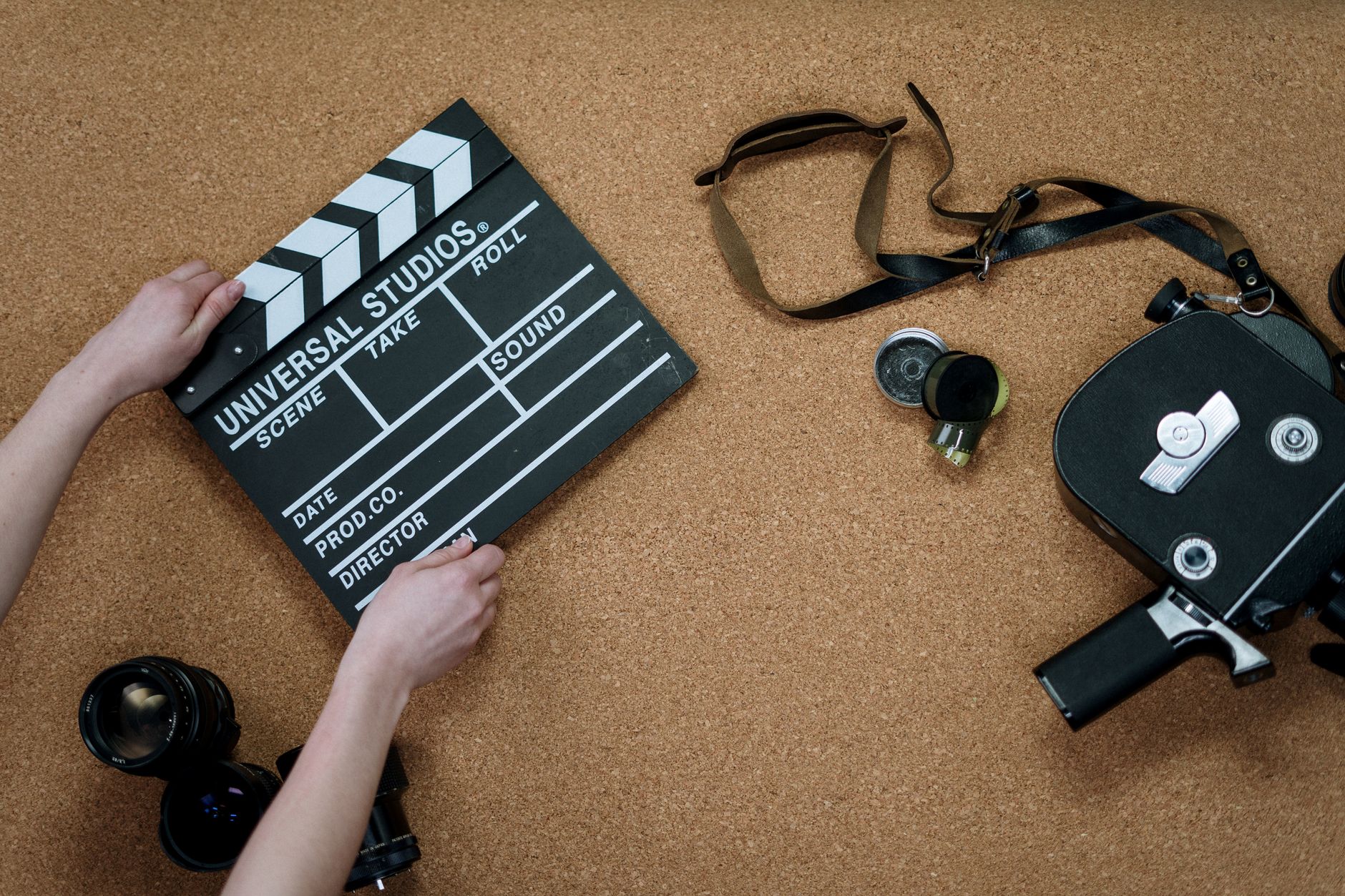
Nothing inherent separates a film from a movie in critical writing; both words can name the same screen work. In practice, the choice usually signals dialect, audience, or tone—not artistic quality. Critical writing evaluates or interprets a work. Its seriousness depends on the writer's method, evidence, and clarity, not the label attached to the work.
Table of Contents
- The Labels Do Not Rank Quality
- What Word Choice Can Signal
- Does Digital Production Change the Answer?
- Review and Analysis Are the Useful Distinction
- A Practical Editorial Rule
The Labels Do Not Rank Quality
Merriam-Webster defines "film" as "movie", while its definition of "movie" describes a motion-picture recording. The terms do not identify separate classes of screen work. The American Heritage Dictionary likewise defines a film as a movie and also uses "film" for movies considered collectively as an art form.
Calling a production a film may sound elevated, but it does not establish artistic merit. That distinction must come from an argument. A critic should explain how direction, performance, imagery, sound, or structure makes a work successful, difficult, conventional, or ambitious.
What Word Choice Can Signal
Regional usage offers a clearer distinction than quality does. Collins identifies "film" as mainly British and "the movies" as mainly American. Register also matters.
"Movie" often suits an accessible review written for viewers deciding what to watch, while "film" may fit an academic or formal discussion. These are tonal choices, not binding rules. A publication can therefore choose either term as part of its house style. Writers should follow the language their readers expect and avoid switching terms merely to imply that one title deserves more respect.
Does Digital Production Change the Answer?
The words have different histories. Collins traces "movie" to "moving picture", while "film" also names light-sensitive photographic stock. Those origins explain some associations but do not create a modern quality hierarchy.
Nor must a production use physical film stock to be called a film. Collins includes making an electronic recording with a digital camera within the verb "film," so "digital film" is not a contradiction under that definition. When the recording medium matters, writers should state it directly. "Shot on film stock" or "captured digitally" conveys technical information that the noun "film" alone cannot provide.
Review and Analysis Are the Useful Distinction
The meaningful divide in critical writing is between recommendation and analysis. Illinois Central College describes popular reviews as brief, accessible judgments, while academic film writing uses systematic analysis and evidence. A review might say that a thriller feels slow and advise viewers whether to see it.
An analysis would identify the long takes, sparse cutting, restrained acting, or sound patterns that produce that feeling. Academic analysis commonly considers cinematography, editing, sound, acting, context, and recurring patterns. A popular review can use the same evidence without becoming dense; the difference lies in its purpose and depth.
A Practical Editorial Rule
Choose "film" or "movie" according to readership, regional usage, and house style. Then test every evaluative statement by asking what observable feature supports it.
Replace "This is a serious film" with a precise claim: "The work uses restrained performances and repeated visual patterns to examine grief." Replace "It is just a movie" with the actual criticism, such as predictable plotting, inconsistent tone, or thin characterization. If the format is the point, name it specifically: feature film, short film, documentary, animated movie, theatrical release, digital production, or work shot on photographic stock.