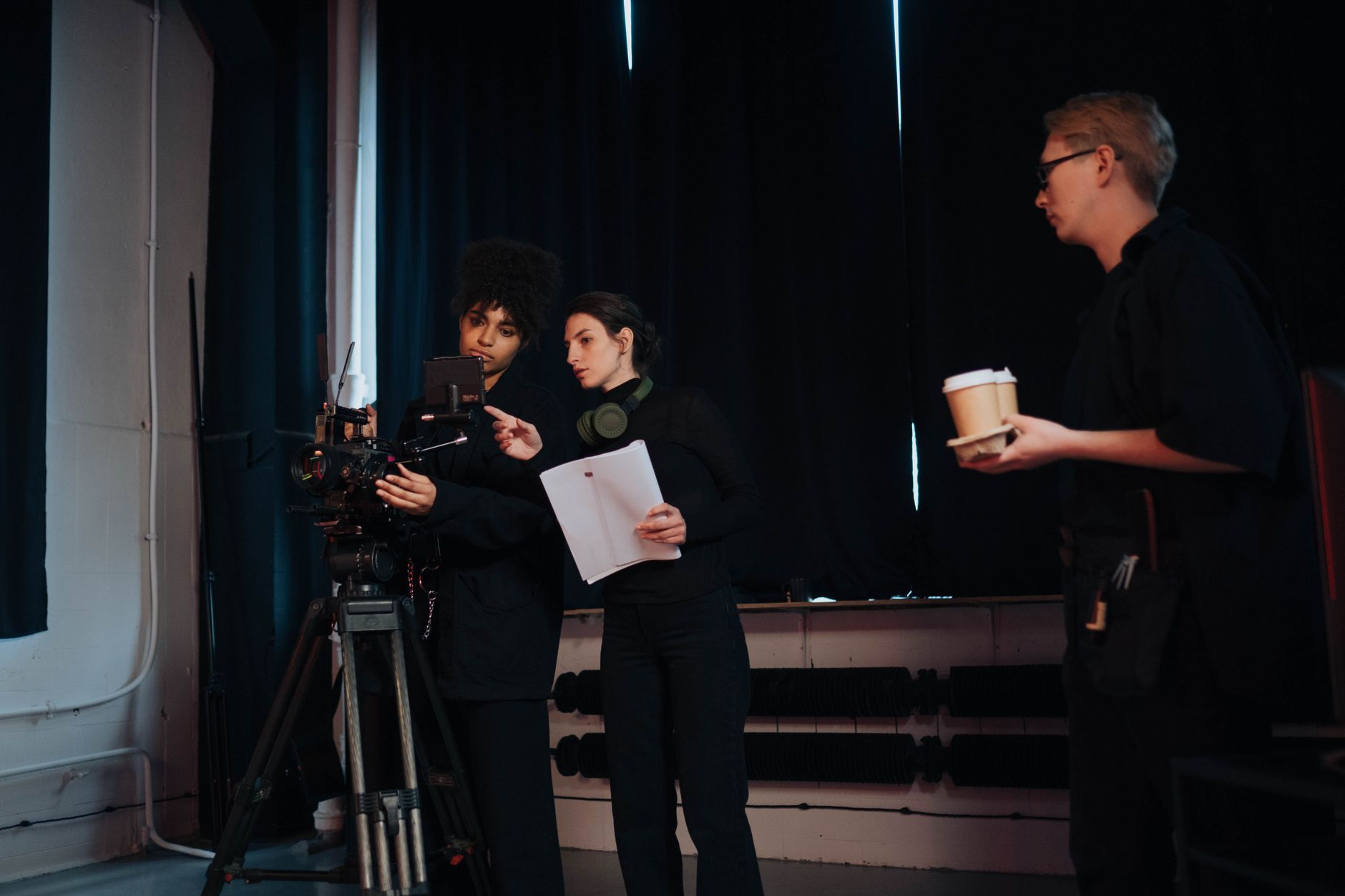
Directors most often use framing, camera movement, editing, lighting, and sound to steer attention and emotion. A film technique means a deliberate choice about image, sound, or timing that serves the story. Styles vary by genre, budget, and intent, so the same tool can feel quiet in one film and bold in another. Readers can learn the common patterns and then watch how each choice supports character, tension, or clarity.
Table of Contents
- How Framing Controls What You Notice
- How Camera Movement Shapes Energy
- How Editing Builds Pace and Meaning
- How Light, Color, and Sound Set Mood
How Framing Controls What You Notice
A close-up fills the frame with a face or key object to stress reaction or detail. A medium shot keeps heads and torsos in view, which suits talk and gesture. A wide shot pulls back to show place and scale, often before action starts. Angle shapes power and sympathy. A low angle looks up and can make a person seem strong or threatening.
A high angle looks down and can make the same person seem exposed or small. Depth and placement also guide the eye. Directors use foreground shapes, doorways, windows, and leading lines to point toward the subject. To read framing fast, pause and ask where your eye lands first. Then notice what the frame crops out, since exclusion often creates suspense or focus.
How Camera Movement Shapes Energy
A still camera holds steady and lets action, faces, and sound carry the moment. It suits tense talks, jokes that need timing, and scenes where detail matters. A pan turns side to side, a tilt moves up or down, and a dolly or tracking shot travels with the subject.
Handheld movement shakes slightly and can feel urgent or close, while smooth glides feel calm or grand. Movement works best with purpose. Too much motion pulls focus from story to camera, so many directors save big moves for shifts in goal, place, or stakes.
How Editing Builds Pace and Meaning
Editing means joining shots to control time, pace, and links between events. Short shots and quick cuts raise speed, while longer takes let tension build in real time. Continuity cutting keeps space and eyelines clear so action feels smooth.
Eyelines mean the direction people look, which helps viewers track who talks to whom. Cross-cutting jumps between places to join chases, calls, or deadlines into one rising pressure. A match cut links two shots by shape, motion, or idea, which can compress time without confusion. Montage strings brief images together to show practice, travel, or change without playing each step in full.
How Light, Color, and Sound Set Mood
Lighting shapes texture, depth, and mood. Hard side light brings out edges and strain, while soft front light smooths faces and calms scenes. Low-key scenes use deep shadow for threat or secrecy, and bright scenes open space for ease or honesty. Color works as a quick signal. Warm tones can feel close or tense, while cool tones can feel distant or calm.
A sharp color shift can mark memory, danger, or change. Sound guides feeling even when viewers watch the image. Score sets pulse and mood, while room tone, footsteps, and props keep the world solid. Dialogue mixed forward stays clear, and quiet gaps before a loud hit can sharpen shock. Pick one scene and watch it twice, once for image and once for sound. The separate jobs of eye and ear become easy to name.
- Check framing first: what fills the center and what gets cropped?
- Check motion: does the camera sit still or travel with action?
- Check cuts: are shots short and fast or long and steady?
- Check light, color, and sound: what mood do they add to the words?