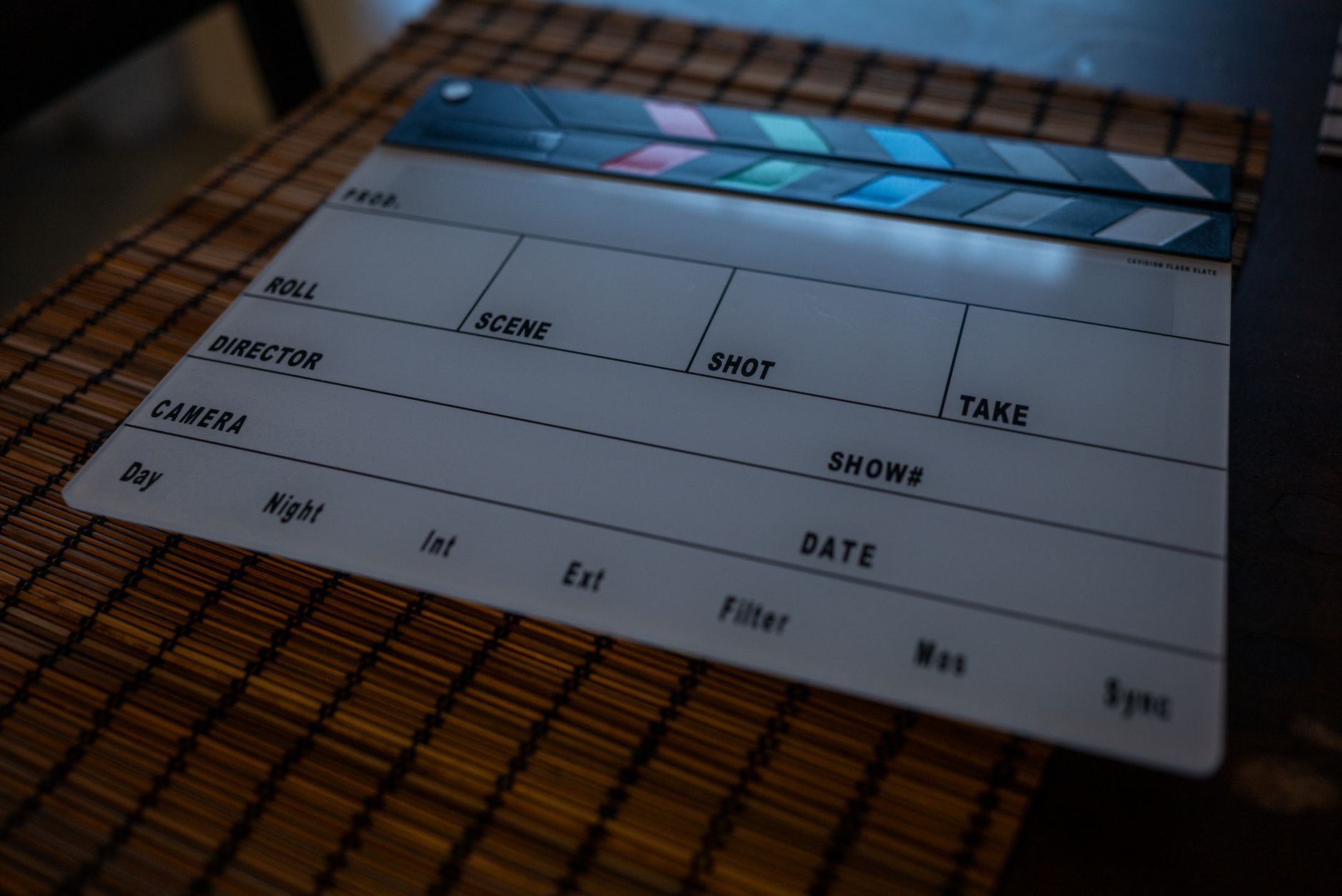
A clapperboard is still used to sync picture and sound and to label each take for editing. It is the small board with a hinged stick that a crew member holds in frame and claps shut. Digital cameras and recorders made the job simpler, not obsolete. Separate microphones remain common, and editors still need a fast way to match files.
Table of Contents
- Why does the clap still matter?
- What information does the board show?
- How do editors use it after shooting?
- Does digital timecode replace it?
Why does the clap still matter?
The sharp clap creates one frame where the stick closes. That same instant creates a sharp spike on the audio track. An editor can line up those two points in seconds.
This matters because many shoots record sound apart from the camera. A boom microphone, lavalier set, or field recorder often captures cleaner dialogue than the camera mic. Without a shared mark, matching each line to each lip movement would take far longer.
What information does the board show?
The written part identifies the shot. It lets the crew and editor know what they are looking at before anyone presses play.
A basic board often lists: The crew updates the take number after each attempt. That small habit prevents confusion between a good take and a discarded one.
- production or project title
- scene and shot number
- take number
- camera roll or card, date, and director initials
How do editors use it after shooting?
Editors scan dailies by slate first, not by acting. A clear board lets them find the selected takes from the script notes. It also flags pickup shots, inserts, and effects plates.
The board helps fix mistakes in continuity. Costume, props, and camera settings can be checked against the labeled setup. When sound was recorded wild, the slate tells the editor which picture it belongs with.
Does digital timecode replace it?
Timecode and electronic slates can stamp matching numbers on picture and sound. Many professional cameras and recorders can lock to the same clock. That speeds sync when every device stays connected and powered.
Crews still clap as backup because clocks drift, batteries fail, and gear gets swapped. On small shoots, a plain board is cheaper and faster than wireless sync gear. The visible take number also survives when file names get changed or metadata gets lost.