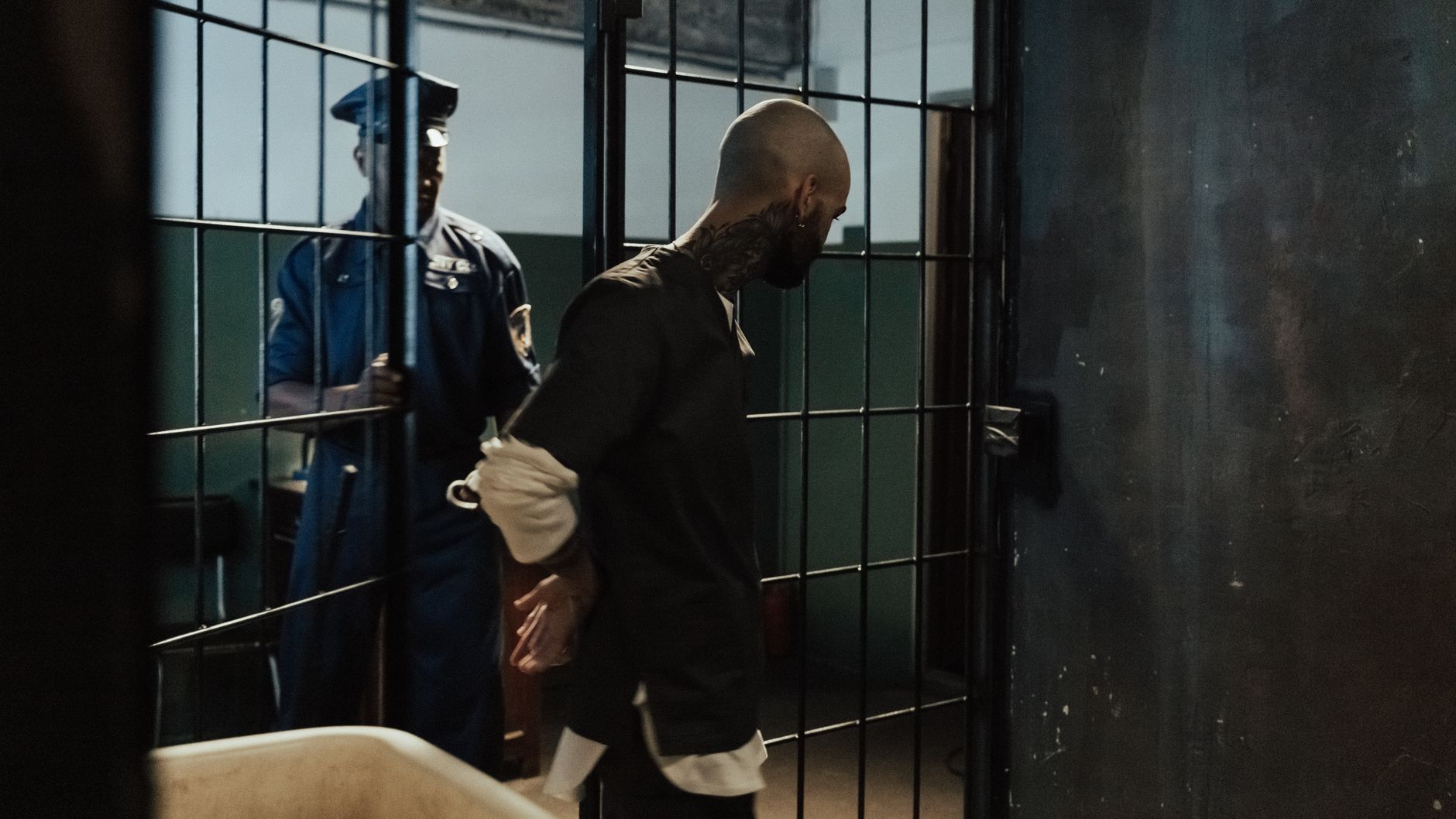
In *Prisoners* (2013), two girls are abducted on Thanksgiving in small-town Pennsylvania, and the kidnapper turns out to be Holly Jones — the frail old woman the police had treated as a bystander, the aunt of their prime suspect. The film ends with Detective Loki rescuing Anna Dover while her father, Keller, lies trapped in a hidden pit in Holly's yard; the last shot has Loki pausing over that yard as a faint whistle reaches him, then cutting to black before we see him dig.
Denis Villeneuve's film, written by Aaron Guzikowski and shot by Roger Deakins, is built so the answer is on screen long before anyone recognises it. Below is a straight account of the plot, who did it and why, what the final scene is doing, and why the ending refuses to show you the rescue it clearly implies. Full spoilers follow.
Table of Contents
- What happens in the plot, step by step
- Who took the girls, and what their motive was
- The ending explained — the pit, the whistle, the cut to black
- Why the film ends before the rescue
- Clues planted before the reveal
- Common questions the plot leaves open
- Frequently Asked Questions
What happens in the plot, step by step
Two families share Thanksgiving dinner. Keller Dover (Hugh Jackman), a carpenter and survivalist whose motto is "pray for the best, prepare for the worst," and his wife Grace (Maria Bello) eat with their neighbours Franklin and Nancy Birch (Terrence Howard and Viola Davis). The younger daughters, Anna Dover and Joy Birch, walk back to the Dover house unsupervised and vanish. The only lead is a battered RV that had been parked on the street earlier in the day. Detective Loki (Jake Gyllenhaal), who tells Keller he has solved every case he has been given, finds the RV that night. Its driver, Alex Jones (Paul Dano), crashes it while fleeing and is arrested. Alex is a young man with the mental capacity of a ten-year-old; forensics find nothing in the vehicle, and after the legal holding period the police release him to his aunt, Holly Jones (Melissa Leo).
Keller does not accept that. On the way out of the station, Alex mutters something about the girls that only Keller hears. Keller abducts him, chains him in a derelict apartment building he inherited from his father, and tortures him over days — eventually with Franklin and Nancy's knowledge and reluctant help. Alex never gives up a location. Meanwhile Loki works other threads: a priest, Father Dunn, who has a decomposing corpse in his basement, and Bob Taylor (David Dastmalchian), a disturbed man who obsessively draws mazes, hoards children's clothing, and shoots himself with Loki's gun during questioning. Joy is found alive and drugged. In the hospital she tells Keller, in a confused half-sentence, that he was *there* — in the house where she was held. Keller had been in Holly Jones's living room.
Who took the girls, and what their motive was
Holly Jones and her husband took the girls. Years earlier the couple lost their own son to cancer, and the husband's response, as Holly explains it, was to declare war on God by abducting children — on the theory that losing a child is what turns ordinary people into atheists. They took sixteen children, by the husband's own confession, and Holly continued alone after he left her. That confession is the body in Father Dunn's basement. The priest's parishioner admitted to the killings, and Dunn killed him rather than let him continue, then hid the corpse.
The corpse wears a maze pendant — the same maze the couple used as a signature, taught to the children, and drawn compulsively by their survivors. Alex Jones is one of those survivors. His real name is Barry Milland; he was taken as a boy, drugged for weeks with a compound that induces lasting psychosis, and raised by Holly as her nephew. So is Bob Taylor, who escaped and spent the rest of his life reproducing the maze and stealing children's clothes. Both men are victims the investigation keeps mistaking for the perpetrator, which is precisely the trap Holly relies on.
The ending explained — the pit, the whistle, the cut to black
Acting on Joy's words, Keller drives to Holly's house and confronts her. She is armed, shoots him in the leg, and forces him at gunpoint to drink the drugged water she has used on the children. Then she makes him climb into a concealed pit in her yard — a hole covered by a car and a lid, where Anna has been held — and leaves him there, injured and sedated. Loki arrives separately. He has traced the maze to the Jones house and spots the photograph of Holly's husband wearing the pendant. Holly shoots him in the head; the bullet wounds him without killing him, and he kills her.
Anna is in Holly's car. Loki, bleeding and able to see out of one eye, drives her to the hospital through snow in the film's most physically harrowing sequence. Days later, forensic teams work Holly's property. Keller is still missing, and the film has already shown us what the audience knows and the police do not: he is under their feet. In the last shot Loki stands alone in the cold, and a thin, high sound — Keller blowing the emergency whistle he once gave Anna, which she left in the pit — reaches him. He stops and turns his head. Cut to black.
Why the film ends before the rescue
The cut is the point. For two and a half hours the film has argued that certainty is the dangerous thing — Loki's claim to have cracked every case, Keller's conviction that Alex knows, Holly's belief that she has proven something about God. Showing the rescue would hand the audience the certainty the story has spent its running time dismantling. Mechanically, though, the scene is weighted. The whistle is loud enough that Loki visibly registers it, he is standing within feet of the lid, and the site is already crawling with investigators.
Nothing in the frame suggests he walks away. Read as plot, Keller is found. Read as theme, Keller is left suspended in a hole he built his whole worldview to avoid — a man who prepared for every disaster and ended up imprisoned by his own methods, in the dark, waiting on someone else's mercy. The title carries all of it. Keller imprisons Alex; Holly imprisons children; Alex and Bob are prisoners of what was done to them decades earlier; Loki is a prisoner of his record; Grace is a prisoner of sedation and grief. The maze is the same idea in a different shape: every character is inside a structure they cannot see the whole of.
Clues planted before the reveal
On a second viewing the solution is sitting in plain sight. Villeneuve withholds emphasis rather than information.
- Holly's first scene with Loki includes the photograph of her husband with the maze pendant visible, unremarked.
- She mentions, unprompted, that her husband left her after their son died — the motive, offered as small talk.
- Alex says the line that sets Keller off, and says "the maze" during his captivity; both are accurate statements from a victim, not taunts from a captor.
- Bob Taylor's mazes are identical to the pendant and to the drawings Alex makes, linking two men who never met as adults.
- Holly serves Keller a drink in that early scene — the same hospitality she uses on everyone.
Common questions the plot leaves open
Some ambiguities are deliberate and some are just unstated. Loki's first name is never given, and his tattoos, blinking tic and Masonic ring are never explained — details built to suggest a history the film declines to narrate. How many of the sixteen children survived is not specified beyond Alex and Bob.
What *is* resolved: Joy and Anna both live, Holly is dead, and the two men wrongly suspected were victims throughout. Keller's fate is the only genuine open question, and it is open by one shot's worth of margin. There is no sequel, no alternate cut in general circulation, and no on-screen epilogue that settles it — so any confident claim that Keller definitely dies in that pit is an interpretation, not something the film shows.
Frequently Asked Questions
Does Keller Dover survive at the end of Prisoners?
The film does not show it. Loki hears his whistle while standing over the hidden pit at an active forensic site, which strongly implies rescue, but the shot cuts to black before any dig.
Was Alex Jones guilty of anything?
No. He was Barry Milland, abducted as a child and drugged into permanent impairment by Holly and her husband. Keller tortured an innocent survivor for days.
What is the significance of the maze?
It was the abductors' signature, drawn by the children they took and worn as a pendant by Holly's husband. It also describes the film's structure — everyone trapped inside a pattern they can't see whole.
Why did Bob Taylor kill himself?
He was another survivor of the same abductions, not the kidnapper. Cornered in interrogation and unable to explain himself, he grabbed Loki's holstered gun and shot himself.