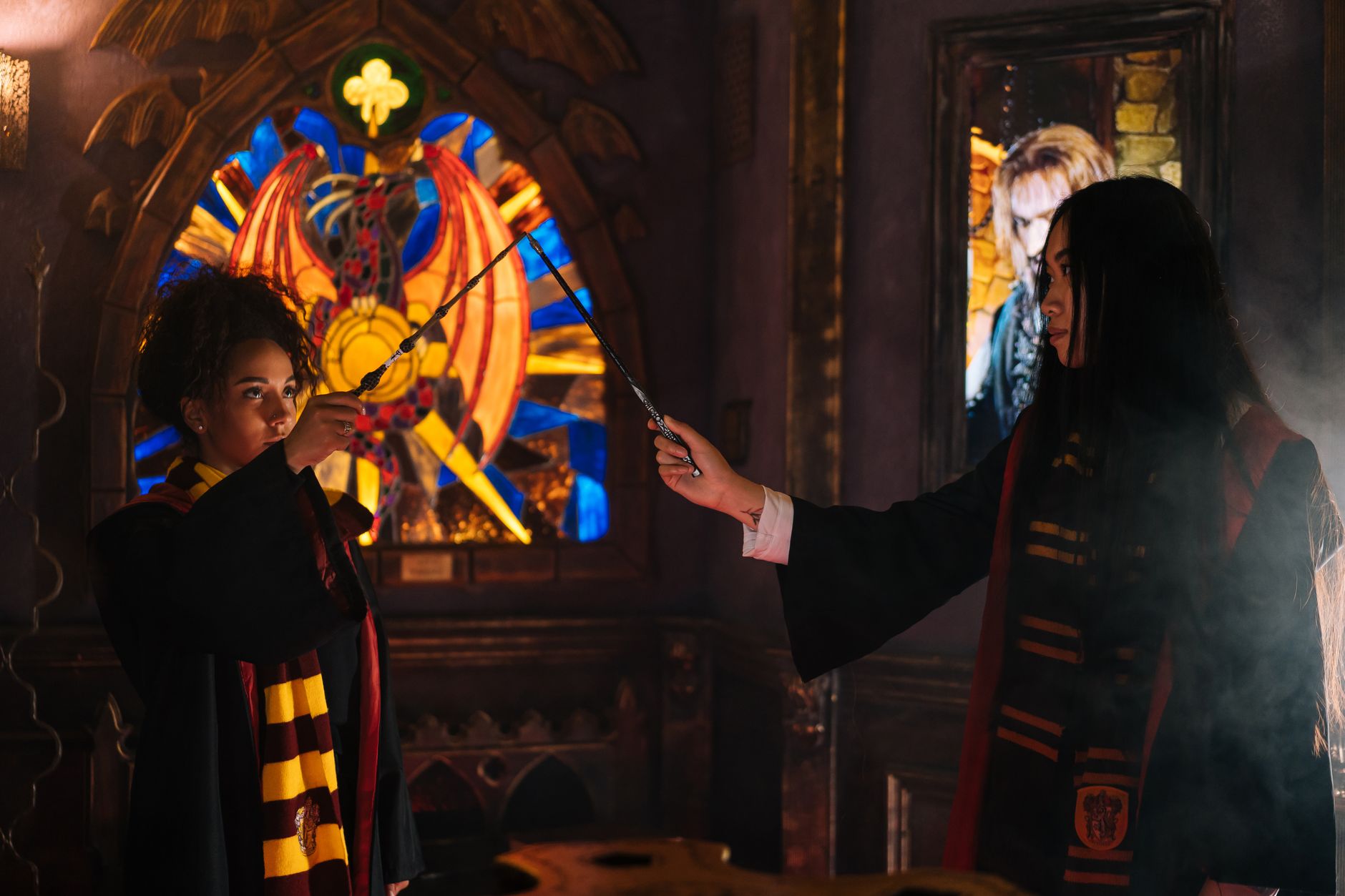
"Harry Potter and the Sorcerer's Stone" (2001) follows an orphaned boy who learns he is a wizard and is sent to Hogwarts School of Witchcraft and Wizardry, where he uncovers a plot to steal a magical stone that grants immortality. By the end, Harry stops Professor Quirrell, who is possessed by the dark wizard Voldemort, from taking the stone, and Harry survives the first of many confrontations with the man who killed his parents.
Directed by Chris Columbus and based on J.K. Rowling's 1997 novel, the film introduces Harry Potter (Daniel Radcliffe), Ron Weasley (Rupert Grint), and Hermione Granger (Emma Watson) as they navigate their first year at Hogwarts. The plot and ending set up the series' central conflict: Voldemort's attempts to return to full power, and Harry's unresolved connection to him.
Table of Contents
- How does Harry end up at Hogwarts?
- What is the Sorcerer's Stone, and who is after it?
- What happens in the climax, and who is really behind the plot?
- What does the ending mean for the rest of the story?
- Frequently Asked Questions
How does Harry end up at Hogwarts?
Harry Potter has lived with his neglectful aunt and uncle, the Dursleys, since his parents died when he was an infant. He has been told his parents died in a car accident, and he knows nothing about magic. A half-giant named Hagrid arrives to tell Harry the truth: his parents, Lily and James Potter, were killed by the dark wizard Lord Voldemort, and Harry survived Voldemort's killing curse as a baby, leaving him with a lightning-bolt scar and a strange fame in the wizarding world.
Hagrid delivers Harry's invitation to Hogwarts, and the two travel to Diagon Alley to buy school supplies, including Harry's wand, which shares a magical core with Voldemort's own wand. At Hogwarts, Harry is sorted into Gryffindor house, befriends Ron Weasley and Hermione Granger, and begins lessons in spells, potions, and flying. A key early clue arrives when Harry visits Gringotts, the wizard bank, the same day something is secretly removed from a vault there. That object becomes central to the mystery driving the rest of the film.
What is the Sorcerer's Stone, and who is after it?
The Sorcerer's Stone (called the Philosopher's Stone in the original British text and most international releases) is a magical object that produces the Elixir of Life, which grants the drinker immortality, and can also turn any metal into gold. It belongs to Nicolas Flamel, an ancient alchemist, and is being hidden at Hogwarts under a trapdoor guarded by a series of enchantments. Harry, Ron, and Hermione suspect that Professor Severus Snape, the dour Potions teacher, is trying to steal the stone for himself.
Snape behaves suspiciously throughout the film, including an incident where his leg is injured, which the children interpret as evidence he was attacked while trying to get past the three-headed dog guarding the trapdoor. The real threat, as the film eventually reveals, is Voldemort. Weakened since his failed attempt to kill Harry years earlier, Voldemort is a disembodied spirit seeking the stone's power to rebuild his body and regain strength.
What happens in the climax, and who is really behind the plot?
When Harry, Ron, and Hermione learn that someone intends to steal the stone that same night, they descend through the trapdoor themselves, passing through a series of obstacles: Devil's Snare (a strangling plant), a room of flying keys, a life-size chess match, and a troll. Ron is knocked out during the chess match, and Hermione stays behind to help him, leaving Harry to continue alone. Harry finds Professor Quirrell, the seemingly timid Defense Against the Dark Arts teacher, standing before the Mirror of Erised, which shows the viewer their deepest desire. Quirrell reveals that he, not Snape, has been working to steal the stone all along, and that Snape's suspicious behavior was actually an attempt to protect Harry, not harm him. Quirrell removes his turban to reveal Voldemort's face embedded on the back of his head.
Voldemort has been possessing Quirrell's body to survive and orders him to take the stone from the mirror, which only reveals it to someone who wants to find it rather than simply use it. When Quirrell tries to take Harry by force, touching him causes Quirrell pain, because Harry's mother's self-sacrificing love left a protection in his skin that burns anyone carrying Voldemort's hatred. Voldemort speaks directly to Harry, urging him to hand over the stone in exchange for bringing his parents back, an offer Harry refuses. As Quirrell and Voldemort try to kill Harry, Harry grabs Quirrell's face, and the resulting struggle destroys Quirrell and drives Voldemort's spirit away, though Voldemort survives, weakened, to return in future films. Harry passes out and wakes up in the hospital wing, where Professor Dumbledore, the school's headmaster, explains what happened and confirms that the stone has been destroyed to keep it safe.
What does the ending mean for the rest of the story?
The ending establishes that Voldemort is not dead, only diminished, and that he will keep seeking ways to regain a body and full power, a thread picked up in the sequels. Harry's survival confirms that his mother's protective sacrifice is a real magical force, not just a comforting story, which becomes important again later in the series.
Dumbledore's choice to let Harry face the danger himself, rather than intervening earlier, reflects a pattern that continues through the franchise: Dumbledore repeatedly allows Harry to be tested, believing he must grow into the role of Voldemort's eventual opponent. The film closes with Gryffindor winning the House Cup, thanks to last-minute points awarded for Harry, Ron, and Hermione's bravery, and with Harry returning to the Dursleys for the summer, aware now that he belongs to a world his aunt and uncle can never fully shut him out of again. The Mirror of Erised scene also carries thematic weight beyond the plot mechanics: it shows Harry's deepest wish is not fame or power but his parents, reinforcing that his motivations throughout the series are rooted in loss and family rather than ambition, a contrast Rowling draws deliberately against Voldemort's hunger for immortality.
Frequently Asked Questions
Is Professor Snape a villain in this film?
No. Snape's suspicious behavior is a red herring; he is actually working to protect Harry and the stone, not steal it, as Quirrell reveals in the climax.
Why couldn't Voldemort just take the stone from the mirror himself?
Voldemort was possessing Quirrell's body and had no physical form of his own strong enough to retrieve the stone, so he needed Quirrell, and later tried to force Harry, to get it instead.
Why does touching Harry hurt Quirrell?
Harry's mother, Lily, died protecting him, and that act of love left a lasting magical protection in his skin that causes pain to anyone acting on Voldemort's hatred who touches him.
Does the Sorcerer's Stone survive at the end of the film?
No. Dumbledore has it destroyed after the events at Hogwarts, removing the immediate threat of Voldemort using it to regain a body.