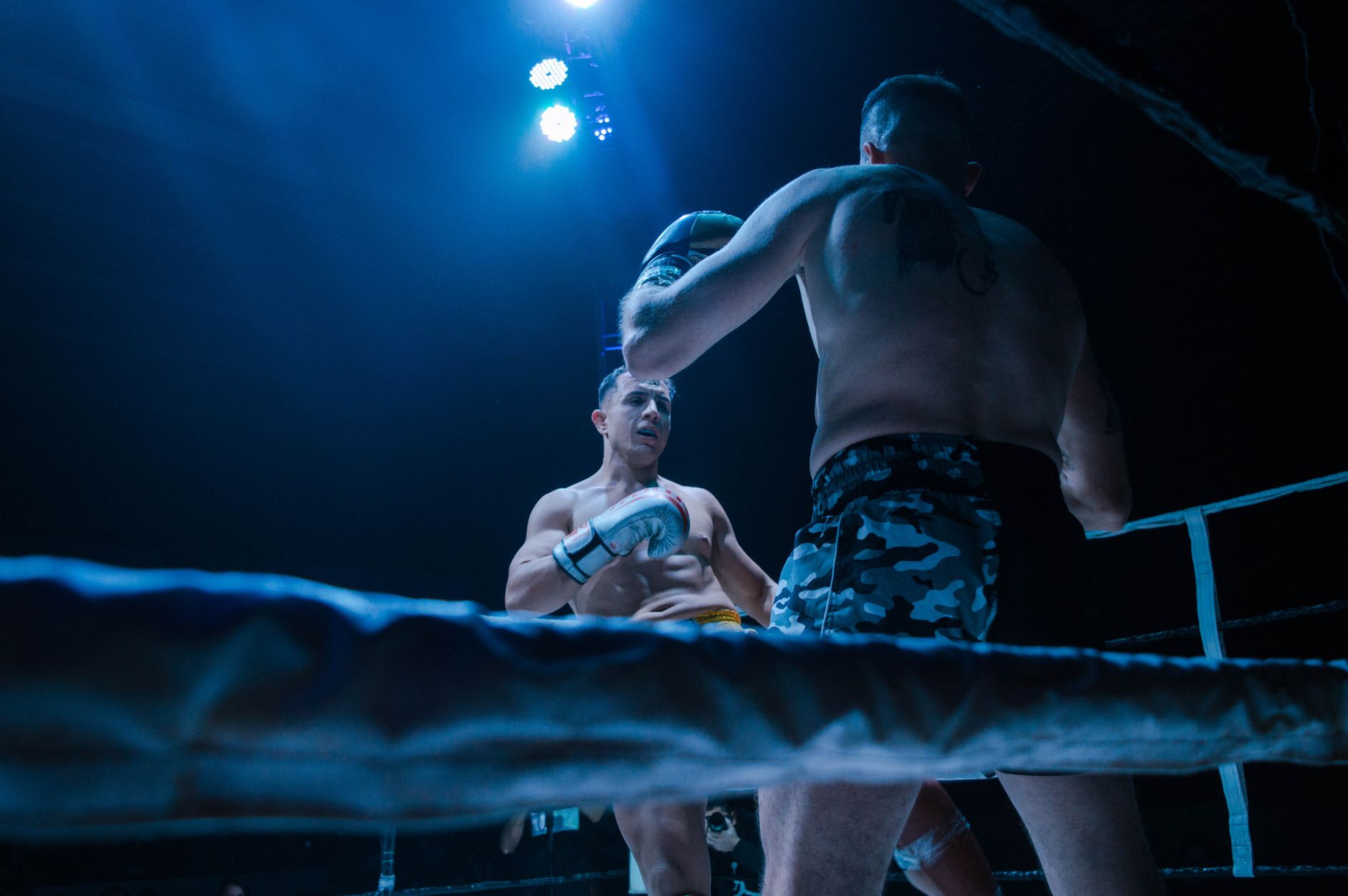
Fight Club is rated R in the United States, and the MPAA's stated reason is its disturbing and graphic depiction of violent anti-social behavior, sexuality and language. In practice that means sustained bare-knuckle fighting, roughly a hundred uses of strong profanity, a loud off-screen sex subplot with brief explicit imagery, and a tone of nihilism and self-harm that lands harder than the bruises. David Fincher's 1999 film follows an unnamed insomniac office worker (Edward Norton) who meets the charismatic soap salesman Tyler Durden (Brad Pitt) and founds an underground bare-knuckle club that grows into an anarchist movement. Most parents find the film unsuitable below about 16, and the content concerns here are less about gore than about what the movie makes appealing before it turns on it.
Table of Contents
- What the R rating actually covers
- Violence and injury detail
- Language, sexual content and nudity
- The themes that matter more than the content list
- Deciding by age, and what to talk about afterward
- Scenes to know in advance
- Frequently Asked Questions
What the R rating actually covers
The R rating is an American classification meaning anyone under 17 needs an accompanying parent or adult guardian to see it in a theater. Fight Club earned that rating on three grounds at once rather than one standout scene, which is why trimming it for a younger viewer is not realistic. Internationally the film sits at the strict end of teen classifications.
It carries an 18 certificate in the United Kingdom, and comparable adults-only or 16-plus ratings in most European and Commonwealth markets. The home-video and streaming versions are the theatrical cut; there is no toned-down edition in circulation, though broadcast television airings are heavily cut and dubbed over the profanity. One practical note for families: the film's first act contains a self-help-group storyline involving terminal cancer support meetings, including a testicular cancer group and a hospice setting. It is played partly for black comedy, which some viewers find more uncomfortable than the fighting.
Violence and injury detail
The fighting is the film's engine and it is filmed to hurt. Men strip to the waist in a basement and hit each other bare-handed until one quits or passes out, and the camera stays close on split lips, swollen eye sockets, loosened teeth and blood on concrete. Several characters walk around for most of the running time with visible facial injuries. Three moments go further than the standard fights.
The narrator beats a younger man far past the point of submission in a scene designed to be sickening rather than exciting. He also beats himself bloody in front of his boss to fake an assault. And late in the film a character takes a gunshot wound to the head, with a graphic exit-wound effect shown plainly. There is also violence used as coercion rather than sport: a convenience store clerk is dragged outside at gunpoint and threatened with execution, and the movement's members carry out assaults, vandalism and bombings. Animals are not harmed, but a chemical burn scene — lye pressed onto a bare hand — is one of the most frequently cited scenes people find hardest to watch.
Language, sexual content and nudity
Profanity is constant. The script uses the strongest English swear word and its variants heavily throughout, along with frequent crude anatomical slang, blasphemy and homophobic insults used by characters to demean each other. There is no stretch of the film that is clean. Sexual content is loud but mostly non-explicit.
Marla Singer (Helena Bonham Carter) and Tyler have an ongoing, aggressive sexual relationship heard through walls and described in blunt dialogue; one brief sequence shows a stylized, digitally rendered view of their bodies mid-act. There is rear and partial nudity, a scene in which a woman appears in underwear, and a running joke about single-frame pornographic inserts spliced into film reels — one such frame does appear near the end. Crude content sits alongside it. A long subplot involves stealing human fat from a liposuction clinic's medical waste to render into soap, shown in unpleasant detail. Dialogue includes a graphic castration threat that is later acted on, off-screen but unmistakably.
The themes that matter more than the content list
Fight Club's real parental question is not whether a teenager can handle blood. It is whether they will read the film as a critique or an instruction manual. The movie presents self-destruction, group violence and the dismantling of a consumer society as thrilling and liberating for most of its length, and only reveals the cost in the final act. Mental health content runs through the whole picture.
The narrator experiences severe insomnia, dissociation and a psychiatric break; the film's central twist turns on that break. There is a suicide threat with a gun in the mouth, a staged near-execution framed as a motivational act, and the narrator deliberately injuring himself. Viewers who are struggling with self-harm or dissociation may find specific scenes genuinely distressing rather than merely intense. The film also depicts a cult dynamic with unusual accuracy: isolation, rules, slogans, erasure of individual names, and escalating loyalty tests. That makes it strong material for discussion with an older teenager and poor material for an unsupervised watch by a younger one.
Deciding by age, and what to talk about afterward
A rough guide, based on how the content clusters rather than on any single scene: If you do watch it together, the useful questions are about the gap between what the film shows and what it endorses. Ask why the fighting feels appealing early on.
Ask what the movement actually achieves for its members. Ask what the narrator wanted that he could not name.
- Under 13: not appropriate. The language alone is disqualifying, and the self-harm imagery is beyond most viewers this age.
- 13 to 15: only with a parent watching alongside, and only for a viewer who already handles ambiguity well. The film never signposts its own irony.
- 16 to 17: workable for many, and often rewarding, provided there is a conversation attached.
- Any age, with mental health concerns: skip it, or screen it yourself first. The self-harm and dissociation content is not incidental.
Scenes to know in advance
If you want to brace for or skip around the worst of it, these are the markers most often flagged: the chemical burn on the hand, the beating of the blond club member, the narrator attacking himself in his boss's office, the castration threat, the convenience store gunpoint scene, and the head wound near the climax. Two practical cautions for a family viewing.
The film opens with a disclaimer-style prologue and a gun in the narrator's mouth, so there is no gentle on-ramp. And the final shot pairs building demolition with the single-frame pornographic insert, which catches people out who assumed the content concerns ended with the violence.
Frequently Asked Questions
Is there a cut of Fight Club suitable for younger viewers?
No. Home video and streaming carry the theatrical cut. Television airings are cut and dubbed, but they remove so much that the film stops making sense.
How bad is the language compared with other R-rated films?
It is at the heavy end. The strongest profanity appears around a hundred times, spread evenly rather than concentrated in a few scenes.
Does the film glorify violence?
It depicts violence as seductive for most of its length and then shows the damage. Younger viewers often absorb the first part and miss the second, which is the main reason to watch it with them.
You Might Also Like
- Fargo (1996) Movie Parents Guide: Age Rating, Violence, Language, Sexual Content, and Scary Scenes
- Edward Scissorhands (1990) Movie Parents Guide: Age Rating, Violence, Language, Sexual Content, and Scary Scenes
- Die Hard (1988) Movie Parents Guide: Age Rating, Violence, Language, Sexual Content, and Scary Scenes