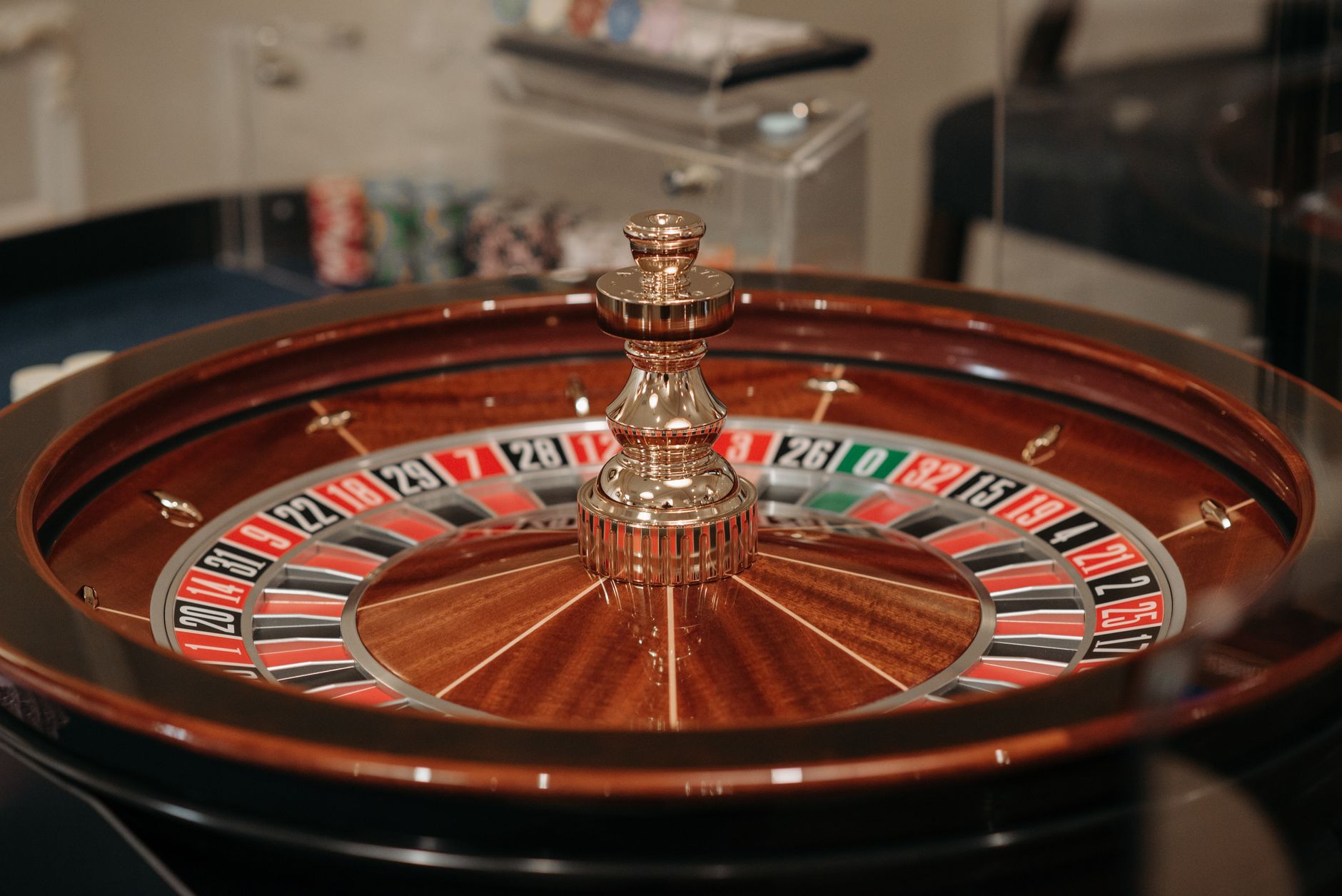
Casino Royale (2006) follows James Bond's first mission as a newly promoted 00 agent: he bankrupts Le Chiffre, a banker who launders money for terrorists, in a high-stakes poker game in Montenegro, then falls in love with the Treasury officer sent to watch the money. The ending reveals that she, Vesper Lynd, was blackmailed into stealing Bond's winnings for the organisation behind Le Chiffre; she drowns in a sinking Venetian building rather than be rescued, and Bond ends the film hunting the man who coerced her. The film is a reboot, not a sequel. Directed by Martin Campbell and adapted from Ian Fleming's 1953 first Bond novel by Neal Purvis, Robert Wade and Paul Haggis, it resets the series to Bond's beginning and treats his coldness as something he acquires on screen rather than a trait he arrives with.
Table of Contents
- What Bond is actually chasing before the card game
- Why the poker game is the mission
- The torture scene and who really kills Le Chiffre
- The Venice ending, explained
- What the ending means for the character
- Where to watch it in the Craig run
- Frequently Asked Questions
What Bond is actually chasing before the card game
The opening, shot in black and white, shows Bond earning his licence to kill. He confronts Dryden, a corrupt MI6 section chief, and we see in flashback the messy bathroom fight in which he killed Dryden's contact — the second of the two kills the 00 rank requires. The point of the sequence is that Bond is new, and that killing is still hard work for him. His first assignment goes badly.
Pursuing a bomb-maker through a construction site in Madagascar, Bond shoots him inside a foreign embassy on camera, creating a diplomatic incident and earning a furious rebuke from M, played by Judi Dench. He keeps the dead man's phone, which leads him to Dimitrios in the Bahamas, and from there to an attempt to blow up an airliner prototype at Miami airport. That bombing is the financial engine of the plot. Le Chiffre, played by Mads Mikkelsen, has short-sold shares in the aviation firm — betting on the stock falling — using more than $100 million of his clients' money. When Bond stops the bomber on the runway, the share price rises instead, and Le Chiffre is suddenly a banker who has lost terrorist money he cannot replace.
Why the poker game is the mission
Le Chiffre arranges a tournament at the Casino Royale in Montenegro to win the money back before his clients ask for it. MI6's plan is not to arrest him but to beat him, on the theory that a ruined Le Chiffre will have nowhere to go but Western protection, and will trade everything he knows for it. Bond is staked with $10 million of government money, and Vesper Lynd, played by Eva Green, is attached from the Treasury to guard it. Two reversals drive the game. Le Chiffre's partner poisons Bond's martini with digitalis, a heart drug; Bond staggers to his car, uses a field defibrillator, and survives only because Vesper reconnects a lead he cannot reach.
Later, Bond is bluffed off a huge pot after reading a twitch in Le Chiffre's eye as a tell, when the twitch was deliberate bait. Bankrupt and refused more funds by Vesper, Bond is restaked by CIA agent Felix Leiter, who wants custody of Le Chiffre in return. Bond then wins the tournament with a straight flush, and Le Chiffre's last option disappears. The sequence also plants the series' long-running cocktail. Bond dictates the recipe — gin, vodka, Kina Lillet, shaken, with a slice of lemon peel — and later names it after Vesper. His reply when asked whether he wants it shaken or stirred, "Do I look like I give a damn," is the film telling you the catchphrases have not been earned yet.
The torture scene and who really kills Le Chiffre
Le Chiffre kidnaps Vesper and uses her to force Bond off the road, wrecking the Aston Martin. He then tortures Bond in a stripped-out cargo ship, beating him with a knotted rope and demanding the password to the account holding the winnings. Bond refuses, and the scene is played for humiliation rather than heroics — he is stripped, seated, and taunted about his loyalty to a service that will not save him. Le Chiffre is interrupted and shot by Mr. White, who has been in the film from early on as the man moving money between clients.
White does not rescue Bond; he executes a banker who lost the organisation's funds and then tried to sell its secrets. The line that matters is White's explanation that money is not as important as knowing who to trust — the theme the ending then detonates. Bond wakes in a hospital on Lake Como. He names René Mathis, his Montenegro contact, as the leak, and Mathis is dragged away — a judgement the next film revisits. Then Bond resigns from MI6, writes to M, and sails to Venice with Vesper.
The Venice ending, explained
In Venice, Vesper withdraws the winnings and delivers the money to Mr. White's courier, Gettler. M phones Bond to say the money never reached the Treasury, and Bond works out what Vesper has done. He pursues them into a Venetian palazzo whose flotation supports he shoots out during the gunfight, and the building begins sinking into the canal. Vesper is trapped inside a submerged lift cage. She locks it herself, mouths an apology, and lets herself drown while Bond is still trying to force the gate open. He surfaces with her body and cannot revive her. Her death is a choice, not an accident: she has already decided she cannot be saved and does not want to be. The explanation comes afterward.
M tells Bond that Vesper had a lover, Yusef Kabira, who was taken by the organisation; she stole the money to buy Bond's life, because the deal she struck traded the winnings for his safety. That is also why Le Chiffre's torture stopped short of killing him. Her final act was to leave Mr. White's number in her phone — a lead she had no reason to give unless she wanted Bond to finish it. Bond's outward response is to go cold. He tells M "the job's done and the bitch is dead," a line lifted almost directly from Fleming, and M hears it for what it is. Minutes later Bond shoots Mr. White in the leg on a Lake Como estate and introduces himself with the full formula — "The name's Bond. James Bond" — for the first time in the film, over the first full use of the Monty Norman theme.
What the ending means for the character
The structural argument of Casino Royale is that the invulnerable Bond of the earlier films is a defence mechanism with an origin. The film gives him a woman who sees through him, lets him resign for her, and then kills her in a way that makes love itself look like an operational liability. The habits that follow — the one-night stands, the jokes over corpses, the refusal to trust handlers — are presented as consequences. It also reframes the villain.
Le Chiffre is not trying to rule anything; he is an overleveraged financier trying to cover a loss, and he is killed by his own clients for incompetence. The organisation behind him, later named Quantum, is the real adversary, and the film deliberately ends with that thread untied. Two smaller details reward a rewatch. Bond's gambling tell and his misread of Le Chiffre's are both about arrogance, and the only reason he survives the poisoning is that he accepted help. The film's theme song, Chris Cornell's "You Know My Name," states the reading plainly: the arrogance is the armour.
Where to watch it in the Craig run
Casino Royale is the first of five Daniel Craig films and the only one that works completely as a standalone. If you are watching for the Vesper and Quantum storyline, the order matters: One caveat for new viewers: the poker is dramatised, not instructional.
The final table produces four premium hands at once, which is close to statistically impossible in a real game, and the tells are written to serve character rather than reflect how professionals actually play. Treat the card logic as choreography and the stakes as the real subject.
- Casino Royale (2006) — Bond earns 00 status, loses Vesper, captures Mr. White.
- Quantum of Solace (2008) — picks up minutes later; Bond interrogates White, clears Mathis, and confronts the man who blackmailed Vesper.
- Skyfall (2012) — a self-contained story about Bond and M; no Vesper plot.
- Spectre (2015) — retroactively links Quantum to a larger organisation and to Bond's own past.
- No Time to Die (2021) — opens at Vesper's grave in Matera, closing the arc that starts here.
Frequently Asked Questions
Did Vesper Lynd betray Bond or protect him?
Both. She stole the winnings for Mr. White's organisation, but the deal she made was to keep Bond alive, which is why Le Chiffre tortured rather than killed him.
Who shoots Le Chiffre?
Mr. White, acting for the clients whose money Le Chiffre lost. It is an execution for incompetence and disloyalty, not a rescue of Bond.
Do I need to see earlier Bond films first?
No. Casino Royale restarts the continuity, so Sean Connery through Pierce Brosnan are not prerequisites. Quantum of Solace is the one film that genuinely requires it.
Why is the opening in black and white?
It marks the period before Bond holds 00 status, separating the agent he is becoming from the one the rest of the film follows.