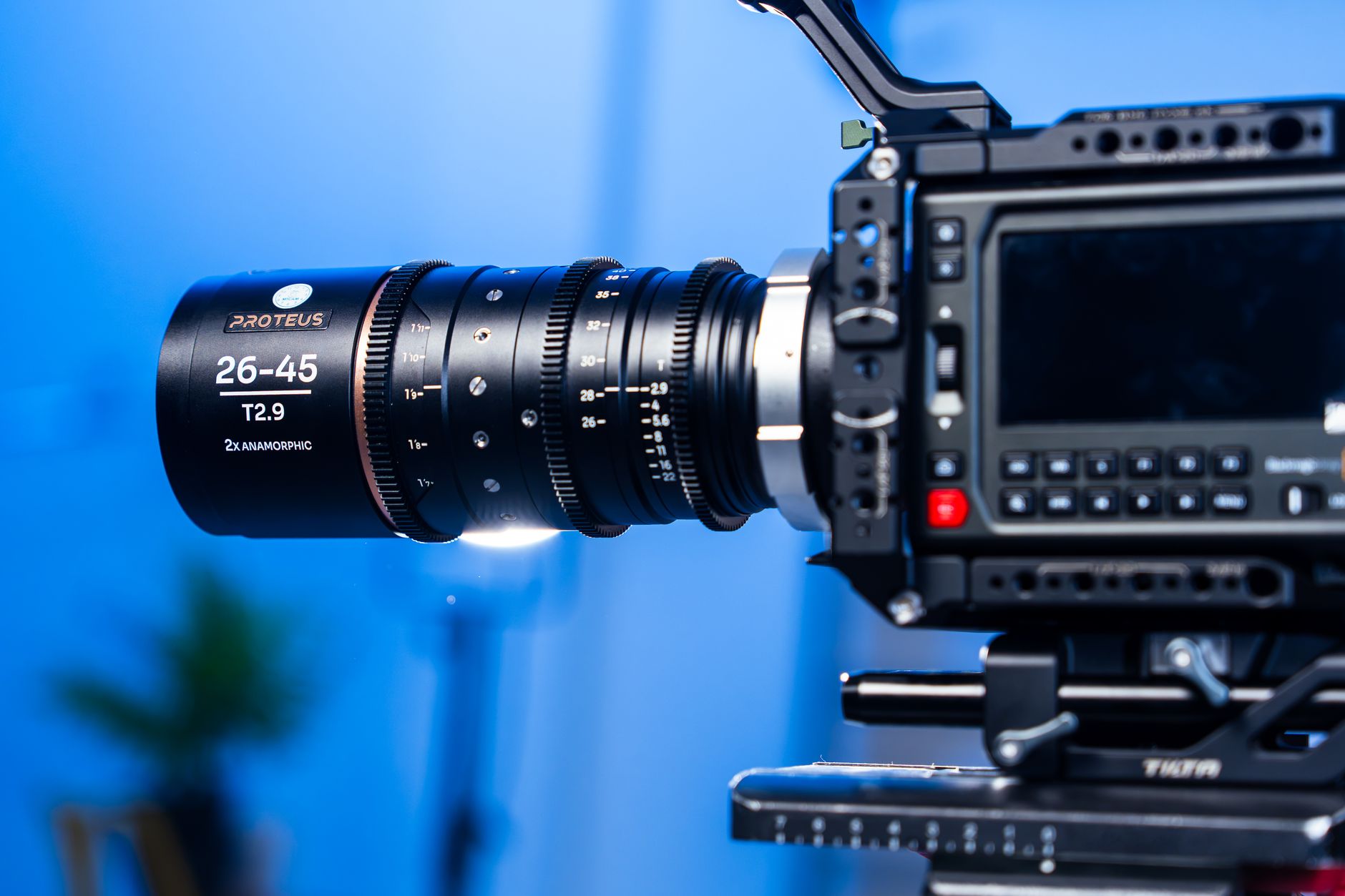
Anamorphic lenses squeeze a wide view onto the camera sensor and stretch it back to widescreen to create the classic film look. They produce very wide frames with shallow focus, long horizontal flares, and oval background blur. A spherical lens, which treats height and width the same, cannot copy that mix without cropping or digital effects. Directors choose anamorphic when they want both grandeur and closeness in the same shot.
Table of Contents
- How Does the Squeeze Work?
- What Marks the Anamorphic Look?
- How Does It Differ From Spherical and Cropping?
- When Should Filmmakers Choose It?
How Does the Squeeze Work?
An anamorphic lens uses curved glass that compresses the image more side to side than up and down. The camera records a tall, squeezed image. Playback stretches it back out to normal proportions.
That stretchrestores shapes but keeps the optical marks of the process. Faces look normal in the center, while edges can bend and soften. Focus falls off faster across the width, which separates people from busy backgrounds.
What Marks the Anamorphic Look?
The clearest mark is the widescreen shape with a close, intimate feel. You see broad landscapes or rooms, yet the main face stays large and softly isolated. Background lights turn into tall ovals instead of round dots.
Flare is the second giveaway. Bright lamps, windows, and headlights drag into thin blue or white streaks across the frame. Skin, sweat, and texture often look smooth and slightly glowing, with gentle falloff at the frame edges.
How Does It Differ From Spherical and Cropping?
A normal spherical lens records width and height evenly and keeps round blur and tight control. Cropping the top and bottom of that image makes a wide shape, but it throws away picture and does not change blur or flare. Anamorphic captures the full width optically, so nothing is cut to fake the shape.
- Anamorphic: wide capture, oval blur, horizontal streaks, soft edges
- Spherical: even capture, round blur, compact flare, sharper edges
- Cropped spherical: wide shape only, with lost resolution and no anamorphic traits
When Should Filmmakers Choose It?
Choose anamorphic for stories that need scale plus emotional closeness. It suits two people talking in a vast desert, a car interior at night, or a crowded street where the lead must still stand out. The oval blur quiets clutter without losing place.
Avoid it for clean product shots, fast documentary work, or tight spaces with many straight lines. The lenses are larger, heavier, harder to focus, and more fussy with close-ups and distortion. Test skin, flare, and edge bending before you commit to a whole project.