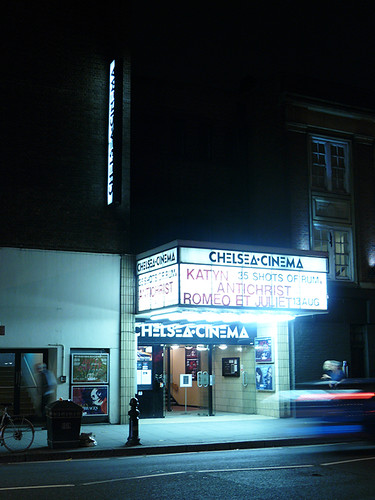
Day-for-night filming is a technique that lets filmmakers shoot a scene meant to look like nighttime while the camera is actually rolling during daylight hours. Crews use filters, exposure tricks, and color grading to turn a sunlit set into a believable night sky without waiting for the sun to go down. The method has existed since the earliest decades of cinema, when film stock was too slow to capture usable images after dark. Directors still rely on it today, even with cameras that handle low light far better than old film ever could, because shooting at night costs more, takes longer, and limits what a crew can safely see and do.
Table of Contents
- Why Filmmakers Shoot Night Scenes During the Day
- How the Effect Is Achieved on Set and in Post
- How to Spot Day-for-Night Shots While Watching a Film
- Why Some Directors Avoid the Technique Entirely
- Frequently Asked Questions
Why Filmmakers Shoot Night Scenes During the Day
Night shoots are expensive. Crews need extra lighting rigs to make anything visible on camera, and actors and equipment have to be moved and set up in the dark, which slows down every stage of production. Insurance and safety costs also rise when a cast and crew are working outdoors after sunset, especially on remote or rugged locations. Daylight shooting solves these problems by letting a production use natural light as its base and shape that light into a false night.
A crew can block scenes, adjust framing, and fix technical problems far more easily when they can actually see what they're doing. This is especially valuable for outdoor action sequences, westerns, and war films, where wide shots of landscapes or large groups of people would be difficult to light convincingly after dark. The tradeoff is that day-for-night only works under specific conditions. A clear sky, controlled shadows, and the right camera settings all matter, which is why some productions choose it for certain shots and switch to real night shooting for others within the same film.
How the Effect Is Achieved on Set and in Post
The traditional method starts with underexposing the shot, meaning the camera captures less light than the scene actually has. A blue filter, often called a "day-for-night" filter, is then placed over the lens to push the color temperature toward the cooler tones audiences associate with moonlight. Cinematographers also angle shots to avoid direct sunlight hitting faces, since harsh daytime shadows don't match the softer light of night. Polarizing filters sometimes darken the sky further, since a bright daytime sky is one of the biggest giveaways that a "night" scene was shot in daylight.
Practical lights, like lamps, headlights, or lanterns within the frame, help sell the illusion by giving the eye a believable light source to focus on. Modern productions extend this work into digital color grading. Editors darken the image, shift the color balance toward blue, and sometimes add digital effects like simulated moonlight or stars after filming wraps. This gives filmmakers more control than older optical filters allowed, and it lets them fix inconsistencies that weren't visible on set.
How to Spot Day-for-Night Shots While Watching a Film
Trained eyes can usually catch day-for-night shots by watching a few consistent details. The sky is the most common tell: a daytime sky, even underexposed, often retains a slightly washed-out or overly uniform brightness that a real night sky doesn't have, since real night skies are either pitch black or show visible stars and clouds with texture. Shadows are another giveaway.
Daylight creates hard-edged, well-defined shadows from a single strong light source, the sun. If a supposedly moonlit scene shows sharp, dense shadows under actors' eyes or across the ground, that's a sign the scene was lit by the sun rather than a softer night source. Older films, especially from the black-and-white and early color eras, tend to show these tells more obviously because the filtering technology was less refined. Contemporary films with heavy digital grading can hide the effect much more convincingly, sometimes requiring a frame-by-frame pause to catch the inconsistencies.
- Check the sky: an unnaturally flat or slightly bright sky suggests daylight underneath the color shift.
- Look at shadow edges: hard, defined shadows point to direct sunlight rather than ambient night light.
- Watch for squinting actors: performers shooting in bright daylight sometimes squint slightly, which looks out of place in a "night" scene.
- Notice color uniformity: an overall blue tint applied evenly across the frame, without variation, often signals a filter or color-grade fix rather than natural night lighting.
Why Some Directors Avoid the Technique Entirely
Not every filmmaker uses day-for-night, and some actively avoid it because audiences have grown more visually literate and can spot it more easily than in past decades. A poorly executed day-for-night shot can pull viewers out of a film, especially in an era where high-sensitivity digital cameras make real night shooting far more practical than it once was.
Advances in camera sensor technology mean many productions now shoot at actual night and still capture clean, usable images with far less supplemental lighting than film cameras once required. This has made true night photography a realistic alternative for scenes where day-for-night's visual compromises would be too noticeable, such as close-up dialogue scenes where an actor's face needs to read clearly under convincing night light. Directors who do still choose day-for-night often reserve it for wide establishing shots or action sequences where the imperfections are less visible, while shooting closer, more detail-heavy scenes at actual night or on a soundstage with controlled lighting.
Frequently Asked Questions
Does day-for-night work in color film the same way it did in black and white?
The core idea, underexposing the image and cooling its color, applies to both, but color productions depend more heavily on blue filters and digital grading to sell the night illusion, since black-and-white film relies mainly on exposure and contrast.
Can digital color grading alone create a convincing night scene without underexposing on set?
Grading alone can shift tone and color, but it struggles to replicate night-level shadow depth and contrast convincingly, so most productions still underexpose or adjust lighting during filming rather than relying only on post-production fixes.