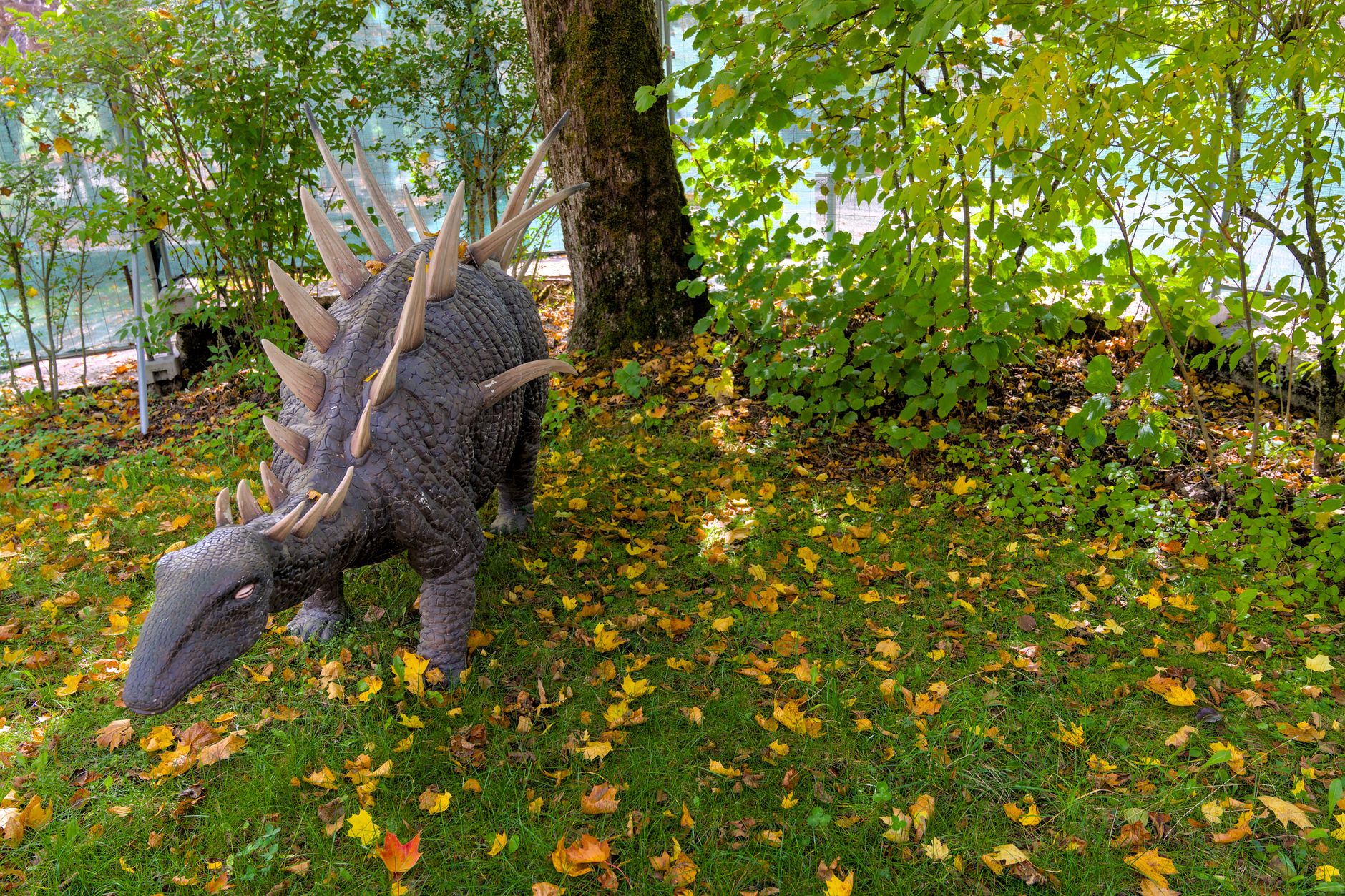
"Jurassic Park" (1993), directed by Steven Spielberg, follows a group of scientists and visitors trapped on an island theme park after its genetically engineered dinosaurs break loose. The park's security systems fail during a sabotage attempt, and the survivors escape only after the dinosaurs themselves turn on each other, allowing the humans to flee by helicopter. The film, based on Michael Crichton's 1990 novel, centers on billionaire John Hammond's plan to open a zoo of cloned dinosaurs on Isla Nublar. He invites a paleontologist, a paleobotanist, a mathematician, and his two grandchildren to tour the park before its public opening, and the visit collapses into a fight for survival once containment breaks down.
Table of Contents
- How does the park fail in the first place?
- What happens to the main characters during the crisis?
- Why do the velociraptors matter so much to the story?
- How does the movie end, and how do the survivors escape?
- What does the ending mean?
- Frequently Asked Questions
How does the park fail in the first place?
Hammond's company, InGen, clones dinosaurs from DNA recovered in fossilized mosquitoes and raises them inside electrified paddocks monitored by a central computer system. The park depends on that system for nearly everything: fences, locks, phone lines, and tracking how many animals are actually on the island. The breakdown starts with Dennis Nedry, the park's programmer, who disables the security grid so he can steal dinosaur embryos for a rival company.
His shutdown cuts power to the electric fences across the island, not just the one system he needed, because he built hidden shortcuts into the park's code that he alone understood and that no one can safely reverse in the moment. With fences down during a tropical storm, the Tyrannosaurus rex escapes its paddock and attacks the tour vehicles carrying Hammond's grandchildren, Lex and Tim, along with paleontologist Dr. Alan Grant. Nedry dies soon after, killed by a dilophosaurus while trying to smuggle the embryos off the island, so the one person who could easily undo the shutdown is no longer available.
What happens to the main characters during the crisis?
After the T. rex attack separates their jeep from the rest of the tour, Grant leads Lex and Tim on foot back toward the park's main facility, fending off the T. rex again along the way and discovering that the park's "all female" dinosaurs have been breeding in the wild. Meanwhile, paleontologist Dr. Ellie Sattler and game warden Robert Muldoon search for survivors from the visitor center.
Mathematician Dr. Ian Malcolm, who warned Hammond before the trip that complex systems like the park were doomed to fail unpredictably, is injured during the T. rex attack but survives. Chief engineer Ray Arnold goes into the maintenance tunnels to manually restore power after Nedry's shutdown, and does not return; Muldoon is later killed by velociraptors while trying to protect Sattler. Hammond's granddaughter Lex, a competent computer user, becomes essential near the end: she accesses the park's computer system from the control room to restore security functions, including the door locks protecting the group from raptors, once Sattler reaches the main switch to turn power back on.
Why do the velociraptors matter so much to the story?
The velociraptors are the park's most intelligent and dangerous dinosaurs, kept in a high-security paddock separate from the main tour because they have already tested the fence for weaknesses and shown coordinated, pack-based hunting behavior. Muldoon warns earlier in the film that they are deliberate and systematic, not simply aggressive.
Once power and containment fail, raptors get loose inside the visitor center and stalk Grant, Lex, and Tim through the kitchen and control room in one of the film's tensest sequences. Their hunting behavior demonstrates the film's core warning: the park's creators underestimated how much the animals could adapt and think, treating them as controllable exhibits rather than living predators.
How does the movie end, and how do the survivors escape?
With raptors closing in on the group inside the visitor center, the Tyrannosaurus rex reappears and attacks the raptors, giving Grant, Sattler, Malcolm, Lex, and Tim the chance to flee to the building's lobby. The T. rex's intervention is not planned by any character; it results from the same loss of containment that endangered everyone, now working in the humans' favor.
Hammond, Grant, Sattler, Malcolm, and the two children are evacuated from the island by helicopter. Hammond abandons his plan to open the park, having seen that the systems meant to control the animals, and the overconfidence that built them, could not hold. Grant leaves having privately resolved never to endorse the park for public opening, a position he hints at earlier and never abandons.
What does the ending mean?
The film's resolution argues that genetic engineering and automated safety systems cannot substitute for understanding a living creature's behavior. Malcolm's warnings about chaos theory, that small failures in a complex system cascade into total breakdown, are borne out exactly: one disabled security program leads to multiple deaths and the collapse of the entire park.
The T. rex saving the humans from the raptors is often read as the film's final irony: the same uncontrolled nature that caused the disaster is what ends it, with no human plan or weapon involved. Hammond's closing silence on his helicopter ride home underscores that the story ends not with a villain defeated, but with a lesson about the limits of control learned at a steep cost.
Frequently Asked Questions
Who turns the park's power back on?
Ellie Sattler restores the main power supply from the maintenance shed after Ray Arnold fails to return, which allows Lex to then re-engage the security and door-lock systems from the control room.
Does John Hammond get to open the park?
No. After witnessing the systems fail and seeing the human cost, Hammond gives up on opening Jurassic Park and leaves the island with the surviving visitors.
Why were the velociraptors considered more dangerous than the T. rex?
Muldoon describes them as intelligent pack hunters that test fences and coordinate attacks, making them harder to predict and contain than a single large predator like the T. rex.