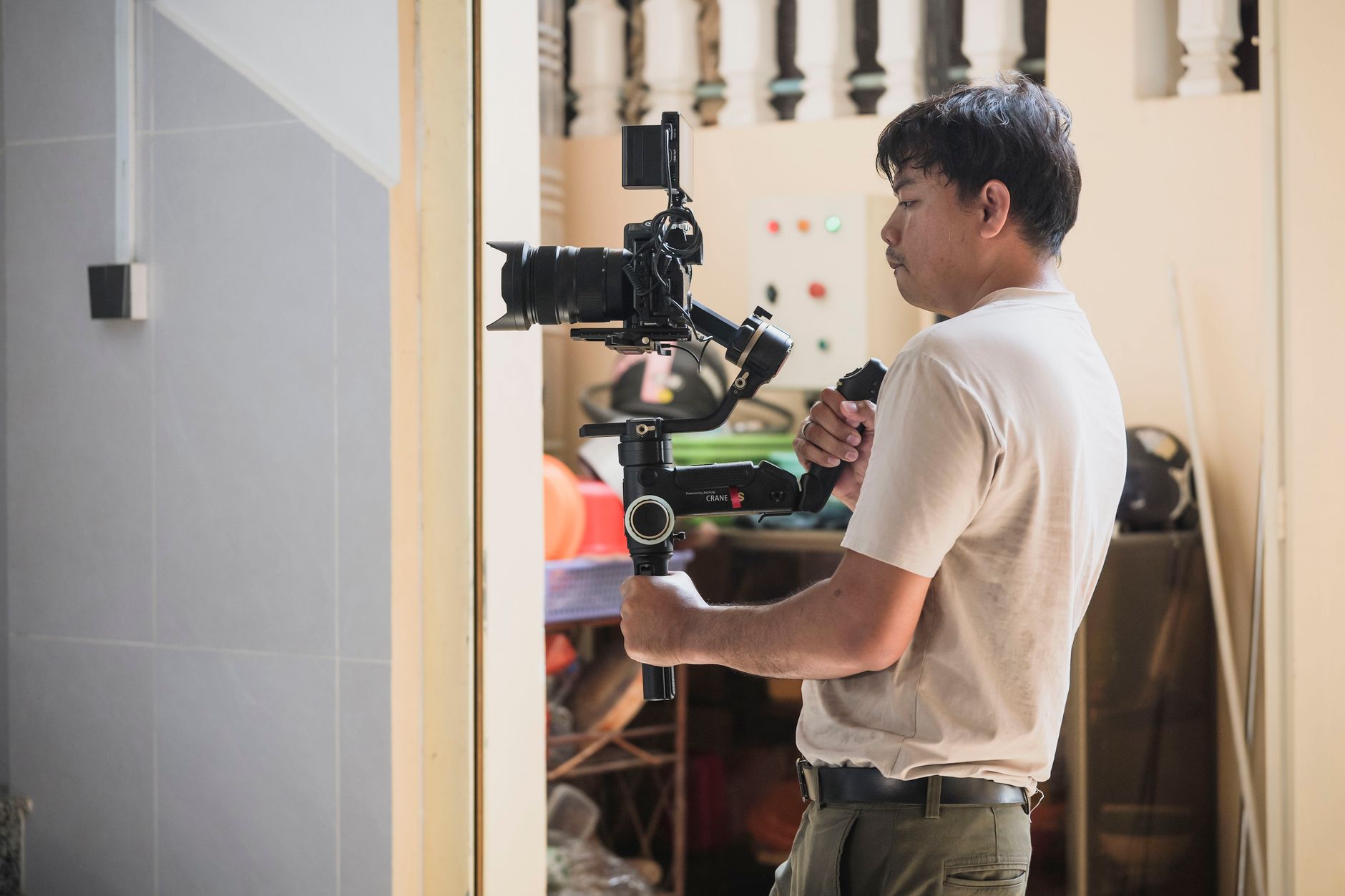
Filmmakers show man vs. technology by making machines feel large, cold, and fast while humans look small, warm, and strained. They use camera angle, scale, sound, lighting, and editing to turn that contrast into conflict.
Man vs. technology means a story clash between people and tools they built, from robots and computers to surveillance networks and automated weapons. Viewers feel the theme less through dialogue and more through what they see and hear moment by moment.
Table of Contents
- How Does Framing Make Machines Feel Powerful?
- How Do Sound and Music Turn Technology Into a Threat?
- How Does Editing Show Humans Losing Control?
- How Do Light, Color, and Design Divide People and Machines?
- What Can You Watch for in Any Scene?
How Does Framing Make Machines Feel Powerful?
Directors often shoot technology from a low angle so it towers over the viewer. They place a person small in a wide shot beside a vast server room, ship, or factory. The size gap tells the story before anyone speaks.
Close-ups work the other way. A lens lingers on a blinking sensor, a metal hand, or a screen that refuses to turn off. The machine gets a face without showing emotion, which makes it feel patient and unstoppable.
How Do Sound and Music Turn Technology Into a Threat?
Sound gives machines weight and intent. Low hums, sharp alarms, grinding gears, and flat synthetic voices replace normal room tone. Human breathing, stumbling steps, and shaky speech sit thinly on top of that wall of noise.
Music sharpens the split. Strings and piano often follow the human character, while pulsing electronic tones follow the system. When the electronic pulse grows louder and steadier, the viewer senses the machine taking over.
How Does Editing Show Humans Losing Control?
Fast cutting makes technology feel quicker than thought. A person presses one button while the film flashes through locking doors, spreading alerts, and moving drones. The viewer cannot track every change, just like the character.
Slower editing can feel just as cruel. A long, unbroken shot of a person waiting while a machine scans, counts down, or decides creates dread. Repetition also helps: the same warning screen or mechanical motion returns again and again until escape looks unlikely.
How Do Light, Color, and Design Divide People and Machines?
Lighting often separates warm flesh from cold steel. Humans appear in soft daylight, lamp glow, or uneven shadows. Machines appear under hard white, blue, or red light with clean edges and steady movement.
Production design strengthens the divide. Human spaces look cluttered, worn, and personal, with clothes, food, photos, and tools. Machine spaces look smooth, symmetrical, and empty, with glass, chrome, and glowing panels. Costume and makeup add the final touch through tired skin, torn fabric, and sweat against flawless metal.
What Can You Watch for in Any Scene?
Start with scale and focus. Notice who fills the frame, who looks trapped at the edge, and what the camera refuses to leave.
Then listen for which sounds stay calm while the human voice breaks down. Pick one scene and track those four contrasts from start to finish. You will see the power shift change in framing, noise, and pace before the plot states it.
- Compare size: human body against machine or system
- Compare sound: steady hum against uneven breathing
- Compare movement: smooth automation against delayed reaction
- Compare image: warm clutter against cold order