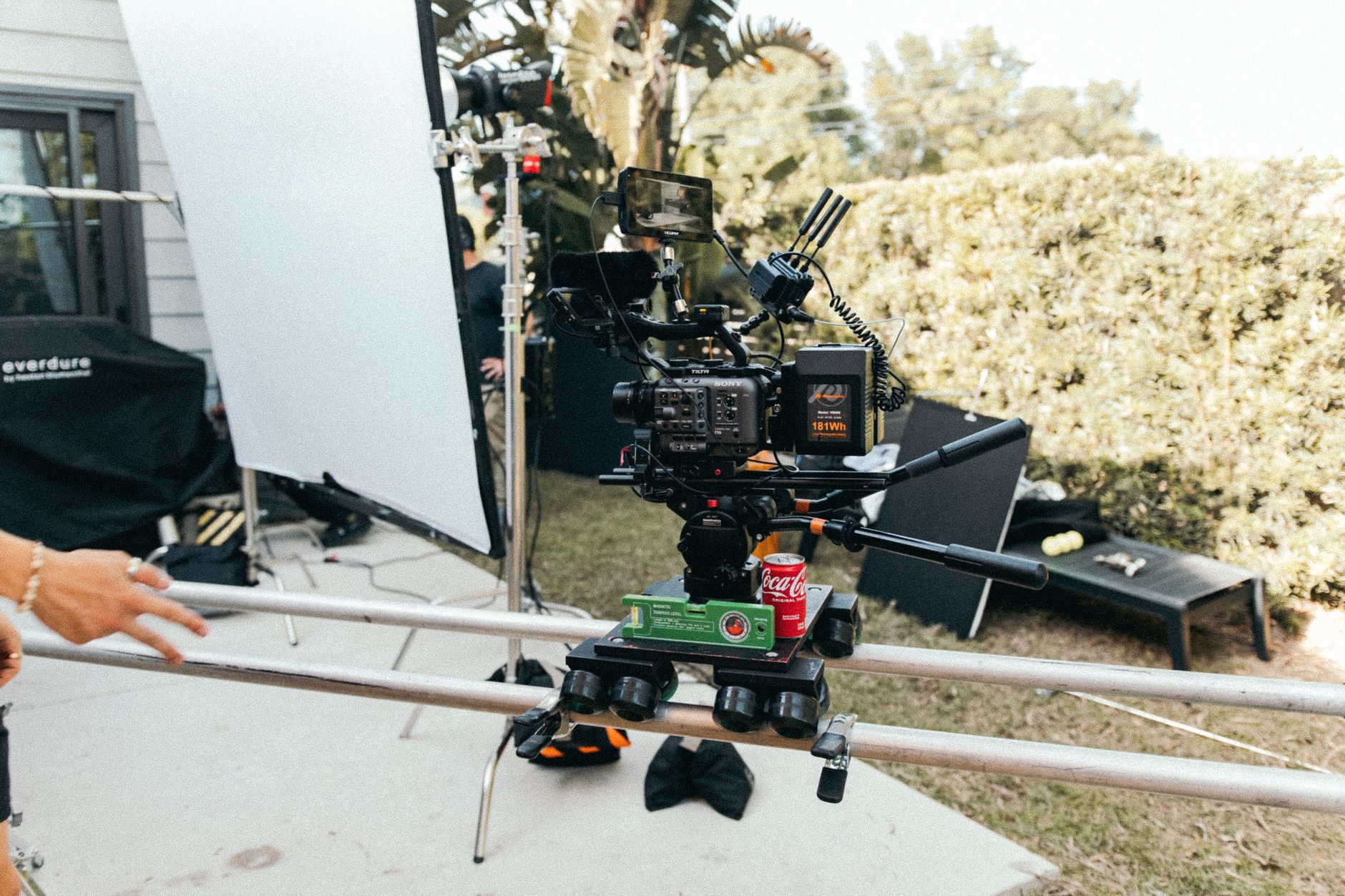
A dolly in film production is a wheeled platform that carries the camera during a shot. It rolls on tracks or the floor to make smooth, deliberate movement.
A crew member pushes the platform while the operator rides and controls the camera. The viewer sees gliding motion rather than steps or shake. Learning to spot it helps you read intent in a scene.
Table of Contents
- How Does a Dolly Shot Feel to Watch?
- What Are the Main Types of Dollies?
- How Is It Different From Other Moves?
- Why Do Directors Choose a Dolly?
- What Limits a Dolly on Set?
How Does a Dolly Shot Feel to Watch?
A push-in moves the camera closer to a subject. It builds focus or tension without cutting. A pull-back moves away and reveals more space.
A lateral move slides sideways alongside action. The motion feels steady and intentional. It holds framing while changing distance or angle. That steadiness tells viewers the move matters to the story.
What Are the Main Types of Dollies?
A track dolly rides on rails laid on the ground. The rails fix the path and remove bumps. Crews use it for straight, repeatable moves.
A doorway dolly has rubber wheels and runs on smooth floors. It can turn freely without rails. Small sliders and motorized carts handle short moves in tight rooms.
How Is It Different From Other Moves?
A dolly moves the whole camera through space. That changes perspective: near objects shift faster than far ones. A zoom only magnifies the image and keeps perspective flat.
Viewers can test the difference by watching the background. If shapes separate and depth opens up, the camera moved. If the frame only grows tighter, it was a lens change.
- Dolly vs. zoom: dolly adds depth, zoom only tightens the frame.
- Dolly vs. handheld: dolly glides, handheld shakes and drifts.
- Dolly vs. stabilizer: dolly follows a fixed path, stabilizer follows the operator.
Why Do Directors Choose a Dolly?
Directors use a dolly to link a character to space. A slow push isolates a decision. A steady pull reveals who else is present.
They also use it to follow action without distraction. The camera stays level while actors walk, talk, or run. That calm frame keeps attention on performance, not movement.
What Limits a Dolly on Set?
A dolly needs space, smooth ground, and time to set up. Stairs, grass, crowds, and tight rooms block rails and wheels. The push also needs a trained grip, meaning a crew member who moves the dolly safely.
Weight and noise matter too. The platform, rails, and riders take room and can creak. When a hallway looks too narrow for rails, watch for a slower handheld or stabilizer move instead.