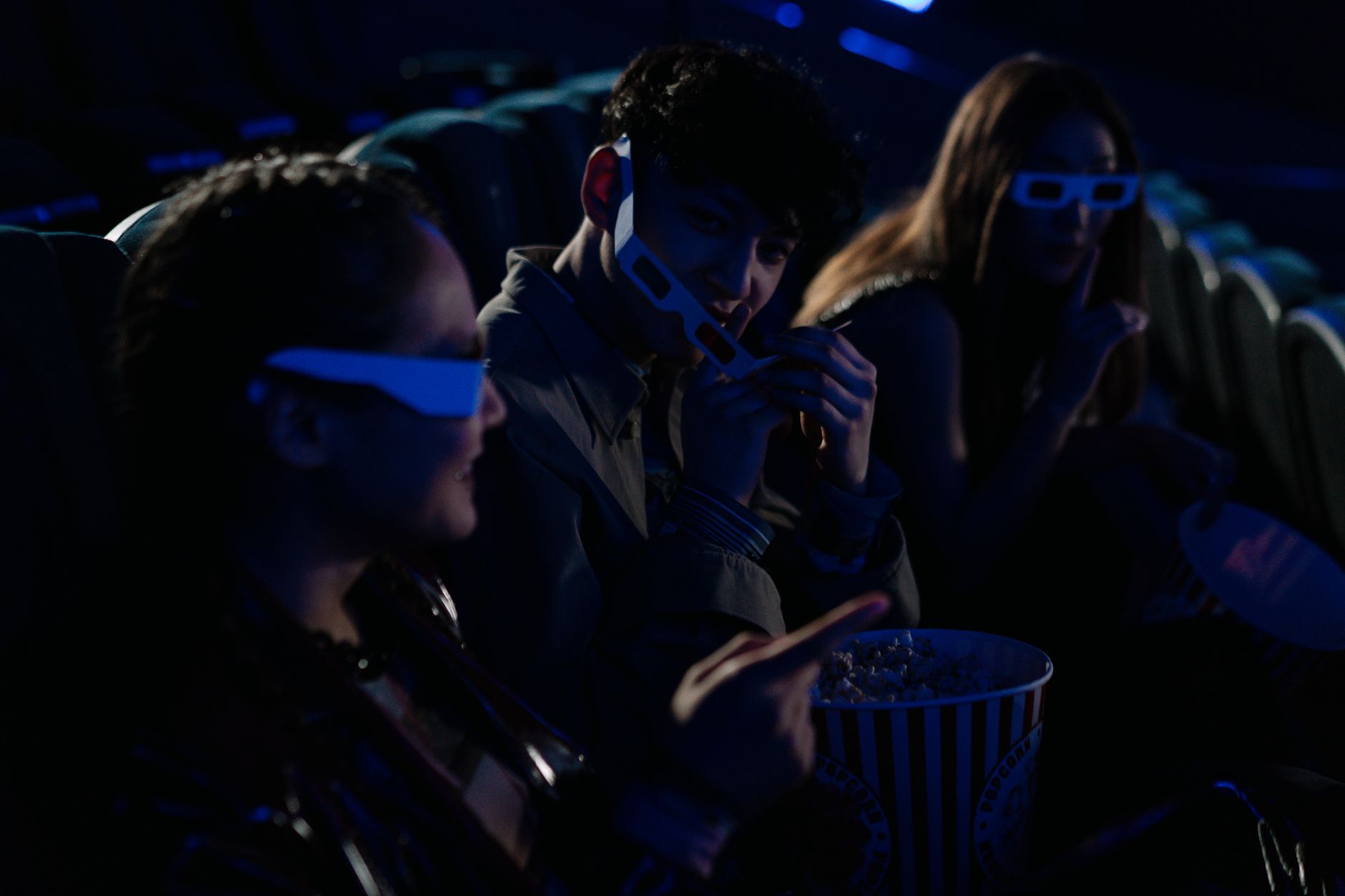
Movie talk and film reviews represent the ongoing conversation between viewers and cinema, where critics and enthusiasts examine what makes films work—or fail—on technical, narrative, and emotional levels. Critical analysis goes beyond simple enjoyment or dismissal; it involves studying how directors use cinematography, how screenwriters construct dialogue, how editors pace scenes, and how all these elements combine to create meaning. When you engage in genuine film criticism, you’re learning to see the decisions behind every frame, from the color palette in a Wes Anderson film to the rhythmic editing in an action sequence by the Russo Brothers.
The value of this kind of analysis lies in its specificity. Rather than saying “The Godfather is a great movie,” critical film talk examines why—how Coppola’s use of warm lighting establishes family intimacy, how the cinematography shifts from constrained interiors to wider spaces as Michael’s moral world expands, how Nino Rota’s score reinforces emotional moments without overshadowing dialogue. This depth transforms passive viewing into active engagement with the medium itself, whether you’re watching a superhero blockbuster or an experimental art film.
Table of Contents
- What Distinguishes Professional Film Criticism from Casual Movie Talk?
- How Different Critical Frameworks Reveal Different Truths About Films
- How Box Office Performance and Critical Consensus Can Diverge
- Building a Personal Critical Vocabulary for Film Analysis
- Common Analytical Biases That Distort Film Criticism
- Genre-Specific Analysis Considerations
- The Fragmentation of Film Criticism in the Streaming and Social Media Era
What Distinguishes Professional Film Criticism from Casual Movie Talk?
Professional film critics and casual viewers both discuss films, but their approaches differ fundamentally in rigor and methodology. A professional critic examines structure, visual language, performance choices, and thematic intent with frameworks built from film history and theory. They might discuss how a film uses negative space or analyze the implications of a casting decision.
Casual conversation, while valuable for sharing enjoyment, often skips these analytical layers in favor of general reactions—”I loved it” or “It was boring.” This distinction matters because it shapes what audiences take away from reviews. When a critic examines the cinematography in Denis Villeneuve’s Blade Runner 2049, discussing Roger Deakins’ use of desaturated colors and geometric framing, readers gain specific visual vocabulary for understanding what they see on screen. Compare this to a social media comment saying “pretty” or “slow”—both are honest reactions, but only one provides tools for deeper comprehension. The limitation here is that professional analysis can sometimes feel inaccessible to general audiences, creating a barrier between expert discourse and mainstream viewership.
How Different Critical Frameworks Reveal Different Truths About Films
Film criticism employs multiple analytical lenses, each illuminating different aspects of a work. Formalist criticism focuses on visual composition, editing, sound design, and technical craft. Narrative criticism examines plot structure, character arcs, and storytelling techniques. Thematic criticism explores the ideas and messages embedded in a film. Auteur theory privileges the director’s consistent vision across their body of work.
Marxist criticism examines class dynamics and economic systems depicted on screen. Feminist film criticism analyzes representation, gaze, and gender dynamics. The problem with relying on a single framework is that you miss crucial dimensions of the film. A purely formalist reading of Parasite might celebrate Bong Joon-ho’s precise framing and editing without addressing the film’s social commentary about class and inequality. Conversely, focusing only on class themes could blind you to the remarkable visual storytelling that communicates those themes. most sophisticated film analysis combines multiple approaches—understanding that form and content are inseparable, and that a film’s technical execution carries ideological weight.
How Box Office Performance and Critical Consensus Can Diverge
Sometimes films that critics praise bomb commercially, while commercially successful films receive mixed or negative reviews. Consider the divergence between Paddington 2, which earned overwhelming critical praise and a 97% on Rotten Tomatoes while remaining a modest commercial performer outside the UK, and Michael Bay’s Transformers: Dark of the Moon, which critics largely dismissed but which grossed $1.1 billion worldwide. These gaps reveal something important: critical analysis and commercial appeal operate on different metrics. Critics evaluate artistic achievement, narrative coherence, and originality.
Audiences seeking pure entertainment prioritize spectacle, star power, and emotional gratification—which aren’t inherently less valid as viewing goals. Understanding this divide prevents false conclusions. A film that underperforms critically but thrives commercially hasn’t been “proven wrong” by the market; it’s simply serving a different audience appetite. The Transformers franchise serves viewers who want visual spectacle and action set pieces, not viewers seeking complex character development or innovative storytelling. Neither audience is wrong—they’re engaging with films for different reasons.
Building a Personal Critical Vocabulary for Film Analysis
Developing your own film analysis skills begins with watching deliberately. Rather than passively consuming films, pause periodically and ask specific questions: Why did the director choose this camera angle? What does this color choice communicate? How does this scene’s pacing affect my emotional response? Over time, you develop a vocabulary for describing what you observe—terms like “shallow focus,” “Dutch angle,” “cross-cutting,” “diegetic sound,” and “visual metaphor” become tools for precise observation. Watch films multiple times, especially those you find challenging or unsatisfying. The second viewing reveals structural patterns and intentional choices you might miss initially.
Read reviews by critics whose sensibilities interest you—not to adopt their opinions wholesale, but to absorb their analytical methods and terminology. Track how established critics justify their interpretations with specific evidence from the film. Consider keeping a film journal where you note technical observations, thematic patterns, and questions about director’s choices. This practice builds analytical muscle memory that eventually becomes second nature.
Common Analytical Biases That Distort Film Criticism
Personal preferences dramatically shape critical analysis, often without conscious awareness. Recency bias leads viewers to overrate recently watched films while undervaluing older work. Nostalgia bias makes critics overestimate the quality of films from their youth. Genre bias causes critics raised on prestige dramas to dismiss genre films as inherently lesser. Casting bias means a beloved or reviled actor can cloud judgment about their actual performance quality.
These biases aren’t flaws in criticism—they’re inherent to how humans process experience—but recognizing them prevents them from masquerading as objective analysis. Be suspicious of absolute statements about film quality. When someone says “This is objectively the best movie ever made,” they’re conflating personal response with universal truth. Film criticism can identify technical mastery, historical significance, and innovative storytelling, but it cannot objectively rank aesthetic experiences. A film that profoundly moves one viewer while boring another isn’t objectively superior or inferior—it’s simply ineffective for that particular viewer. Acknowledging this limitation makes criticism more honest.
Genre-Specific Analysis Considerations
Different film genres demand different analytical frameworks. Analyzing a documentary requires understanding fact-checking and the filmmaker’s editorial choices—what footage did they select, what did they exclude, how do interviews shape the narrative? Analyzing a horror film involves understanding how it generates fear through pacing, sound design, and constraint of information. Analyzing a musical demands attention to how choreography, music, and visual design function as narrative language equal to dialogue.
A critic skilled in analyzing prestige dramas might completely miss what makes a Dwayne Johnson action film effective if they apply the same standards. Consider how critics often undervalue genre entertainment because it prioritizes entertainment value over ambiguity or narrative complexity. A well-crafted heist film like Ocean’s Eleven executes its genre formula with precision and style—the plotting is intricate, the performances are charming, the editing is sharp—yet it rarely generates the critical esteem reserved for films with “important” themes. This reflects bias more than aesthetic judgment; a perfectly executed genre film demonstrates as much craft and intentionality as a literary drama.
The Fragmentation of Film Criticism in the Streaming and Social Media Era
Professional film criticism has transformed dramatically in the past fifteen years. Traditional outlets like print magazines and newspaper film sections have contracted significantly, while digital platforms, YouTube video essays, podcasts, and social media have become primary spaces for film discussion. This democratization means more voices participate in film analysis, but it also means critical standards have become less unified. A YouTube essayist with a million followers influences viewing habits more than a print critic, yet they may apply entirely different analytical rigor.
The rise of long-form video essays as a critical form represents a genuinely new development in film discourse. Creators like Thomas Flight, The Take, and Nerdwriter1 analyze films with sophistication comparable to academic criticism while reaching mass audiences. Simultaneously, Twitter threads and TikTok videos reduce complex analysis to bite-sized takes that prioritize wit over accuracy. Streaming platforms’ algorithm-driven recommendations shape which films enter the cultural conversation, creating hidden gatekeeping where certain films never reach viewers who would appreciate them. Film criticism exists now in a fragmented ecosystem where professional standards coexist with viral takes, where thoughtful analysis competes for attention with hot takes designed for engagement.
- —