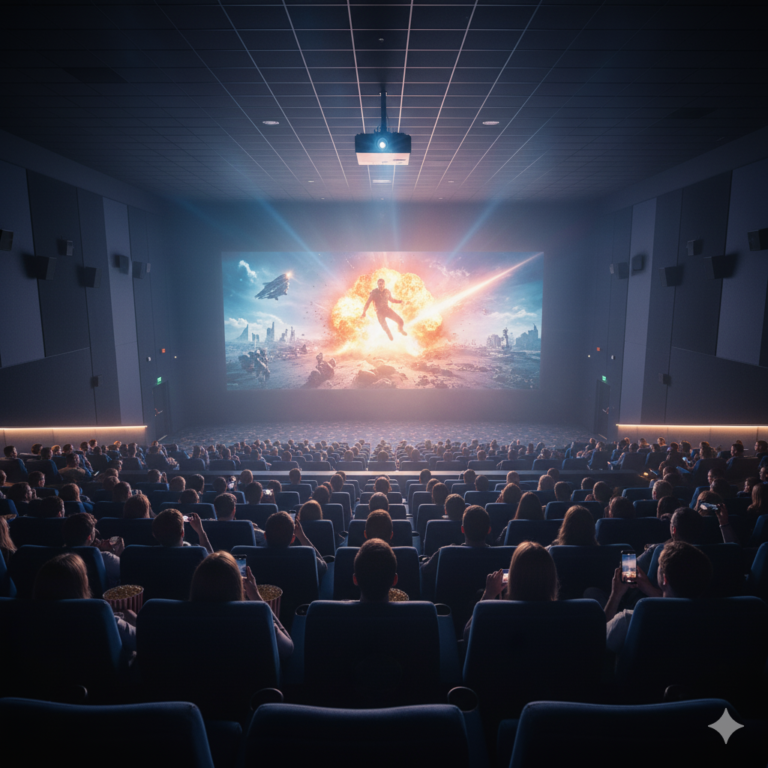
Why viewers struggle to recall standout moments
People often leave a movie, show, or live event remembering the feeling it gave them but unable to name a single clear standout moment. That gap between emotional impression and concrete recall comes from how attention, memory encoding, and later retrieval work together and sometimes work against us.
How attention decides what gets saved
Memory starts with attention: what you notice gets encoded into the brain more strongly than what you ignore. If a scene does not capture attention at the precise moment it happens, the brain may only store a vague sense of it rather than a detailed record. Your attention is limited and constantly shifting, so many potentially memorable beats arrive when you are half-distracted and fail to form a strong memory trace[3].
Emotion focuses memory but not always detail
Strong emotions act like a highlighter for memory: moments that provoke fear, surprise, joy, or disgust are more likely to be rehearsed in the mind and therefore strengthened over time. That is why viewers remember the emotional tone of a story easily[1]. However, emotion tends to strengthen the gist and the feelings around an event rather than precise sensory details, which is why someone might recall being riveted but not the exact line or camera angle that caused it[1].
The forgetting curve and time decay
Even experiences encoded well fade with time unless they are revisited. Memory researchers have shown that retention drops quickly after learning unless the information is rehearsed or reinforced[3]. For a viewer, that means a standout moment can slip away in hours or days if it is not cued, replayed, or discussed.
Interference from similar content
New experiences interfere with older ones. When a viewer watches multiple shows, scenes with similar themes or images can blur together. This interference makes it harder to pick out a single memorable beat later because overlapping elements compete during retrieval.
Context and retrieval cues matter
Remembering is not just about what was stored but about how you try to retrieve it. Specific cues that match the original context—visual details, a song, a place—help pull a moment back into awareness. Without those cues, you may only recover a general impression. Inattentiveness during encoding or a mismatch between encoding context and retrieval cue can even create a false sense of familiarity, like déjà vu, where something feels remembered without a retrievable memory[2].
Narrative focus and expectation shape salience
What creators emphasize and what viewers expect both shape which moments stick. Viewers naturally encode parts of a story that confirm existing expectations or relate to their identity; unexpected or identity-relevant beats get rehearsed more in the mind and so become more accessible later[1]. Conversely, subtle technical feats or clever but quiet moments can be easy to miss and therefore hard to recall.
Physiological and lifestyle effects
Sleep, nutrition, and stress influence how well the brain encodes and consolidates memories. Poor sleep or high stress on the day of viewing can weaken the consolidation process that stabilizes memories, making standout moments less likely to be retained[3].
How collective and social memory shift importance
Social sharing and discussion act as a rehearsal that solidifies selected moments into shared memory. If a clip is widely quoted or reposted, that beat is repeatedly cued and becomes part of cultural memory. Moments that do not get social amplification are at risk of fading even if they were striking in the moment.
Why viewers remember emotions more than specifics
Putting the pieces together, viewers commonly recall the emotional residue of an experience because emotion both captures attention and prompts internal rehearsal[1]. The downside is that those processes favor the broad feeling or narrative theme over the exact lines, images, or technical details that made the beat memorable in the first place.
Practical ways creators and viewers can make moments more recallable
– Make moments attention-commanding at the moment they happen, using contrast or surprise so encoding is stronger[1].
– Provide memorable sensory cues that can be used later for retrieval, like a distinct line, image, or sound.
– Encourage rehearsal through repetition, callbacks, or shareable clips so standout beats get reinforced socially.
– For viewers who want to remember more, use active watching: take notes, pause and replay, or discuss the moment soon after seeing it to strengthen consolidation[3].
Sources
https://www.youtube.com/watch?v=blh24XpiyJE
https://www.britannica.com/science/deja-vu-psychology
https://libguides.bcit.ca/studyskills/memory