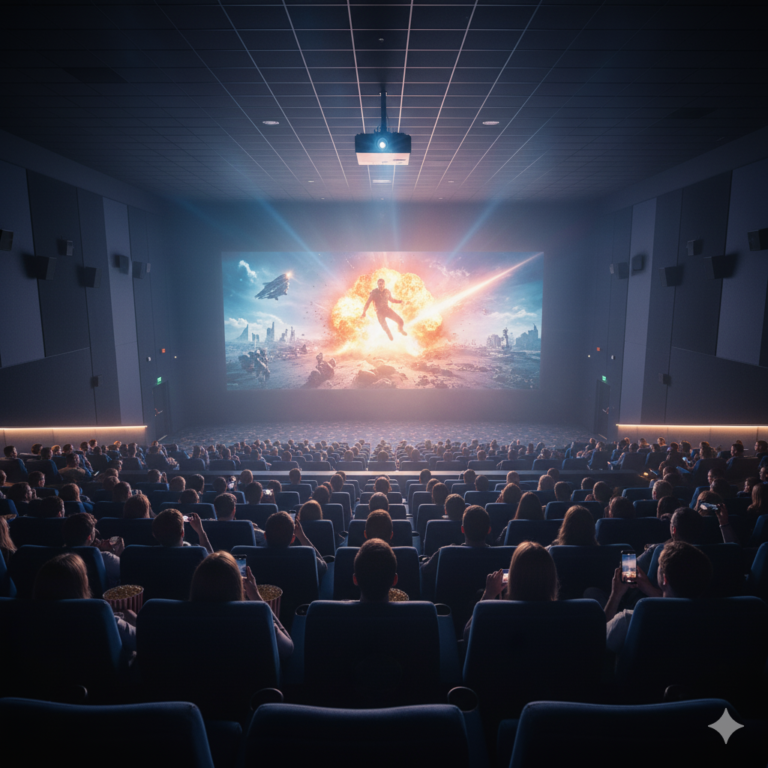
The technology behind Avatar 3, officially titled Avatar: Fire and Ash, pushes the boundaries of visual effects and realism more than ever before, building on the groundbreaking work of the previous films in the series. James Cameron and his team have developed and refined a suite of advanced techniques that combine cutting-edge motion capture, high-resolution rendering, and innovative virtual production methods to create an immersive and lifelike cinematic experience.
One of the key technologies that makes Avatar 3 look so real is the use of **advanced motion capture systems**. These systems capture the actors’ performances with incredible detail, including subtle facial expressions and body movements. Unlike traditional motion capture, which often relies on markers placed on the actors, the Avatar team uses a combination of markerless capture and high-definition facial scanning. This allows for a more natural and nuanced translation of human emotion onto the digital characters, making the Na’vi and other creatures feel truly alive.
In addition to motion capture, the film employs **high-resolution digital rendering** techniques that significantly enhance the visual fidelity of the environments and characters. The rendering process uses powerful computer graphics algorithms to simulate realistic lighting, textures, and materials. This includes complex subsurface scattering for skin, which mimics how light penetrates and diffuses through organic tissue, giving the characters a lifelike translucency. The environments are rendered with meticulous attention to detail, from the intricate foliage of Pandora’s forests to the dynamic water effects that were a highlight in Avatar: The Way of Water.
James Cameron’s team has also embraced **virtual production technologies**, which allow filmmakers to visualize and interact with digital environments in real time during filming. This approach integrates live-action footage with computer-generated imagery on set, enabling directors and actors to see the virtual world as they perform. This real-time feedback loop improves the creative process and helps ensure that the performances and visual effects blend seamlessly.
Another important aspect is the **use of proprietary software and hardware** developed specifically for the Avatar series. These tools optimize the workflow for handling the massive amounts of data generated by the detailed motion capture and rendering processes. The software also supports the complex animation rigs that control the digital characters, allowing animators to fine-tune movements and expressions with precision.
While generative AI technologies have become prominent in visual effects, James Cameron has noted that the Avatar films have been created without relying on generative AI so far. However, there is interest in exploring how AI might be used in the future to improve efficiency and reduce costs in VFX production, potentially enabling even more ambitious projects.
The combination of these technologies results in a film that not only looks visually stunning but also conveys emotional depth and realism. The extended runtime of Avatar 3, which exceeds three hours, reflects Cameron’s commitment to immersive storytelling supported by these technological advancements.
In summary, the realism of Avatar 3 is achieved through a blend of advanced motion capture, high-resolution rendering, virtual production, and custom-developed tools, all orchestrated under James Cameron’s visionary direction to create a cinematic experience that feels more real than ever before[1][2][3].