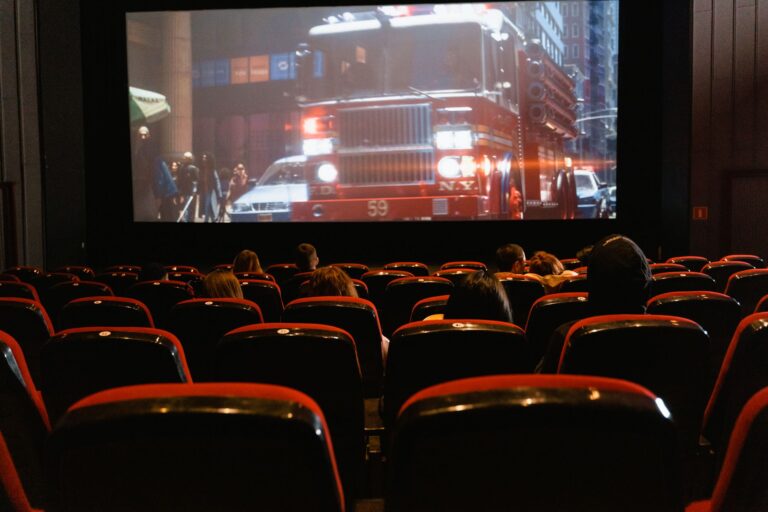
The opening sequence of “The Rock” (1996) is a textbook example of how to establish a military thriller’s stakes in under ten minutes. The sequence follows a team of rogue U.S. Marines led by Brigadier General Francis X. Hummel as they stage a silent assault on Alcatraz Island, systematically neutralizing guards and taking control of the prison.
By the time the sequence ends with Hummel’s team securing the island and its cache of VX nerve gas missiles, the film has established not just the plot mechanics, but the moral complexity that will drive the entire narrative forward. Michael Bay structured this opening to do heavy lifting on multiple fronts simultaneously. Within the first sequence, audiences learn that Hummel is not a conventional villain—he’s a decorated war hero driven by legitimate grievances about abandoned soldiers. The assault itself, shot with clinical precision across Alcatraz’s architecture, demonstrates his military competence and the professionalism of his team. A guard is shot point-blank in the opening moment, the violence sudden and real, setting the tone that this threat carries genuine consequences.
Table of Contents
- How the Prison Assault Establishes Hummel’s Moral Authority
- The Cinematography and Pacing That Define the Opening’s Impact
- Introducing the Rogue Marines Through Tactical Competence
- Visual Storytelling Over Exposition in High-Pressure Scenarios
- The Sound Design and Hans Zimmer’s Score as Narrative Devices
- Stunt Work and Practical Effects in the Prison Assault
- Plot Threads Embedded in the Opening That Resonate Throughout
- Frequently Asked Questions
How the Prison Assault Establishes Hummel’s Moral Authority
The brilliance of opening with the Alcatraz breach rather than with FBI dialogue or exposition scenes is that it allows General Hummel to earn audience sympathy through action. He’s not monologuing about his grievances; he’s executing a mission with a team that clearly trusts him. The sequence shows veterans following orders from a leader they respect, which raises the immediate question: what cause could make decorated soldiers participate in what appears to be terrorism? This tension—between the audience’s instinct to view them as criminals and their clear military discipline—is precisely what the film wants viewers to feel. The guards at Alcatraz, by contrast, are portrayed as ordinary men, some of them reading magazines or playing cards in their guard stations.
Bay deliberately shoots these moments to show their humanity before the violence. When the assault begins, it’s efficient and overwhelming, but not sadistic. Hummel’s team uses stun grenades and suppressive fire rather than gratuitous brutality. This tactical restraint contrasts sharply with action films where the opening villain’s team massacres everyone they encounter without hesitation. Here, the audience is forced to observe a military operation conducted by professionals against unprepared civilians, which complicates rather than simplifies the moral landscape.
The Cinematography and Pacing That Define the Opening’s Impact
Bay’s camera work during the Alcatraz assault is notably grounded compared to his later work. The sequences shot outside the prison use natural light and wide shots to emphasize the isolation of the island and the impossibility of escape or reinforcement. The camera moves through the prison’s corridors with the operatives, using tight framing to create claustrophobia even in an open structure. This creates a significant limitation: viewers who expect the kinetic, fast-cut editing Bay would become famous for in later films may find the opening’s pacing methodical and slow by modern standards. The deliberate rhythm works in the film’s favor, but it does require patience. The editing during the sequence prioritizes spatial clarity. Bay doesn’t cut away from the geography of Alcatraz; instead, he builds a mental map for the viewer so that when the FBI and military respond later, the spatial stakes feel concrete.
A guard is cornered in a recreation yard. The camera pulls back to show his isolation against the expanse of concrete and fencing. Snipers position themselves on the roof’s highest points. Each element of the assault is shown with enough time to register, creating tension through positioning and inevitability rather than through rapid-fire cuts. one technical warning: the opening’s reliance on model work and early CGI for certain wide shots of the island is visible to modern viewers. The digital composite of Alcatraz from certain angles shows the seams of 1996 visual effects, which pulls some viewers out of immersion. However, this is a limitation specific to rewatching the film decades later; contemporary audiences would have accepted these effects without question.
Introducing the Rogue Marines Through Tactical Competence
Each operative in Hummel’s team is introduced not through dialogue but through what they accomplish. A demolitions expert efficiently plants charges. A communications specialist takes over the prison’s intercom system. A marine provides covering fire. By showing what each person does rather than telling viewers who they are, Bay establishes their credibility and commitment. This is a considerable contrast to action films where a villain explains his plan to an assembled team in a briefing scene.
Here, the team already knows the plan; they execute it with precision. Hummel himself moves through the assault with a combination of authority and visible humanity. He checks on wounded guards, ensuring they receive medical attention. He’s not gratuitously cruel, yet he’s entirely willing to use lethal force when necessary. This duality is maintained throughout the sequence without being explicitly stated. A young marine is nervous, and Hummel places a reassuring hand on his shoulder before they advance. These moments of leadership humanize Hummel in a way that makes his subsequent demands for compensation to families of fallen soldiers feel earned rather than like the ranting of a madman.
Visual Storytelling Over Exposition in High-Pressure Scenarios
The opening sequence accomplishes what many action films attempt with painful expository dialogue: it establishes the scope and stakes through pure image. No one explains who Hummel is or why he’s conducting this operation. No one narrates the military significance of the VX gas missiles. Instead, the sequence shows soldiers moving with purpose, securing a fortress, and achieving their objective. The audience infers competence, preparation, and serious intent without a single sentence of dialogue explaining any of it. Compared to the opening of a film like “Die Hard,” where John McClane narrates his thoughts and backstory, “The Rock” trusts viewers to read the situation.
Die Hard’s approach isn’t wrong—it creates character intimacy through McClane’s voice. But it also relies on exposition. The Rock’s approach creates tension through ambiguity. Viewers don’t need to know Hummel’s background to understand that this operation is military in nature, coordinated, and dangerous. The tradeoff is that the opening is less personal; we’re watching from a distance rather than experiencing events through a protagonist’s perspective. This distance is intentional, serving the film’s structure of eventually bringing FBI interpreter Nicolas Cage and rogue ex-Marine Sean Connery into conflict with Hummel.
The Sound Design and Hans Zimmer’s Score as Narrative Devices
Hans Zimmer’s score for the opening avoids typical action-film bombast. Instead, it’s tense and minimal, with sparse percussion and electronic elements that mirror the precision of the operation. The score builds anticipation without overwhelming the sound of the environment—the footsteps of soldiers, the clink of gear, the static of radios. This restraint in the music creates a limitation that some viewers find unsatisfying: there’s no triumphant or aggressive main theme accompanying Hummel’s team. The score doesn’t celebrate their competence; it emphasizes the coldness and danger of their mission.
The sound design of the assault itself is meticulous. Suppressed gunshots have a specific character, distinct from unsuppressed fire. Stun grenades create a particular pitch and echo in the concrete corridors. The radio chatter is layered beneath the action, providing tactical communication that viewers can partially hear but not fully understand. This creates a documentary-like quality, as if recording actual military operations. A warning for sound design enthusiasts: the 1996 theatrical sound mix is significantly more effective than the later 5.1 home video mix, which flattens some of the spatial precision that makes the original assault sequence so immersive.
Stunt Work and Practical Effects in the Prison Assault
The Alcatraz sequence was shot on location and used practical stunt work for much of the assault. Marines were suspended from the prison’s exterior cliffs using real rope systems. Explosions were practical charges detonated on the island itself. A guard falls from a height—a real stunt performer descended via cable, with the impact absorbed by safety rigging that isn’t visible in the final cut. This commitment to practical execution gives the sequence weight and physical reality that purely digital action sequences often lack.
One specific example: a marine descends the prison’s wall using a rope system while maintaining suppressive fire with his rifle. The stunt performer had to manage both the physical demands of the descent and the timing of the blanks being fired from the rifle. Any hesitation or misalignment would have been visible. The fact that the shot holds without obvious safety devices or cuts emphasizes the risk and training involved. These practical details, while invisible to casual viewers, contribute to the sequence’s credibility and tension.
Plot Threads Embedded in the Opening That Resonate Throughout
The VX gas missiles that Hummel’s team secures are established in the opening as the central McGuffin of the narrative. Viewers see the weapons, understand their significance, and recognize why their possession becomes a matter of national security. This is efficient storytelling—the audience doesn’t need a scientist to explain why VX is terrifying; the military response to its theft does that work. Later conflicts between Cage’s character, Connery’s character, and various military figures all stem from this single fact established in the opening.
The opening also establishes the composition of Hummel’s team in a way that becomes relevant to the film’s middle and end. A sharp-eyed viewer can count the operatives, note their roles, and anticipate which members might become plot points. When casualties occur later, they have weight because the opening identified these as competent, disciplined soldiers rather than faceless henchmen. The specific layout of Alcatraz Island, learned during the assault, becomes crucial to the final confrontation. Nothing in the opening is wasted; every architectural detail, every guard position, every tactical choice has implications for what follows.
Frequently Asked Questions
How much of the Alcatraz opening was shot on location?
The production filmed extensively on Alcatraz Island itself, using practical stunt work and real explosives for much of the sequence. Some wide shots were augmented with model work and early visual effects, but the majority of the assault was executed practically.
Why does the opening focus on Hummel’s competence rather than establishing him as a villain?
Bay intentionally complicates the narrative by making Hummel a sympathetic antagonist. By showing his military discipline and restraint, the film creates moral ambiguity—he’s pursuing an unjust cause through criminal means, but he’s not a cartoon villain.
What role does the opening play in the rest of the film’s structure?
The opening establishes the stakes, the location, the MacGuffin (the VX gas missiles), and the question that drives the narrative: how will the FBI and military contain a highly trained military team that has already proven its competence and access to weapons of mass destruction?
How does the opening compare to typical action-film preambles?
Most action films either open with a character introduction or a prologue that’s disconnected from the main plot. “The Rock” opens with the inciting incident itself, forcing audiences into the heart of the conflict immediately.
Is dialogue used effectively in the opening sequence?
The opening is nearly dialogue-free, relying on visual action and sparse radio chatter to convey information. This creates a documentary-like quality and forces viewers to read the situation rather than having it explained.
What was the budget allocated specifically to the Alcatraz assault?
While the production’s total budget was approximately $75 million, the exact allocation to specific sequences was never publicly disclosed. However, the location shooting, stunt work, and practical effects required significant resources.