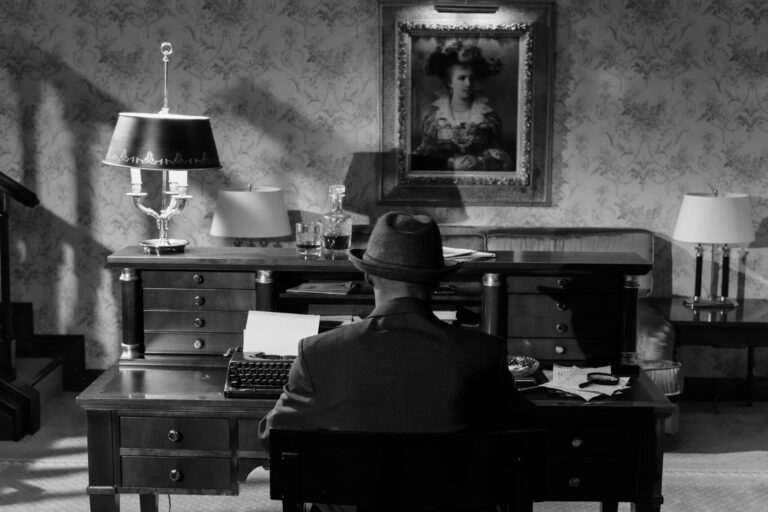
The opening scene of *Spotlight* (2015) depicts a 1976 incident at Boston Police District 11, where a distraught mother arrives to report that her children have been sexually abused by Father John Geoghan, a Catholic priest. Within minutes, a district attorney enters the police station and verbally instructs the officers present—both senior and junior ranks—to keep the incident confidential and prevent any media disclosure. The complaint is effectively silenced through institutional pressure, and no formal charges are filed. This seven-minute prologue establishes the film’s central thesis: that the suppression of abuse within the Catholic Church was not accidental, isolated, or driven by individual actors alone, but rather a deliberate, systemic practice that had been operational for decades.
The scene does not show a dramatic confrontation or explicit threats. Instead, it shows something quieter and more insidious—the casual exercise of institutional power to make a problem disappear. A single phone call from the church ensures the priest’s release. A few quiet words from the DA ensure the mother’s complaint vanishes from the record. By the time the title card appears and the film jumps forward to 2001, the viewer understands that the *Spotlight* team’s investigation will not be uncovering a recent scandal, but rather excavating the machinery of cover-up that had functioned with near-perfect efficiency for a quarter-century.
Table of Contents
- Why Does Spotlight Open in 1976, Not 2001?
- How the Scene Depicts Institutional Silencing in Real Time
- Father John Geoghan and the Real Historical Pattern
- How the Opening Establishes the Film’s Central Narrative Problem
- The Thematic Weight of Institutional Pressure
- The Troubled Police Officer and Institutional Complicity
- The 1976 Scene as Proof of Systemic Suppression, Not Individual Failure
Why Does Spotlight Open in 1976, Not 2001?
Director Tom McCarthy uses the 1976 opening to answer a question the audience hasn’t yet asked: How did this happen for so long? By beginning a quarter-century before the investigation, *Spotlight* shows that institutional abuse was not a bug in the system—it was the system working as intended. The 1976 scene is a historical witness statement. It proves that church officials, police, and prosecutors all knew what was happening and actively chose to shield it. This framing separates *Spotlight* from the typical investigative thriller, where reporters uncover a hidden crime. Here, the crime was never hidden from the people with power to stop it.
The 1976 opening makes clear that the *Spotlight* team’s 2001 investigation is not about discovering something new, but about breaking a chain of institutional silence that had been deliberately maintained by people across multiple institutions. It’s the difference between solving a mystery and exposing a conspiracy. The historical distance also matters. By 1976, Father Geoghan’s pattern of abuse had already begun, and the church hierarchy already knew. The opening doesn’t show the beginning of a priest’s misconduct, but the beginning of the cover-up machinery. This distinction is crucial: the film is about institutional response, not individual pathology.
How the Scene Depicts Institutional Silencing in Real Time
The power of the opening lies in its procedural clarity. We watch, step by step, how a complaint becomes a non-incident. A mother walks into a police station—a public space, a place nominally designed to protect citizens. Within the span of a few minutes, her report is effectively erased. The district attorney doesn’t arrest the priest or open an investigation. He instructs officers to ensure the incident remains confidential.
What makes this scene threatening is its ordinariness. No one raises their voice. There are no dramatic confrontations. The DA speaks as if this is routine procedure, which, for the networks of power protecting the church, it was. The police officers comply not because they’ve been explicitly threatened, but because they understand the social order they inhabit: certain people have the power to make things disappear, and certain institutions are protected from scrutiny. A critical limitation of the opening, though, is that it shows only one incident—the viewer sees one child abuse complaint being silenced, not the full scope of Father Geoghan’s offenses or the many other priests involved in the scandal. The scene is illustrative rather than comprehensive, which is appropriate for an opening, but it means the audience doesn’t yet grasp the scale of what remained hidden.
Father John Geoghan and the Real Historical Pattern
The opening scene is not fictional. Father John Geoghan was a real Boston priest who became central to one of the earliest major Catholic abuse scandals in the United States. By the time the *Spotlight* team began investigating in 2001, Geoghan had abused children across multiple Boston parishes for decades. The 1976 opening depicts the actual historical pattern: institutional officials knew about Geoghan’s abuse years before the public ever did, and they moved him between parishes rather than removing him from ministry.
Geoghan’s case is significant precisely because it shows how institutional knowledge, institutional silence, and institutional transfers enabled one priest to harm dozens of children across a span of years. The 1976 opening in *Spotlight* captures the moment when that silence was enforced—when a mother’s report was turned away not because no one in authority believed her, but because the people in authority had decided that protecting the institution mattered more than protecting children. By grounding the opening in Geoghan’s actual history, the filmmakers ensure that the viewer understands *Spotlight* as not just a procedural drama, but a historical reckoning with a real institution’s real choices. The opening is not invented conflict; it is documented institutional failure.
How the Opening Establishes the Film’s Central Narrative Problem
The 1976 scene does something that most investigative journalism films do not: it reveals the obstacles before the investigation begins. The *Spotlight* team in 2001 is not just digging into files or interviewing sources. They are trying to crack open an institutional system that has spent twenty-five years perfecting the art of concealment. Every archive they need to access has been locked down. Every official they interview has been trained to say nothing. This opening makes the film’s investigative challenge clear: the team is not searching for a hidden crime, but for evidence of a deliberate policy.
They need to prove that the church’s hierarchy knew about the abuse and systematically chose to move abusers rather than defrocking them. That’s much harder to prove than catching someone committing a crime. It requires documents, corroboration, and the willingness of victims to speak publicly—all of which the institutional machinery had been designed to prevent. The 1976 opening also establishes a practical tradeoff that haunts the entire investigation. The *Spotlight* team must publish a story large and credible enough to overcome decades of institutional denial and media blindness. If they publish something incomplete or can’t prove the systematic nature of the cover-up, the story remains just another scandal, easily dismissed. The opening makes clear that partial truth is not enough.
The Thematic Weight of Institutional Pressure
What separates the 1976 opening from a typical police procedural scene is that the scene depicts not law enforcement doing its job, but law enforcement deferring to institutional power. The district attorney’s instruction to keep the complaint confidential is not a criminal act—it’s an exercise of prosecutorial discretion that operates in the shadows of the criminal justice system. No law is broken. No threats are explicitly made. The machinery of silence runs on its own. This scene establishes a theme that recurs throughout *Spotlight*: institutional actors often do not need to be ordered to suppress truth.
They understand the hierarchy they serve and act accordingly. The police officers keep silent not because they fear the district attorney, but because they live in a world where the Catholic Church has immense social and political power in Boston. The DA doesn’t need to threaten anyone; he simply needs to make his priorities clear. A key limitation of the opening is that it shows only what happened to one complaint. The viewer doesn’t see how many other complaints were similarly suppressed, or how the church’s local power was deployed across other jurisdictions. The opening is a single, devastating example, but it leaves the scale of the suppression to be revealed over the course of the film.
The Troubled Police Officer and Institutional Complicity
Among the police officers present in the 1976 scene is a troubled-looking officer who witnesses Father Geoghan’s arrest and subsequent release due to church pressure. This officer is shown registering the outcome—a priest arrests and then quietly freed—but the character does not reappear in the film. His presence in the opening serves a specific purpose: to show that someone within the system sees the injustice, but the system’s mechanisms ensure that individual conscience has nowhere to go.
This officer represents a kind of institutional powerlessness. He may recognize that something wrong has just occurred, but the social order around him operates in a way that makes his objection irrelevant. The church pressure that freed Father Geoghan operates through channels—the DA’s office, the police hierarchy, the broader Catholic networks in Boston—that are not accessible to a single officer with doubts. His troubled expression acknowledges the system’s injustice, but the scene confirms that acknowledgment changes nothing.
The 1976 Scene as Proof of Systemic Suppression, Not Individual Failure
By 2001, when the *Spotlight* team begins its investigation, the official explanation for the abuse within the Boston diocese was that a few priests had acted inappropriately, and the church had dealt with them. The 1976 opening demolishes this narrative. It shows, in real time, how institutional actors at every level—police, prosecutors, church hierarchy—worked together to ensure that abuse remained hidden and abusers remained in position to harm children. The opening proves that what *Spotlight* will later document through interviews, documents, and archival research was already visible to authorities decades earlier.
The suppression was not an oversight or a mistake. It was institutional policy. This distinction matters because it transforms the investigation from a search for criminal wrongdoing into an accounting of institutional choice. The *Spotlight* team is not exposing a scandal that occurred in the dark. They are exposing a scandal that was willfully maintained in the light, by officials who had the power and information to stop it.
- —