Saving Private Ryan’s opening scene is brutally, almost disturbingly realistic—so much so that the Department of Veterans Affairs set up a toll-free hotline for WWII veterans who experienced PTSD after watching the film. D-Day survivors praised the Omaha Beach sequence as the most authentic depiction of combat they’d ever seen on screen.
- Saving Private Ryan: Table of Contents
- Why WWII Veterans Called It the Most Realistic Combat Ever Filmed
- How Spielberg Created Visual and Sensory Authenticity Through Practical Effects and Camera Work
- The Military Expertise Behind Every Detail
- The Cast's Grueling Preparation Through Military Boot Camp
- The Known Inaccuracies—Where Dramatic Necessity Overrode History
- The Historical Reality of D-Day That the Film Represents
- How Spielberg's Approach Changed War Cinema Permanently
- Conclusion
- You Might Also Like
Director Steven Spielberg didn’t achieve this realism through accident or artistic intuition alone; he methodically reconstructed the conditions, sounds, and visceral horror of amphibious assault through meticulous research, military consultation, practical effects, and an uncompromising creative vision that prioritized authenticity over comfort.
This breakdown examines how Spielberg and his team transformed the opening 27 minutes into a historically grounded experience that still resonates as the gold standard for war cinema authenticity.
We’ll explore the techniques that created the illusion of realism, the military expertise that informed the details, how the cast prepared for their roles, and where the film’s dramatic needs led it to diverge from historical fact.
Table of Contents
- Why WWII Veterans Called It the Most Realistic Combat Ever Filmed
- How Spielberg Created Visual and Sensory Authenticity Through Practical Effects and Camera Work
- The Military Expertise Behind Every Detail
- The Cast’s Grueling Preparation Through Military Boot Camp
- The Known Inaccuracies—Where Dramatic Necessity Overrode History
- The Historical Reality of D-Day That the Film Represents
- How Spielberg’s Approach Changed War Cinema Permanently
- Conclusion
Why WWII Veterans Called It the Most Realistic Combat Ever Filmed
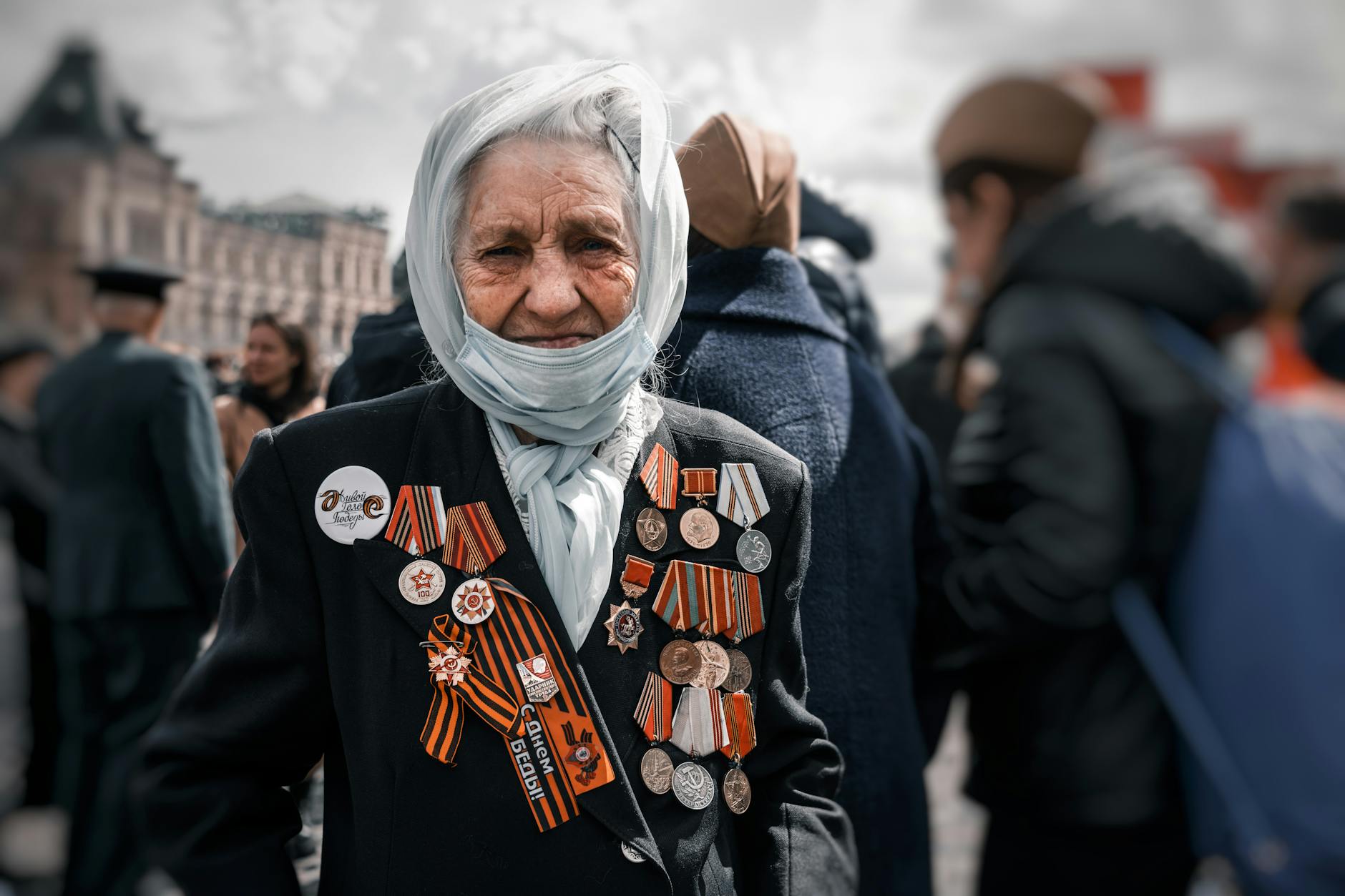
D-Day survivors were the film’s ultimate arbiters of authenticity, and their response was overwhelming.
Veterans who had lived through the actual Omaha Beach landings on June 6, 1944 recognized something in Spielberg’s opening that no previous war film had captured: the disorientation, the noise, the randomness of who lived and who died.
Some found the experience so close to their own trauma that they had to leave theaters. The Veterans Affairs response—establishing a dedicated hotline—acknowledged that the film was triggering genuine PTSD symptoms in men who thought they’d processed their trauma decades earlier.
This wasn’t nostalgia or sentimentality from aging veterans. These were men who had been there, who had waded through water thick with blood, who had watched their friends disappear under machine-gun fire. Their validation carried weight that no film critic could match.
When a veteran who survived Omaha Beach says a movie got it right, they’re not comparing it to other films—they’re comparing it to their own terrifying memories. Spielberg understood this, and it drove his entire approach to the opening sequence.
How Spielberg Created Visual and Sensory Authenticity Through Practical Effects and Camera Work
Spielberg’s commitment to practical effects over CGI—which was already technologically feasible in 1998—proved crucial to the opening’s visceral impact. He hired amputee actors to play wounded soldiers, ensuring that the missing limbs on screen were real, not digitally rendered. The blood, sand, and water on the beach were genuine materials, not computer graphics.
Fake blood was deliberately splattered on the camera lens during takes, creating a nauseating immediacy that no amount of post-production could replicate. The camera itself became a character in the chaos.
Shot at ground level, the perspective forces viewers into the soldier’s vantage point—not hovering above the battle, but embedded in it, seeing only what someone crawling through sand and water could see.
This wasn’t a stylistic flourish; it was based on actual combat cameramen’s angles from WWII newsreel footage. Spielberg also employed handheld camera techniques that created a documentary-like quality, avoiding the polished stability that would have created emotional distance.
The result is that viewers don’t watch the opening; they experience it from inside the terror. However, this commitment to ground-level realism meant Spielberg had to sacrifice some of the battle’s actual scope.
The real Omaha Beach assault involved thousands of men, elaborate strategy, and coordination across multiple zones. The film compresses this into a more intimate, claustrophobic narrative that prioritizes emotional truth over geographical accuracy.
The Military Expertise Behind Every Detail
Retired USMC Captain Dale Dye, who served 21 years and saw combat in Vietnam and Lebanon, led the production as military advisor.
Dye wasn’t a consultant who reviewed scripts in an office; he was embedded in the filmmaking process, ensuring that everything from how soldiers held rifles to how they moved under fire reflected actual combat protocol. His credibility came from lived experience, not theoretical knowledge.
Spielberg also hired uncredited writers Frank Darabont and Scott Frank to rewrite scenes specifically based on military interviews and extensive research into D-Day accounts. The sound design deserves particular attention.
Every M1 Garand rifle in the film produces the accurate “ping” of ammunition clips ejecting—a distinctive sound that any WWII soldier would instantly recognize. The cacophony of overlapping explosions, shouted orders, and screaming wounded was built from extensive audio research, not generic Hollywood combat ambience.
When a soldier yells an order and it’s muffled because another character can’t hear over the noise, that reflects the actual auditory chaos of combat, where communication collapses under the assault of sound. The film also captures specific tactical realities.
Charlie Company’s experiences—including the seasickness soldiers suffered in landing craft, the initial heavy casualties that decimated the unit, and the difficulty of linking up with other units on the chaotic beach—all track with historical accounts.
Spielberg understood that authenticity wasn’t just about blood and gore; it was about depicting how soldiers actually felt and experienced the invasion.

The Cast’s Grueling Preparation Through Military Boot Camp
Before a single frame was shot, Spielberg put his cast through a 10-day boot camp led by Dale Dye.
This wasn’t theatrical training or a costume fitting; it was a genuine military preparation that included sleeping rough in wet conditions, eating limited field rations, dawn physical training, weapons training, and the psychological discomfort of following orders from a former Marine. Actors weren’t coddled between takes.
The experience was designed to create muscle memory and emotional exhaustion that would translate authentically to the screen.
This preparation revealed the difference between acting combat and having been through something proximity-adjacent to combat. Actors who participated reported that the boot camp fundamentally changed how they approached their roles. They understood now what it meant to be cold, hungry, and terrified. They had experienced the physical exhaustion that real soldiers felt.
Tom Hanks has spoken about how this preparation, particularly the weapons training and the constant disorientation of the boot camp, shaped his performance of Captain Miller as a man trying to maintain authority while barely holding himself together.
The Known Inaccuracies—Where Dramatic Necessity Overrode History
Despite its reputation for realism, the film contains deliberate historical inaccuracies that deserve acknowledgment. Most significantly, the opening sequence shows bullets killing soldiers underwater when they’re fully submerged—a Hollywood trope that doesn’t reflect actual ballistics. Bullets lose velocity rapidly in water and rarely kill at depth.
Real soldiers died on Omaha Beach, but not primarily from bullets penetrating water. The film also omits British coxswains who actually steered American landing craft toward the beach and directed traffic.
This erasure wasn’t accidental; it was a narrative choice to focus exclusively on American experience and American command structures. Similarly, the film incorrectly suggests that no American armor reached Omaha Beach, when in fact tanks did make it ashore, though many were lost in the approach.
The battle sequence itself is dramatically compressed; the real fighting at Omaha lasted longer and involved more complex tactical movements than the film portrays. These inaccuracies matter not because they invalidate the film’s authenticity, but because they remind us that “realism” in cinema is always a construction.
Spielberg and his collaborators made deliberate choices about which realities to depict and which to simplify, omit, or dramatize. The opening scene is more authentic than any previous war film, but it remains a film—shaped by narrative requirements, character arcs, and the director’s thematic intent.
The Historical Reality of D-Day That the Film Represents
To understand what makes the opening scene remarkable, it helps to know the actual scale of the D-Day invasion on June 6, 1944. A total of 133,000 troops landed across five beaches: UTAH, OMAHA, GOLD, JUNO, and SWORD. The Americans were responsible for UTAH and OMAHA; the British and Canadians handled the others.
Overall D-Day casualties across all forces totaled approximately 10,300, with American casualties at roughly 6,000. At Omaha Beach specifically, where Spielberg’s opening is set, American forces suffered over 2,000 casualties—nearly 30 percent of the American troops involved in that landing zone.
The invasion’s logistical scope was staggering. By June 30, 1944, just three weeks after D-Day, the Allies had landed over 850,000 men, 148,000 vehicles, and 570,000 tons of supplies in Normandy.
The film’s opening focuses on a single landing zone and a single company, but this narrow perspective actually serves the authenticity better than attempting to show the entire invasion. Real soldiers experienced D-Day as chaos at their immediate level—they didn’t know what was happening on the other beaches or understand the larger tactical picture.
Spielberg’s tight focus replicates that fragmented reality.
How Spielberg’s Approach Changed War Cinema Permanently
Saving Private Ryan fundamentally altered how war is depicted in cinema. Before 1998, most war films, even well-regarded ones, maintained a certain aesthetic distance from violence. Spielberg collapsed that distance. The opening 27 minutes became the new standard against which all subsequent war films would be measured.
Directors like Oliver Stone, Christopher Nolan, and Denis Villeneuve have acknowledged the influence of Spielberg’s approach, though few have matched its unflinching commitment to depicting combat as visceral, disorienting, and morally messy. The film’s cultural impact extended beyond cinema.
It influenced how historical documentaries approached D-Day, how museums presented the invasion, and how subsequent generations understood the cost of amphibious assault. By proving that audiences would sit through an extended, non-glorifying depiction of warfare—that spectators didn’t need rousing music or inspirational speeches to stay engaged—Spielberg created permission for other filmmakers to take similar risks.
The opening scene’s reputation has only grown in the 25+ years since release, as it remains the most widely referenced standard for authenticity in war filmmaking.
Conclusion
Saving Private Ryan’s opening scene achieves its legendary realism through a combination of practical effects, military expertise, historical research, and directorial vision. The film isn’t entirely historically accurate—it contains inaccuracies born of dramatic necessity and narrative choices.
However, it captures something more important than checklist authenticity: it conveys the sensory, psychological, and moral reality of amphibious assault as experienced by the men who lived it.
That D-Day veterans recognized themselves in the film, even though recognition triggered trauma, stands as the highest possible validation. The opening sequence remains essential viewing for understanding both cinema and history.
It demonstrates that spectacle isn’t required for emotional impact, that authenticity can be more powerful than dramatization, and that respect for historical reality can coexist with storytelling.
For anyone interested in how films shape our understanding of history, or how cinema can achieve both accuracy and truth, Spielberg’s approach to this 27-minute opening offers a masterclass in the craft of documentary realism within fiction filmmaking.
You Might Also Like
- Why The Saving Private Ryan Opening Scene Became Iconic
- Saving Private Ryan Opening Scene Real Events Compared
- Saving Private Ryan Opening Scene Impact On War Movies