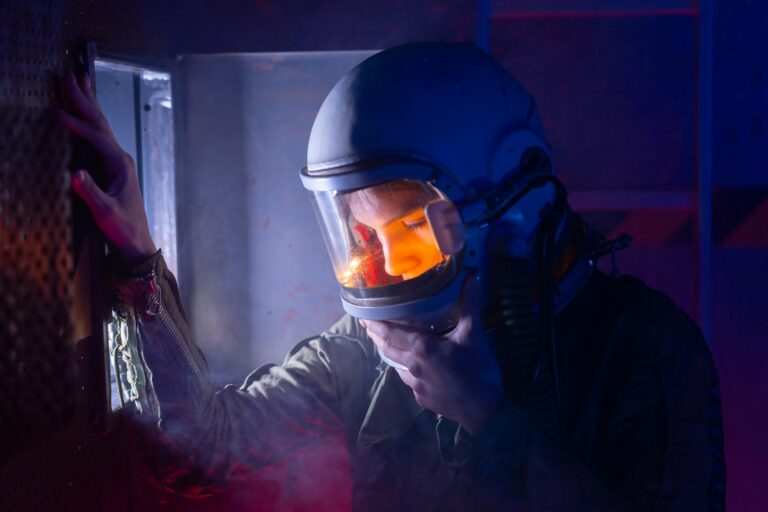
The climax of “Paul” (2011) takes place at Devil’s Tower, where the alien protagonist arranges to be picked up by his people in a dramatic confrontation with government agents. This moment marks the film’s emotional and narrative peak, combining science fiction spectacle with genuine character development. The scene works because it forces Paul to make a final sacrifice for his friends while simultaneously demonstrating the extraordinary powers that define him as an alien being.
The climax serves as the emotional resolution to the unlikely friendship between Paul and the two comic book enthusiasts Graeme and Clive, played by Nick Frost and Simon Pegg. Rather than focusing purely on an alien escape narrative, the filmmakers made the deliberate choice to center the ending on Paul’s realization that his connection with humans has fundamentally changed who he is. This thematic underpinning elevates the climax from a simple sci-fi action sequence to a moment of genuine sacrifice and mutual transformation.
Table of Contents
- Why Devil’s Tower Becomes the Final Battleground
- Paul’s Devastating Injury and the Healing Demonstration
- The Thematic Transformation of All Three Characters
- How Paul’s Climax Differs from Standard Alien-Contact Films
- The Cost of Loyalty and Friendship
- The Spaceship Arrival and Final Moments
- The Transformation of Graeme and Clive’s Worldview
Why Devil’s Tower Becomes the Final Battleground
Devil’s Tower functions as more than just a dramatic location in the Paul climax—it represents neutral ground where the alien can make his final stand. The formation’s iconic status in UFO folklore makes it the logical destination for an alien pickup, grounding the film’s fantastical premise in real-world mythology and cultural touchstones. The choice reflects the filmmakers’ understanding that audiences connect more strongly with landmarks they recognize, making the alien departure feel both epic and emotionally grounded.
The standoff at Devil’s Tower creates the central tension of the climax sequence. Government agents corner Paul and his friends, creating a situation where escape seems impossible without external intervention. This setup mirrors classic siege narratives where characters must hold their ground until rescue arrives, but the twist is that Paul’s rescue comes from space rather than from conventional sources. The location transforms into a pressure cooker where all the film’s various antagonistic forces—government conspiracy, religious extremism, and personal betrayal—converge simultaneously.
Paul’s Devastating Injury and the Healing Demonstration
The most shocking moment of the climax occurs when Paul sustains a severe injury while protecting his friend Graeme from government gunfire. This injury serves a dual narrative purpose: it demonstrates Paul’s willingness to die for his human friends, and it sets up the revelation of his most powerful ability. The injury isn’t played for cheap drama; instead, it functions as a genuine turning point where the tone of the film shifts from comedy toward something more poignant and serious.
Paul’s healing ability represents the most direct expression of his alien superiority, yet the demonstration nearly kills him in the process. This limitation is crucial to understand—Paul’s powers are not infinite, and using them to heal himself carries genuine risk and cost. The healing scene creates a moment of vulnerability that contrasts sharply with the jokes and irreverent humor that have defined much of the film up to that point. Audiences watching Paul struggle through his own regeneration process experience a visceral sense of how much this act of salvation takes from him, making his decision to perform it all the more meaningful.
The Thematic Transformation of All Three Characters
The climax’s emotional weight derives from Paul’s revelation that his time with Graeme and Clive has changed him as profoundly as he has changed them. This mutual transformation separates the film from standard alien-contact narratives where the alien remains fundamentally separate from human experience. Paul’s acknowledgment that his friends have altered his perspective and priorities reframes the entire story as one about cross-species friendship rather than alien infiltration or conspiracy.
Graeme and Clive’s journey from cynical fanboys to people willing to risk everything for their alien friend creates the emotional stakes that make Paul’s eventual departure genuinely painful. The climax forces both characters to confront what matters most to them—not comic books or pop culture references, but authentic human connection. Paul’s departure undercuts the typical Hollywood ending where friendship conquers all obstacles; instead, the film acknowledges that sometimes caring about someone means letting them go, even when that means permanent separation.
How Paul’s Climax Differs from Standard Alien-Contact Films
Most alien-contact films treat the arrival of extraterrestrial life as either a threat requiring military response or a spiritual event requiring philosophical acceptance. “Paul” distinguishes itself by treating the climax as a personal goodbye rather than a civilization-altering event. The government agents pursuing Paul aren’t part of some grand conspiracy to prevent alien disclosure—they’re fundamentally incompetent bureaucrats whose interference creates collateral damage rather than preventing catastrophe.
This comedic undercut to the typical alien-contact thriller gives the climax a distinctive tone. The spaceship’s arrival at Devil’s Tower lacks the apocalyptic grandeur audiences might expect from a major science fiction film. Instead of a massive vessel blocking out the sky or overwhelming light displays, the pickup is relatively understated, which makes Paul’s moment of departure feel more intimate and personal. This restraint in execution allows the emotional farewell to remain the focus rather than competing with visual spectacle for the audience’s attention.
The Cost of Loyalty and Friendship
Paul’s decision to use his healing powers to save Graeme comes at genuine risk to his own survival and escape. The climax presents a scenario where Paul could have prioritized his own survival by reaching the spaceship immediately, but instead he chooses to ensure his friend’s safety first. This choice encapsulates the entire thematic arc of his transformation from a self-centered alien using humans for his own purposes to someone genuinely invested in human welfare. The risk he takes is real—using his powers nearly costs him his life, and there’s a legitimate moment where it appears Paul won’t survive to board the spaceship at all.
The limitation audiences must grapple with is that Paul’s powers, while extraordinary, are not unlimited solutions to every problem. His healing ability drains him significantly, and the process nearly proves fatal. This constraint prevents the climax from feeling like an easy resolution where Paul simply uses alien technology to fix everything. Instead, Paul must make difficult choices about resource allocation, sacrifice, and priority, grounding the scene in genuine emotional stakes despite its science fiction trappings.
The Spaceship Arrival and Final Moments
The spaceship’s arrival represents the culmination of Paul’s entire journey toward this moment, yet it also marks an ending rather than a new beginning for the protagonist. Unlike many science fiction films where alien contact opens new possibilities for human civilization, Paul’s departure closes a chapter. The spacecraft comes to collect one being, not to establish diplomatic relations or offer technological advancement to humanity.
This specificity makes the moment feel real rather than mythic—it’s about a individual alien’s personal transportation, not the fate of worlds. Paul’s goodbye to his friends carries weight precisely because it’s finite and irreversible. There’s no suggestion that they’ll see him again, no promise of future contact, no technological solution that might overcome the vast distances between worlds. The finality of the separation underscores how meaningful the friendship has been precisely because it’s temporary by definition.
The Transformation of Graeme and Clive’s Worldview
Graeme and Clive’s transformation throughout the film culminates in the climax when they must choose whether to protect Paul despite personal risk and legal consequences. These two men who began the story as sheltered pop culture enthusiasts end it as people willing to stand against government authority and religious extremism for a friend. The climax reveals that their growth from comic book convention attendees to genuine rebels is complete, and they’ve earned the right to say goodbye to someone they’ve genuinely loved.
The filmmakers’ decision to end the climax with Paul’s acknowledgment that his human friends changed him reflects a mature understanding of what friendship means across species and cultural boundaries. Paul boarding the spaceship with this knowledge creates a bittersweet resolution where everyone has gained something irreplaceable but must accept permanent loss. The scene at Devil’s Tower ultimately celebrates the unexpected connection between an alien and two ordinary men as the most meaningful relationship in the film, which is why its dissolution carries such emotional weight.
- —