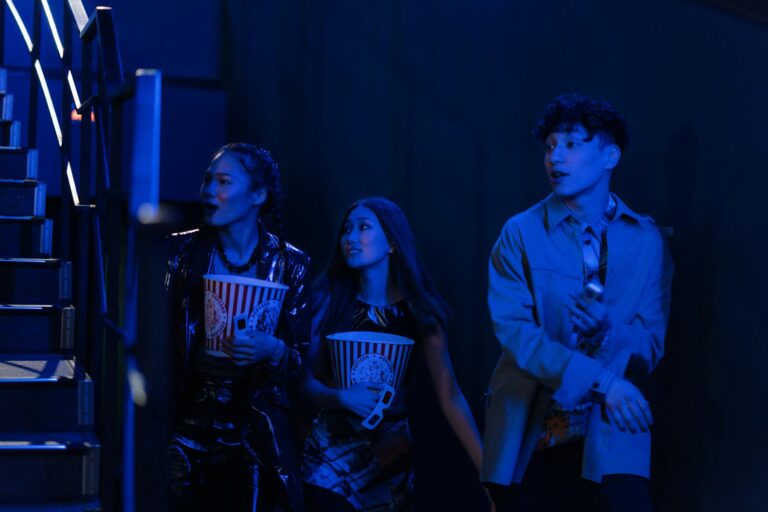
Paul Thomas Anderson’s 2025 film “One Battle After Another” draws heavily from American radical history, with the director weaving together inspirations from Thomas Pynchon’s 1990 novel *Vineland*, Brian Burrough’s 2015 book *Days of Rage*, and documentary footage from real revolutionary movements.
The film’s deliberate engagement with these historical sources explains why viewers have become amateur researchers, trying to identify which characters and plot points map onto real events and organizations.
From the visual aesthetics of the militant groups to specific lines of dialogue borrowed directly from Weather Underground documentaries, Anderson constructed a film that functions simultaneously as a period piece and a puzzle box inviting audience investigation. The film’s cultural resonance—earning a 7.7/10 on IMDB—stems partly from this detective work.
- Table of Contents
- What Historical Sources Shaped "One Battle After Another"'s Revolutionary Elements?
- The Revolutionary Groups That Inspired "One Battle After Another"'s Visual Language and Ideology
- How Weather Underground Documentary Dialogue Appears Directly in the Film
- Sean Penn's Character and Contemporary Parallels to Border Patrol Commander Greg Bovino
- How Director Paul Thomas Anderson's Personal Connection Deepened the Film's Emotional Resonance
- How Audiences Have Investigated "One Battle After Another"'s Real-World Connections
- The Broader Significance of Historical Cinema That Requires Active Audience Participation
- Conclusion
- You Might Also Like
Audiences recognize that the film isn’t simply fiction; it’s a carefully researched examination of 1960s radical movements that shaped American politics. By deliberately obscuring which inspirations inform specific scenes, Anderson created a narrative that rewards viewers who dig deeper.
This approach transforms casual moviegoing into an investigative act, encouraging audiences to compare the film’s fictional elements against the historical record. The real-world foundations beneath “One Battle After Another” are substantial enough that understanding them fundamentally changes how viewers interpret the narrative.
What appears as purely fictional political ideology becomes more weighted when audiences discover that entire scenes reference actual revolutionary groups or documented historical figures.
Table of Contents
- What Historical Sources Shaped “One Battle After Another”‘s Revolutionary Elements?
- The Revolutionary Groups That Inspired “One Battle After Another”‘s Visual Language and Ideology
- How Weather Underground Documentary Dialogue Appears Directly in the Film
- Sean Penn’s Character and Contemporary Parallels to Border Patrol Commander Greg Bovino
- How Director Paul Thomas Anderson’s Personal Connection Deepened the Film’s Emotional Resonance
- How Audiences Have Investigated “One Battle After Another”‘s Real-World Connections
- The Broader Significance of Historical Cinema That Requires Active Audience Participation
- Conclusion
What Historical Sources Shaped “One Battle After Another”‘s Revolutionary Elements?
Director Paul Thomas Anderson anchored the film’s revolutionary characters in two primary literary sources. Pynchon’s *Vineland*, set partially in 1960s counterculture, provided narrative frameworks for exploring how radical ideology fractures and evolves across decades.
More directly, Burrough’s *Days of Rage* offered a documentary-style account of actual 1960s radical movements, giving Anderson specific organizational structures, tactical approaches, and ideological conflicts to depict on screen.
Rather than inventing revolutionary movements from scratch, Anderson used these books as blueprints for authenticity, ensuring that the film’s political elements would resonate as recognizable to viewers familiar with American radical history.
The choice of literary sources matters because both books occupy specific positions in how we understand 1960s radicalism. *Vineland* approaches the subject through the lens of family trauma and generational conflict, while *Days of Rage* is more journalistic and forensic, documenting the Weather Underground and related groups with specificity that cinema rarely achieves.
By combining these approaches, Anderson created revolutionary characters who feel both emotionally grounded and historically informed.
A viewer might recognize sean Penn’s character as inspired by composite figures from these books, or they might spend hours cross-referencing specific plot points with events documented in Burrough’s pages.

The Revolutionary Groups That Inspired “One Battle After Another”‘s Visual Language and Ideology
The film‘s revolutionary factions draw visual and ideological inspiration from three major real-world organizations: the Black Panthers, the Symbionese Liberation Army (SLA), and the Weather Underground.
These groups didn’t operate as interchangeable radical entities; each had distinct aesthetics, tactical philosophies, and political theories. Anderson’s casting and costume choices reflect these differences.
The Black Panthers’ emphasis on community protection and armed self-defense appears distinct from the Weather Underground’s more abstract theorizing about property destruction as political speech, which itself differs from the SLA’s more cult-like leadership structure under Cinque Mtume.
However, one crucial limitation in historical accuracy: film necessarily compresses and synthesizes real organizations into composites for narrative efficiency. A viewer researching the Black Panthers, SLA, and Weather Underground separately will find that “One Battle After Another” cannot possibly depict all the nuances that distinguished these groups.
The film uses recognizable visual elements—berets, leather jackets, communal living arrangements, armed confrontations with police—as shorthand for radicalism generally, which means individual historical groups may feel somewhat flattened.
The trade-off is dramatic clarity; Anderson gains narrative momentum by creating characters who embody radical ideology broadly rather than getting mired in organizational specifics that would lose most viewers.
How Weather Underground Documentary Dialogue Appears Directly in the Film
One of the more striking revelations about “One Battle After Another” is that Anderson incorporated verbatim quotes from the Weather Underground documentary into his screenplay. Specifically, the phrase “a declaration of a state of war” appears as dialogue, taken directly from actual Weather Underground statements and reproduced in documentary footage.
This isn’t subtle homage; it’s an explicit insertion of historical language into fictional narrative. When viewers hear characters speak these words, they’re essentially hearing the radical movement speak for itself, channeled through Anderson’s fictional framing. This approach raises interesting questions about the relationship between cinema and history.
By embedding actual historical language into fictional scenes, Anderson creates moments where the boundary between dramatization and documentation becomes ambiguous. A character in the film isn’t just inspired by Weather Underground rhetoric; they’re literally speaking it. This technique has the effect of lending the entire film a documentary weight.
Viewers who recognize or later research these direct quotations often report feeling that the film operates more truthfully than straightforward fiction would.
The limitation of this approach is that it can also feel like appropriation—using the actual words of radical movements to add credibility to fictional narratives may feel either respectfully archival or exploitative depending on the viewer’s perspective.

Sean Penn’s Character and Contemporary Parallels to Border Patrol Commander Greg Bovino
Viewers have noted striking parallels between Sean Penn’s portrayal of a militarized law enforcement character and real-world Border Patrol Commander Greg Bovino, who became a figure of controversy regarding aggressive border enforcement tactics.
The comparison isn’t coincidental; Anderson appears to have constructed Penn’s character with contemporary militarized policing in mind, creating a figure whose brutality and ideology feel less like 1960s period piece material and more like commentary on present-day law enforcement approaches. What makes this parallel significant is the way it complicates the film’s temporal setting.
While the surface narrative appears grounded in historical radicalism, Penn’s character represents something more modern—a specific style of militarized bureaucratic violence that became more prominent in the 2000s and 2010s.
This creates a productive tension: viewers interested in 1960s history find themselves looking at 2020s politics. The film doesn’t explicitly signal this connection, which is why viewers “look for clues,” as the title suggests.
The tradeoff in this approach is that some viewers may miss the contemporary critique entirely, reading the Penn character as purely a period villain rather than a proxy for ongoing enforcement practices.
How Director Paul Thomas Anderson’s Personal Connection Deepened the Film’s Emotional Resonance
Beyond historical research and literary adaptation, Anderson infused “One Battle After Another” with personal material. An emotional scene in the film parallels director Anderson’s longtime partner Maya Rudolph’s personal family experience, as documented in a 2018 New York Times profile.
This biographical connection gives certain moments in the film a weight that pure historical recreation couldn’t achieve. Rather than filming events as external spectacle, Anderson channeled personal emotional truth through historical circumstances.
This mixing of the personal and historical is where “One Battle After Another” transcends typical prestige drama. The revolutionary characters aren’t just ideological constructs; they’re vessels for exploring family loss, generational conflict, and the ways private trauma intersects with public upheaval.
A limitation of this approach is that it can make the film emotionally effective while historically less precise—Anderson’s personal investment in certain character arcs may prioritize emotional authenticity over strict historical fidelity. For viewers primarily interested in learning about 1960s radical movements, this occasionally means the film pivots away from historical detail toward psychological exploration.

How Audiences Have Investigated “One Battle After Another”‘s Real-World Connections
The title itself—”One Battle After Another”—reflects a specific worldview about activism and political struggle: endless conflict without resolution. This concept, familiar to students of radical history, invites audiences to engage with the film’s references rather than passively consume it.
Online forums and film criticism sites have become crowded with viewers attempting to identify specific inspirations, cross-referencing characters against figures from *Days of Rage*, debating whether certain plot points echo actual Weather Underground operations.
This investigative engagement represents a shift in how audiences interact with serious cinema. Rather than accepting the film as self-contained fiction, viewers treat it as a document that requires historical contextualization.
The film succeeds in part because it rewards this research; a viewer who reads Burrough’s book or watches the Weather Underground documentary will recognize layers of meaning that casual viewers miss.
The Broader Significance of Historical Cinema That Requires Active Audience Participation
“One Battle After Another” participates in a growing trend of prestige cinema that doesn’t simply present history but rather asks audiences to think historically. Rather than explaining connections between the film and its sources, Anderson trusts viewers to discover them.
This places demands on audiences but also suggests a particular respect for their intelligence and curiosity.
The film’s approach raises questions about how cinema should engage with historical trauma and radical politics. By weaving together literary sources, documentary materials, and personal biography, Anderson created something that feels neither purely historical nor purely fictional.
For viewers, this ambiguity is precisely the appeal—it transforms passive consumption into active interpretation, making “One Battle After Another” a film that viewers don’t simply watch but investigate.
Conclusion
“One Battle After Another” succeeds as both entertainment and historical inquiry because Anderson grounded the film in real sources and real movements while maintaining narrative freedom. The specific inspirations—from Pynchon and Burrough’s books to the Black Panthers, SLA, and Weather Underground—provide historical weight without constraining the fiction.
Viewers looking for clues find them throughout the film’s construction, from direct dialogue quotations to character designs inspired by actual radical organizations to contemporary parallels that complicate the historical setting.
Understanding these real-world inspirations enhances the viewing experience significantly. Whether audiences discover these connections immediately or conduct their own research afterward, the film’s engagement with actual history becomes a feature rather than a limitation.
In an era of prestige cinema, “One Battle After Another” stands as an example of ambitious filmmaking that respects audience intelligence by embedding complexity rather than spelling out meaning.
You Might Also Like
- One Battle After Another Has Viewers Investigating the Real World Influences Behind Its Characters
- Fans Are Looking for Clues About the Real Inspiration Behind Sean Penn’s Role in One Battle After Another
- Sean Penn’s Role in One Battle After Another Has Sparked Hundreds of Theories About Its Inspiration