Real-time storytelling in film is no longer a niche experiment reserved for indie darlings and festival curiosities. In 2025 and heading into 2026, the technique has arrived at the mainstream doorstep, with projects like Alex Garland’s Warfare telling an entire war story in unbroken real time, and Christopher Nolan’s The Odyssey pushing the boundaries of immersive cinema with never-before-seen IMAX technology. The old rules about how audiences experience time on screen are being rewritten, and several of the most anticipated films of 2026 are leading that charge.
This shift goes beyond a single gimmick. From interactive horror films where viewers determine who lives and who dies, to AI-powered compositing that maps human emotion onto digital characters in real time, the definition of “real-time storytelling” itself is expanding. What follows is a close look at the specific films driving this movement, the technology making it possible, the limitations filmmakers still face, and what all of it means for the moviegoing experience over the next year.
Table of Contents
- What Does Real-Time Storytelling Actually Mean for Movies in 2026?
- The Films of 2025 That Set the Stage for 2026’s Real-Time Wave
- Christopher Nolan’s The Odyssey and the IMAX Immersion Frontier
- Interactive and Branching Narratives in 2026 Film
- AI-Powered Real-Time Filmmaking and Its Limits
- Genre Trends Favoring Real-Time and Single-Location Films in 2026
- Where Real-Time Cinema Goes After 2026
- Conclusion
- Frequently Asked Questions
What Does Real-Time Storytelling Actually Mean for Movies in 2026?
Real-time storytelling in cinema refers to a film whose narrative unfolds in the same duration as the events depicted, or close to it. The audience watches events as they happen, without time jumps, montages, or ellipses compressing hours or days into minutes. It is a brutal constraint. Every second of screen time must justify itself, and there is no cutting away to a subplot when the tension dips. The payoff, when it works, is an immersive intensity that conventional editing simply cannot replicate. The clearest recent example is Warfare, the A24 film directed by Alex Garland and Ray Mendoza. Released theatrically in April 2025 and later streaming on HBO Max from september 2025, the film follows a platoon of Navy SEALs through insurgent territory in Iraq in 2006, entirely in real time.
It is based on Mendoza’s actual combat memories, and critics responded accordingly: the film holds a 93% on Rotten Tomatoes. What makes Warfare instructive for the 2026 landscape is that it proved a mass audience will sit with real-time storytelling if the material demands it. War, by its nature, resists compression. Every second matters when lives are at stake, and the format honors that. But real-time storytelling is not limited to the literal definition. In 2026, the concept has expanded to include single-take filmmaking, interactive branching narratives, and AI-driven personalization that adjusts the story as it plays. Each variation shares a common thread: collapsing the distance between the viewer and the story, making the audience feel less like an observer and more like a participant.

The Films of 2025 That Set the Stage for 2026’s Real-Time Wave
Before looking ahead, it is worth understanding the foundation. Two 2025 projects demonstrated the commercial and creative viability of real-time and single-take approaches at scale, and their success is directly shaping what studios are greenlighting for 2026 and beyond. Warfare was the critical breakthrough, but the logistical breakthrough came from an unexpected source: One Shot with Ed Sheeran, a Netflix music special directed by Philip Barantini. Filmed in a single continuous take across New York City, the production required a team of nearly 1,000 people to choreograph the unbroken shot. It premiered on Netflix on november 21, 2025, and holds a 7.7 on IMDb. Barantini, already known for his work on the series Adolescence, proved that single-take storytelling could work outside of a controlled soundstage, across an unpredictable urban environment, at a scale that dwarfs previous attempts like Birdman or 1917, both of which used hidden cuts.
The lesson for the industry was clear: the infrastructure now exists to execute these projects without the compromises that previously made them impractical. However, neither project should be mistaken for proof that real-time storytelling is universally superior. The technique works when the material benefits from temporal honesty. A sprawling epic covering decades, a story that depends on the contrast between past and present, or a narrative that needs breathing room between set pieces would be poorly served by the constraint. The 2025 successes worked because the stories were built around the format, not retrofitted into it. That distinction matters as more filmmakers chase the trend in 2026.
Christopher Nolan’s The Odyssey and the IMAX Immersion Frontier
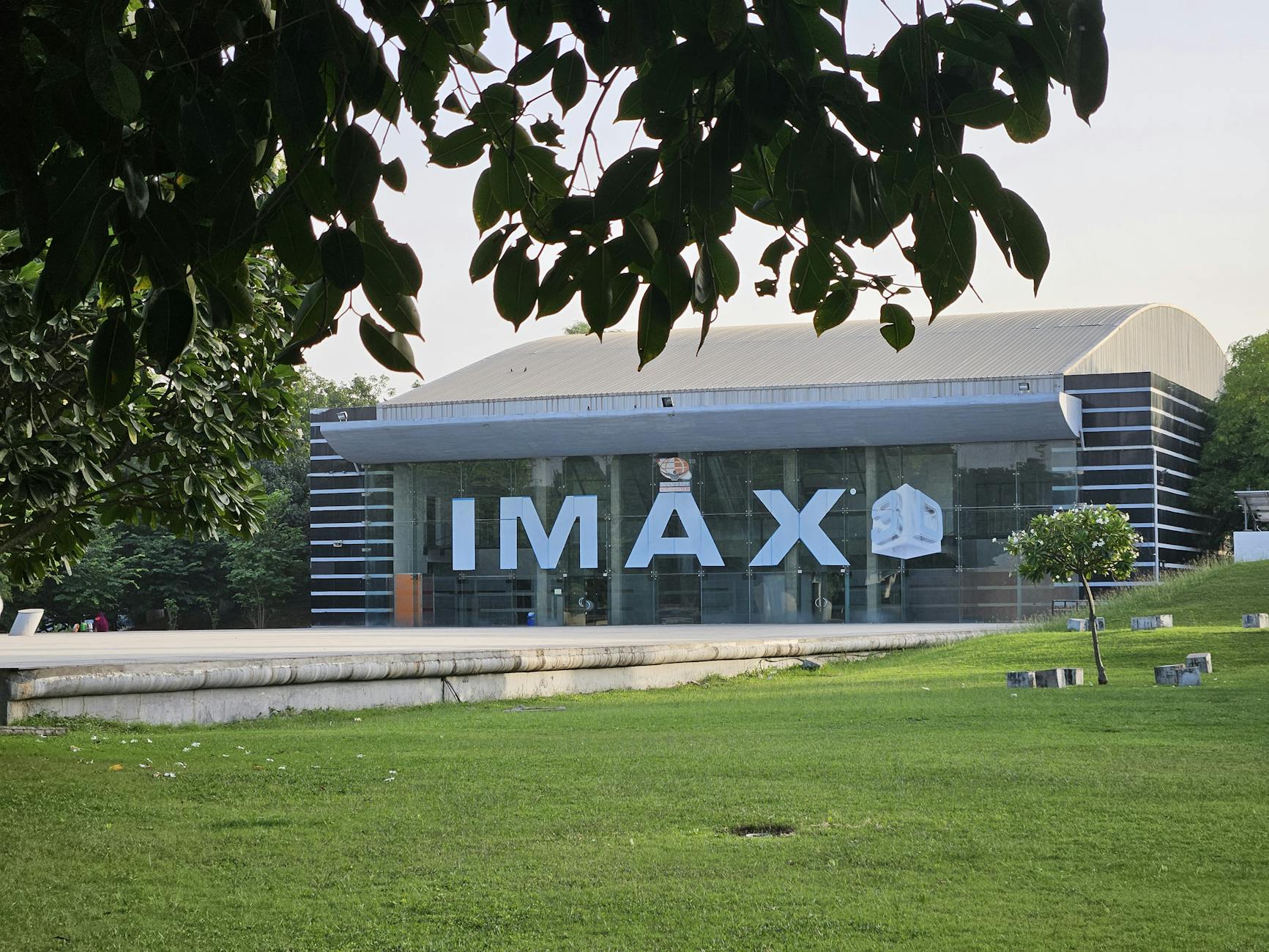
The most anticipated film of 2026 is not technically a real-time narrative, but it may do more to advance immersive storytelling than any project on the calendar. Christopher Nolan’s The Odyssey, releasing july 17, 2026 through Universal Pictures, is the first Nolan film shot entirely on IMAX film cameras. The production used a newly developed lighter and quieter IMAX camera along with what IMAX CEO Richard Gelfond has described as never-before-seen IMAX technology. Over 2 million feet of IMAX 70mm film, roughly 610 kilometers, was exposed during the shoot. The cast reads like a studio wish list: Matt Damon, Tom Holland, Anne Hathaway, Zendaya, Charlize Theron, and Robert Pattinson. Filming took place on location in Morocco, Greece, Italy, Iceland, and Scotland. The estimated budget sits at $250 million, making it Nolan’s most expensive film to date.
Nolan has long been cinema’s most prominent advocate for the physical moviegoing experience, and The Odyssey appears to be his most ambitious argument yet that the theatrical screen offers something no home setup can match. What connects The Odyssey to the real-time storytelling conversation is its commitment to presence. Nolan’s work has always played with time, from Memento’s reverse chronology to Dunkirk’s interlocking timelines to Tenet’s inversion mechanics. But the throughline is a filmmaker obsessed with making the audience feel time rather than merely observe it. Shooting entirely in IMAX is a technical choice, but it is also a narrative one. The format’s expanded field of view and resolution eliminate the comfortable frame that separates the viewer from the image. Whether or not The Odyssey unfolds in real time, it will almost certainly feel like it.
Interactive and Branching Narratives in 2026 Film
If real-time storytelling is about collapsing the distance between viewer and story, interactive cinema takes the next logical step and hands the viewer partial authorship. The most notable 2026 entry in this space is The Run, an interactive horror film directed by Paul Raschid and starring Roxanne McKee and George Blagden. The premise places a fitness influencer on a remote running trail where she is hunted by killers, and viewers make real-time decisions that determine whether characters live or die. The film features branching narrative paths and multiple possible endings. The tradeoff with interactive storytelling is always the same: agency versus craft. When a viewer controls the outcome, the filmmaker surrenders a degree of authorial precision. The emotional arc that a director can calibrate in a linear film, building tension toward a specific catharsis, becomes diffuse when there are six possible endings.
Netflix’s Black Mirror: Bandersnatch demonstrated this tension in 2018. It was a fascinating experiment, but few would argue it achieved the emotional depth of the series’ best linear episodes. The Run will face the same challenge, and its success will depend on whether the branching paths feel like genuine narrative divergences or cosmetic variations on the same skeleton. Interactive VR movies with branching narratives are also growing as a category, with studios investing in hybrid productions that augment linear storytelling with immersive headset and app components. The question is whether these remain a sideshow or converge with mainstream theatrical distribution. For now, the technology serves horror and thriller genres best, where the stakes of viewer choice are visceral and immediate. A wrong decision means a character dies. That feedback loop is harder to replicate in drama or comedy, which is why the interactive space remains genre-constrained heading into 2026.
AI-Powered Real-Time Filmmaking and Its Limits
The most controversial frontier in real-time storytelling is not a camera technique or a narrative structure. It is artificial intelligence. In 2026, AI-powered real-time compositing has entered active filmmaking workflows. Directors are using what is called Act-One technology to map human emotional performances onto AI-generated characters in real time, a process sometimes referred to as Live Animation. An actor performs on set, and their facial expressions and body language are instantly translated onto a digital character, eliminating the months-long post-production pipeline that traditional motion capture requires. On the distribution side, AI-personalized storytelling is emerging as a model where a single film concept can theoretically be spun into thousands of personalized versions, each tailored to an individual viewer’s preferences. Tools like OpenAI’s Sora 2 Pro, Google’s Veo 3.1, and Kling 3.0 enable real-time storyboard and sequence generation.
Some industry analysts describe this as replacing the blockbuster model with what they call niche-at-scale, where instead of one $250 million film aimed at everyone, a studio produces a flexible narrative framework that becomes a different experience for each viewer. The limitation should be stated plainly: none of this has produced a great film yet. The technology is impressive in isolation, but storytelling is not a problem that scales the way software does. A film that means something to everyone risks meaning nothing to anyone. The most effective movies in history work because a singular creative vision made specific choices, including what to leave out. AI personalization, taken to its logical extreme, eliminates specificity. It is worth watching this space, but it is also worth skepticism until someone demonstrates that the tools can serve a story rather than replace one.
Genre Trends Favoring Real-Time and Single-Location Films in 2026
Non-linear narratives, real-time storytelling, and single-location films have been identified as a key trend in 2026 thriller cinema specifically. The appeal is partly economic: a single-location film with a real-time structure is cheaper to produce than a globe-spanning epic. But the creative appeal is just as strong. Constraint breeds invention.
When a filmmaker cannot cut away to a different city or jump forward three months, every scene must carry its weight. Maggie Gyllenhaal’s Bride of Frankenstein offers an interesting counterpoint. Set in 1930s Chicago, the film reimagines the classic story through a female lens, following a murdered woman who is reborn and becomes a radical social leader. It is not a real-time film, but it represents the same broader impulse: taking familiar narrative structures and finding new ways to make them feel urgent and present. The best genre films of 2026 will likely share this quality, whether or not they adopt real-time technique as a formal constraint.
Where Real-Time Cinema Goes After 2026
The trajectory is clear. Each year, the tools for creating immersive, temporally honest cinema become more accessible and more refined. Lighter IMAX cameras mean more filmmakers can shoot in the format without Nolan-level budgets. Choreographing a single-take production across a city, as Barantini proved with One Shot, is now a solved logistical problem rather than an impossible dream. Interactive branching is moving from novelty to genre staple in horror and thriller spaces. The real question is whether audiences will develop a sustained appetite for these experiences or whether real-time storytelling will cycle through a peak and settle into a niche.
History suggests the latter. 3D had its moment and receded. IMAX surges and plateaus. But real-time storytelling has something those technologies lacked: it is not an add-on to existing filmmaking. It is a fundamentally different relationship between story and audience. That gives it staying power, even if it never becomes the dominant mode. The films of 2026 will not settle the question, but they will advance it considerably.
Conclusion
The real-time storytelling movement heading into 2026 is not a single trend but a constellation of related experiments. Warfare proved that literal real-time narrative can thrive critically and commercially. One Shot with Ed Sheeran showed the single-take format can scale to nearly impossible logistical demands. The Odyssey is pushing immersive visual storytelling to its technical limits. The Run is testing whether interactive cinema can deliver genuine dramatic stakes.
And AI tools are opening doors that did not exist two years ago, even if no one has walked through them to make something truly great. For audiences, the practical takeaway is straightforward: the most interesting films of 2026 will reward theatrical viewing more than any recent year. Real-time and immersive storytelling lose their power on a phone screen. These are films designed to fill your field of vision and collapse the distance between you and the story. Seek them out on the biggest screen you can find.
Frequently Asked Questions
What is the best example of a real-time film released recently?
Warfare, directed by Alex Garland and Ray Mendoza, is the most critically acclaimed recent example. Released in April 2025, it tells its entire story in real time following Navy SEALs in Iraq and holds a 93% on Rotten Tomatoes.
Is Christopher Nolan’s The Odyssey a real-time film?
Nolan has not described it as a real-time narrative. However, it is his most immersive project to date, shot entirely on IMAX film cameras with over 2 million feet of 70mm film and an estimated $250 million budget, releasing July 17, 2026.
How does interactive storytelling work in films like The Run?
Viewers make real-time decisions at key plot points that determine whether characters live or die. The film features branching narrative paths and multiple possible endings, though the format currently works best in horror and thriller genres where the stakes of choice are immediate.
Are AI-generated personalized movies actually happening in 2026?
The technology exists through tools like OpenAI Sora 2 Pro, Google Veo 3.1, and Kling 3.0, which enable real-time sequence generation. However, no AI-personalized film has yet produced a critically acclaimed result. The tools are promising but unproven as storytelling vehicles.
What was the single-take Ed Sheeran Netflix special?
One Shot with Ed Sheeran, directed by Philip Barantini, was filmed in a single continuous take across New York City with a team of nearly 1,000 people. It premiered on Netflix on November 21, 2025, and holds a 7.7 on IMDb.