- Movies 2026 Multi: Table of Contents
- What Are Multi-Character Storylines and Why Do They Matter in 2026?
- The Ensemble Cast Advantage and Its Narrative Demands
- 2026's Most Ambitious Multi-Character Films
- Comparing Different Approaches to Ensemble Storytelling
- Audience Engagement with Complex Multi-Character Narratives
- Production Complexity and Directorial Vision
- The Future of Multi-Character Storytelling in Cinema
- Conclusion
- Frequently Asked Questions
- You Might Also Like
is shaping up to be a landmark year for films that weave together multiple character arcs and ensemble casts, with major releases including Christopher Nolan’s *The Odyssey*, the MCU’s *Avengers: Doomsday*, Pixar’s *Toy Story 5*, and Marvel Studios’ *Spider-Man: Brand New Day*.
These films represent a return to the kind of sprawling, interconnected narratives that challenge audiences to follow parallel stories while maintaining emotional coherence. Rather than focusing on a single protagonist’s journey, these 2026 releases embrace the complexity of ensemble storytelling, where each character brings their own motivation, conflict, and resolution to the larger narrative tapestry.
The appeal of multi-character storylines lies in their ability to explore themes from multiple perspectives simultaneously. *The Odyssey*, directed by Christopher Nolan and featuring Matt Damon as Odysseus alongside Robert Pattinson, Zendaya, Tom Holland, Anne Hathaway, Mia Goth, and Charlize Theron, adapts Homer’s epic poem by building interconnected character arcs across its sprawling narrative.
Similarly, *Avengers: Doomsday*, arriving December 18, 2026, brings together the Avengers, Wakandans, the Fantastic Four, and the X-Men in a unified storyline, orchestrated by directors Anthony and Joe Russo against Robert Downey Jr.’s Doctor Doom.
This article explores the films defining multi-character storytelling in 2026, examines why filmmakers are drawn to ensemble narratives, and considers how audiences are responding to the challenge of tracking multiple interconnected plotlines on screen.
Table of Contents
- What Are Multi-Character Storylines and Why Do They Matter in 2026?
- The Ensemble Cast Advantage and Its Narrative Demands
- 2026’s Most Ambitious Multi-Character Films
- Comparing Different Approaches to Ensemble Storytelling
- Audience Engagement with Complex Multi-Character Narratives
- Production Complexity and Directorial Vision
- The Future of Multi-Character Storytelling in Cinema
- Conclusion
- Frequently Asked Questions
What Are Multi-Character Storylines and Why Do They Matter in 2026?
Multi-character storylines differ fundamentally from traditional single-protagonist narratives in that they distribute narrative weight across several characters with equal or near-equal importance. Rather than one hero’s journey anchoring the entire film, these narratives create a web of interconnected plotlines that intersect, diverge, and ultimately converge.
The approach allows filmmakers to explore how individual choices ripple across a community, and how different characters perceive and navigate the same central conflict from entirely different angles.
In 2026, this approach has become increasingly ambitious. *Toy Story 5*, releasing June 19, 2026, continues Pixar’s tradition of balancing multiple toy characters—Tom Hanks’ Woody, Tim Allen’s Buzz, Joan Cusack’s Jessie, alongside new additions including Keanu Reeves and Greta Lee—each with their own concerns about a world where electronics threaten playtime.
Meanwhile, *Spider-Man: Brand New Day* (July 31, 2026) sets 4 years after *No Way Home*, bringing Tom Holland’s Spider-Man into scenes with Zendaya, Jacob Batalon, Mark Ruffalo, Jon Bernthal’s Punisher, Michael Mando’s Scorpion, and Sadie Sink, each with distinct motivations and story arcs.
The multi-character approach gives audiences access to viewpoints they wouldn’t have in a more traditional superhero narrative.

The Ensemble Cast Advantage and Its Narrative Demands
When filmmakers assemble large casts for multi-character narratives, they gain the ability to explore a subject with greater depth and dimensionality.
*The Odyssey* benefits from this approach—Homer’s epic poem is fundamentally about multiple perspectives on homecoming, loss, and identity, concepts that resonate differently through Matt Damon’s Odysseus, Zendaya’s character, Tom Holland’s portrayal, and Anne Hathaway’s role.
A single-character adaptation would necessarily flatten these thematic layers, but the ensemble structure allows each actor to explore a distinct aspect of the poem’s central preoccupations. However, multi-character narratives demand rigorous structural discipline.
The risk with ensemble storytelling is that audiences lose track of where they are in the narrative—which character’s arc is currently in focus, why this scene matters to the larger story, and how each subplot connects to the central conflict.
*Avengers: Doomsday*, with its integration of Avengers teams, Wakandan characters, the Fantastic Four, and the X-Men all converging against Robert Downey Jr.’s Doctor Doom, faces this challenge acutely.
Directors Anthony and Joe Russo have significant experience managing ensemble complexity from their *Avengers* work, but the December 18, 2026 release date suggests this film will be extensive enough to justify its scope. The key limitation of ensemble narratives: if the screenplay fails to establish clear emotional stakes for each character’s subplot, audience investment fragments.
2026’s Most Ambitious Multi-Character Films
The range of multi-character storytelling in 2026 spans several genres and stylistic approaches. *The Odyssey* represents the prestige end of the spectrum—a Christopher Nolan adaptation of classical literature with a star-studded cast chosen for dramatic range.
*Toy Story 5* operates in the children’s entertainment space but employs the same principle: each toy faces different anxieties about their relevance in a world changing around them. Woody, Buzz, and Jessie have fundamentally different relationships to the crisis the story presents, and their paths through the narrative diverge before converging toward resolution.
- Spider-Man: Brand New Day* positions itself as a bridge narrative, occurring four years after *No Way Home* (in 2026 story time, or 2028 depending on timeline accounting). Director Destin Daniel Cretton’s film brings together Tom Holland’s Peter Parker with supporting cast members Zendaya, Jacob Batalon, and Mark Ruffalo, while introducing larger ensemble conflicts through Jon Bernthal’s Punisher, Michael Mando’s Scorpion, and Sadie Sink. Finally, *Avengers: Doomsday* represents the culmination of Marvel’s multi-character storytelling approach—it’s not just a team-up film but explicitly features multiple interconnected teams (Avengers, Wakandans, Fantastic Four, new roster, X-Men) whose separate storylines must align against a unified threat. The scope is extraordinary; these four films demonstrate that 2026 is not positioning multi-character narratives as niche artistic choices but as blockbuster-scale commercial propositions.

Comparing Different Approaches to Ensemble Storytelling
The films of 2026 employ distinctly different structural strategies for managing their multi-character narratives. *The Odyssey* uses an episodic, journey-based structure rooted in its source material—characters experience successive trials and encounters that test and reveal their inner lives.
This approach is well-suited to Nolan’s exploratory directorial style and allows the ensemble cast (including Mia Goth and Charlize Theron) to have substantial scenes without requiring constant scene-cutting between equal plotlines.
- Toy Story 5* employs a more unified-crisis structure, where all characters face the same external threat (electronics threatening playtime) but must find their individual responses to that threat. This approach concentrates screen time efficiently—scenes often involve multiple toys, so character development and plot advancement happen simultaneously. In contrast, *Spider-Man: Brand New Day* uses a hub-and-spoke model where Spider-Man functions as the connecting point between otherwise separate character arcs involving his supporting cast and his antagonists. *Avengers: Doomsday*, based on the scale suggested by its December 18, 2026 release and the integration of multiple teams, likely employs a hybrid: alternating between team-specific storylines and larger ensemble sequences where the multiple groups converge. Each approach involves different tradeoffs—episodic narratives allow character depth but risk pacing issues, unified-crisis structures maintain focus but can oversimplify character motivations, and hub-and-spoke models risk sidelining supporting characters. The choice depends on whether the filmmaker prioritizes character complexity, narrative momentum, or thematic coherence.
Audience Engagement with Complex Multi-Character Narratives
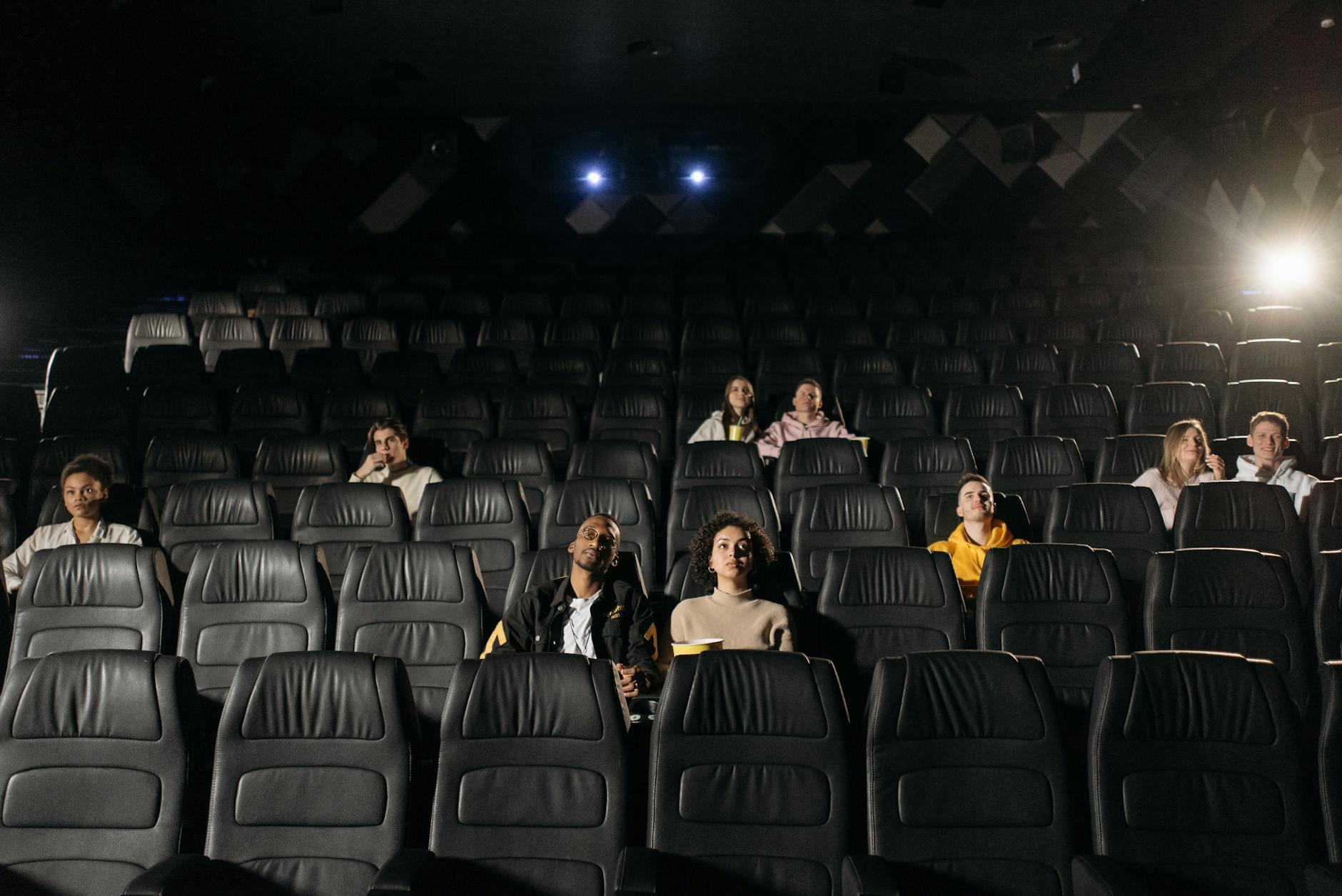
Tracking multiple characters and their arcs requires active audience engagement, a demand that hasn’t always served films well. Audiences conditioned by linear, single-protagonist narratives sometimes experience ensemble films as diffuse or difficult to follow.
However, the success of recent ensemble-scale films (particularly in the MCU) has trained modern audiences to track multiple plotlines and to find satisfaction in scenes where separate character arcs intersect meaningfully.
The June 19, 2026 release of *Toy Story 5* and the July 31, 2026 date for *Spider-Man: Brand New Day* suggest studios are confident audiences have developed this literacy.
A significant limitation, however, is that not all multi-character narratives reward this attention equally. A poorly constructed ensemble film can feel like a series of interruptions—audiences invest in one character’s arc only to be whisked away to another character’s subplot before meaningful resolution.
*Avengers: Doomsday* particularly risks this, given its December 18, 2026 placement and the integration of five distinct character teams. If the screenplay fails to establish why each team’s subplot matters to the larger conflict with Doctor Doom, audiences may experience the film as a collection of competing storylines rather than a unified narrative.
The best multi-character films clarify early which characters are central to the story’s thematic exploration and which are supporting players; this hierarchy prevents narrative whiplash.
Production Complexity and Directorial Vision
Bringing multi-character narratives to the screen requires not just skilled acting ensembles but extraordinary attention to production logistics. Christopher Nolan’s *The Odyssey*, featuring Matt Damon, Robert Pattinson, Zendaya, Tom Holland, Anne Hathaway, Mia Goth, and Charlize Theron, demands a production schedule that accommodates multiple A-list actors’ availability while maintaining narrative coherence.
Similarly, *Avengers: Doomsday* with its multiple character teams and the integration of Wakanda, the Fantastic Four, and the X-Men requires coordination between separate character storylines that may have been developed across different MCU films.
Directors Anthony and Joe Russo bring experience managing this complexity, but the December 18, 2026 release date suggests an extensive post-production schedule to assemble these multiple narratives into a unified whole.
Pixar’s *Toy Story 5* navigates these challenges through voice acting rather than location filming, but voice actors like Tom Hanks, Tim Allen, Keanu Reeves, and Greta Lee must still be coordinated across a studio schedule.
The advantage of ensemble narratives in animation is that character presence isn’t limited by actor availability, but the creative demand of giving each voice actor meaningful material remains.
Destin Daniel Cretton’s direction of *Spider-Man: Brand New Day*, set four years after *No Way Home* in the MCU timeline, shows how single-director visions can successfully manage large ensembles by maintaining clear thematic priorities and visual consistency.
The Future of Multi-Character Storytelling in Cinema
The concentration of high-profile, multi-character narratives in 2026 suggests filmmakers have moved past thinking of ensemble stories as a niche approach. Rather, the ability to orchestrate complex, interconnected character arcs across expansive narratives is increasingly considered a benchmark of sophisticated filmmaking.
*The Odyssey*’s investment in adapting a classical epic with a diverse ensemble cast signals that prestige cinema values this approach; *Avengers: Doomsday*’s December 18, 2026 date signals that blockbuster franchises see multi-character storytelling as commercially viable at maximum scale.
Looking forward, the challenge will be ensuring that multi-character narratives serve thematic depth rather than simply accumulating cast members for marquee value.
The films of 2026 offer a template: *Toy Story 5* uses ensemble storytelling to explore shared anxiety about relevance and change; *The Odyssey* uses it to explore homecoming and identity through multiple lenses; *Spider-Man: Brand New Day* uses it to expand the MCU’s street-level world.
If these films succeed with audiences, expect more prestige adaptations, more superhero team-ups, and more animated features designed around interconnected character arcs.
Conclusion
is establishing multi-character storytelling as a dominant mode in American cinema, with *The Odyssey*, *Toy Story 5*, *Spider-Man: Brand New Day*, and *Avengers: Doomsday* each demonstrating that audiences and filmmakers alike have embraced the complexity of ensemble narratives.
These films prove that multi-character storytelling isn’t a limitation or a compromise—it’s a sophisticated narrative approach capable of delivering blockbuster-scale entertainment alongside thematic depth and character-driven drama.
For viewers approaching these 2026 releases, the multi-character format rewards attentive viewing: paying attention to how each character’s arc relates to the story’s central theme, noticing how separate plotlines interconnect, and appreciating how ensemble casts can explore a story’s possibilities from angles a single protagonist never could.
The success of these films will likely shape filmmaking decisions for years to come.
Frequently Asked Questions
What’s the difference between a multi-character story and an ensemble cast?
An ensemble cast refers to a group of actors with roughly equal screen time and importance; a multi-character story refers to a narrative structure that gives multiple characters their own distinct arcs.
A film can have an ensemble cast while focusing primarily on one protagonist’s journey (like the *Ocean’s* films), or it can have a multi-character narrative structure with one clear lead (like *The Dark Knight* trilogy). 2026’s films tend to combine both—large casts with multiple significant arcs.
Which 2026 multi-character film is the longest?
*Avengers: Doomsday*, releasing December 18, 2026, is likely to be the longest given its integration of multiple character teams (Avengers, Wakandans, Fantastic Four, X-Men) and its placement late in the year, suggesting extended post-production. *The Odyssey*, as a Christopher Nolan epic adaptation, will likely also be substantially long.
Is *Toy Story 5* actually a multi-character narrative or is it Woody’s story with supporting characters?
While Woody and Buzz have been the focal characters in previous *Toy Story* films, the fifth installment distributes its narrative across all the major toys. Jessie has her own arc, and the ensemble (including new characters) all respond to the threat electronics pose to playtime.
It’s a genuine multi-character narrative rather than a single-protagonist story with supporting players.
Do I need to watch earlier Spider-Man films to understand *Brand New Day*?
*Spider-Man: Brand New Day* takes place four years after *No Way Home*, so it will likely reference or build on events from that film. However, it’s being positioned as an entry point into a new era of the Spider-Man franchise, so it should be functional without extensive previous viewing.
That said, familiarity with the MCU’s Spider-Man will enhance enjoyment.
Are multi-character stories harder to follow than single-protagonist films?
Not necessarily—it depends on execution. A well-structured multi-character narrative uses clear visual language, thematic coherence, and emotional stakes to guide audiences through multiple arcs. Poorly executed multi-character films can feel chaotic, but the same is true of poorly executed single-protagonist narratives.
Audiences in 2026 have been trained by years of ensemble MCU films and other ensemble narratives to track multiple plotlines effectively.
You Might Also Like
- Movies 2026 With Slow Character Development
- Movies 2026 With Action Driven Storylines
- Movies 2026 With Visual Storytelling Focus
For more on Movies 2026 Multi, see the full breakdown above – the movies 2026 multi details cover what most viewers want to know.
Whether you searched for movies 2026 multi reviews, movies 2026 multi streaming, or movies 2026 multi cast, this guide consolidates the relevant movies 2026 multi facts in one place.