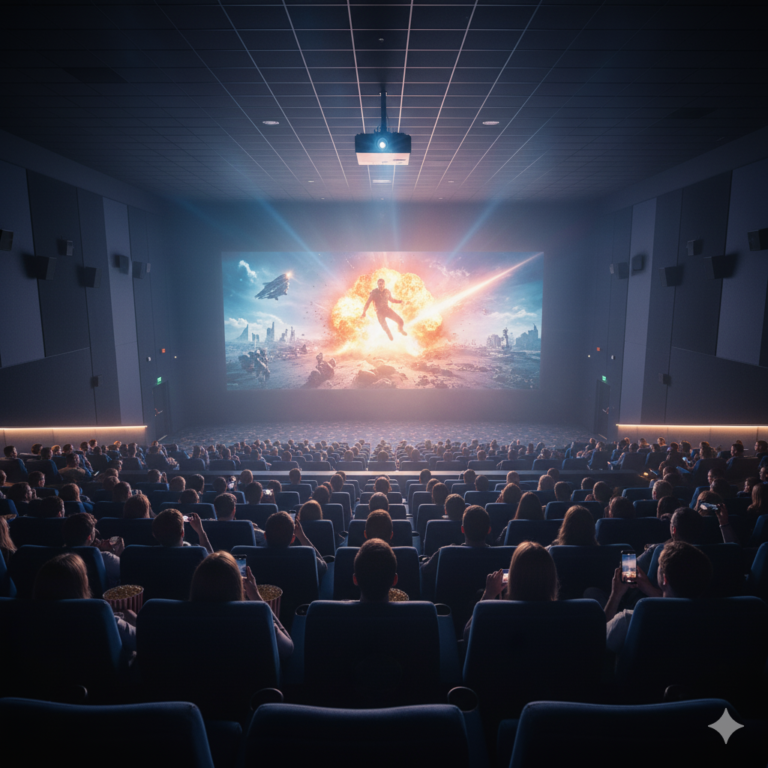
The question of whether Avatar is worth $30 in IMAX has become a defining debate in modern cinema economics, forcing moviegoers to confront the escalating cost of premium theatrical experiences. When James Cameron’s original Avatar premiered in 2009, IMAX tickets averaged around $15. Today, with Avatar: The Way of Water and anticipated future installments, audiences in major metropolitan areas regularly face ticket prices of $25 to $35 for the full IMAX 3D experience. This price point represents a significant investment for a single film viewing, making the value proposition worthy of serious examination. The stakes of this decision extend beyond simple entertainment budgeting. Avatar films represent a unique category in cinema””productions specifically engineered to exploit the maximum capabilities of IMAX technology.
Cameron spent years developing proprietary camera systems, underwater motion capture technology, and high-frame-rate filming techniques designed explicitly for large-format presentation. Unlike films that receive IMAX releases as an afterthought marketing exercise, Avatar exists as a technical showcase where the format choice at its core alters the viewing experience. Understanding whether that technical achievement justifies premium pricing requires examining both the tangible differences in presentation quality and the more subjective elements of cinematic immersion. By the end of this analysis, readers will have the information needed to make an informed decision about IMAX pricing for Avatar specifically and premium formats generally. This includes understanding the technical specifications that differentiate IMAX from standard presentations, the real-world quality variations between different IMAX venues, how Avatar’s production design use large-format capabilities, and practical strategies for maximizing value if choosing the premium option. The goal is neither to justify nor dismiss the $30 price point, but to provide the analytical framework for a personal decision that depends heavily on individual viewing priorities and financial circumstances.
Table of Contents
- Why Do IMAX Tickets for Avatar Cost $30 or More?
- The Technical Differences Between IMAX and Standard Avatar Presentations
- How Avatar Was Specifically Designed for the IMAX Format
- Comparing IMAX Value: Avatar Versus Other Premium Movie Experiences
- Understanding the Different Types of IMAX Theaters Showing Avatar
- How Premium Large Format Alternatives Compare to IMAX for Avatar
- How to Prepare
- How to Apply This
- Expert Tips
- Frequently Asked Questions
Why Do IMAX Tickets for Avatar Cost $30 or More?
imax ticket pricing reflects a combination of technology licensing, venue operational costs, and market positioning that has evolved significantly over the past fifteen years. Genuine IMAX theaters””those using the company’s proprietary projection systems and meeting screen size requirements””pay substantial licensing fees to IMAX Corporation. These fees, combined with the higher maintenance costs of specialized projection equipment and the reduced seating capacity of properly designed IMAX auditoriums, create a cost structure that theaters pass directly to consumers. The $30 price point in major markets represents theaters’ calculation of what the market will bear for what they position as the definitive presentation format.
Avatar’s IMAX pricing specifically connects to the film’s unusual technical specifications. Cameron shot portions of Avatar: The Way of Water using IMAX-certified cameras at 48 frames per second, with an expanded 1.43:1 aspect ratio for select sequences. Theaters capable of presenting these specifications””true IMAX 70mm film projectors or the latest IMAX laser projection systems””represent a small subset of venues marketing themselves as IMAX. This technical tiering creates a pricing complexity where not all “$30 IMAX tickets” deliver equivalent experiences.
- **Licensing economics**: IMAX Corporation receives revenue sharing from every ticket sold, creating a price floor that theaters cannot easily undercut
- **Equipment investment**: A full IMAX laser projection system costs between $1.5 million and $5 million to install, requiring higher ticket prices to achieve reasonable return on investment
- **Market segmentation**: Premium pricing serves as a deliberate strategy to position IMAX as an elite experience, maintaining brand value even as the “IMAX” label has been applied to increasingly diverse venue types

The Technical Differences Between IMAX and Standard Avatar Presentations
The visual differences between IMAX and standard theatrical presentations of Avatar exist across multiple measurable dimensions, though their perceptibility varies based on viewing distance and individual visual acuity. True IMAX laser projection systems deliver approximately 18,000 lumens of brightness compared to roughly 14,000 lumens for standard laser projectors, resulting in noticeably more vibrant imagery, particularly in 3D presentations where the polarized glasses reduce perceived brightness by approximately 50%. This brightness advantage becomes especially apparent in Avatar’s bioluminescent night sequences, where the luminous flora and fauna of Pandora display greater depth and color saturation in IMAX. Resolution differences prove more complex to evaluate.
While IMAX marketing emphasizes resolution superiority, the practical impact depends heavily on screen size and viewing distance. IMAX laser systems project at dual 4K resolution (effectively 8K when combined), while most premium large-format competitors project single 4K images. However, Avatar: The Way of Water was finished at a 4K digital intermediate, meaning the source material cannot fully exploit IMAX’s maximum resolution capabilities. The visual benefit comes primarily from IMAX’s superior contrast handling and HDR implementation rather than raw resolution.
- **Aspect ratio expansion**: Select sequences in Avatar: The Way of Water expand from 2.39:1 to 1.90:1 (IMAX digital) or 1.43:1 (IMAX 70mm/laser GT), adding up to 26% more image area in key scenes
- **High frame rate presentation**: IMAX theaters can present 48fps sequences as Cameron intended, while standard theaters typically show 24fps conversions
- **Sound system specifications**: IMAX’s proprietary 12-channel sound system provides more precise spatial audio than standard 7.1 configurations, enhancing Pandora’s environmental soundscape
How Avatar Was Specifically Designed for the IMAX Format
James Cameron’s approach to Avatar production represents an unusual case of format-first filmmaking, where technical specifications of the final presentation format influenced creative decisions from initial conceptualization. Cameron co-developed the Fusion Camera System with Vince Pace specifically to meet IMAX acquisition standards, and for The way of Water, further advanced this with underwater-rated housings capable of high-frame-rate capture. This production methodology means Avatar films contain visual information and design choices that only become fully apparent in IMAX presentation.
The world-building of Pandora demonstrates this format-conscious design philosophy. The bioluminescent ecosystem, with its intricate patterns of glowing organisms, was designed with IMAX’s superior brightness and contrast handling as the reference standard. Environments contain fine detail in both foreground and extreme background simultaneously, exploiting IMAX’s ability to maintain focus and clarity across the full image depth. The underwater sequences in The Way of Water particularly showcase this approach””the complex interplay of light refraction, particle effects, and creature movement was calibrated for large-format presentation where subtle details remain visible.
- **Frame composition**: Cameron employs deeper staging than typical blockbusters, placing important visual information at multiple depth planes to exploit IMAX screen real estate
- **3D calibration**: The stereoscopic depth effects were tuned for IMAX viewing distances and screen sizes, with parallax settings that can feel excessive on smaller screens
- **Sound design integration**: The spatial audio mix positions environmental sounds to complement the expanded aspect ratio, creating an immersion envelope that standard presentations cannot replicate

Comparing IMAX Value: Avatar Versus Other Premium Movie Experiences
Evaluating whether Avatar justifies $30 in IMAX requires comparison with alternative uses of that entertainment budget and with other films’ IMAX presentations. The average domestic movie ticket price in 2024 hovers around $11, meaning the IMAX premium for Avatar approaches a 170% increase over standard admission. For that differential, viewers could alternatively see three standard-format films, purchase two months of a major streaming service, or attend a single IMAX showing of a film less specifically engineered for the format.
The comparative value of Avatar’s IMAX presentation against other IMAX releases reveals significant variation in format necessity. Films like Christopher Nolan’s Oppenheimer, shot partially on IMAX 70mm film, offer genuine IMAX-exclusive content with expanded aspect ratios throughout. Marvel and DC films receiving IMAX releases rarely contain footage shot with IMAX cameras, instead offering digitally enlarged images of questionable additional value. Avatar occupies the upper tier of IMAX-worthiness alongside films by Cameron, Nolan, and select other directors who shoot with large-format cameras intentionally.
- **Cost-per-hour value**: Avatar: The Way of Water’s 192-minute runtime delivers approximately $9.37 per hour of entertainment at $30, compared to roughly $5.50 per hour for standard presentation
- **Rewatchability consideration**: Many viewers report that a single IMAX viewing satisfies their Avatar experience, while standard-format fans often rewatch at home, potentially offering better lifetime entertainment value
- **Special event framing**: For viewers who rarely attend theatrical films, the $30 IMAX ticket can represent a worthwhile special occasion experience that justifies premium pricing
Understanding the Different Types of IMAX Theaters Showing Avatar
Not all IMAX presentations deliver equivalent experiences, creating a crucial knowledge gap that affects the $30 value proposition. The “IMAX” brand now encompasses at least four distinct theater categories with meaningfully different specifications, and Avatar ticket prices often remain similar across these variations. Understanding this hierarchy helps viewers ensure their premium payment corresponds to genuinely premium presentation.
True IMAX 70mm theaters represent the format’s original gold standard, with screens measuring 72 feet wide by 52 feet tall (or larger) and projection from 15-perforation 70mm film. Fewer than thirty such venues remain operational in North America, and they provide the definitive Avatar experience with the full 1.43:1 aspect ratio expansion. IMAX laser GT theaters offer comparable image quality through dual 4K laser projection on screens sized for original IMAX dimensions. These venues, numbering approximately 100 globally, represent the most practical way to see Avatar as Cameron intends.
- **IMAX with Laser (standard)**: Dual 4K laser projection on screens typically measuring 60-80 feet wide, offering 1.90:1 aspect ratio expansion””a strong but not maximum Avatar presentation
- **IMAX Digital (Xenon)**: The most common “IMAX” format, using single 2K projectors on screens sometimes only slightly larger than premium large format competitors; Avatar’s technical advantages least visible here
- **Liemax**: Industry slang for IMAX Digital theaters retrofitted into standard multiplexes with screens inadequately sized for true IMAX””paying $30 at these venues delivers questionable additional value over premium large format alternatives

How Premium Large Format Alternatives Compare to IMAX for Avatar
The premium large format (PLF) market segment has expanded significantly, offering potential alternatives to IMAX that often cost $5-10 less while providing comparable experiences at venues using IMAX Digital. Dolby Cinema, AMC’s proprietary format, delivers HDR presentation with Dolby Vision and Dolby Atmos sound in auditoriums with laser projection and premium seating. For Avatar, Dolby Cinema cannot match true IMAX’s aspect ratio expansion or screen scale, but its superior contrast handling and HDR capabilities create a legitimate alternative presentation with distinct advantages.
Regal’s RPX, Cinemark’s XD, and various regional chain premium formats offer large screens and enhanced sound at price points typically $18-24, representing meaningful savings over IMAX. These formats present Avatar in its standard theatrical aspect ratio without expansion, using single 4K or 2K projection systems. For viewers whose local IMAX option is a smaller IMAX Digital venue, these alternatives may actually deliver comparable or superior image quality per dollar spent, though none can replicate IMAX’s brand-specific technical features.
- **Dolby Cinema strengths**: Superior contrast ratios (up to 1,000,000:1 versus IMAX laser’s approximately 8,000:1), making Avatar’s shadow detail and bioluminescence particularly impressive
- **PLF weaknesses for Avatar**: No aspect ratio expansion, typically smaller screens than even modest IMAX venues, and lack of high-frame-rate support
- **Value calculation**: At $20-24 ticket price, PLF alternatives offer roughly 80% of IMAX’s Avatar experience at 70% of the cost
How to Prepare
- **Verify your theater’s IMAX category**: Before purchasing tickets, research whether your chosen venue uses IMAX laser, IMAX digital, or (ideally) IMAX 70mm projection. The website LFexaminer.com maintains a comprehensive database of large format theaters with technical specifications. A $30 ticket to an IMAX laser GT theater delivers substantially more value than the same price at an IMAX Digital venue with a 40-foot screen.
- **Select optimal seating position**: IMAX screens are designed for closer viewing distances than standard theaters. The ideal position sits approximately two-thirds back from the screen, centered horizontally. This placement allows the screen to fill peripheral vision without requiring constant head movement, maximizing immersion while maintaining comfortable neck position for Avatar’s three-hour-plus runtime.
- **Arrive early for eye adjustment**: IMAX presentations, particularly in 3D, benefit from allowing your eyes to adjust to the theater’s darkness before the feature begins. Arriving during pre-show content gives your pupils time to dilate and your visual cortex time to calibrate to stereoscopic presentation, reducing the adjustment period that can make Avatar’s opening sequences less impactful.
- **Manage physical comfort**: Avatar: The Way of Water runs 192 minutes without intermission. Use restroom facilities immediately before the screening begins, avoid excessive liquid consumption, and consider whether your theater’s seating provides adequate support. Physical discomfort significantly degrades the perceived value of premium presentation.
- **Minimize pre-screening phone use**: Bright smartphone screens in the pre-show period constrict pupils and reduce dark adaptation, diminishing the impact of IMAX’s brightness advantage during the film’s opening. Keep phones stowed with screens off for at least ten minutes before Avatar begins.
How to Apply This
- **Consciously notice format-specific elements**: During expanded aspect ratio sequences, deliberately observe the additional image information visible above and below the standard frame. This active appreciation helps justify the premium payment by ensuring you actually perceive what you paid for rather than passively watching without registering the technical enhancements.
- **Avoid comparison during viewing**: Some viewers spend IMAX screenings mentally calculating whether the experience justifies the cost, creating a self-defeating distraction that reduces immersion and enjoyment. Commit to the experience fully once in the theater, saving critical evaluation for afterward.
- **Document your subjective response**: Immediately after the screening, note your honest assessment of whether the IMAX presentation felt worth the premium. This personal data proves valuable for future format decisions and prevents memory reconstruction that often exaggerates either positive or negative reactions.
- **Compare with subsequent home viewing**: When Avatar becomes available on streaming or physical media, watch key sequences on your home system and honestly compare with your IMAX memory. This comparison provides the clearest personal answer to the value question and informs future IMAX purchasing decisions.
Expert Tips
- **The Tuesday exception**: Many IMAX venues offer discounted tickets on Tuesdays, sometimes reducing prices to $18-22. This discount can at its core change the value proposition, making Tuesday IMAX screenings the optimal choice for budget-conscious viewers who still want the premium experience.
- **Opening weekend carries hidden costs**: Beyond higher ticket prices during initial release, opening weekend IMAX screenings often suffer from audience disruptions, sold-out optimal seating, and projection settings calibrated for maximum brightness rather than optimal picture quality. Waiting 2-3 weeks often delivers a superior viewing experience at lower cost.
- **3D glasses quality matters**: If your IMAX venue offers premium 3D glasses for rental (typically $1-3), the optical quality improvement over standard disposable glasses meaningfully enhances Avatar’s stereoscopic depth. The coating and polarization quality of premium glasses reduces ghosting and maintains brightness.
- **Avoid marathons and double-features**: Some theaters offer Avatar double-feature events pairing both films. While seemingly good value, visual fatigue from 6+ hours of 3D IMAX viewing significantly degrades the second film’s impact. See each film in separate premium screenings for maximum experience quality.
- **Trust your physical response over technical specifications**: If you don’t experience a visceral difference between IMAX and standard presentations””if Avatar doesn’t feel qualitatively different rather than just slightly larger””then IMAX premium pricing probably isn’t worth it for your particular visual system and viewing priorities. Not everyone perceives format differences equally, and that’s a valid reason to save the money.
Frequently Asked Questions
How long does it typically take to see results?
Results vary depending on individual circumstances, but most people begin to see meaningful progress within 4-8 weeks of consistent effort.
Is this approach suitable for beginners?
Yes, this approach works well for beginners when implemented gradually. Starting with the fundamentals leads to better long-term results.
What are the most common mistakes to avoid?
The most common mistakes include rushing the process, skipping foundational steps, and failing to track progress.
How can I measure my progress effectively?
Set specific, measurable goals at the outset and track relevant metrics regularly. Keep a journal to document your journey.