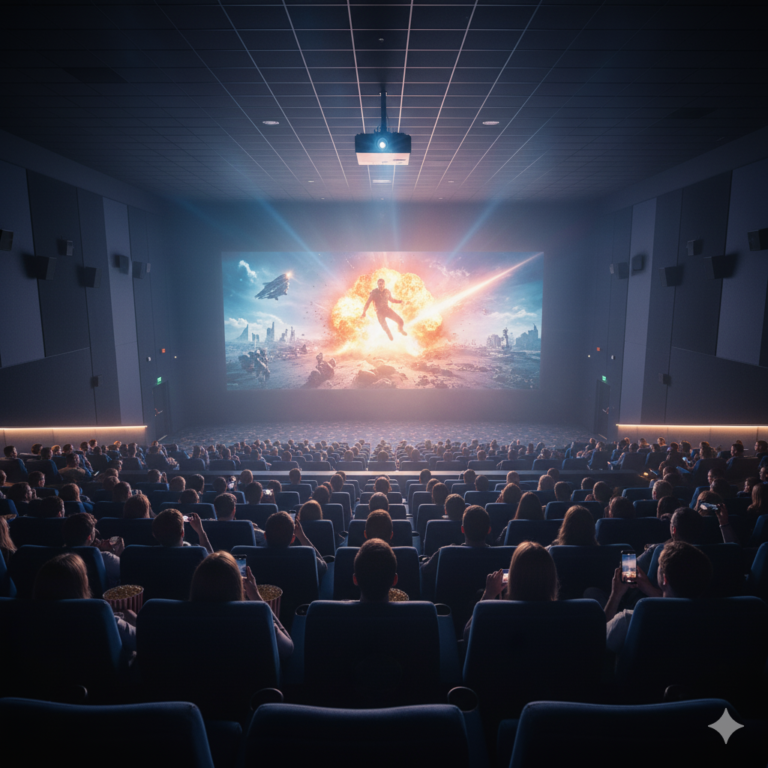
IMAX sound quality justifies the ticket price premium for films specifically designed for the format, but not for standard movies retrofitted to IMAX screens. The difference between a true IMAX presentation with its 12-channel sound system delivering 52,000 watts of precision-tuned audio and a regular theater’s 5.1 or 7.1 setup is genuinely transformative””you feel Hans Zimmer’s Dune score in your chest cavity, not just your ears. However, when a studio slaps the IMAX label on a film shot entirely with standard cameras and mixed for conventional sound systems, you’re paying 40 to 60 percent more for a marginally louder experience that doesn’t warrant the cost. Christopher Nolan’s Oppenheimer, filmed partially with IMAX cameras and mixed specifically for the format’s capabilities, represents the ideal use case where every additional dollar translates to measurable audio-visual improvement.
This distinction matters because IMAX has evolved from a specialized large-format documentary system into a brand applied inconsistently across vastly different theater configurations. Some venues feature genuine IMAX laser projection with the full proprietary sound system, while others operate “IMAX Experience” screens that are barely larger than standard auditoriums with sound systems only marginally better than premium large format competitors. The ticket price, however, remains consistently elevated across all these variations. This article examines what you’re actually paying for when you choose IMAX, how to identify theaters worth the premium, and when saving your money for a standard screening makes more practical sense.
Table of Contents
- What Makes IMAX Sound Quality Different From Standard Theater Audio?
- Understanding the IMAX Ticket Price Premium Across Different Venues
- How Film Production Choices Affect IMAX Sound Value
- Comparing IMAX Sound to Dolby Atmos and Other Premium Formats
- When IMAX Sound Quality Does Not Justify the Premium
- The Economics Behind IMAX Ticket Pricing
- How to Prepare
- How to Apply This
- Expert Tips
- Conclusion
- Frequently Asked Questions
What Makes IMAX Sound Quality Different From Standard Theater Audio?
imax‘s proprietary sound system operates on fundamentally different engineering principles than conventional cinema audio. Traditional theaters use a 5.1 or 7.1 channel configuration with speakers positioned behind a perforated screen and along the side walls, creating a soundstage that emanates primarily from the front of the room. IMAX theaters deploy a 12-channel system with speakers positioned throughout the entire auditorium, including overhead arrays and side-surround clusters tuned to the specific acoustic properties of each individual room. The result is audio that doesn’t just come from a direction but occupies three-dimensional space around you. The wattage difference tells only part of the story. A flagship IMAX location can push 52,000 watts through its speaker system compared to approximately 10,000 to 15,000 watts in a well-equipped standard auditorium, but raw power means nothing without precision.
IMAX calibrates each speaker cluster to account for room dimensions, seat positioning, wall materials, and even the acoustic absorption characteristics of a full audience versus an empty house. This means the explosion in row 15 seat 8 should sound virtually identical to the same explosion in row 3 seat 22″”a consistency that standard theaters rarely achieve. The frequency response range in IMAX systems extends lower than most conventional setups can reproduce, reaching into the infrasonic territory below 20 Hz. You cannot consciously hear these frequencies, but your body perceives them as physical pressure. When the sandworm emerges in Dune or the Batmobile tears through Gotham in The Dark Knight, that sensation of your ribcage vibrating isn’t just volume””it’s frequencies your standard theater literally cannot produce. For comparison, most commercial theaters roll off their low-frequency effects around 30 to 35 Hz, missing an entire register of designed sound.

Understanding the IMAX Ticket Price Premium Across Different Venues
The IMAX brand encompasses at least three distinct theater configurations, each commanding similar price premiums despite offering dramatically different experiences. True IMAX theaters, sometimes called GT or Grand Theater venues, feature screens measuring 72 by 53 feet or larger with dual 4K laser projection and the full 12-channel sound system. IMAX Digital venues, the most common configuration, use single projectors on screens typically measuring 40 by 60 feet with the same sound specifications. IMAX Experience screens, found in some multiplex conversions, may measure only slightly larger than standard auditoriums with modified sound systems that approximate but do not replicate the full specification. ticket prices across all three configurations typically range from 18 to 28 dollars, representing a 40 to 60 percent premium over standard screenings at the same location.
A moviegoer paying 24 dollars at a genuine IMAX GT venue like the amc Lincoln Square in New York receives measurably more value than someone paying 22 dollars at a converted IMAX Experience screen in a suburban multiplex, yet the branding and marketing make this distinction nearly invisible. The sound system in a proper IMAX installation costs approximately 500,000 dollars and requires ongoing calibration by certified technicians, while converted venues may operate systems costing a fraction of that amount. However, if your nearest IMAX venue is a Digital or Experience configuration rather than a flagship GT location, the sound premium specifically may not justify the cost difference. The visual presentation””larger screen, brighter projection, higher resolution””might still warrant the upgrade, but the audio delta between these lesser IMAX configurations and a well-maintained Dolby Cinema or premium large format screen narrows considerably. Research your specific theater’s IMAX specification before assuming the brand name guarantees the flagship experience.
How Film Production Choices Affect IMAX Sound Value
Not every film released in IMAX benefits equally from the format’s audio capabilities, and understanding production choices helps predict whether the premium makes sense. Films natively shot with IMAX cameras and mixed specifically for the 12-channel sound system””including most Christopher Nolan productions, certain Marvel tentpoles, and select prestige releases””contain audio elements explicitly designed for speakers that standard theaters don’t have. The IMAX mix of Oppenheimer included discrete sound objects positioned in the overhead channels that collapsed into ambient noise on standard 7.1 systems. Conversely, films that receive IMAX releases through digital upscaling and basic remixing offer minimal audio improvement over standard presentations.
A romantic comedy or dialogue-driven drama released in IMAX primarily for the screen size premium will sound louder but not dimensionally different, because the source material was never designed to exploit the expanded channel configuration. studios increasingly push films into IMAX release windows regardless of production specifications, diluting the format’s value proposition for consumers who assume the label guarantees a meaningfully enhanced experience. The most reliable indicator of genuine IMAX audio value is whether the marketing materials mention “filmed with IMAX cameras” or “specially formatted for IMAX.” When a production commits to the format during filming rather than post-production, the entire sound design typically follows suit. Denis Villeneuve’s Dune films exemplify this approach””the sound team built custom speaker rigs during production specifically to ensure the mix would translate to IMAX’s expanded frequency range and spatial capabilities. Paying premium prices for this level of intentional craftsmanship delivers measurable value that generic format conversions cannot match.

Comparing IMAX Sound to Dolby Atmos and Other Premium Formats
IMAX’s primary competitor in the premium theater space, Dolby Cinema with Atmos sound, offers a meaningfully different audio philosophy that may suit certain films and listener preferences better. Dolby Atmos treats sound as discrete objects positioned in three-dimensional space, with up to 64 individually addressable speaker locations in a fully-equipped auditorium. IMAX’s 12-channel system uses broader zones rather than pinpoint positioning, creating an immersive wall of sound rather than precise spatial placement. Neither approach is objectively superior””they represent different engineering priorities. For films heavy on dialogue and subtle ambient detail, Dolby Atmos often delivers superior clarity because its object-based approach prevents competing audio elements from masking each other.
A quiet conversation in a rainstorm can place each voice, each raindrop, and each ambient sound in its own spatial position, maintaining separation that zone-based systems blur together. For films emphasizing overwhelming sensory impact””massive explosions, crushing bass, the physical sensation of being inside a scene””IMAX’s raw power and extended frequency response create an experience Dolby venues struggle to replicate. The price differential between these formats typically favors Dolby slightly, with most Dolby Cinema screenings running two to four dollars less than IMAX at the same multiplex. Both represent substantial premiums over standard screenings, so the choice often comes down to the specific film’s design and your personal preference for precision versus power. Action tentpoles and visually spectacular blockbusters generally favor IMAX; genre thrillers, horror films, and anything relying on subtle sound design often shine brighter in Dolby Atmos environments.
When IMAX Sound Quality Does Not Justify the Premium
Several scenarios exist where paying IMAX prices delivers minimal return on investment despite the format’s genuine capabilities. Matinee screenings in poorly-maintained IMAX venues often suffer from calibration drift, where the precise speaker tuning that defines the format has degraded between scheduled technician visits. Unlike standard projection booths that theater staff can adjust, IMAX systems require certified specialists for calibration, and some venues stretch maintenance schedules to reduce costs. Films mixed primarily for home theater release that receive brief IMAX theatrical runs rarely justify the premium. Streaming service theatrical releases, documentary expansions, and anniversary re-releases often use IMAX windows for marketing cachet rather than genuine format optimization.
The 2023 re-release of Titanic in IMAX, while visually remastered, contained audio improvements that most audience members could not meaningfully distinguish from a well-maintained standard auditorium. The price premium paid for nostalgia rather than technical enhancement. Personal hearing sensitivity also affects value calculation. If you’ve experienced any high-frequency hearing loss””common in adults over 40 and those with significant concert or headphone exposure””the subtle spatial distinctions that justify IMAX’s premium become progressively harder to perceive. The extended high-frequency response that makes laser fire sizzle and dialogue sparkle operates in precisely the range most vulnerable to age and noise-related degradation. This doesn’t mean IMAX becomes worthless, but the delta between it and standard presentations narrows for affected listeners.
The Economics Behind IMAX Ticket Pricing
Theater chains split IMAX revenue differently than standard screenings, with IMAX Corporation claiming a larger percentage of premium ticket sales in exchange for licensing and equipment support. This arrangement means theaters have less margin flexibility on IMAX pricing even when market conditions might warrant discounts. A venue might offer five-dollar Tuesday promotions for standard screens while maintaining full IMAX pricing because the licensing structure doesn’t permit proportional discounts.
The installed cost of IMAX equipment also drives pricing regardless of whether a specific screening fills seats. A full IMAX GT installation can exceed five million dollars in equipment and construction costs, requiring theaters to maintain premium pricing across all screenings to amortize the investment. This economic reality means IMAX pricing rarely responds to competition or demand fluctuations the way standard ticket prices might. You’ll find Dolby Cinema prices varying by market, time, and promotion while IMAX holds relatively steady nationwide.
How to Prepare
- **Identify your specific theater’s IMAX configuration** by searching the venue name plus “IMAX specification” or checking the IMAX website’s theater locator, which distinguishes between GT, laser, and digital venues.
- **Research whether the film was shot or formatted for IMAX** by reviewing production materials, as films specifically designed for the format advertise this distinction prominently.
- **Choose center-section seating** where IMAX calibrates its sound system for optimal coverage, typically between the fourth and tenth rows in the horizontal center third of the auditorium.
- **Attend evening or weekend screenings** when theaters typically schedule their most experienced projectionists and maintain stricter presentation standards.
- **Avoid opening weekend if possible** when equipment operates under maximum stress and sound calibration may drift from constant use.
How to Apply This
- **Calculate the actual dollar premium** at your specific venue by comparing IMAX and standard pricing, as this varies significantly by market and establishes your true cost threshold.
- **Cross-reference the film’s production format** against your venue’s IMAX specification””a film shot in IMAX shown at an IMAX GT venue represents maximum value alignment.
- **Consider your personal audio sensitivity** honestly, including any hearing limitations and your historical ability to perceive premium sound differences in past screenings.
- **Factor in non-audio IMAX benefits** like screen size and visual resolution, which may justify the premium even when the sound improvement proves marginal for your specific situation.
Expert Tips
- Select films with substantial low-frequency sound design””space epics, war films, disaster movies””to maximize IMAX’s extended bass response that standard theaters cannot reproduce.
- Do not pay IMAX premium for dialogue-driven films, dramas, or comedies where the 12-channel system has nothing distinctive to reproduce.
- Visit flagship IMAX GT locations for tentpole releases even if they require additional travel, as the difference between GT and standard IMAX installations can exceed the difference between standard IMAX and regular theaters.
- Request seat assignment in the horizontal center of the auditorium where the sound system’s calibration sweet spot typically falls, avoiding extreme sides where channel separation becomes exaggerated.
- Consider Dolby Atmos for horror films and thrillers where object-based sound positioning creates more effective tension than IMAX’s power-focused approach.
Conclusion
IMAX sound quality represents a genuine technical achievement that justifies premium pricing under the right circumstances””specifically, when films designed for the format screen at properly-maintained flagship venues for audiences seated in calibrated sweet spots. The combination of extended frequency response, overwhelming wattage, and room-specific calibration creates an experience that standard theaters cannot replicate regardless of their own technical capabilities. However, the inconsistent application of the IMAX brand across vastly different theater configurations means consumers must educate themselves about what they’re actually purchasing rather than trusting the label alone.
The practical decision framework requires matching film production choices against venue specifications against personal hearing capabilities against actual dollar premiums. A Christopher Nolan film at an IMAX GT venue for a 45-percent markup delivers obvious value; a streaming service’s theatrical expansion at an IMAX Experience screen for the same percentage premium does not. As premium formats continue proliferating and competing for moviegoer dollars, understanding these distinctions becomes essential for extracting genuine value from elevated ticket prices rather than simply paying more for marketing terminology.
Frequently Asked Questions
How long does it typically take to see results?
Results vary depending on individual circumstances, but most people begin to see meaningful progress within 4-8 weeks of consistent effort. Patience and persistence are key factors in achieving lasting outcomes.
Is this approach suitable for beginners?
Yes, this approach works well for beginners when implemented gradually. Starting with the fundamentals and building up over time leads to better long-term results than trying to do everything at once.
What are the most common mistakes to avoid?
The most common mistakes include rushing the process, skipping foundational steps, and failing to track progress. Taking a methodical approach and learning from both successes and setbacks leads to better outcomes.
How can I measure my progress effectively?
Set specific, measurable goals at the outset and track relevant metrics regularly. Keep a journal or log to document your journey, and periodically review your progress against your initial objectives.
When should I seek professional help?
Consider consulting a professional if you encounter persistent challenges, need specialized expertise, or want to accelerate your progress. Professional guidance can provide valuable insights and help you avoid costly mistakes.
What resources do you recommend for further learning?
Look for reputable sources in the field, including industry publications, expert blogs, and educational courses. Joining communities of practitioners can also provide valuable peer support and knowledge sharing.