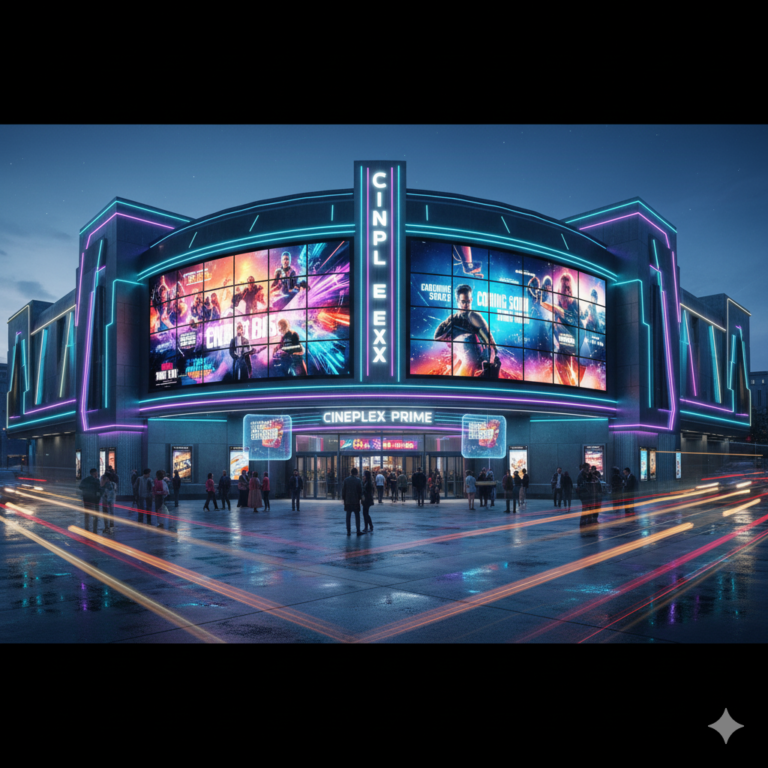
IMAX uses an aspect ratio of 1.43:1 (approximately 1.44:1), which is significantly wider and taller than standard theatrical formats, displaying images in a nearly square-shaped frame that fills more of the viewer’s vertical field of vision.
This differs fundamentally from the 2.39:1 ultra-wide format common in modern Hollywood releases or the 1.85:1 standard used in many theaters; the IMAX ratio prioritizes height as much as width, creating an immersive experience where the image dominates your entire visual field.
This article explores the technical specifications of IMAX aspect ratio, explains why filmmakers choose to shoot in this format, examines how it affects what you see on screen compared to other theatrical standards, discusses the practical implications for film production and exhibition, and addresses common misunderstandings about IMAX presentation.
- Table of Contents
- How Does IMAX Aspect Ratio Compare to Standard Theater Formats?
- Why Do Filmmakers Choose IMAX's Nearly Square Format?
- How Does Aspect Ratio Affect Image Cropping and Content Loss?
- What's the Practical Viewer Experience Difference?
- What Happens When Standard Films Are Reformatted for IMAX Exhibition?
- IMAX Aspect Ratio and Digital vs. Film Projection
- The Evolution and Future of IMAX Aspect Ratio Standards
- Conclusion
- Frequently Asked Questions
- You Might Also Like
The IMAX aspect ratio’s distinguishing characteristic is its emphasis on vertical real estate. When you sit in an IMAX theater, roughly 90% of your peripheral vision is occupied by the screen, compared to approximately 60-70% in a standard multiplex.
This isn’t simply a matter of the image being bigger; it’s a fundamentally different compositional challenge that requires cinematographers and directors to rethink how they frame shots, position actors, and construct visual storytelling.
Table of Contents
- How Does IMAX Aspect Ratio Compare to Standard Theater Formats?
- Why Do Filmmakers Choose IMAX’s Nearly Square Format?
- How Does Aspect Ratio Affect Image Cropping and Content Loss?
- What’s the Practical Viewer Experience Difference?
- What Happens When Standard Films Are Reformatted for IMAX Exhibition?
- IMAX Aspect Ratio and Digital vs. Film Projection
- The Evolution and Future of IMAX Aspect Ratio Standards
- Conclusion
- Frequently Asked Questions
How Does IMAX Aspect Ratio Compare to Standard Theater Formats?
The imax 1.43:1 ratio sits in a unique middle ground between traditional academy ratio (1.37:1, used in older films) and modern widescreen standards. Standard theatrical releases in the United States use either 1.85:1 or 2.39:1 aspect ratios.
A 1.85:1 image is considerably wider than tall—think of a rectangle stretched horizontally—while 2.39:1 is even more extreme, creating the ultra-wide letterboxed look you see in action blockbusters and prestige dramas.
By contrast, IMAX’s 1.43:1 is nearly boxy by modern standards, which means it actually shows more vertical information than most theatrical releases but less horizontal information than ultra-widescreen films.
To understand the visual difference: imagine a scene where an actor stands in front of a tall building. In a 2.39:1 format, you’d see enormous stretches of space on either side of the building with the actor dwarfed in the middle.
In 1.43:1 IMAX, that same scene would crop less horizontal space but would capture more of the building’s height, the sky above, and the ground below. This creates a viewing experience where vertical composition becomes paramount.
A film shot specifically for IMAX might frame characters to take advantage of this vertical space, positioning them lower in the frame to emphasize environmental height and grandeur.
Why Do Filmmakers Choose IMAX’s Nearly Square Format?
IMAX’s aspect ratio wasn’t chosen arbitrarily; it emerged from the technical requirements of IMAX’s massive projection system and the practical reality of theater architecture.
IMAX screens are typically 72 feet wide by 52 feet tall (with variations depending on the venue), and the 1.43:1 ratio represents an optimal balance between maximizing screen size and maintaining reasonable viewing distances for audiences sitting at different distances from the screen.
If IMAX used a 2.39:1 ratio like modern Hollywood, the screen would need to be proportionally wider, forcing back-row viewers to experience severe perspective distortion—their eyes would have to track horizontally across an unreasonable distance.
However, this technical necessity creates artistic constraints that filmmakers must navigate carefully. A shot that works compositionally in 1.85:1 or 2.39:1 may not work in 1.43:1; vertical headroom becomes critical, and the nearly square frame can make actors appear slightly squat if they’re framed from head to toe.
Some filmmakers embrace these constraints creatively—Denis Villeneuve’s Dune films were notably shot with IMAX projection in mind, and the cinematography actively uses the vertical space to emphasize the vastness of desert landscapes and monumental architecture.
Other directors view IMAX projection as secondary to their primary artistic vision; in those cases, footage shot for standard formats is simply projected on IMAX screens without the benefit of format-specific composition, which means unused vertical space appears as unwanted headroom or excessive sky.
How Does Aspect Ratio Affect Image Cropping and Content Loss?
This is where the distinction between “IMAX filmed” and “reformatted for IMAX” becomes critical to your viewing experience. Some films are shot specifically for IMAX cameras using that 1.43:1 ratio throughout.
Others are shot in standard theatrical ratios (usually 2.39:1) and then projected on IMAX screens, which requires either black bars on the sides or cropping of the image.
When a 2.39:1 film is shown on a 1.43:1 IMAX screen, the theater essentially chooses: show black bars on the sides (losing the immersive full-screen effect) or crop the left and right edges of the image (potentially losing compositional information).
Interstellar, for example, was shot with multiple aspect ratios in mind—different sequences use different ratios (including full IMAX 1.43:1 sequences and standard 2.39:1 sequences). When shown in IMAX, those sequences shot in standard ratios undergo what’s called “IMAX ratio manipulation,” which may involve cropping or repositioning.
The opening farmer scenes that were shot in 2.39:1 lose some horizontal information when shown in 1.43:1, though the filmmakers made compositional choices to minimize noticeable losses. Conversely, the space station sequences shot in true IMAX 1.43:1 fill the entire screen with intentional detail that wouldn’t exist in the standard format version.

What’s the Practical Viewer Experience Difference?
The practical impact of IMAX’s aspect ratio is immersion and scale. Because more of your visual field is occupied by the image, your brain experiences less visual boundary—you’re less aware of where the screen ends and the theater begins. For films with sweeping landscapes or large-scale action, this creates a heightened sense of presence.
The tall format is particularly effective for vertical compositions: soaring skyscrapers, vast cliffs, towering ships, or the expanse of sky in space scenes benefit from the extra vertical information.
Dialogue-heavy films or intimate character drama, however, don’t necessarily benefit from the vertical real estate. A close-up of an actor’s face in 1.43:1 takes up less horizontal space than in 2.39:1, which can sometimes feel cramped if the cinematography wasn’t specifically designed for it.
Many IMAX conversions of standard films don’t feel dramatically different to the casual viewer—the image is larger and the aspect ratio slightly different, but the compositional impact is subtle.
This is why certain filmmakers (Nolan, Villeneuve, James Cameron for Avatar sequels) actively choose IMAX formats and design their cinematography around them, while others treat IMAX as an afterthought in their distribution strategy.
What Happens When Standard Films Are Reformatted for IMAX Exhibition?
The technical challenge of showing a 2.39:1 film on a 1.43:1 IMAX screen reveals a crucial limitation: aspect ratio conversion is not resolution-neutral. If a theater uses the “pillarbox” method (adding black bars on the sides), you’re paying premium IMAX prices for a smaller effective image than a standard theater would show.
If the theater crops the image, you’re losing compositional information that the cinematographer intentionally included.
There’s no perfect solution. This conversion problem is why some filmmakers and enthusiasts are particular about whether a film is “IMAX formatted” versus “blown up for IMAX.” Oppenheimer, for example, was shot specifically for IMAX in 1.43:1 for multiple sequences, so viewing it on an IMAX screen delivers the cinematographer’s intended composition.
By contrast, many theatrical releases are shot in 2.39:1 with IMAX theatrical release as an afterthought—the IMAX projection is basically enlargement without the compositional optimization. The experience is bigger but not necessarily better; you’re watching a larger version of something not designed for that format, like upscaling a standard-definition video.

IMAX Aspect Ratio and Digital vs. Film Projection
The distinction between IMAX film projection (using 70mm physical film) and IMAX digital projection adds another layer to aspect ratio considerations. IMAX film cameras shoot on massive 70mm film stock, and the 1.43:1 ratio has been standardized for decades.
Digital IMAX projection systems, which have become more common in recent years, maintain the same 1.43:1 aspect ratio for consistency, but digital sensors and projection systems have different image quality characteristics than the massive optical enlargement of 70mm film.
A 70mm IMAX print is optically unique—no upscaling, no digital interpolation—the physical 70mm film stock is projected directly, which produces extraordinary sharpness and color fidelity at massive scales.
Digital IMAX systems require digital sensors to capture content and digital projectors to display it, which means no film stock advantages but easier integration with standard digital cinematography workflows.
For modern films, this often means the cinematographer shoots on standard digital cameras (RED, Alexa) in standard aspect ratios and the material is upscaled and cropped for digital IMAX projection, which brings us back to the content-loss problem discussed earlier.
The Evolution and Future of IMAX Aspect Ratio Standards
IMAX’s 1.43:1 aspect ratio has remained virtually unchanged since the format’s introduction in 1970, making it one of the most standardized theatrical formats in cinema history. This consistency is both a strength (predictable exhibition standards) and a limitation (the format hasn’t evolved as cinematography has).
Over the past decade, as more filmmakers like Christopher Nolan and Denis Villeneuve have embraced IMAX specifically for artistic reasons, there’s been renewed interest in aspect ratio composition for large-format theatrical presentation.
The future is likely to see continued dual-format shooting—where significant sequences in major films are shot in 1.43:1 for IMAX theaters while the primary film is shot in standard 2.39:1.
This approach recognizes that IMAX is a premium theatrical experience rather than the default format, and allows directors to apply the format strategically to sequences where vertical composition and scale matter most.
As streaming and home viewing continue to expand, IMAX’s massive-scale theatrical presentation has become even more differentiated, which incentivizes filmmakers to actually optimize their visual language for the format rather than treating it as a simple enlargement.
Conclusion
IMAX’s 1.43:1 aspect ratio is a nearly square format that prioritizes vertical visual field and immersive scale, fundamentally different from the elongated rectangles of standard theatrical or ultra-widescreen formats.
The key technical challenge is that this ratio requires either compositional sacrifice (when standard films are cropped or pillarboxed for IMAX screens) or intentional filmmaking design (when cinematographers shoot specifically for the 1.43:1 frame to maximize its vertical strengths).
Understanding whether a film was shot for IMAX or merely projected on an IMAX screen will help you anticipate whether you’re experiencing the cinematographer’s optimized vision or a reformatted approximation of it.
To get the most from IMAX aspect ratio, seek out films that were specifically shot for the format—look for promotional materials or filmmaker interviews indicating IMAX cinematography. Sit in seats that allow you to see the full screen without neck strain, typically in the middle-to-back rows of an IMAX theater.
Recognize that the format excels at vertical compositions and large-scale imagery but doesn’t automatically enhance every film; a dialogue-driven intimate drama shot in standard formats won’t necessarily be significantly improved by the larger frame and wider vertical field of view.
Frequently Asked Questions
Is IMAX 1.43:1 aspect ratio the same as IMAX 1.90:1?
No. IMAX 1.43:1 is the classic large-format ratio for 70mm IMAX film and digital IMAX screens. Some specialty IMAX theaters use 1.90:1, which is a compromise ratio that fits some existing theater architectures; it’s less common than 1.43:1 and represents a different optimization for different venue constraints. Most major IMAX releases use 1.43:1.
If I watch an IMAX film at home or on streaming, do I see the true aspect ratio?
Not typically. Streaming services and home video releases usually default to standard theatrical aspect ratios (1.85:1 or 2.39:1) rather than the 1.43:1 IMAX ratio.
You might see letter-boxed bars on the top and bottom if the content was shot in IMAX and the platform is trying to preserve it, but you’re viewing it at a massive size reduction and not experiencing the full immersive intent.
Why don’t all movie theaters use IMAX’s aspect ratio?
IMAX’s tall, nearly square format requires expensive specialized projection equipment and theater design. Standard multiplex screens are optimized for 2.39:1 widescreen, which uses less vertical space and is cheaper to implement. IMAX is a premium format reserved for major theatrical releases and specialty venues, not the default multiplex experience.
Can IMAX theaters show standard 2.39:1 films without cropping or pillarboxing?
Not really without compromise. A 2.39:1 image on a 1.43:1 screen will either lose horizontal information (if cropped to fill the frame) or show black bars (if shown in full with pillarboxing). Some theater operators use automatic cropping or aspect ratio adjustment, but this always involves some loss of the cinematographer’s intended composition.
How much bigger is an IMAX image compared to a standard theater?
An IMAX screen (typically 72′ × 52′) is roughly 7-10 times larger by area than a standard multiplex screen (roughly 30′ × 16′). The aspect ratio difference means IMAX is particularly taller, so vertical content appears dramatically more immersive than it would in a standard theater’s wider but shorter screen.
Do all “IMAX Enhanced” labels mean the film was shot in IMAX aspect ratio?
No. “IMAX Enhanced” is a marketing term that sometimes means content was actually filmed in IMAX, but often just means it’s been formatted and optimized for IMAX projection. Always check whether the film was “shot on IMAX cameras” versus “optimized for IMAX exhibition”—the distinction significantly affects whether you’re seeing the cinematographer’s intended composition.
You Might Also Like
- Why IMAX Aspect Ratio Matters In Cinematography
- What IMAX Aspect Ratio Means For Movie Viewing
- IMAX Versus Standard Aspect Ratio Key Differences