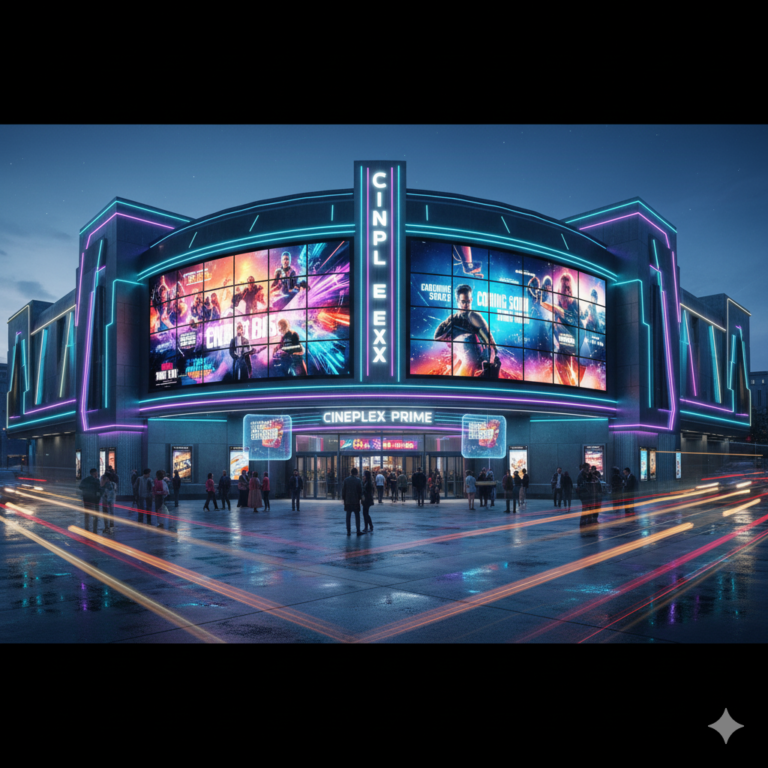
Learning how to design a logo for your online movie club is one of the most important branding decisions you will make when launching a film-focused community. A logo serves as the visual cornerstone of your club’s identity, appearing on everything from your website header and social media profiles to merchandise and email newsletters. Unlike generic clip art or borrowed imagery, a custom logo immediately signals to potential members that your movie club is a legitimate, thoughtfully curated space for film discussion and appreciation. The challenge many film enthusiasts face when starting an online movie club is translating their passion for cinema into a cohesive visual identity.
Questions arise: Should the logo reference classic film iconography like reels and clapperboards, or take a more abstract approach? How do you balance creativity with readability across different screen sizes? What colors evoke the right mood for your particular film niche, whether that is horror, classic Hollywood, international cinema, or documentary? These design decisions require understanding both fundamental logo design principles and the specific cultural language of cinema. By the end of this guide, you will understand the complete process of designing a movie club logo, from initial concept development through final file preparation. The information covers typography selection, color psychology for film-related branding, iconography options, software choices for different skill levels, and practical considerations for digital application. Whether you plan to design the logo yourself or brief a professional designer, this knowledge will ensure your online movie club starts with a strong visual foundation that attracts like-minded film lovers.
Table of Contents
- What Makes an Effective Logo for an Online Movie Club?
- Understanding Cinema Iconography and Visual References for Logo Design
- Typography Selection for Film-Related Brand Identity
- Color Psychology and Palette Selection for Movie Club Branding
- Common Logo Design Mistakes Movie Clubs Should Avoid
- Software and Tools for Creating Your Movie Club Logo
- How to Prepare
- How to Apply This
- Expert Tips
- Conclusion
- Frequently Asked Questions
What Makes an Effective Logo for an Online Movie Club?
An effective movie club logo accomplishes several objectives simultaneously. First, it must be instantly recognizable at small sizes, since most viewers will encounter it as a favicon, social media avatar, or mobile app icon before seeing it at full scale. Second, it needs to communicate something about your club’s focus or personality without requiring explanation. Third, it should be distinctive enough to avoid confusion with existing film organizations, streaming services, or production companies.
The most successful movie club logos tend to balance familiarity with originality. They often incorporate recognizable cinema elements, such as film strips, projector light beams, or screen shapes, but present them in unexpected ways. Consider how the logo might look in both positive and negative space, since you will likely need versions that work on both light and dark backgrounds. The design should also scale gracefully, meaning intricate details that look impressive at large sizes might become muddy or illegible when reduced to 32 pixels square. Key characteristics of effective movie club logos include:.
- **Simplicity with purpose**: The most memorable logos use minimal elements arranged thoughtfully, avoiding cluttered compositions that confuse the eye
- **Relevant visual vocabulary**: Successful designs draw from cinema history and culture without defaulting to overused clichés
- **Versatility across applications**: Strong logos maintain their impact whether displayed on a website masthead, embroidered on a cap, or printed in grayscale on a newsletter
Understanding Cinema Iconography and Visual References for Logo Design
Cinema has developed a rich visual language over more than a century, providing logo designers with extensive iconographic options. Traditional film symbols include 35mm film reels, sprocket holes, clapperboards, director’s chairs, spotlights, film strip frames, projectors, and the classic cinema curtain. More contemporary references might include popcorn containers, 3D glasses, the play button triangle, or stylized screen aspect ratios. The challenge lies in selecting imagery that feels fresh rather than dated or generic. Different film genres and eras carry their own visual associations.
A club focused on classic Hollywood might draw from art deco typography and golden-age glamour. horror film communities often gravitate toward distressed textures, blood-red accents, and gothic letterforms. International cinema clubs might incorporate subtle references to specific national film movements, such as the stark compositions associated with Scandinavian cinema or the vibrant colors of Bollywood. Documentary film groups sometimes favor more minimalist, journalistic design approaches. When selecting visual references for your movie club logo:.
- **Research existing film organization logos** to understand what visual territory is already occupied and identify opportunities for differentiation
- **Consider your club’s specific focus** and choose imagery that speaks directly to that niche rather than generic “movie” symbols
- **Think about longevity** by avoiding trendy design elements that might feel dated within a few years
Typography Selection for Film-Related Brand Identity
Typography often carries more weight in logo design than imagery, particularly for text-based or wordmark logos. The typeface you select for your movie club name communicates tone, era, and personality before anyone reads the actual words. Serif fonts suggest tradition, authority, and classic sophistication, making them natural choices for clubs focused on film history or prestigious cinema. Sans-serif fonts project modernity, accessibility, and clean professionalism. Script and decorative typefaces require careful consideration. While a dramatic script might evoke classic Hollywood glamour, it can sacrifice readability, especially at small sizes or on screens.
Display fonts with unusual letterforms attract attention but may not reproduce well across all applications. Many successful movie club logos combine two complementary typefaces: a distinctive display font for the club name and a neutral supporting font for taglines or secondary information. Custom lettering or modified typefaces can give your logo a unique character that standard fonts cannot achieve. This might involve adjusting letter spacing, connecting specific characters, or incorporating subtle film-related elements into the letterforms themselves. For example, the crossbar of an “A” might become a film strip, or the dot of an “i” might suggest a projector light. These modifications should enhance readability rather than compromise it.
- **Match typography to your club’s personality**: Playful clubs benefit from rounded, friendly fonts while serious cinephile organizations might prefer more austere options
- **Test readability at multiple sizes**: Your chosen typeface must remain legible when scaled down to social media icon dimensions
Color Psychology and Palette Selection for Movie Club Branding
Color choices profoundly influence how audiences perceive your movie club before they engage with any content. The classic cinema palette of black, white, red, and gold carries immediate associations with theatrical experiences, red velvet curtains, and Hollywood prestige. However, these traditional colors are also heavily used, which can make differentiation challenging. Understanding color psychology helps you select hues that align with your club’s specific identity and target audience. Red remains the dominant accent color in film branding because of its connections to passion, drama, and the iconic red curtain.
Black provides sophistication and works well for clubs focused on serious film criticism or darker genres. Gold and warm metallics suggest awards, achievement, and premium positioning. Blue, less common in cinema branding, can work effectively for clubs emphasizing calm discussion, analytical approaches, or science fiction content. Green appears rarely in film logos but might suit clubs focused on environmental documentaries or independent cinema. When building your color palette:.
- **Limit your primary palette to two or three colors** to maintain visual coherence across all applications
- **Ensure sufficient contrast** between background and foreground colors for accessibility and readability
- **Consider cultural color associations** if your club serves an international audience, as color meanings vary significantly across cultures
- **Test colors on screen** since digital display is your primary medium, and some colors render differently on monitors than in print
Common Logo Design Mistakes Movie Clubs Should Avoid
The most frequent mistake in movie club logo design is over-reliance on clichéd imagery. Film reels, while immediately recognizable, appear in thousands of existing logos and rarely distinguish one organization from another. Clapperboards face similar oversaturation. When using these elements, the execution must be exceptional enough to overcome their familiarity. A more effective approach often involves suggesting cinema through less obvious means: the shape of a screen, the quality of light, or typography that evokes specific film eras.
Complexity presents another common pitfall. Designers sometimes pack multiple cinema references into a single logo, resulting in cluttered compositions that fail to communicate anything clearly. A logo featuring a reel, a clapperboard, a popcorn bucket, and a star accomplishes less than a single, well-executed element. Similarly, overly detailed illustrations might look impressive in large format but become incomprehensible at icon sizes. The solution involves ruthless simplification: identify the single most important idea your logo should communicate and let that guide all design decisions. Technical mistakes also undermine otherwise sound designs:.
- **Poor file preparation**: Logos created only in raster formats like JPEG or PNG cannot scale without quality loss; vector formats are essential
- **Insufficient version planning**: Most clubs need full-color, single-color, reversed, and icon-only versions of their logo
- **Ignoring accessibility**: Low-contrast color combinations or overly thin line weights can make logos difficult to perceive for viewers with visual impairments

Software and Tools for Creating Your Movie Club Logo
The software you use depends on your design experience, budget, and specific requirements. Professional designers typically work in Adobe Illustrator, the industry standard for vector logo creation. Illustrator provides precise control over every element and produces files that scale infinitely without quality loss. The subscription cost and learning curve, however, place it beyond reach for many casual users.
Free and lower-cost alternatives have improved significantly. Inkscape offers vector editing capabilities comparable to Illustrator with no cost, though its interface requires some adjustment. Canva provides template-based logo creation accessible to complete beginners, though results often look generic without significant customization. Figma, while primarily a user interface design tool, handles logo creation competently and offers free tiers. For those willing to commission professional work, platforms like 99designs, Fiverr, and direct outreach to freelance designers provide options across various budget levels.
How to Prepare
- **Define your club’s identity and values**: Write down three to five adjectives that describe your movie club’s personality, whether sophisticated, casual, niche, inclusive, analytical, or entertaining. These words guide every subsequent design decision.
- **Research your competitive landscape**: Examine logos from other movie clubs, film festivals, streaming services, and cinema organizations. Note what you find effective and what seems overused. Create a folder of visual references that inspire you.
- **Determine technical requirements**: List every application where your logo will appear, including website headers, social media profiles, email signatures, and potential merchandise. Note the required dimensions and format specifications for each.
- **Establish your constraints**: Clarify your budget, timeline, and whether you will design the logo yourself, use online tools, or hire a professional. These practical factors shape realistic expectations.
- **Gather input from founding members**: If your club already has members or co-founders, collect their perspectives on visual direction. Consensus at this stage prevents conflict during later revisions.
How to Apply This
- **Begin with rough sketches on paper**: Even if you plan to work digitally, quick hand-drawn concepts help explore ideas faster than any software. Sketch twenty to thirty small thumbnails without judging quality, then identify the three strongest directions.
- **Develop selected concepts digitally**: Translate your best sketches into vector format using your chosen software. Focus on shapes and composition before adding color. Create multiple variations of each concept.
- **Test at multiple scales and contexts**: Place your logo candidates into mockups showing real-world applications. Check legibility at favicon size, examine how they appear on different colored backgrounds, and assess whether they remain effective in single-color versions.
- **Gather feedback and refine**: Share your top two or three options with trusted colleagues or potential club members. Ask specific questions about clarity, mood, and appropriateness rather than general preferences. Incorporate useful feedback into final revisions.
Expert Tips
- **Start in black and white**: Color can mask compositional problems. A strong logo works in pure black on white before any color is added. Only after the form succeeds should you introduce color.
- **Design for the smallest size first**: Since most people encounter logos at tiny dimensions on phones and in browser tabs, prioritize clarity at small scales. Details can always be added for large-format applications.
- **Create a simplified icon version**: Even if your primary logo includes text, develop a standalone symbol that works independently for favicons, app icons, and social media avatars.
- **Document your design decisions**: Keep notes on color codes, typeface names, and spacing specifications. This information proves invaluable when creating future materials or briefing other designers.
- **Protect your work legally**: Once finalized, consider trademark registration for your logo, particularly if you plan to sell merchandise or build a substantial membership base.
Conclusion
Designing a logo for your online movie club requires balancing creative ambition with practical constraints. The process involves understanding what makes cinema visually distinctive, translating that understanding into design decisions about typography, color, and iconography, and then refining those decisions through testing and feedback. A well-designed logo does more than look attractive; it communicates your club’s identity, attracts the right members, and provides a foundation for all future visual materials.
The effort invested in thoughtful logo design pays dividends throughout your club’s existence. Every time a potential member encounters your logo on social media, in search results, or through word of mouth, that visual impression shapes their expectations. A polished, distinctive logo signals that your movie club values quality and attention to detail, the same values that likely drive your passion for film analysis and discussion. Take the time to develop something you will remain proud to display as your community grows.
Frequently Asked Questions
How long does it typically take to see results?
Results vary depending on individual circumstances, but most people begin to see meaningful progress within 4-8 weeks of consistent effort.
Is this approach suitable for beginners?
Yes, this approach works well for beginners when implemented gradually. Starting with the fundamentals leads to better long-term results.
What are the most common mistakes to avoid?
The most common mistakes include rushing the process, skipping foundational steps, and failing to track progress.
How can I measure my progress effectively?
Set specific, measurable goals at the outset and track relevant metrics regularly. Keep a journal to document your journey.