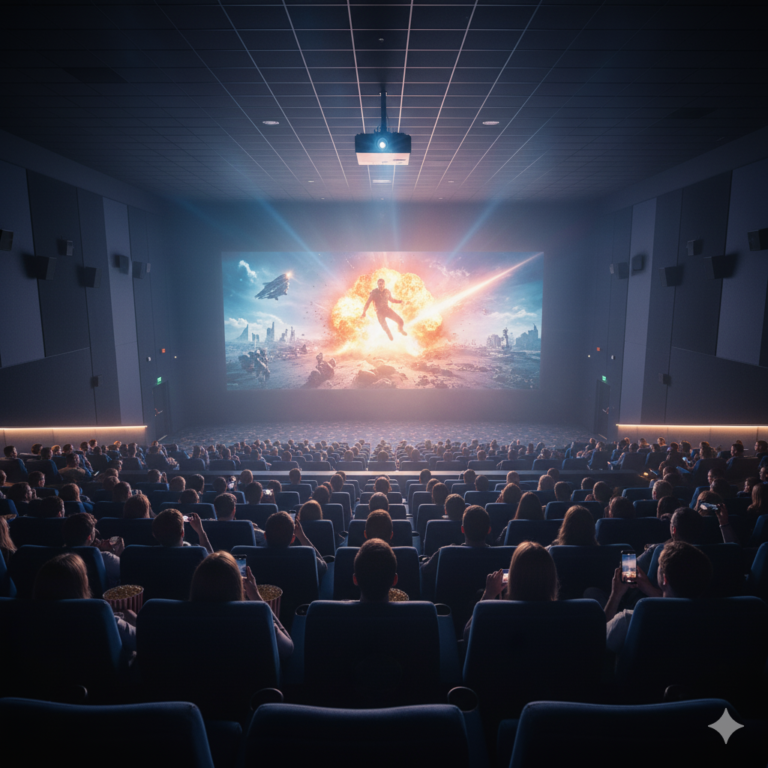
The best movie musicals of all time represent a unique intersection of storytelling, music, choreography, and cinematic artistry that no other film genre quite matches. From the golden age of Hollywood to contemporary Oscar winners, musical films have captured audiences with their ability to express emotions that dialogue alone cannot convey. These films transform ordinary narratives into extraordinary experiences where characters break into song at moments of heightened feeling, creating indelible memories that audiences carry with them for decades.
Understanding what elevates certain musicals above the rest matters for both casual viewers seeking quality entertainment and serious film enthusiasts studying the craft. The movie musical genre addresses fundamental questions about artistic expression: How can music enhance storytelling? What makes choreography cinematically effective rather than merely theatrical? Why do certain songs become cultural touchstones while others fade from memory? By examining the greatest examples of the form, viewers gain insight into the technical mastery, creative vision, and cultural timing that combine to create lasting works of art. By the end of this comprehensive guide, readers will have a thorough understanding of what distinguishes exceptional movie musicals from forgettable ones, knowledge of the essential films spanning nearly a century of cinema, and practical guidance for exploring this rich genre. Whether discovering classic musicals for the first time or revisiting beloved favorites with fresh perspective, this exploration covers the historical context, artistic achievements, and enduring influence of the films that define musical cinema at its finest.
Table of Contents
- What Makes the Best Movie Musicals Stand Out From Other Musical Films?
- Classic Golden Age Movie Musicals That Defined the Genre
- Modern Movie Musicals That Revitalized the Genre
- Essential Movie Musicals Every Film Enthusiast Should Watch
- Common Mistakes When Approaching Classic Movie Musicals
- The Global Influence of Movie Musicals Beyond Hollywood
- How to Prepare
- How to Apply This
- Expert Tips
- Conclusion
- Frequently Asked Questions
What Makes the Best Movie Musicals Stand Out From Other Musical Films?
The distinction between a good movie musical and one that achieves greatness lies in the seamless integration of music into narrative. In the finest examples of the genre, songs do not interrupt the story but rather advance it, revealing character depths and plot developments that would be impossible through dialogue alone. When Gene Kelly splashes through puddles in “Singin’ in the Rain” or when Maria spins atop an Austrian mountain in “The Sound of Music,” these moments feel inevitable rather than forced. The music emerges organically from the emotional truth of the scene, creating a heightened reality that audiences accept and embrace. Technical excellence in cinematography, editing, and sound design separates movie musicals from filmed stage productions.
Directors like Vincente Minnelli, Stanley Donen, and Bob Fosse understood that the camera itself could dance, using movement, angles, and cuts to amplify the energy of musical numbers rather than simply recording performances. The transition from stage to screen requires reconceptualizing how musical sequences function, taking advantage of close-ups that capture subtle emotional nuances, location shooting that provides authentic backdrops, and editing rhythms that synchronize with musical beats. Films that master this translation achieve something neither stage nor concert can replicate. Cultural impact and lasting influence also distinguish the greatest movie musicals from their contemporaries. These films introduce songs that become standards, dance sequences that inspire generations of performers, and visual styles that influence fashion and design beyond the movie theater. They speak to their historical moment while retaining relevance across decades, addressing universal themes of love, ambition, identity, and community through their particular stories.
- Organic integration of music and narrative where songs feel essential rather than decorative
- Cinematic techniques that distinguish film musicals from recorded stage performances
- Lasting cultural influence through memorable songs, dances, and visual innovations

Classic Golden Age Movie Musicals That Defined the Genre
The period from the late 1920s through the early 1960s established the template for movie musicals that filmmakers still reference today. “The Wizard of Oz” (1939) demonstrated how fantasy settings could liberate the musical form, with Judy Garland’s performance of “Over the Rainbow” becoming one of cinema‘s most iconic moments. The film’s transition from sepia-toned Kansas to Technicolor Oz showed audiences that musicals could create entire worlds impossible in any other medium. Its influence extends through every fantasy musical that followed, from “Mary Poppins” to “La La Land.” MGM’s Arthur Freed unit produced an extraordinary run of sophisticated musicals throughout the 1940s and 1950s that remain benchmarks of the form. “Singin’ in the Rain” (1952) stands as perhaps the most beloved movie musical ever made, combining Gene Kelly’s athletic dancing, Donald O’Connor’s comic brilliance, and Debbie Reynolds’s charm with a witty script about Hollywood’s transition to sound.
“An American in Paris” (1951) concluded with a seventeen-minute ballet sequence that proved musicals could aspire to high art while remaining entertaining. “The Band Wagon” (1953) offered a more adult, self-aware take on show business mythology, featuring Fred Astaire in peak form. The Rodgers and Hammerstein adaptations brought Broadway’s most successful partnership to cinema audiences worldwide. “Oklahoma!” (1955), “The King and I” (1956), “South Pacific” (1958), and “The Sound of Music” (1965) translated stage hits into films that often surpassed their theatrical sources in emotional impact. “West Side Story” (1961), adapted from the Bernstein and Sondheim stage production, pushed the form toward social relevance, using musical sequences to depict gang violence and ethnic tension in ways that felt revolutionary for mainstream entertainment.
- “The Wizard of Oz” established fantasy as a natural fit for musical storytelling
- MGM’s Freed unit created sophisticated entertainments that balanced artistry with accessibility
- Stage adaptations like “West Side Story” expanded the emotional and thematic range of movie musicals
Modern Movie Musicals That Revitalized the Genre
After a period of decline in the 1970s and 1980s when traditional musicals seemed antiquated, a series of films demonstrated the genre’s continued vitality. “Moulin Rouge!” (2001) proved that contemporary audiences would embrace musical storytelling if presented with sufficient visual audacity and emotional sincerity. Director Baz Luhrmann’s anachronistic approach, setting a tragic love story in 1899 Paris while characters sang twentieth-century pop songs, initially seemed bizarre but ultimately felt liberating. The film earned eight Academy Award nominations and launched a renaissance of interest in movie musicals. “Chicago” (2002) succeeded where previous attempts to revive the movie musical had failed, winning the Academy Award for Best Picture and becoming a major commercial success.
Director Rob Marshall solved the problem of realistic musical staging by presenting most numbers as fantasy sequences in protagonist Roxie Hart’s imagination, allowing audiences to accept the artifice. The film’s success led studios to greenlight musical projects that had languished in development for years, including adaptations of “The Phantom of the Opera,” “Rent,” “Dreamgirls,” and “Sweeney Todd.” “La La Land” (2016) synthesized golden age aesthetics with contemporary sensibilities, earning fourteen Academy Award nominations and winning six, including Best Director for Damien Chazelle. The film’s bittersweet ending, which denied audiences the traditional happy resolution, proved that modern musicals could engage with complex emotions while still delivering the pleasures of song and dance. Its success demonstrated that original movie musicals could compete with adaptations of established stage properties, encouraging production of films like “The Greatest Showman” and “Tick, Tick… Boom!”.
- “Moulin Rouge!” demonstrated that unconventional approaches could connect with modern audiences
- “Chicago” proved the commercial viability of movie musicals in the twenty-first century
- “La La Land” showed that original musical films could achieve both critical acclaim and popular success

Essential Movie Musicals Every Film Enthusiast Should Watch
Building a foundational knowledge of the genre requires viewing films that represent different eras, styles, and approaches to musical storytelling. Start with the acknowledged masterpieces that appear on virtually every critical ranking: “Singin’ in the Rain” for its perfect balance of comedy, romance, and spectacular musical numbers; “West Side Story” for its ambitious fusion of dance, music, and social commentary; and “The Sound of Music” for its demonstration of how emotional sincerity can transcend potential sentimentality. These three films provide essential grounding in what the genre can achieve at its best. Expand into films that pushed boundaries and influenced subsequent productions. “Cabaret” (1972) showed that musicals could address dark subjects like the rise of Nazism without sacrificing entertainment value, with Bob Fosse’s direction and Liza Minnelli’s performance creating something genuinely adult and disturbing.
“All That Jazz” (1979) offered Fosse’s semi-autobiographical exploration of artistic obsession and mortality, integrating musical sequences into a narrative structure borrowed from Federico Fellini. “Hedwig and the Angry Inch” (2001) demonstrated that low-budget independent films could contribute to the genre, using rock music to tell a transgender protagonist’s story. Do not overlook animated musicals, which have produced some of the genre’s finest achievements. Disney’s renaissance period yielded “The Little Mermaid” (1989), “Beauty and the Beast” (1991), and “The Lion King” (1994), films that introduced millions of children to musical storytelling while meeting standards that satisfied adult viewers. More recently, “Coco” (2017) used its Mexican setting to explore themes of family and memory through original songs that earned both commercial success and critical acclaim.
- Begin with acknowledged classics like “Singin’ in the Rain,” “West Side Story,” and “The Sound of Music”
- Explore boundary-pushing films like “Cabaret” and “All That Jazz” for a more complete picture
- Include animated musicals from Disney’s renaissance and contemporary Pixar productions
Common Mistakes When Approaching Classic Movie Musicals
Modern viewers sometimes struggle with older musicals because they approach them with expectations formed by contemporary cinema. The pacing of golden age films differs significantly from current Hollywood productions, with scenes that breathe and musical numbers that unfold at their own tempo rather than cutting rapidly between shots. Viewers accustomed to modern editing rhythms may initially find this approach slow, but patience reveals how these extended takes showcase performer skills that quick cuts would obscure. Watching Gene Kelly or Fred Astaire in continuous shots performing complex choreography provides pleasures unavailable in more fragmented contemporary filming styles. Another common mistake involves dismissing the artificial conventions of the genre rather than accepting them as part of the form.
Characters who spontaneously burst into song, crowds that somehow know the same choreography, and problems solved through musical expression all require what Samuel Taylor Coleridge called “willing suspension of disbelief.” Viewers who cannot accept these conventions will never enjoy movie musicals regardless of quality. The best approach involves surrendering to the heightened reality these films create rather than demanding naturalism the genre never promised to deliver. Judging older films by contemporary social standards without historical context creates another barrier to appreciation. Many classic musicals contain representations of race, gender, and ethnicity that contemporary audiences find problematic. While these elements deserve acknowledgment and discussion, dismissing entire films because of dated attitudes means losing access to genuine artistry and historical documentation of how American culture understood itself at particular moments. The most productive approach involves watching critically and historically, appreciating achievements while recognizing limitations.
- Accept the slower pacing of classic films as an opportunity to appreciate extended performance
- Embrace rather than resist the artificial conventions that define the musical genre
- View older films with historical awareness that acknowledges both achievements and limitations

The Global Influence of Movie Musicals Beyond Hollywood
While American productions dominate discussions of movie musicals, the genre has flourished internationally in distinctive ways. Indian cinema produces more musicals than any other national film industry, with Bollywood integrating song and dance sequences into virtually every genre from action to drama. Films like “Dilwale Dulhania Le Jayenge” (1995) and “Lagaan” (2001) demonstrate sophisticated approaches to musical storytelling that differ significantly from Hollywood conventions while achieving massive audiences domestically and among diaspora communities worldwide.
French cinema has contributed importantly to the genre, from Jacques Demy’s “The Umbrellas of Cherbourg” (1964), where all dialogue is sung, to more recent productions like “8 Women” (2002) and the animated “The Triplets of Belleville” (2003). Japanese musical films include both live-action productions and animated features that blend musical conventions with anime aesthetics. British productions from “Oliver!” (1968) to “Billy Elliot” (2000) and its subsequent stage adaptation demonstrate the transatlantic exchange of talent and stories that has enriched the genre.
How to Prepare
- **Establish your baseline by watching consensus masterpieces first.** Begin with films that appear on multiple “best of” lists, such as “Singin’ in the Rain,” “West Side Story,” and “The Sound of Music,” which provide reference points for evaluating other musicals. These films represent the genre at peak achievement, demonstrating what becomes possible when all elements align perfectly. Watching them early establishes standards against which other films can be measured.
- **Create a chronological viewing plan covering each major era.** Select representative films from the 1930s (Busby Berkeley spectacles), 1940s (wartime musicals), 1950s (MGM peak productions), 1960s (big-budget adaptations), 1970s (revisionist approaches), 1980s-1990s (genre decline and animation revival), and 2000s-present (theatrical renaissance). This approach reveals how the genre evolved in response to changing audience tastes, technological capabilities, and social attitudes.
- **Balance famous productions with overlooked films that deserve attention.** While canonical titles dominate discussions, discoveries await in less-celebrated productions. Films like “The Court Jester” (1955), “Funny Face” (1957), “Sweet Charity” (1969), and “Little Shop of Horrors” (1986) offer pleasures that rival better-known titles. Exploring beyond obvious choices deepens appreciation for the genre’s breadth.
- **Research production history before viewing to enhance appreciation.** Understanding that “Singin’ in the Rain” was created to utilize songs from earlier films, that “West Side Story” required unprecedented location shooting in New York, or that “Chicago” spent decades in development adds layers of meaning to viewing experiences. Background knowledge transforms passive watching into engaged appreciation.
- **Watch with attention to specific elements during repeated viewings.** First viewings allow overall impressions to form; subsequent viewings can focus on particular aspects like choreography, cinematography, editing, or performance. Noticing how directors frame dancers, how editors cut to musical rhythms, and how performers blend singing and acting reveals craft that initial viewings may miss.
How to Apply This
- **Compare multiple versions of adapted properties.** Many musicals exist in both stage and film versions, and some have been filmed multiple times. Watching the 1961 and 2021 versions of “West Side Story” or comparing the stage recording of “Into the Woods” with the 2014 film adaptation reveals how different creative teams interpret shared material, highlighting what works cinematically versus theatrically.
- **Follow the careers of major creative figures across multiple productions.** Directors like Vincente Minnelli, Stanley Donen, and Bob Fosse, choreographers like Jerome Robbins and Michael Kidd, and performers like Fred Astaire, Gene Kelly, and Judy Garland appear in multiple films that reveal their artistic development. Tracking careers provides context that enriches understanding of individual works.
- **Connect musical sequences to their narrative functions.** Rather than treating songs as interruptions, analyze what each number accomplishes dramatically. Does it advance the plot, reveal character, establish mood, or provide comic relief? The best musicals use songs strategically; identifying these strategies deepens appreciation for the craft involved.
- **Discuss films with other enthusiasts to test and refine reactions.** Whether through online communities, local film clubs, or friends who share the interest, conversation about movie musicals sharpens critical thinking and introduces perspectives that solitary viewing misses. Others may notice elements that escaped attention or offer interpretations that challenge initial responses.
Expert Tips
- **Pay attention to how songs are staged relative to realistic space.** The greatest movie musicals understand that cinema liberates musical numbers from theatrical constraints. Notice when and how films transition from realistic settings to stylized spaces during musical sequences, as these transitions reveal directorial vision and solve practical problems of making song feel natural.
- **Listen to orchestrations and arrangements, not just melodies.** Film musicals typically feature richer orchestrations than stage productions, taking advantage of recording studio capabilities. The lush strings in “An American in Paris,” the jazz influences in “West Side Story,” and the rock arrangements in “Moulin Rouge!” all contribute to those films’ distinctive characters.
- **Watch dance sequences multiple times with attention to different performers.** Group choreography rewards repeated viewing because a single pass cannot take in everything happening on screen. Subsequent viewings can follow background dancers, notice symmetries and patterns, and appreciate how individual performers contribute to collective effects.
- **Consider the cultural moment of each film’s original release.** “The Sound of Music” arriving in 1965, as the counterculture began challenging traditional values, helps explain both its enormous success and critical dismissal. “Cabaret” in 1972 reflected post-sixties disillusionment. “La La Land” in 2016 offered nostalgic escapism during a divisive political moment. Films speak to and from their times.
- **Do not skip overtures, entr’actes, and exit music when present.** Many golden age musicals included these theatrical conventions that contemporary home viewing makes easy to bypass. These musical passages prepare viewers emotionally for what follows and provide transition time that the original theatrical experience included. Skipping them diminishes the complete artistic experience these films were designed to provide.
Conclusion
The best movie musicals of all time represent achievements in collaborative art that integrate storytelling, music, dance, and cinematic technique into unified experiences unlike anything other forms can provide. From the groundbreaking early sound films through the MGM golden age, the revisionist approaches of the 1970s, and the contemporary renaissance, the genre has continually reinvented itself while maintaining core commitments to emotional expression through song and movement. Understanding this history enriches viewing experiences and reveals the craft underlying seemingly effortless entertainment.
These films matter because they demonstrate human creativity at its most ambitious, requiring dozens or hundreds of artists working in coordination to achieve effects no individual could produce alone. They preserve performances by legendary talents that would otherwise exist only in fading memories, serving as time capsules that document changing aesthetics, values, and capabilities across nearly a century. Whether seeking entertainment, education, or artistic inspiration, exploring movie musicals rewards viewers with experiences that linger long after credits roll. The genre’s enduring popularity suggests that audiences will continue turning to these films for the irreplaceable pleasures they provide.
Frequently Asked Questions
How long does it typically take to see results?
Results vary depending on individual circumstances, but most people begin to see meaningful progress within 4-8 weeks of consistent effort.
Is this approach suitable for beginners?
Yes, this approach works well for beginners when implemented gradually. Starting with the fundamentals leads to better long-term results.
What are the most common mistakes to avoid?
The most common mistakes include rushing the process, skipping foundational steps, and failing to track progress.
How can I measure my progress effectively?
Set specific, measurable goals at the outset and track relevant metrics regularly. Keep a journal to document your journey.