The best foreign language films of the last decade have fundamentally reshaped how global audiences consume and appreciate cinema, breaking down linguistic barriers and proving that compelling storytelling transcends borders. From the historic Oscar win of Bong Joon-ho’s “Parasite” in 2020 to the streaming revolution that has made international titles more accessible than ever, non-English language films have moved from niche art-house screenings to mainstream cultural phenomena. This shift represents more than changing viewer habits”it reflects a growing appetite for diverse perspectives, unfamiliar narratives, and filmmaking traditions that challenge Hollywood conventions. The question of which foreign language films deserve recognition matters because cinema serves as a window into cultures, histories, and human experiences that might otherwise remain invisible to international audiences. Films from South Korea, Japan, Mexico, Iran, and across Europe have introduced viewers to distinct visual languages, storytelling structures, and thematic concerns that differ markedly from Western filmmaking norms.
These works tackle universal themes”class struggle, family bonds, grief, love, identity”through culturally specific lenses that enrich our understanding of the human condition. The decade spanning 2014 to 2024 proved particularly significant, as streaming platforms, film festivals, and changing Academy Award categories dramatically expanded the reach and recognition of international cinema. By the end of this guide, readers will have a thorough understanding of the most critically acclaimed and culturally significant foreign language films released over the past ten years. This includes analysis of why certain films achieved breakthrough success, exploration of national cinema movements that produced exceptional work, practical guidance for discovering and appreciating international films, and expert recommendations for building a viewing list that spans continents and genres. Whether approaching foreign cinema as a newcomer or seeking to deepen an existing appreciation, this comprehensive overview provides the context and specific recommendations needed to navigate this rich landscape.
Table of Contents
- What Makes a Foreign Language Film One of the Best of the Last Decade?
- Award-Winning Foreign Language Films That Defined the Decade
- Regional Movements in International Cinema Over the Past Decade
- How to Discover and Access the Best Foreign Language Films Today
- Common Barriers to Enjoying Foreign Language Films and How to Overcome Them
- The Streaming Revolution’s Impact on International Film Distribution
- How to Prepare
- How to Apply This
- Expert Tips
- Conclusion
- Frequently Asked Questions
What Makes a Foreign Language Film One of the Best of the Last Decade?
Determining what qualifies a foreign language film as one of the decade’s best requires examining multiple criteria that extend beyond simple popularity or box office returns. Critical consensus, as measured through aggregated review scores, festival recognition, and year-end lists from major publications, provides one essential metric. Films like “Roma” (2018), which earned a 96% score on Rotten Tomatoes and won three Academy Awards, demonstrate the kind of universal acclaim that signals exceptional quality.
However, critical praise alone cannot capture a film’s full significance”cultural impact, technical innovation, and lasting influence on subsequent filmmaking all factor into assessments of greatness. Festival performance serves as a particularly reliable indicator of quality in international cinema, with premieres at Cannes, Venice, Berlin, and Toronto often identifying films destined for lasting recognition. The Palme d’Or winners from this period”including “Winter Sleep” (2014), “Dheepan” (2015), “I, Daniel Blake” (2016), “The Square” (2017), “Shoplifters” (2018), “Parasite” (2019), and “Titane” (2021)”represent a curated selection of films judged exceptional by international juries of filmmakers and critics. These awards carry weight because they emerge from direct comparison with hundreds of submissions and reflect consensus among industry professionals with deep knowledge of cinematic history and craft.
- **Technical excellence** encompasses cinematography, editing, sound design, and visual effects that push boundaries or demonstrate mastery of established techniques
- **Narrative originality** rewards films that tell familiar stories in fresh ways or explore subjects rarely addressed in mainstream cinema
- **Cultural authenticity** values films that offer genuine insight into specific communities, time periods, or social conditions rather than presenting exoticized or superficial representations
- **Emotional resonance** recognizes works that create lasting impressions through powerful performances, meaningful themes, and skilled manipulation of audience response

Award-Winning Foreign Language Films That Defined the Decade
The Academy Award for Best International Feature Film (renamed from Best Foreign Language Film in 2019) provides a useful framework for examining the decade’s most celebrated non-English productions. “Ida” (Poland, 2014) began the period with Pawel Pawlikowski’s austere black-and-white meditation on identity, faith, and Poland’s wartime history. Shot in the boxy 4:3 aspect ratio with meticulously composed static frames, the film demonstrated how formal restraint could amplify emotional impact. “Son of Saul” (Hungary, 2015) followed with László Nemes’s harrowing Holocaust drama, employing shallow focus and handheld camerawork to create an immersive, claustrophobic experience that earned near-universal acclaim.
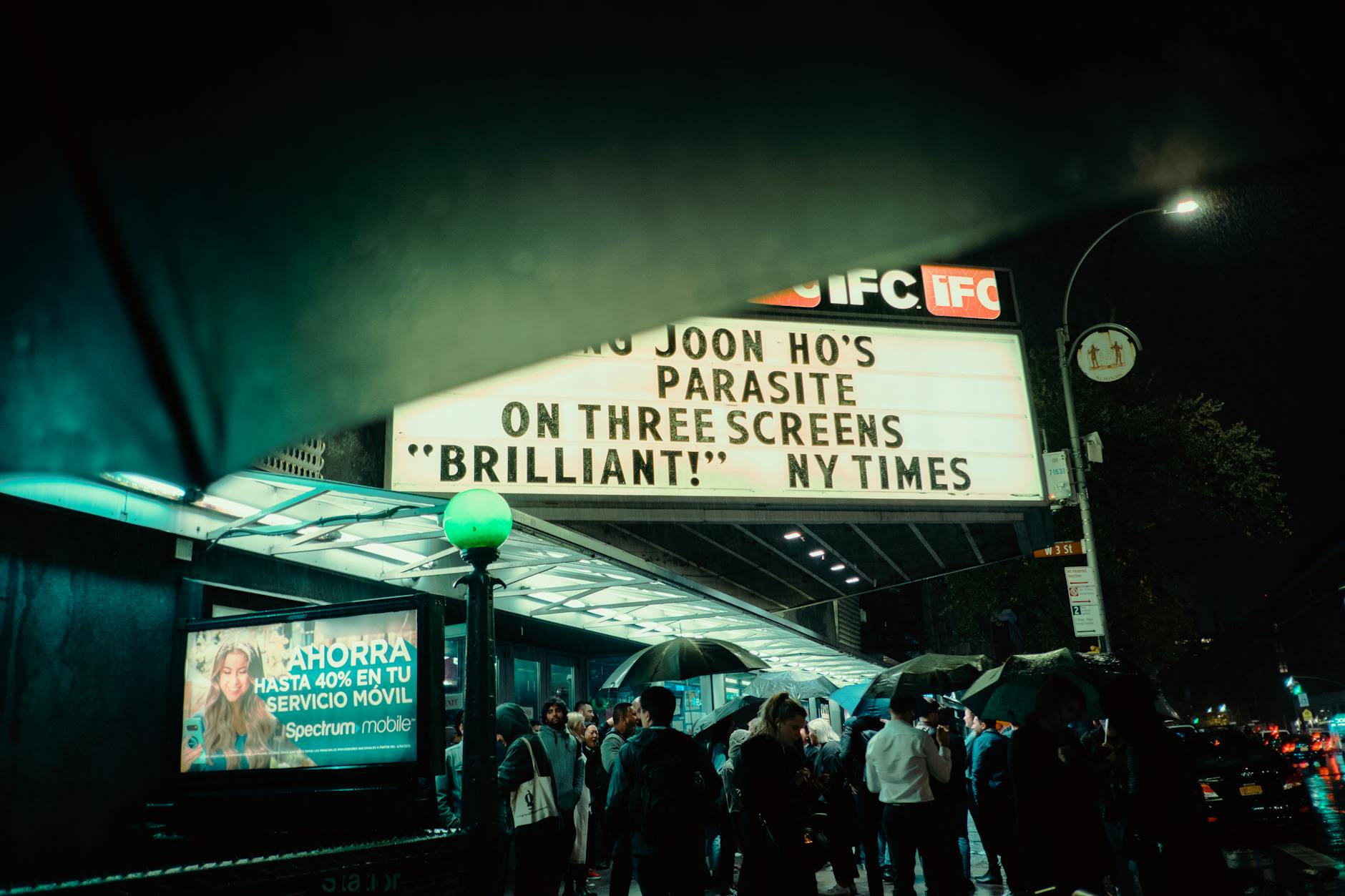
The late 2010s brought watershed moments for international cinema at the Oscars. “Roma” (Mexico, 2018), Alfonso Cuarón’s deeply personal memoir of his childhood in 1970s Mexico City, became the first Mexican film to win Best Foreign Language Film while also securing Best Director and Best Cinematography. Shot in stunning black-and-white 65mm digital, the film’s technical ambition matched its emotional scope, depicting the life of a domestic worker against the backdrop of political upheaval. Then came “Parasite” (South Korea, 2019), which shattered precedent by winning Best Picture”the first non-English language film to claim the Academy’s top honor”alongside Best Director, Best Original Screenplay, and Best International Feature Film.
- **”A Fantastic Woman” (Chile, 2017)** brought transgender representation to the forefront with Daniela Vega’s powerful performance as a woman fighting for dignity after her partner’s death
- **”Another Round” (Denmark, 2020)** balanced dark comedy with genuine pathos in Thomas Vinterberg’s exploration of four teachers experimenting with constant mild intoxication
- **”Drive My Car” (Japan, 2021)** adapted Haruki Murakami’s short story into a three-hour meditation on grief, art, and human connection that won Best International Feature
- **”All Quiet on the Western Front” (Germany, 2022)** brought Remarque’s anti-war classic to devastating new life, winning four Oscars including Best International Feature
Regional Movements in International Cinema Over the Past Decade
South Korean cinema emerged as arguably the decade’s most influential national film industry outside Hollywood, building on foundations laid by the Korean New Wave of the late 1990s and early 2000s. Beyond “Parasite,” director Bong Joon-ho contributed “Okja” (2017), a genre-defying tale of corporate greed and animal rights that premiered on Netflix. Park Chan-wook delivered “The Handmaiden” (2016), an erotic thriller adapted from Sarah Waters’s novel and transposed to colonial-era Korea, featuring intricate plot twists and sumptuous period detail. Lee Chang-dong’s “Burning” (2018), loosely based on a Murakami story, created atmospheric psychological tension that earned the highest-ever score in Screen International’s Cannes jury grid.
Japanese cinema maintained its reputation for both art-house excellence and genre innovation throughout the decade. Hirokazu Kore-eda continued his sensitive explorations of family dynamics with “Like Father, Like Son” (2013), “Our Little Sister” (2015), “After the Storm” (2016), and the Palme d’Or-winning “Shoplifters” (2018), which examined a found family of petty thieves with characteristic warmth and moral complexity. Animation remained a Japanese strength, with Studio Ghibli’s “The Tale of the Princess Kaguya” (2013) and “When Marnie Was There” (2014) earning Oscar nominations, while Makoto Shinkai’s “Your Name” (2016) became the highest-grossing anime film at the time. Ryusuke Hamaguchi emerged as a major international voice with “Drive My Car” (2021) and “Wheel of Fortune and Fantasy” (2021).
- **Iranian cinema** produced masterworks despite challenging political conditions, including Asghar Farhadi’s “A Separation” follow-up “The Salesman” (2016) and Jafar Panahi’s remarkable films made under government filmmaking ban
- **Mexican filmmakers** Alfonso Cuarón, Guillermo del Toro, and Alejandro González Iñárritu”the “Three Amigos””continued winning major awards while new voices like Michel Franco (“New Order,” 2020) gained prominence
- **French cinema** contributed provocative works from Julia Ducournau (“Raw,” 2016; “Titane,” 2021) and Céline Sciamma (“Portrait of a Lady on Fire,” 2019)
How to Discover and Access the Best Foreign Language Films Today
The streaming landscape has transformed access to international cinema, though navigating available options requires some knowledge of which platforms prioritize foreign language content. Netflix has invested heavily in non-English productions, acquiring films like “Roma” and “The Hand of God” while producing original content across dozens of countries. The platform’s recommendation algorithm can surface international titles based on viewing history, though actively searching by country or language often yields better results. Amazon Prime Video, while more Hollywood-focused, hosts significant international catalogs that vary by region.
Dedicated streaming services for cinephiles offer more curated selections of foreign language films. The Criterion Channel provides hundreds of international classics and contemporary art-house releases, organized into themed collections and director retrospectives that contextualize individual films within broader movements. MUBI presents a rotating selection of 30 films, with one added and one removed daily, emphasizing festival favorites and overlooked gems from global cinema. In certain markets, services like BFI Player, Curzon Home Cinema, and regional platforms provide access to titles unavailable elsewhere.
- **Festival coverage** from publications like Variety, The Hollywood Reporter, Screen Daily, and IndieWire identifies notable international films months or years before wider release
- **Year-end lists** from critics at major outlets consistently highlight the best foreign language releases, providing vetted recommendations with context
- **Letterboxd** enables users to track viewing, read reviews from critics and general audiences, and follow curators who specialize in international cinema
- **Physical media** from labels like Criterion, Arrow, and Kino Lorber often represents the best way to access certain titles with optimal picture quality and supplementary features
Common Barriers to Enjoying Foreign Language Films and How to Overcome Them
The subtitle question generates persistent debate among film viewers, with some citing reading fatigue as a barrier to engaging with non-English cinema. Research and viewer experience suggest that subtitle adaptation occurs relatively quickly”most viewers report becoming unconscious of reading within 10-15 minutes of a well-subtitled film. The key involves watching on sufficiently large screens where text doesn’t dominate the visual field and choosing releases with professionally translated subtitles that capture dialogue’s meaning and rhythm. Dubbing, while preferred in some markets, typically sacrifices performance nuance and lip-sync accuracy in ways that diminish the filmmaking.
Cultural unfamiliarity can initially make certain foreign films feel disorienting, as viewers encounter unfamiliar social norms, historical contexts, or narrative conventions. Japanese cinema’s deliberate pacing, for instance, often feels slow to viewers accustomed to Hollywood’s rhythms until they adjust to different dramatic expectations. Similarly, films that assume knowledge of specific historical events or cultural practices may require supplementary reading to fully appreciate. This learning curve represents part of foreign cinema’s value”the productive discomfort of encountering perspectives that challenge assumptions about how stories should be told and what they should concern.
- **Starting with accessible genres** like thrillers (“Parasite,” “The Handmaiden”) or visually driven films (“Roma,” “Hero”) can ease the transition for viewers new to subtitled cinema
- **Director retrospectives** allow viewers to develop familiarity with individual filmmaking styles, making subsequent works more legible
- **Reading reviews after viewing** provides context that enriches understanding without spoiling initial experience

The Streaming Revolution’s Impact on International Film Distribution
Netflix’s investment in international content fundamentally altered how foreign language films reach global audiences, though the effects remain subject to debate. The platform’s release of “Roma” in 2018 demonstrated that a black-and-white Spanish-language art film could generate significant viewership when placed before subscribers alongside mainstream content. Similar strategies with films like “The Platform” (Spain, 2019), “The Hand of God” (Italy, 2021), and numerous Korean titles proved that international cinema could thrive outside traditional theatrical distribution. Viewing numbers, while not publicly disclosed, reportedly exceeded what most foreign language films achieve through conventional release patterns.
Critics of streaming’s dominance point to several concerns. Theatrical exhibition remains important for optimal viewing of films composed for cinema screens, with picture quality, sound design, and communal viewing experiences all diminished in home settings. The Netflix model also tends to favor certain types of international content”genre films, prestige dramas with recognizable stars, and works from established directors”potentially marginalizing experimental or challenging work that lacks obvious commercial hooks. Nevertheless, the practical reality remains that streaming has introduced international cinema to millions of viewers who would never have encountered these films otherwise.
How to Prepare
- **Research award winners and nominees** from the Oscars, BAFTAs, Cannes, Venice, Berlin, and Toronto festivals for the past decade, creating a master list of films that received significant recognition”this provides a foundation of critically validated titles spanning multiple countries and styles.
- **Identify directors whose work resonates** after watching initial films, then seek out their complete filmographies; directors like Bong Joon-ho, Hirokazu Kore-eda, Asghar Farhadi, and Céline Sciamma have produced multiple essential films, and familiarity with one creates context for appreciating others.
- **Select films representing diverse national cinemas** rather than focusing exclusively on one country’s output; a balanced list might include entries from South Korea, Japan, Mexico, Iran, France, Germany, Poland, Spain, Denmark, and India to capture the full range of international filmmaking traditions.
- **Check availability across streaming platforms** before finalizing viewing order, as some films require purchasing or renting while others stream free with existing subscriptions; practical access often determines optimal viewing sequence.
- **Balance challenging art-house works with more accessible genre films** to maintain engagement; alternating between demanding three-hour dramas and propulsive thrillers prevents fatigue while still covering essential territory.
How to Apply This
- **Watch films in their original language with subtitles** rather than dubbed versions, preserving performances and directorial intent while developing comfort with reading dialogue”this practice becomes second nature with experience.
- **Research cultural and historical context** for films set in unfamiliar times or places, reading brief background material before viewing when specific knowledge seems essential to understanding the story.
- **Discuss films with others** through online communities like Letterboxd, Reddit’s various film subreddits, or local film clubs; articulating responses and reading others’ interpretations deepens understanding and surfaces aspects that might otherwise go unnoticed.
- **Revisit films that made strong impressions**, as international cinema often rewards repeat viewing”narrative complexity, visual detail, and thematic depth frequently reveal themselves more fully on second or third encounters.
Expert Tips
- **Resist the temptation to multitask** while watching subtitled films; foreign language cinema demands full attention, and checking phones or engaging in side activities guarantees missing crucial visual and narrative information.
- **Adjust expectations about pacing** when approaching cinema from cultures with different dramatic traditions; what initially feels slow often proves purposeful, and allowing films to unfold at their intended rhythm reveals rewards unavailable to impatient viewers.
- **Seek out lesser-known films** from celebrated directors after watching their most famous works; Bong Joon-ho’s “Mother” (2009) and Hirokazu Kore-eda’s “After Life” (1998) demonstrate why these filmmakers earned attention, even though they precede the decade under consideration.
- **Pay attention to national cinema histories** when a particular country’s films resonate; understanding that “Parasite” emerges from South Korea’s specific class dynamics and film industry context enhances appreciation of what the film achieves.
- **Consider physical media purchases** for films likely to reward repeat viewing; Criterion Collection and similar labels provide superior picture quality, expert commentary, and supplementary features that streaming cannot match.
Conclusion
The best foreign language films of the last decade have proven that language barriers matter far less than the quality of storytelling, the universality of human experience, and the power of cinema to bridge cultural divides. From “Parasite’s” unprecedented Oscar triumph to the quiet devastation of “Shoplifters,” from “Roma’s” intimate epic scope to “Portrait of a Lady on Fire’s” revolutionary gaze, these films have expanded what audiences expect from cinema and demonstrated that Hollywood holds no monopoly on excellence. The decade’s international releases have addressed class inequality, questioned gender norms, processed historical trauma, and explored family bonds with sophistication and emotional power that rival or exceed anything produced in English.
Moving forward, viewers who engage with foreign language cinema position themselves to experience storytelling at its most diverse and ambitious. The infrastructure for accessing international films has never been stronger, with streaming platforms, specialty labels, and film festivals all working to bring global cinema to interested audiences. The films discussed throughout this guide represent starting points rather than comprehensive coverage”each national cinema mentioned contains dozens of additional worthy titles, and countries not addressed here have produced their own essential works. The rewards for exploring this landscape include not only great films but expanded understanding of how different cultures process shared human concerns through the singular art form of cinema.
Frequently Asked Questions
How long does it typically take to see results?
Results vary depending on individual circumstances, but most people begin to see meaningful progress within 4-8 weeks of consistent effort.
Is this approach suitable for beginners?
Yes, this approach works well for beginners when implemented gradually. Starting with the fundamentals leads to better long-term results.
What are the most common mistakes to avoid?
The most common mistakes include rushing the process, skipping foundational steps, and failing to track progress.
How can I measure my progress effectively?
Set specific, measurable goals at the outset and track relevant metrics regularly. Keep a journal to document your journey.