Avatar CGI water physics represents one of the most significant leaps in digital fluid simulation that cinema has ever witnessed, fundamentally changing audience expectations for how water should look and behave on screen. When James Cameron released Avatar: The Way of Water in 2022, the film showcased underwater sequences and surface water interactions that made previous CGI water effects look dated almost overnight. The achievement was not merely aesthetic but technical, requiring the development of entirely new rendering pipelines and simulation algorithms that pushed the boundaries of what visual effects studios thought possible. Understanding how Avatar’s water simulation compares to other films matters for several reasons. For filmmakers and visual effects artists, it establishes a new benchmark against which all future water-based CGI will be measured.
For audiences, it explains why certain films feel more immersive than others when depicting oceanic environments, storms, or even simple rain. The gap between convincing and unconvincing water effects can determine whether viewers remain absorbed in a story or become distracted by artificial-looking visuals. This comparison also illuminates the exponential growth in computational power and artistic technique that separates modern blockbusters from films made even a decade ago. By the end of this article, readers will understand the specific technical innovations that set Avatar apart from competitors, how other major films have approached water simulation with varying degrees of success, and what makes fluid dynamics one of the most challenging aspects of computer-generated imagery. The analysis covers everything from the physics engines used to the artistic decisions that inform how digital water is lit, colored, and integrated with live-action footage.
Table of Contents
- How Does Avatar’s CGI Water Physics Compare to Other Hollywood Movies?
- The Technical Innovation Behind Avatar’s Fluid Dynamics Engine
- Comparing Water Effects: Avatar vs Titanic, Aquaman, and The Abyss
- Why Water Remains the Most Challenging Element for CGI Artists
- Avatar’s Performance Capture Technology and Its Impact on Water Realism
- The Computational Cost: Render Times and Processing Power Behind Film Water Effects
- How to Prepare
- How to Apply This
- Expert Tips
- Conclusion
- Frequently Asked Questions
How Does Avatar’s CGI Water Physics Compare to Other Hollywood Movies?
The comparison between Avatar’s water physics and other Hollywood productions begins with understanding scale and complexity. Avatar: The Way of Water featured approximately 2,225 visual effects shots, with the majority involving some form of water interaction. Weta FX, the visual effects company behind the film, developed a proprietary fluid simulation system called Loki that could process water behavior at a level of detail previously impossible. Each frame of underwater footage required simulating millions of individual water particles, accounting for variables like salinity, temperature variations, light absorption at different depths, and the interaction between water and biological matter. In contrast, earlier water-heavy films like Aquaman (2018) and The Meg (2018) relied on more traditional particle-based systems that, while impressive for their time, could not match the granular detail of Avatar’s approach. Aquaman used a combination of practical water tanks and CGI enhancement, with digital water often appearing slightly too clean and uniform in its movement patterns.
The underwater sequences in Pirates of the Caribbean: Dead Men Tell No Tales (2017) employed similar techniques, achieving serviceable results but lacking the organic chaos that characterizes real ocean water. Avatar’s water doesn’t just move; it carries sediment, refracts light unevenly, and creates the subtle turbulence patterns that the human eye recognizes subconsciously. The technical specifications reveal the gap more starkly. Avatar: The Way of Water rendered frames at up to 48 frames per second in high frame rate versions, meaning the simulation had to maintain physical accuracy at double the traditional frame rate. This required approximately 18.5 million render hours for the entire film, with water shots among the most computationally expensive. By comparison, Moana (2016), Disney’s celebrated animated film with extensive ocean sequences, used around 10 million render hours total, despite being fully animated rather than hybrid live-action.
- Avatar used volumetric rendering for underwater light scattering, simulating how photons interact with water molecules at various depths
- Previous films typically used shader-based approximations that faked light behavior rather than calculating it physically
- Weta developed specialized algorithms for handling air-water interface dynamics, the boundary where most CGI water fails to look convincing
The Technical Innovation Behind Avatar’s Fluid Dynamics Engine
Weta FX’s approach to avatar‘s water required abandoning several long-standing conventions in visual effects work. Traditional CGI water relies heavily on spectral ocean simulation, a technique that generates surface waves using mathematical functions based on oceanographic data. While efficient, this method struggles with close-up interaction shots where water touches characters, creatures, or objects. Avatar needed water that could convincingly splash against Na’vi skin, flow through hair, and react to the movement of massive underwater creatures. The solution involved a multi-resolution simulation system. Large-scale ocean movements used spectral methods for efficiency, but any region where interaction occurred triggered a high-resolution particle simulation overlay.
This particle system could contain upwards of 100 million individual elements per shot, each one inheriting velocity, momentum, and physical properties from the broader simulation. The genius of this approach was seamless integration; viewers cannot identify where the efficient background simulation ends and the detailed foreground simulation begins. Perhaps most revolutionary was Weta’s treatment of underwater bubbles and foam. Previous films typically added these elements as post-process effects, painting them onto footage after primary rendering completed. Avatar simulated bubbles as physical objects with their own buoyancy calculations, surface tension properties, and light interaction. When a character exhaled underwater, thousands of individual bubbles formed, merged, split, and rose according to accurate physics. This level of detail extended to foam formation on wave crests, a phenomenon that had frustrated visual effects artists for decades due to its chaotic, fractal nature.
- The film employed physically based rendering for underwater caustics, the dancing light patterns caused by surface wave refraction
- Subsurface scattering calculations determined how light penetrated and colored the skin of underwater characters
- Real-time simulation previews allowed directors to adjust water behavior during production rather than waiting for final renders
Comparing Water Effects: Avatar vs Titanic, Aquaman, and The Abyss
Examining specific films reveals how far water simulation has advanced and where Avatar stands relative to both older and contemporary productions. James Cameron’s own titanic (1997) provides an interesting baseline, as it won the Academy Award for Visual Effects partly due to its ocean sequences. The sinking scenes combined practical water shot in massive tanks with early CGI enhancement, but the digital water of that era appears almost gelatinous by modern standards, lacking the fine spray and chaotic turbulence of real ocean surfaces during storms. The Abyss (1989), another Cameron film, pioneered CGI water with its famous water tentacle sequence. That four-minute scene required six months of rendering on hardware that would be outperformed by a modern smartphone. The water tentacle was groundbreaking for its time, using displacement mapping and early ray tracing to create reflections and refractions.
However, the sequence cheated the simulation in numerous ways, avoiding complex splashing or breaking wave dynamics that would have been computationally impossible. Avatar’s water, by contrast, embraces chaos, simulating the exact scenarios that earlier films had to carefully avoid. Aquaman represents the most direct modern comparison, as a film built entirely around underwater environments released just four years before Avatar: The Way of Water. Industrial Light & Magic handled Aquaman’s effects using their proprietary tools, achieving water that reads as stylized rather than photorealistic. The film made artistic choices to maintain clarity and visibility underwater, sacrificing some physical accuracy for visual coherence. Avatar took the opposite approach, allowing murky conditions, light-absorbing depths, and reduced visibility when physics demanded it, trusting audiences to accept realistic limitations.
- Titanic’s water used approximately 300 CGI water shots compared to Avatar’s 2,000+ water-intensive shots
- Aquaman’s underwater scenes averaged 2-3 million particles per frame versus Avatar’s 50-100 million in complex shots
- The Abyss water tentacle required 75 hours per frame to render; Avatar’s most complex water shots required up to 500 hours per frame but contained exponentially more detail
Why Water Remains the Most Challenging Element for CGI Artists
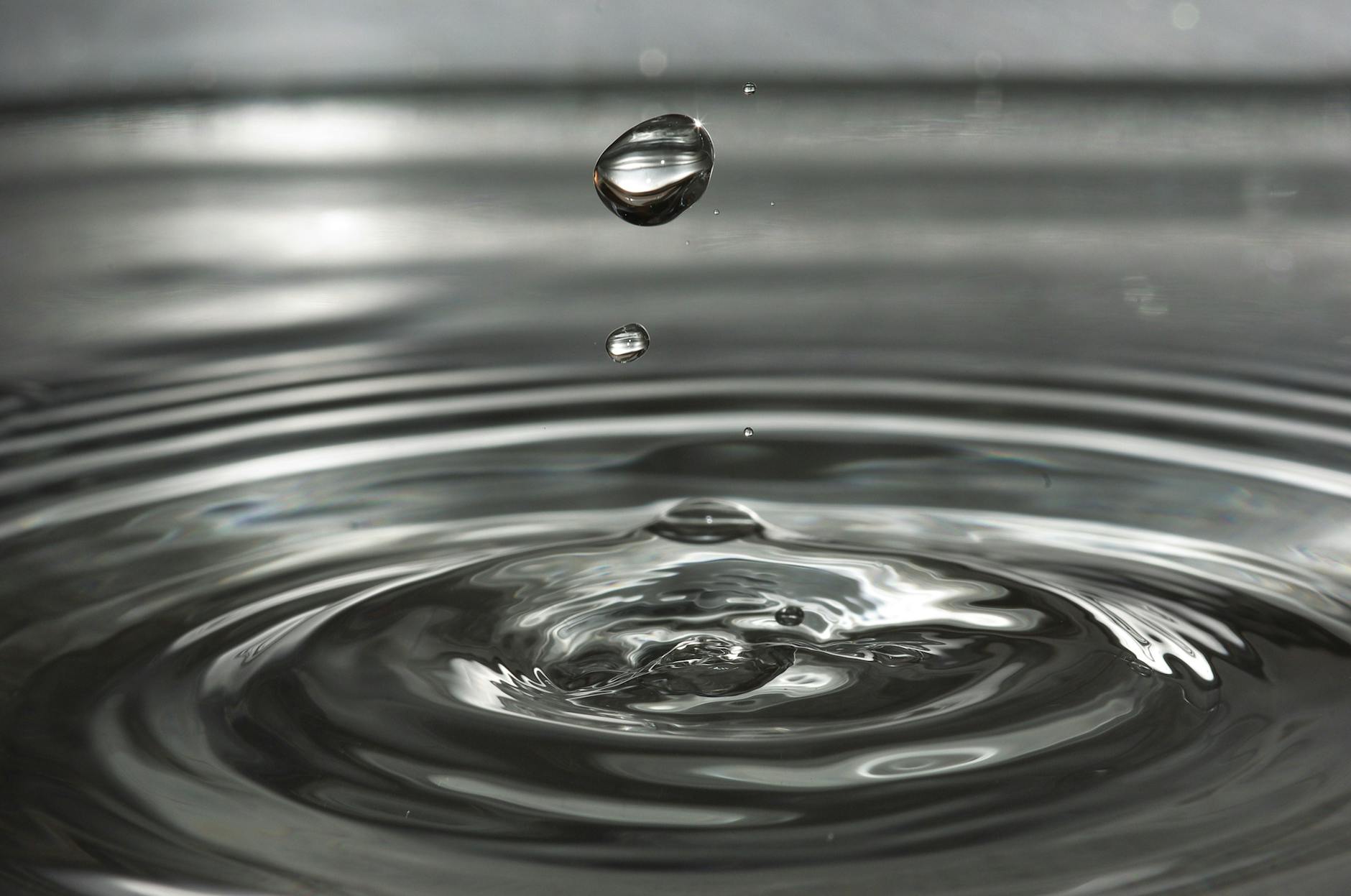
Water presents unique challenges that make it arguably the most difficult natural element to simulate convincingly in CGI. Unlike fire, which follows relatively predictable upward patterns, or smoke, which diffuses in understandable ways, water exists in multiple states simultaneously. A single ocean wave contains bulk movement, surface tension effects, spray particles, foam generation, and subsurface currents, all interacting with each other and the environment in real-time. Simulating any one of these behaviors is manageable; simulating them all together while maintaining physical coherence pushes current technology to its limits. The human eye has evolved to read water behavior with extreme precision. Our ancestors needed to identify safe drinking water, navigate waterways, and predict weather based on ocean patterns. This evolutionary heritage means audiences instinctively recognize when CGI water moves wrong, even if they cannot articulate what specifically bothers them.
The uncanny valley effect, typically discussed regarding human faces, applies equally to water. A simulation can be 95% accurate and still feel artificial because that remaining 5% triggers subconscious rejection. Light interaction compounds the difficulty exponentially. Water is simultaneously transparent, reflective, and refractive, with those properties changing based on viewing angle, depth, and surface agitation. A calm pool reflects the sky like a mirror from low angles but shows the bottom clearly from above. Add waves, and those reflections fragment into thousands of moving highlights while simultaneously showing distorted refraction patterns. Calculating this light behavior accurately requires ray tracing millions of light paths per frame, a computational task that only recently became feasible for film production schedules.
- Surface tension effects at small scales behave differently than bulk water movement, requiring separate simulation layers
- Water memory, how ripples and waves interact with previous disturbances, adds computational complexity that grows exponentially over time
- The air-water boundary requires special handling because standard fluid solvers struggle with the dramatic density difference between media
Avatar’s Performance Capture Technology and Its Impact on Water Realism
A frequently overlooked aspect of Avatar’s water success is how performance capture technology contributed to fluid realism. Traditional underwater filming limits actor movement and expression due to breathing apparatus, water pressure, and visibility constraints. Cameron solved this by developing a dry-for-wet performance capture system where actors performed in air while simulated water was added later. This approach allowed for natural performances that could then be integrated with CGI water that responded to their movements with physical accuracy. The capture system used an array of over 100 cameras to record actor movements and facial expressions at high resolution. This data drove digital character animation, but it also fed directly into the water simulation system.
When a digital Na’vi character moved their arm through water, the simulation received precise motion data from the actual actor’s movement, allowing it to calculate accurate drag, turbulence, and splash patterns. Previous films had to approximate these interactions because actor data was either unavailable or captured at insufficient resolution for precise simulation. Weta developed specialized software to handle the marriage between performance data and fluid simulation. Called Synapse, this system allowed animators to adjust character movement and see water simulation updates in near real-time. The feedback loop meant that performances could be refined for better water interaction, and water behavior could be tuned to emphasize dramatic moments. A character emerging from water could have enhanced splash patterns that remained physically plausible while serving the emotional needs of the scene.
- Performance capture data provided velocity and acceleration information that traditional animation keyframes lack
- Facial capture at 60 frames per second allowed water drops on faces to interact with micro-expressions
- The dry-for-wet approach eliminated the visual artifacts that underwater photography introduces, such as light caustics and visibility limitations that can be simulated more controllably

The Computational Cost: Render Times and Processing Power Behind Film Water Effects
Understanding the computational scale behind Avatar’s water effects contextualizes both its achievement and its cost. Weta FX utilized a render farm comprising over 100,000 processor cores working simultaneously. At peak production, the facility consumed enough electricity to power a small town, with cooling systems required to prevent hardware failure. A single frame of the most complex water shots could require days of processing time, meaning a five-second shot might need months of continuous computation across thousands of machines. This scale dwarfs what was available for previous water-heavy films. Finding Nemo (2003), Pixar’s underwater animated feature, rendered on a farm of approximately 3,000 processors, impressive for its era but orders of magnitude smaller than Avatar’s requirements.
The advancement reflects both increased processing power availability and increased simulation complexity. Each generation of visual effects raises expectations, requiring exponentially more computation to achieve the next level of realism. The economic implications are significant. Avatar: The Way of Water had an estimated production budget exceeding $350 million, with a substantial portion dedicated to visual effects. Smaller productions cannot afford either the hardware or the time required to achieve comparable water simulation. This creates a visible gap in quality between major studio productions and mid-budget films, where water effects often represent the most noticeable compromise. Independent films typically avoid extensive water CGI entirely, planning around the limitation rather than attempting to match blockbuster standards.
- Avatar’s render farm processed approximately 3,600 terabytes of data for final delivery
- The average water-heavy shot required 8-10 terabytes of simulation data before rendering began
- Electricity costs for rendering alone exceeded $10 million over the production period
How to Prepare
- Study real water behavior in various conditions before watching CGI-heavy films. Observe how light plays across calm surfaces versus agitated water, noting the difference between reflection and refraction patterns. Pay attention to how foam forms on wave crests and how long it persists before dissipating. This baseline knowledge makes artificial water immediately more apparent.
- Watch water-heavy scenes with the sound muted initially. Audio often masks visual shortcomings by convincing the brain that splashes and waves are real. Removing audio forces visual evaluation alone, revealing whether water movement feels natural or mechanical. Particularly notice the air-water interface during splashes, where CGI most frequently fails.
- Examine the edges where water meets solid objects. The contact line between water and characters, vehicles, or environments reveals simulation quality. Low-quality CGI water often clips through objects or maintains unnaturally clean boundaries. High-quality simulation shows water crawling up surfaces with appropriate surface tension and leaving realistic wet patterns.
- Compare underwater visibility and light behavior to real diving footage. Note how quickly visibility decreases with depth in realistic simulation versus artificially maintained clarity in stylized approaches. Observe whether caustic light patterns match surface wave activity or appear randomly applied.
- Freeze-frame splash sequences and examine droplet distribution. Real splashes produce droplets in predictable size distributions based on the violence of impact. CGI splashes that use simplified particle systems often show uniform droplet sizes or unrealistic trajectories that ignore air resistance and gravity properly.
How to Apply This
- Select films from different eras and studios for comparison, such as Titanic (1997), The Perfect Storm (2000), Aquaman (2018), and Avatar: The Way of Water (2022). Watch comparable scenes, such as storm sequences or underwater exploration, back-to-back to highlight technological advancement and artistic approach differences.
- Document specific observations about water characteristics in each film: surface texture quality, splash dynamics, underwater lighting, foam behavior, and object interaction. Rate each category on a consistent scale to create comparable assessments across different productions.
- Research the visual effects studios and techniques used for each film to correlate observed quality with technological approach. Understanding that a film used practical water tanks versus full CGI versus hybrid approaches explains many visual differences.
- Apply the evaluation framework to new releases, predicting before research whether scenes used practical effects, standard CGI, or cutting-edge simulation. Over time, this practice develops intuitive recognition of different technical approaches and their visual signatures.
Expert Tips
- Focus on secondary water effects, such as mist, spray, and ripples, rather than primary wave action. Large-scale water movement is easier to simulate convincingly; the small details reveal the quality gap between productions. Films that nail these details have invested in comprehensive simulation rather than surface-level approximation.
- Watch for temporal coherence in water scenes played at reduced speed. Poor CGI water often exhibits frame-to-frame inconsistencies that become obvious in slow motion, such as droplets that disappear between frames or waves that lose momentum unnaturally. High-quality simulation maintains physical consistency regardless of playback speed.
- Consider the color grading and exposure of water scenes. Some productions hide simulation limitations behind heavy color treatment, excessive bloom lighting, or strategic motion blur. Clear, well-lit water scenes demonstrate greater confidence in simulation quality.
- Notice how films handle the transition between underwater and surface shots. This boundary condition is notoriously difficult to simulate, and many productions cut around it rather than showing continuous movement through the interface. Films that depict characters breaking the surface in long takes have solved one of CGI water’s hardest problems.
- Evaluate whether water behaves consistently across different scales within the same film. A production might achieve convincing ocean vistas but struggle with close-up water interaction, or vice versa. Consistency across scales indicates sophisticated multi-resolution simulation systems like those Avatar employs.
Conclusion
The gap between Avatar’s CGI water physics and other films reflects both technological capability and artistic commitment. James Cameron’s willingness to develop new tools, extend production timelines, and invest unprecedented computational resources created water effects that stand as the current pinnacle of the art form. Other productions, constrained by budget, schedule, or technical expertise, continue to improve but have not yet matched the benchmark Avatar established.
For viewers, understanding these technical distinctions enriches film appreciation without diminishing entertainment value. Recognizing the difficulty of convincing water simulation creates respect for productions that achieve it and contextualizes the compromises that budget-conscious films must make. As processing power continues increasing and simulation techniques mature, the gap between top-tier and average water effects will narrow, but Avatar: The Way of Water will remain a milestone in demonstrating what becomes possible when resources and ambition align. The next generation of filmmakers and visual effects artists will build on these foundations, eventually achieving water effects that make even Avatar seem dated, continuing the relentless advancement that has characterized computer graphics since its inception.
Frequently Asked Questions
How long does it typically take to see results?
Results vary depending on individual circumstances, but most people begin to see meaningful progress within 4-8 weeks of consistent effort.
Is this approach suitable for beginners?
Yes, this approach works well for beginners when implemented gradually. Starting with the fundamentals leads to better long-term results.
What are the most common mistakes to avoid?
The most common mistakes include rushing the process, skipping foundational steps, and failing to track progress.
How can I measure my progress effectively?
Set specific, measurable goals at the outset and track relevant metrics regularly. Keep a journal to document your journey.