Home → Film → Avatar CGI Compared to Nolan Style
Avatar CGI Compared to Nolan Style
Published: 2026-01-11 | Comments: 0
Share: Facebook X Reddit Share
James Cameron and Christopher Nolan represent opposite poles in modern blockbuster filmmaking’s relationship with CGI. Cameron embraces digital technology to create impossible worlds with obsessive detail. Nolan famously prefers practical effects, using CGI primarily to enhance or extend what was captured on camera. Understanding their different philosophies reveals the spectrum of approaches available to contemporary filmmakers.
Both directors pursue realism through different means. Cameron simulates reality digitally with unprecedented sophistication. Nolan captures reality practically with unprecedented ambition. The results both feel grounded despite their fantastical content, achieving believability through opposing methodologies.
This comparison examines how these directors approach visual effects, when CGI becomes necessary for each, and what their different philosophies achieve artistically.
Table of Contents
- What Effects Philosophy Guides Each Director?
- Why Does Nolan Prefer Practical Effects?
- When Does Nolan Use CGI?
- How Do They Approach Large Format Filmmaking?
- How Do They Visualize Time and Space?
- How Do Environment Approaches Compare?
- How Do Audiences Respond Differently?
- How to Best Experience Each Director’s Work
- Frequently Asked Questions
What Effects Philosophy Guides Each Director?
James Cameron approaches CGI as a tool for limitless creation. If technology doesn’t exist to realize his vision, he develops it. The virtual production pipeline, underwater performance capture, and facial capture fidelity of Avatar all emerged from Cameron’s insistence that specific shots were achievable if the tools were built. No creative vision gets compromised for technical limitations.
This approach produces worlds of unprecedented detail but requires years of development and massive budgets. Cameron accepts these trade-offs because the results justify the investment. Avatar’s Pandora exists as a complete planet because Cameron wouldn’t accept less.
Christopher Nolan approaches CGI skeptically, preferring practical effects that actors can interact with and cameras can capture directly. His philosophy holds that audiences subconsciously recognize real physics, even when they can’t articulate what makes CGI feel artificial. By grounding as much as possible in practical reality, Nolan creates believability that extensive digital work might undermine.
This approach produces astonishing in-camera sequences but imposes creative constraints. If an effect can’t be done practically, Nolan often reconsiders the shot. The rotating hallway in Inception, the truck flip in The Dark Knight, and the practical IMAX shots in Dunkirk demonstrate what’s achievable when practical effects drive creative decisions.
Why Does Nolan Prefer Practical Effects?
Nolan frequently discusses how actor performance improves when interacting with real environments. When Joseph Gordon-Levitt fought in a rotating corridor, his physicality emerged from genuine orientation challenges. CGI could replicate the visual, but the performance grounding in reality improve the sequence.
Practical effects also capture lighting, shadow, and physics that digital artists must simulate. The dust that rises when Bane hits someone in The Dark Knight Rises, the water spray in Dunkirk’s boat sequences, and the light through Interstellar’s practical black hole representation all feature subtle real-world behaviors.
Nolan’s preference also connects to film preservation concerns. CGI ages as technology improves, while practical footage remains stable. The miniature work in Blade Runner still impresses; early CGI often shows its limitations. Nolan creates images that will look the same decades from now.
Nolan’s practical effects advantages:
- Enhanced actor performance through real interaction
- Natural lighting and physics capture
- Timeless visual quality unaffected by technology evolution
- Audience subconscious recognition of reality
When Does Nolan Use CGI?
Despite his practical preference, Nolan employs CGI extensively for impossible shots. Inception’s city-folding sequence combined practical building miniatures with digital extension. The tesseract in Interstellar required digital environments that couldn’t exist physically. These moments demonstrate Nolan’s willingness to use CGI when practical alternatives don’t exist.
Nolan’s CGI often extends or enhances practical foundations. The Dark Knight’s Hong Kong sequence featured CGI building extensions on practical rooftop footage. Dunkirk’s aerial battles combined real Spitfire footage with digital multiplication and environmental work. The approach uses CGI as seasoning rather than the main ingredient.
Oppenheimer demonstrated Nolan’s evolving relationship with digital effects. While the atomic explosion featured no CGI, certain shots required digital compositing and enhancement. The film earned VFX Oscar recognition for work that served Nolan’s practical aesthetic rather than replacing it.
Nolan’s typical CGI applications:
- Environmental extension of practical sets
- Digital multiplication of practical elements
- Wire and rig removal from stunt footage
- Enhancement rather than replacement of practical work
How Do They Approach Large Format Filmmaking?
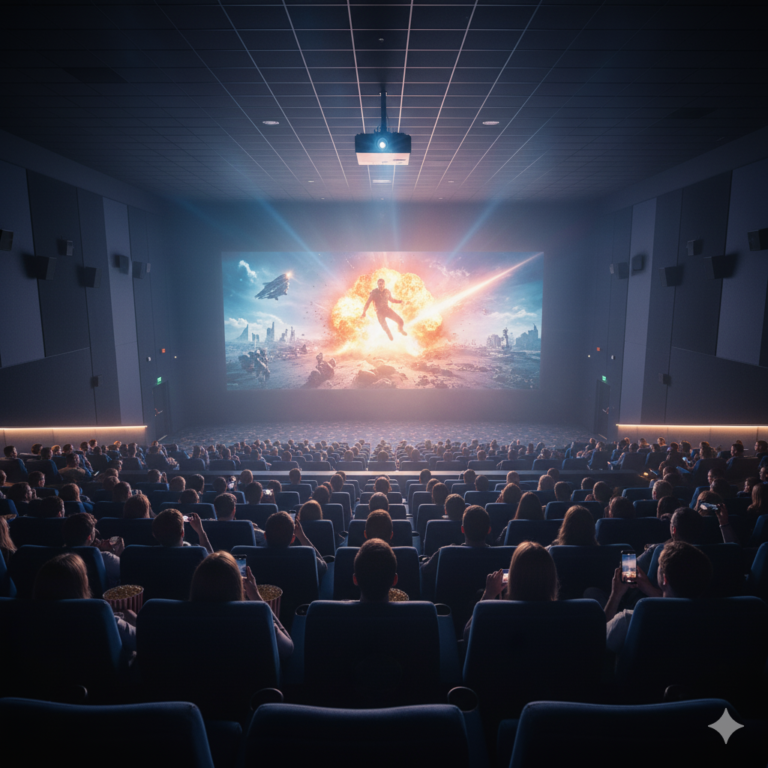
Both Cameron and Nolan champion theatrical presentation, particularly IMAX and large format experiences. Cameron designed Avatar for 3D IMAX viewing, creating depth and scale intended for the largest possible screens. The Way of Water expanded this with high frame rate sequences designed for specific projection capabilities.
Cameron’s entire Avatar workflow optimizes for theatrical presentation. The 3D photography, IMAX framing, and HDR mastering all prioritize the cinema experience over home viewing. The films work at home but achieve their intended impact only in theaters.
Nolan shoots significant portions of his films on IMAX film cameras, the largest practical film format available. Dunkirk, Tenet, and Oppenheimer all feature extended IMAX sequences that expand to fill premium screens. The resolution and detail captured on IMAX film exceeds what digital capture typically achieves.
Nolan’s commitment to film projection extends to advocacy for theatrical-first release windows. His films demand the theatrical experience both directors believe movies deserve.
How Do They Visualize Time and Space?
Both directors explore time manipulation but visualize it differently. Avatar: The Way of Water features frame rate shifts between 24fps and 48fps, creating subtle perceptual changes that affect how viewers experience time passage. The technical innovation serves immersion in Pandora’s alien time flow.
Nolan’s time manipulation works through editing and practical techniques rather than technical innovation. Inception’s time dilation across dream levels emerged from parallel editing traditions. Dunkirk’s three timelines running at different rates created temporal complexity through structure rather than technology.
Interstellar’s wormhole and black hole required CGI to visualize based on physicist Kip Thorne’s calculations. Even here, Nolan grounded the impossible in scientific accuracy. The visual effects team created what actual relativistic phenomena might look like rather than inventing fantasy imagery.
Tenet’s time inversion presented unique challenges. The film featured practical stunts performed forward and backward, with digital work compositing these elements together. The approach maintained Nolan’s practical grounding while achieving impossible visual results.
How Do Environment Approaches Compare?
Avatar builds environments entirely within CGI, allowing limitless creativity in world design. Pandora’s floating mountains, bioluminescent forests, and alien oceans exist only as digital constructs. The freedom allows Cameron to realize any vision without physical constraint.
The detail level in Avatar’s environments invites close examination. Every plant, every creature, every atmospheric particle received individual attention. Viewers can watch the films repeatedly and notice new environmental details because they genuinely exist in the digital world.
Nolan shoots in real locations whenever possible, using sets and practical construction for interior environments. The mountainscapes in Inception were actual locations. The Dunkirk beaches were the historical sites. Oppenheimer’s Los Alamos scenes used practical sets built at scale.
This approach grounds fantastical stories in real geography that cameras captured. The physical reality of locations transfers to screen in ways that even sophisticated CGI doesn’t replicate. Audiences sense, even if they don’t consciously recognize, that real places underlie the images.
How Do Audiences Respond Differently?
Avatar’s CGI-intensive approach polarizes some viewers who find digital environments less engaging than practical footage. Others appreciate the unprecedented detail and immersive qualities that CGI enables. The box office success suggests most audiences accept Cameron’s approach.
Nolan’s practical preference generates enthusiasm from viewers who value tangible filmmaking. The knowledge that real stunts, real locations, and real physics underlie the images adds appreciation beyond the visual. Making-of materials demonstrating practical achievements become part of the films’ appeal.
Both approaches create believability through different mechanisms. Cameron convinces through overwhelming detail. Nolan convinces through practical foundation. Audiences who trust one approach may remain skeptical of the other, though both directors have massive followings.
How to Best Experience Each Director’s Work
Cameron’s films demand premium theatrical presentation. Avatar’s 3D and IMAX design loses significant impact on home screens. The Way of Water’s variable frame rate requires specific projection capabilities. Theatrical viewing remains optimal even years after release.
Optimal Cameron viewing:
- IMAX 3D for intended experience
- 4K HDR for home detail preservation
- Large screen essential for scale
- Theater experience significantly superior
Nolan’s IMAX footage benefits enormously from theatrical presentation. The aspect ratio shifts between IMAX and standard footage were designed for specific theatrical impact. However, the practical photography translates well to quality home systems.
Optimal Nolan viewing:
- IMAX theatrical for intended experience
- 4K preserves IMAX-originated footage detail
- Standard home viewing still effective
- Sound quality essential for Nolan’s audio design
Frequently Asked Questions
Does Nolan dislike CGI?
Nolan doesn’t dislike CGI; he prefers practical effects when possible and uses CGI when necessary. His films contain significant CGI work, but it typically enhances practical photography rather than replacing it entirely. His skepticism targets CGI overuse, not CGI itself.
Which approach costs more?
Avatar’s approach costs more overall due to technology development, render farm requirements, and extended production timelines. Nolan’s practical approach can be expensive for specific sequences but doesn’t require the infrastructure investment CGI-heavy films demand.
Could Nolan make Avatar?
Nolan’s philosophy couldn’t produce Avatar because the alien world requires CGI creation. Practical effects cannot build Pandora. The project would require Nolan to abandon core principles that define his filmmaking approach.
Could Cameron make a Nolan-style film?
Cameron’s earlier work like Aliens and Terminator 2 demonstrated practical effects mastery. He could technically adopt Nolan’s approach but has chosen to push digital technology instead. His current interests lie in expanding CGI capabilities rather than limiting them.
Which approach ages better?
Practical effects typically age better because they capture real physics. CGI dates as technology improves. However, Avatar’s unprecedented CGI quality may prove more durable than typical digital work. Only time will provide definitive answers.
Who has more industry influence?
Both directors influence different aspects of filmmaking. Cameron pushes technology forward; Nolan demonstrates practical possibilities. The industry benefits from both approaches, with productions choosing methods based on specific project needs.
You Might Also Like
- Avatar CGI Compared to Zack Snyder Style
- Avatar CGI Compared to Denis Villeneuve Style
- Avatar CGI Compared to Practical Effects Movies
Categories: Film | Movies | Entertainment