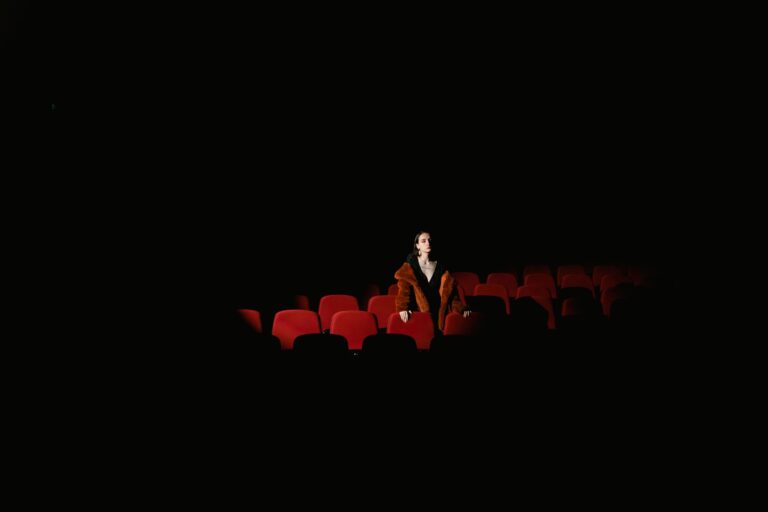
A contact action sequence breakdown is the detailed spatial choreography of how actors physically move, touch, and position themselves relative to each other during a scene—especially crucial moments carrying emotional or narrative weight. Rather than broad blocking that simply gets actors from point A to point B, contact action sequences map out precisely when an actor crosses to another, at what speed, from which angle, and how their bodies relate in space to communicate subtext. The camera placement, the distance between performers, and the exact timing of when hands meet or bodies turn away all work in concert to reinforce what the dialogue and acting choices are meant to convey.
This technique distinguishes itself because it treats physical proximity and contact not as incidental staging but as a deliberate tool for storytelling. In a breakup scene, the distance that opens between two characters—and the moment one turns away—carries as much weight as any line of dialogue. In a reconciliation, the hesitation before an embrace or the awkwardness of reestablishing touch tells the audience about the characters’ emotional state more efficiently than exposition can.
Table of Contents
- HOW DOES CONTACT ACTION SEQUENCING DIFFER FROM STANDARD SCENE BLOCKING?
- THE SPATIAL GRAMMAR OF PHYSICAL PROXIMITY AND DISTANCE
- EMOTIONAL SUBTEXT ENCODED IN PHYSICAL TOUCH AND RECOIL
- CHOREOGRAPHING CONTACT SEQUENCES FOR DIFFERENT SCENE TYPES
- THE RISK OF OVER-CHOREOGRAPHING OR UNDER-CHOREOGRAPHING CONTACT ACTION
- CAMERA POSITIONING AND LENS CHOICE IN CONTACT ACTION SEQUENCES
- HISTORICAL EXAMPLES OF MASTERFUL CONTACT ACTION SEQUENCES IN FILM
HOW DOES CONTACT ACTION SEQUENCING DIFFER FROM STANDARD SCENE BLOCKING?
Standard blocking typically concerns itself with the broad movements actors make within a set—entering from stage left, sitting at a table, moving toward a window. Contact action sequencing goes a layer deeper, isolating the specific moments when two or more actors physically relate to each other and mapping the micro-choreography of those interactions. A scene might be broadly blocked so that Actor A enters, walks to the sofa, and sits. The contact action sequence would then specify: Actor A approaches the sofa at a deliberate pace, pauses half a step away, then sits with visible hesitation, keeping their torso angled away from Actor B who is already seated. The difference becomes apparent in how much information the audience receives.
A director blocking the scene generically might get a functional scene. A director orchestrating contact action gets a scene layered with subtext. If an actor is supposed to be angry but reluctant to leave, having them turn toward the door, pause, then turn back—with each movement carefully measured—creates a visual rhythm that communicates internal conflict. The same scene blocked differently might register as indecision rather than conflicted anger. This approach was formalized in theater training but has become increasingly crucial in film, where close-ups and camera angles can magnify even small physical choices. A two-inch shift in body position between characters playing a tense conversation can read entirely differently depending on whether that shift happens before or after a particular line of dialogue.
THE SPATIAL GRAMMAR OF PHYSICAL PROXIMITY AND DISTANCE
Distance between actors carries meaning that changes based on context and relationship. In intimate drama, two characters sitting close together can still communicate emotional distance through the angle of their bodies—one person angled toward the other, the other person’s shoulders squared away. In confrontation scenes, the violation of personal space creates discomfort for both the characters and the audience watching. The closer two actors stand during an argument, the higher the tension; backing away signals retreat, capitulation, or sometimes a gathering of strength for a counterattack. A critical consideration is that distance and proximity are never static.
The contact action sequence must account for how characters move into and out of each other’s physical space, and whether they do so deliberately or tentatively. In a scene from *In the Mood for Love*, the characters repeatedly circle each other, their proximity shifting based on who is advancing and who is retreating, creating visual poetry that reinforces their complicated attraction without a single touch. The space between them becomes a character itself. One limitation of distance-based choreography is that it can feel artificial if the actors don’t commit to it fully. If a contact action sequence calls for an actor to maintain two feet of distance as a sign of emotional coldness, but the actor’s natural inclination is to move closer for comfort or connection, the result feels stagey rather than honest. The best contact action sequences emerge from the actors’ genuine emotional understanding, with the director’s choreography reinforcing rather than contradicting the internal truth of the scene.
EMOTIONAL SUBTEXT ENCODED IN PHYSICAL TOUCH AND RECOIL
Touch is perhaps the most direct form of contact action, and its presence or absence speaks volumes. A scene where two characters who love each other barely touch communicates restraint, social pressure, or internal prohibition. A scene where one character reaches out and the other pulls back before contact is made becomes a moment of rejection or fear played out in real time. The hesitation before a handshake, the fumbled attempt at reassurance where one person’s hand misses the other’s shoulder—these are the details that separate competent staging from indelible filmmaking. The choreography of recoil is equally important.
When someone flinches from an approaching hand, the speed and degree of that flinch reveal volumes about their relationship to the approaching person and their emotional state. A slow, almost imperceptible lean-away communicates something very different from a sharp recoil. In *Requiem for a Dream*, there are sequences where characters reach for each other with increasing desperation, the contact action becoming more frantic as their emotional states deteriorate. The physical choreography mirrors their psychological unraveling. A trap directors sometimes fall into is using touch as punctuation—a hand on the shoulder to emphasize a line of dialogue—without considering what the touch should cost the characters. Does the touched character accept it freely, or does acceptance require a small internal surrender? Does the touching character do so with confidence or uncertainty? These questions should shape the exact nature of the contact action, not just its presence or absence.
CHOREOGRAPHING CONTACT SEQUENCES FOR DIFFERENT SCENE TYPES
Intimate scenes demand the most careful contact action sequencing, as the proximity is inherently charged. Whether the scene is romantic or confrontational, the choreography must account for how quickly actors move toward each other, whether there is hesitation or hunger in that approach, and how bodies orient once proximity is achieved. The difference between a kiss approached with confidence and one approached with uncertainty is measured in inches and milliseconds, yet it communicates entirely different narratives. A director working on a romantic scene typically works closely with both actors to establish a choreography that feels genuine to the characters’ emotional arc, not just physically accurate. Action sequences—fight scenes, chases, physical confrontations—also rely on careful contact action breakdown, though the goals are different. Here, the contact action must be clear enough for the audience to follow while being safe enough for the actors.
A punch pulled at the last moment, a tackle that’s choreographed to look devastating while protecting both performers, a struggle that communicates desperation through the quality of physical effort—all of these require meticulous planning. The contact action sequence for a fight scene functions almost like a dance notation, with each beat precisely plotted. A tradeoff in choreographing contact sequences is between spontaneity and safety. Heavily choreographed contact looks beautiful and flows smoothly, but it can read as overly controlled. Looser choreography that allows for some improvisation within parameters feels more naturalistic but carries real risk of accidents or miscommunication between performers. Most professional productions find a middle ground: establish the essential contact points and emotional beats of the sequence, then allow the actors some freedom within that structure.
THE RISK OF OVER-CHOREOGRAPHING OR UNDER-CHOREOGRAPHING CONTACT ACTION
One of the most common mistakes in directing contact action sequences is over-specification—planning every movement so precisely that actors have no room to bring their own intuition to the scene. When a director dictates that an actor must take exactly two steps, pause for one beat, then reach out with the right hand, the result often feels mechanical. The best contact action sequences establish clear dramatic intentions and emotional beats, then allow the actors the agency to discover how their bodies want to move in service of those intentions. Conversely, under-choreographing can result in scenes that lack clarity or punch. If a director simply says “the two of you have a confrontation” without choreographing where the actors stand, how they approach each other, or what physical actions punctuate the dialogue, the scene may play flatly.
The actors might unconsciously revert to comfortable distances or habitual gestures that don’t serve the story. Even naturalistic scenes benefit from some level of intentionality about the spatial relationships. Another significant risk is failing to account for camera placement when choreographing contact action. A physical choice that reads powerfully in the rehearsal room might be invisible in the frame, or conversely, a small gesture might become disproportionately important due to a close-up. Directors must understand how the camera will interact with the choreography—whether actors are moving toward or away from the lens, whether intimate moments will be captured in close-ups or medium shots, and how these choices amplify or diminish the physical staging.
CAMERA POSITIONING AND LENS CHOICE IN CONTACT ACTION SEQUENCES
The camera is not a neutral observer of contact action sequences; it is a collaborator that can emphasize or de-emphasize physical choices through proximity and framing. A close-up of two faces separated by inches communicates intimacy or tension; a wide shot of the same distance might read as separate or distant. A camera moving closer as two characters move closer creates visual momentum that reinforces the emotional escalation. A static camera that holds both characters in frame emphasizes their spatial relationship to each other more than a cutting pattern that isolates each actor in individual shots. Lens choice also shapes how contact action reads.
A wide-angle lens distorts proximity and can make physically close characters appear more separate; a telephoto lens compresses space and makes distant characters appear closer together. In intimate scenes, directors often choose lenses that elongate the frame, making the space between characters feel more charged. In confrontational scenes, a lens that flattens depth can intensify the sense of threat, as characters appear to be crowding into the same space without visual relief. The decision of how to move the camera during contact action sequences—whether to follow characters as they move, hold a static frame, or cut between angles—fundamentally changes how the audience experiences the choreography. A camera that moves to maintain two characters in frame as they shift their spatial relationship creates a sense of their connection or struggle; a camera that remains still and forces one character out of frame when they move communicates separation or dominance.
HISTORICAL EXAMPLES OF MASTERFUL CONTACT ACTION SEQUENCES IN FILM
The opening of *Stalker*, directed by Andrei Tarkovsky, contains a masterclass in contact action through restraint. Two characters sit in a modest room, and through subtle shifts in proximity and angle, Tarkovsky communicates their emotional relationship—longing, resignation, acceptance—without a single word of dialogue in that opening sequence. The camera remains almost entirely still, forcing viewers to read meaning in inches of movement. In *There Will Be Blood*, Paul Thomas Anderson choreographs the contact action sequences between Daniel Plainview and Eli Sunday with meticulous precision. When the two characters finally touch—rare moments in their antagonistic relationship—the contact carries enormous weight because it breaks the pattern of physical separation that has dominated their scenes together.
The contact action sequence is defined as much by what doesn’t happen (no casual touch, no shared physical space) as by the rare moments of actual contact. Jackie Chan’s fight choreography operates entirely in the language of contact action sequences. Each punch, each grab, each moment of grappling is precisely choreographed not just for safety but to communicate the emotional state and power dynamics between fighters. A push that sends an opponent flying communicates dominance; a grab that pulls someone close suggests intimacy or desperation, even within a violent confrontation. Chan’s work demonstrates that contact action sequencing is as relevant to action cinema as to intimate drama.