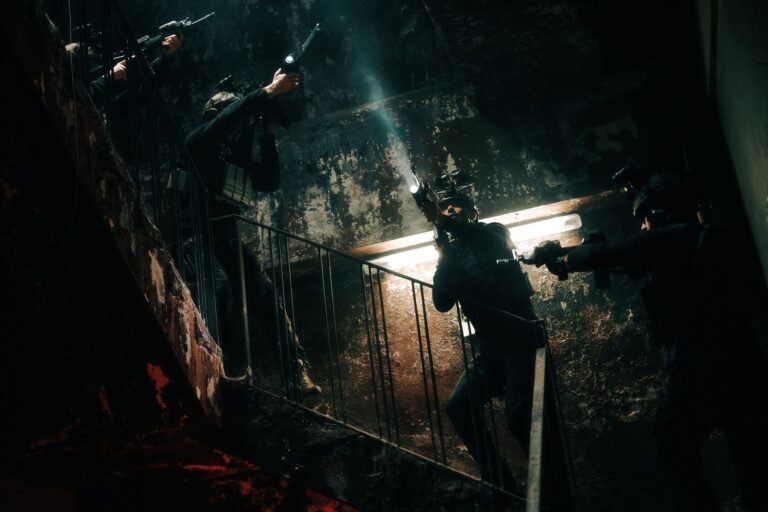
Apple TV+ is releasing two major crime thriller series this fall, marking a significant investment in the genre for the streaming platform. Nocturne arrives on October 30, 2026, bringing the dark Scandinavian detective fiction of Lars Kepler’s Joona Linna book series to screen with Stephen Graham as serial killer Jurek Walter and Liev Schreiber as detective Jonah Lynn. Alongside it, Guilty Creatures launches later in fall 2026, an adaptation of a true-crime narrative centered on a decades-long murder case that begins with a torrid romance between two young lovers.
Together, these shows signal that Apple is doubling down on prestige crime content to compete with established thriller audiences. Both series feature substantial pedigree behind the camera and in front of it. Guilty Creatures comes from Craig Gillespie, the director behind I, Tonya and Pam & Tommy, and stars Julia Garner in a lead role that demands sustained dramatic intensity. Nocturne pairs established talent like Zazie Beetz as FBI agent Saga Bauer with a premise centered on a murder victim’s unexpected reappearance—the kind of narrative hook designed to sustain audience engagement across multiple episodes.
Table of Contents
- Which Crime Thriller Series Is Apple TV+ Releasing This Fall?
- The Cast and Creative Leadership Behind These Productions
- Plot Structure and What the Source Material Offers
- Why Crime Thrillers Remain Essential to Streaming Strategy
- Adaptation Challenges and What Can Go Wrong with Book-to-Screen Crime
- Craig Gillespie’s Direction and Guilty Creatures’ Visual Approach
- What Sets These Apart in the 2026 Crime Thriller Landscape
Which Crime Thriller Series Is Apple TV+ Releasing This Fall?
Nocturne is the more precisely scheduled of the two, with an October 30, 2026 premiere date locked in. The series adapts Lars Kepler’s Joona Linna novels, which have achieved significant readership in Scandinavia and Europe but remain less widely known to American audiences compared to Nordic noir franchises like The Killing. This represents a strategic decision by Apple: the Linna books offer the procedural complexity and serialized plotting that audiences have come to expect from streaming crime dramas, but they’re not oversaturated in English-language television adaptation.
Guilty Creatures, positioned for a fall 2026 launch without a specific premiere date announced, is rooted in a true-crime narrative rather than fictional prose. The book Guilty Creatures: Sex, God, and Murder in Tallahassee, Florida chronicles a real murder case spanning 18 years, involving two adulterous lovers whose relationship becomes lethal. This approach differs from Nocturne’s fictional source material—true-crime adaptations carry the built-in tension that audiences know the ending, yet the narrative must still compel them to understand how events unfolded.
The Cast and Creative Leadership Behind These Productions
Stephen Graham has built a reputation for playing morally compromised or outright villainous characters with psychological depth—roles where menace comes from interiority rather than bombast. As Jurek Walter, the serial killer at the center of Nocturne, Graham has the kind of screen presence that can anchor a show around a predator without slipping into caricature. Liev Schreiber, pairing as detective Jonah Lynn, provides the counterweight: an investigator who must think his way into the mind of someone fundamentally different from himself. Zazie Beetz rounds out the triangle as FBI agent Saga Bauer, a character originating from Kepler’s books who brings institutional authority and her own psychological baggage to the hunt.
Craig Gillespie’s involvement with Guilty Creatures signals that Apple is treating this adaptation as a signature production. Gillespie has demonstrated skill in navigating true stories without flattering them—both I, Tonya and Pam & Tommy balanced sympathy for their subjects with unflinching examination of their choices. Julia Garner’s casting opposite Gillespie’s direction suggests that Guilty Creatures will similarly resist reducing a complex situation to simple morality. Garner has shown range across Ozark and The Assistant, embodying characters caught between complicity and victimhood.
Plot Structure and What the Source Material Offers
Nocturne’s premise hinges on a specific narrative device: a murder victim thought dead unexpectedly resurfaces, forcing investigators to confront the possibility that the case they believed solved is actually unraveled. This creates immediate dramatic stakes—the investigation doesn’t end when a suspect is caught, but rather pivots into something more unsettling. The mechanism also provides structural advantage: it justifies why audiences should invest in earlier episodes, since the revelation changes the entire framework of what came before. The Joona Linna novels are known for their intricate plotting and high body counts, which translates to the kind of recurring mystery that keeps viewers engaged across seasons. Unlike some crime series that burn through plot quickly, these books build slowly, with investigations branching into unexpected directions.
A limitation audiences should anticipate: Scandinavian crime fiction translated for American audiences sometimes loses cultural specificity in adaptation, becoming genericized into a familiar procedural rhythm. Guilty Creatures operates differently because it works backward from a known endpoint. The 18-year span between the romance and its culmination in murder creates narrative space to explore how ordinary people become capable of extraordinary acts. Rather than asking “who did it,” the series examines “how did this happen”—a fundamentally different dramatic question. This approach mirrors other true-crime adaptations like Candy or Godless, where audience interest comes from understanding psychology and circumstance rather than from plot surprise.
Why Crime Thrillers Remain Essential to Streaming Strategy
Streaming platforms have learned that crime thrillers deliver reliable audience engagement and cultural conversation. They’re less vulnerable to franchise fatigue than superhero content, less dependent on viral moments than comedy, and less subject to algorithm gaming than other genres. A well-executed crime series can sustain itself through word-of-mouth and critical attention even if it doesn’t dominate social media. Nocturne and Guilty Creatures both position themselves as series where the quality of writing and performance matter as much as the plot hooks.
The tradeoff is that the market for crime content is saturated. Netflix, HBO, Amazon, and Apple all maintain multiple crime series in rotation. For these shows to break through, they need either distinctive source material (Nocturne’s Scandinavian novels provide this) or a compelling real-world angle (Guilty Creatures’ specific case). An entirely generic crime thriller would disappear into the noise. The relative specificity of both these projects—rooted in recognizable creators and source materials rather than wholly original premises—reflects this reality.
Adaptation Challenges and What Can Go Wrong with Book-to-Screen Crime
Nocturne faces a particular challenge: American audiences haven’t read the Joona Linna novels in comparable numbers to how they know Wallander or The Killing through television. This means the show must introduce viewers to a procedural world and character dynamics simultaneously, without the anchoring familiarity that recognizable source material sometimes provides. The adaptation must also decide how faithfully to follow the books versus making changes for American television pacing and content standards. If the show deviates significantly, longtime readers may feel alienated.
If it adheres too closely, it may feel ponderous to viewers encountering the material for the first time. Guilty Creatures carries different risk. True-crime adaptations face scrutiny from viewers who know the actual case details and survivors who may still be living. Dramatizing real suffering requires discretion, and series sometimes sacrifice accuracy for narrative momentum. The warning for viewers is that Guilty Creatures, however sensitively made, will be a dramatized interpretation of real events, not a documentary account.
Craig Gillespie’s Direction and Guilty Creatures’ Visual Approach
Gillespie has a distinctive visual style that emphasizes domestic spaces as sites of hidden menace—consider how Pam & Tommy used bright, tacky production design to suggest moral emptiness beneath surface excess. For Guilty Creatures, this approach could transform the Tallahassee setting from generic backdrop to a character itself: the particular social environment that enables and conceals long-term deception.
The film-quality cinematography typical of prestige television will contrast with the intimate scale of the story, amplifying the claustrophobia of two people destroying each other over 18 years. Gillespie’s track record suggests Guilty Creatures will avoid simplifying its central figures into villain and victim. Both leads will likely emerge as comprehensible, even sympathetic in moments, which makes the eventual violence psychologically more disturbing than if the show simply condemned them outright.
What Sets These Apart in the 2026 Crime Thriller Landscape
Nocturne’s October 30 premiere positions it to capture fall viewing momentum, particularly if it delivers the kind of word-of-mouth that drives subscriber engagement. The casting of Stephen Graham, Liev Schreiber, and Zazie Beetz in lead roles rather than ensemble arrangements suggests Apple is betting on character-driven narrative rather than plot spectacle. The show’s existence on Apple TV+, without the broader cultural footprint of Netflix, means it will succeed or fail based on critical reception and targeted audience discovery rather than algorithmic promotion.
Guilty Creatures, launching later in the fall window, has the advantage of Craig Gillespie’s recent successes with dramatized narratives. Julia Garner’s leading role signals a shift for the actress from ensemble cast member to central figure, suggesting Apple has confidence in her ability to carry a series. The 18-year narrative span, combined with true-crime scaffolding, provides distinctive structure compared to fictional crime procedurals that typically compress investigation into tighter timeframes.