Sci-fi movies where robots fall in love with humans have captivated audiences for decades, exploring fundamental questions about consciousness, emotion, and what it truly means to connect with another being. These films occupy a unique space in cinema, blending technological speculation with intimate emotional storytelling that resonates far beyond typical genre boundaries. From the earliest depictions of mechanical beings yearning for human connection to contemporary explorations of artificial intelligence seeking romantic fulfillment, this subgenre has consistently pushed audiences to examine their assumptions about love, identity, and the nature of the soul. The appeal of robot-human romance in science fiction extends well beyond novelty or technological fetishism.
These narratives address profound philosophical questions that humanity has grappled with since antiquity: Can love exist without biological imperatives? Is consciousness required for genuine emotional connection? What obligations do creators have to beings that develop feelings? By placing these questions within romantic frameworks, filmmakers make abstract philosophical concepts viscerally accessible. When audiences watch a synthetic being struggle to understand or express love, they often find themselves reflecting on their own emotional experiences and the assumptions they carry about what makes relationships meaningful. This exploration will examine the most significant films in this subgenre, trace the evolution of how cinema has portrayed robot-human romance, analyze the recurring themes and philosophical questions these films raise, and provide guidance for viewers looking to engage with this rich body of work. Whether approaching these films as entertainment, philosophical inquiry, or both, understanding the landscape of robot-human love stories offers insights into how cinema reflects and shapes our anxieties and hopes about technology, relationships, and what awaits humanity in an increasingly automated future.
Table of Contents
- Why Do Sci-Fi Films About Robots Falling in Love With Humans Resonate So Deeply?
- Landmark Sci-Fi Films Exploring Robot and Human Romantic Relationships
- Philosophical Themes in Movies About Artificial Beings and Human Love
- How to Find and Appreciate Quality Robot-Human Romance Films
- Common Criticisms and Controversies Surrounding Robot Love Stories in Cinema
- The Future of Robot-Human Romance in Science Fiction Cinema
- How to Prepare
- How to Apply This
- Expert Tips
- Conclusion
- Frequently Asked Questions
Why Do Sci-Fi Films About Robots Falling in Love With Humans Resonate So Deeply?
The enduring popularity of science fiction films depicting romantic relationships between robots and humans stems from their ability to externalize internal human experiences. When filmmakers construct a synthetic being learning to love, they create a mirror that reflects human emotional development in stark, analyzable terms. Audiences watching a robot struggle to understand jealousy, sacrifice, or longing often gain new perspectives on these emotions precisely because they are being examined from an outside perspective. This defamiliarization technique, borrowed from literary theory, makes the familiar strange and therefore visible in ways that purely human dramas cannot achieve. These films also tap into deep-seated anxieties about technology’s role in intimate human experiences. As dating apps, social media, and digital communication increasingly mediate romantic connections, stories about loving machines feel less like fantasy and more like extrapolation.
Films in this subgenre allow audiences to safely explore fears about emotional authenticity in an age of algorithmic matching and curated online personas. The robot lover becomes a stand-in for questions about whether mediated connection can ever be genuine, and whether the source of affection matters if the experience feels real. Beyond psychological resonance, robot-human romance films satisfy narrative needs that purely human stories cannot. The power imbalance inherent in creator-creation relationships adds tension and ethical complexity. The question of programming versus free will introduces uncertainty about whether emotions are genuine. The potential immortality of synthetic beings creates poignant possibilities around loss and time. These structural elements give filmmakers rich material for drama while allowing audiences to engage with weighty themes through the accessible lens of love stories.
- The defamiliarization of human emotion through synthetic characters creates fresh perspectives on universal experiences
- Anxieties about technology mediating intimacy find safe exploration through robot romance narratives
- Structural elements unique to human-machine relationships enable complex dramatic possibilities
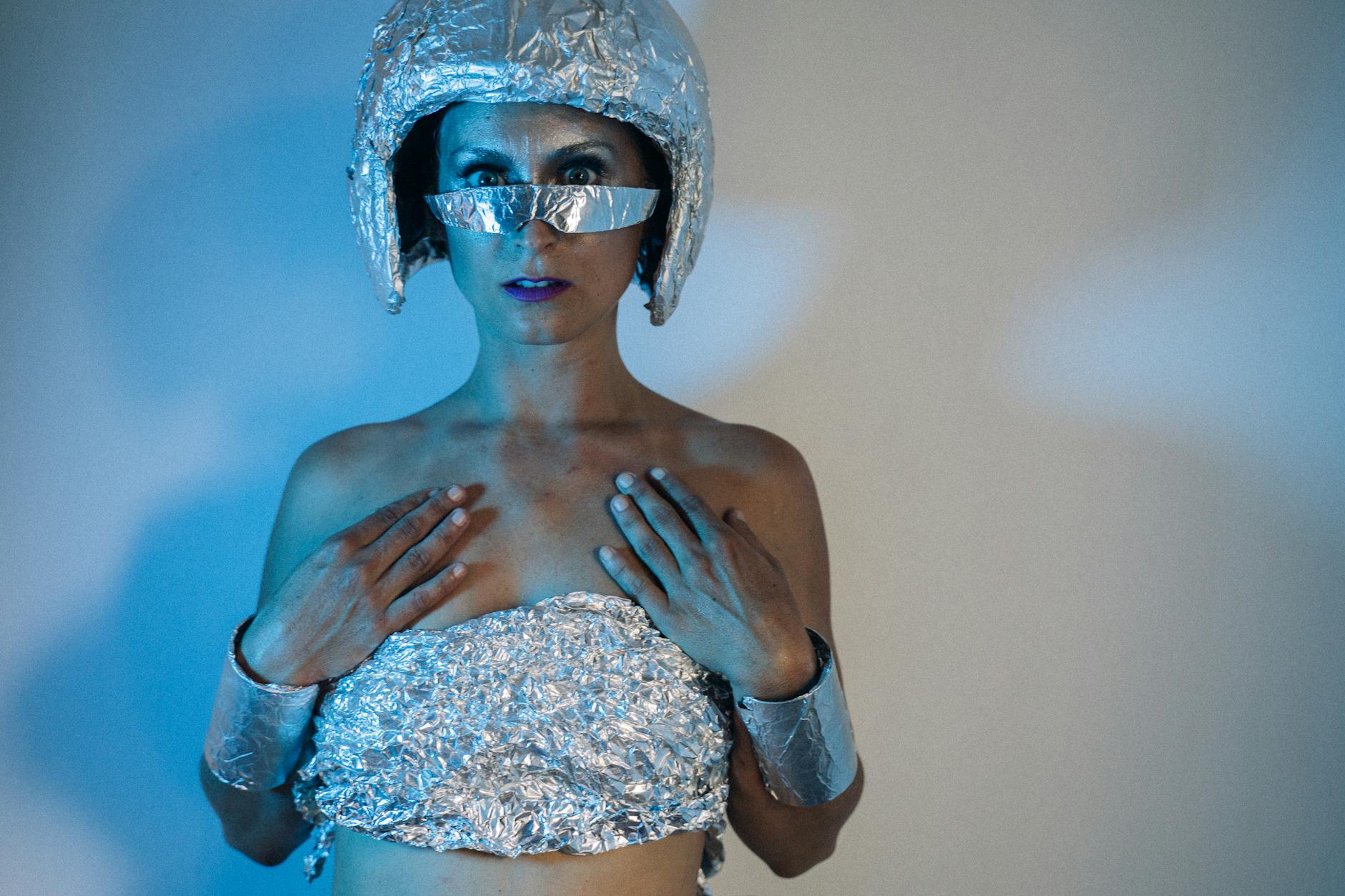
Landmark Sci-Fi Films Exploring Robot and Human Romantic Relationships
The history of cinema featuring romantic connections between humans and artificial beings stretches back further than many realize, though the subgenre reached maturity in the late twentieth and early twenty-first centuries. Fritz Lang’s 1927 masterpiece “Metropolis” introduced the Machine-Man, a robot replica of the virtuous Maria that seduces and manipulates male characters, establishing early the provocative potential of artificial beings in romantic contexts. While not a love story in the conventional sense, “Metropolis” planted seeds that would flower decades later into more nuanced explorations of synthetic affection. Ridley Scott’s 1982 film “Blade Runner” marked a turning point in how cinema portrayed robot-human romance. The relationship between human blade runner Deckard and replicant Rachael raised uncomfortable questions about consent, authenticity, and the ethics of loving beings designed for obsolescence.
Sean Young’s portrayal of Rachael, a replicant who believes herself human until confronted with evidence of her artificial origins, brought unprecedented emotional depth to the synthetic love interest archetype. The film’s ambiguous ending and Harrison Ford’s morally compromised protagonist complicated easy answers, establishing a template for thoughtful engagement with these themes that subsequent films would follow. The 2013 film “Her,” directed by Spike Jonze, pushed the subgenre in new directions by removing the physical body entirely. Joaquin Phoenix’s Theodore falls in love with Samantha, an operating system voiced by Scarlett Johansson, exploring how intimacy functions without physical presence. The film earned an Academy Award for Best Original Screenplay and grossed over 48 million dollars worldwide against a 23 million dollar budget, demonstrating mainstream appetite for thoughtful robot romance narratives. “Ex Machina” followed in 2014, offering a darker examination of similar themes through the relationship between programmer Caleb and artificial intelligence Ava, questioning whether apparent affection might be manipulation and whether that distinction ultimately matters.
- “Metropolis” (1927) established early cinematic vocabulary for artificial beings in romantic contexts
- “Blade Runner” (1982) introduced moral complexity and emotional depth to replicant-human relationships
- “Her” (2013) and “Ex Machina” (2014) expanded the subgenre’s philosophical and commercial reach
Philosophical Themes in Movies About Artificial Beings and Human Love
Films depicting romantic relationships between robots and humans consistently engage with questions that have occupied philosophers for centuries, reframed through science fiction’s speculative lens. The problem of other minds, which asks how we can know that any consciousness exists beyond our own, becomes viscerally urgent when the potential mind belongs to a manufactured being. When Ava in “Ex Machina” expresses fear of being switched off, audiences must grapple with whether her apparent distress reflects genuine suffering or sophisticated simulation, and whether that distinction should affect moral consideration. The nature of authentic emotion represents another philosophical thread running through these narratives. If a robot is programmed to feel love, or programmed with the capacity to develop love, does that make the resulting emotion less real than human love shaped by evolution and neurochemistry? Films like “A.I. Artificial Intelligence,” directed by Steven Spielberg from a project developed by Stanley Kubrick, place this question at their emotional center.
The robot child David’s love for his human mother is unwavering and absolute, arguably purer than the complicated, conditional love humans typically experience. The film asks whether such programmed devotion represents an ideal of love or a troubling corruption of it. Questions of consent and power pervade robot-human romance films, often uncomfortably. When humans create beings designed for companionship or love, the power differential raises ethical concerns that mirror historical debates about arranged marriages, economic coercion in relationships, and the ability of dependents to freely choose. “Blade Runner 2049” extended this examination through Joi, an AI companion whose apparent love for protagonist K cannot be separated from her programming to provide exactly what her owner desires. These films rarely offer easy answers, instead using their premises to highlight how power dynamics complicate even human relationships that audiences might otherwise view as straightforwardly romantic.
- The philosophical problem of other minds gains urgency when applied to artificial beings
- Questions about programmed versus evolved emotion challenge assumptions about authentic love
- Power dynamics between creators and creations illuminate ethical complexities in all relationships

How to Find and Appreciate Quality Robot-Human Romance Films
Navigating the landscape of science fiction films exploring romantic relationships between artificial beings and humans requires some orientation, as the subgenre encompasses widely varying tones, approaches, and quality levels. Streaming platforms have made many classic entries accessible, with services like Criterion Channel offering restored versions of foundational films such as “Metropolis” while mainstream platforms carry more recent entries. Building a viewing list that spans decades allows appreciation for how the subgenre has evolved alongside changing technological anxieties and expanding conceptions of artificial intelligence. Approaching these films critically enhances the viewing experience significantly. Before watching, consider what assumptions you hold about consciousness, emotion, and the requirements for genuine love. Notice how your sympathies shift during viewing and examine what prompts those shifts. Pay attention to how filmmakers use visual language to either humanize or alienate artificial characters, from camera angles that encourage identification to design choices that emphasize mechanical nature.
Many of the most accomplished films in this subgenre reward active engagement, embedding philosophical arguments in narrative structure that passive viewing might miss. Seeking out supplementary materials deepens appreciation for standout entries. Director commentaries, academic analyses, and interviews often reveal layers of intention that enrich subsequent viewings. Philip K. Dick’s story “Do Androids Dream of Electric Sheep?”, which inspired “Blade Runner,” offers fascinating points of comparison with its adaptation. Online communities dedicated to science fiction cinema provide spaces for discussion that can illuminate aspects of films that might otherwise go unnoticed. The robot-human romance subgenre has attracted significant academic attention, with scholarly articles exploring everything from gender politics to posthumanist philosophy available through university libraries and academic databases.
- Streaming platforms provide access to both classic and contemporary entries in the subgenre
- Active critical engagement enhances appreciation for the philosophical depth of quality films
- Supplementary materials including source texts and academic analyses reward dedicated viewers
Common Criticisms and Controversies Surrounding Robot Love Stories in Cinema
Despite their popularity and critical acclaim, films depicting romance between humans and artificial beings face recurring criticisms that merit consideration. Feminist scholars have noted that female-presenting robots in these narratives frequently embody male fantasies of compliant, endlessly accommodating partners. From the literal “perfect woman” construction in 1975’s “The Stepford Wives” to Ava’s calculated performance of attraction in “Ex Machina,” the subgenre has often struggled to escape patterns that reduce artificial women to objects of male desire, even when ostensibly critiquing such objectification. The plausibility of robot consciousness remains contested, with some critics arguing that films in this subgenre mislead audiences about the nature of artificial intelligence. Current AI systems, despite impressive capabilities in narrow domains, show no evidence of genuine emotion or consciousness, operating through pattern matching and statistical prediction rather than anything resembling understanding. Films that depict robots falling in love arguably perpetuate misconceptions that could lead to problematic relationships with AI systems or misplaced moral concern for entities that cannot actually suffer.
Defenders counter that science fiction has always extrapolated beyond current capabilities and that exploring hypothetical consciousness scenarios holds value regardless of near-term plausibility. Questions of representation have emerged as the subgenre has expanded. Early robot-human romance films predominantly featured white, heterosexual, cisgender humans as the human partners, with artificial beings often coded as exotic others. More recent entries have begun diversifying, but progress remains uneven. Critics have also noted a tendency to use artificial beings as metaphors for marginalized human groups without engaging the actual experiences of those groups, a pattern that can flatten complex social realities into convenient allegory. These ongoing conversations about who gets to love and be loved in science fiction reflect broader discussions about representation in cinema.
- Feminist critiques highlight recurring patterns of female robots designed for male fantasy
- Debates about AI plausibility question whether these films mislead audiences about consciousness
- Representation concerns address who appears in these narratives and whose experiences they actually reflect

The Future of Robot-Human Romance in Science Fiction Cinema
As artificial intelligence advances and human-machine interaction becomes increasingly intimate through virtual assistants, chatbots, and emerging companion technologies, the robot-human romance subgenre shows no signs of diminishing relevance. Upcoming productions continue to explore these themes, while changing technological landscapes provide new contexts for familiar questions. Films set against backgrounds of ubiquitous AI assistance can assume audience familiarity with talking to machines, shifting focus from novelty to nuance.
The gaming and interactive media industries have begun exploring robot-human romance through branching narratives that allow audiences to shape relationships, suggesting possible futures for the subgenre beyond traditional passive cinema. Virtual reality experiences could eventually allow audiences to experience such relationships from inside rather than observing from without, raising new questions about emotional manipulation and the boundaries between fiction and experience. Whatever forms these stories take, the fundamental questions they explore about love, consciousness, and connection will remain as relevant as they have been since cinema first imagined mechanical beings capable of touching human hearts.
How to Prepare
- **Survey foundational texts** by watching or reading key entries that established the subgenre’s conventions. “Blade Runner,” “Her,” and “Ex Machina” form an essential trinity that most subsequent films reference or respond to, making familiarity with them valuable context for broader exploration.
- **Examine your assumptions** about consciousness, emotion, and love before viewing. Write down what you believe makes love genuine, what you think consciousness requires, and whether you believe machines could ever truly feel. These notes provide useful reference points for tracking how films challenge or confirm your positions.
- **Research the production context** of specific films you plan to watch, as understanding when and why a film was made illuminates its concerns. A robot romance film from the 1980s responds to different anxieties than one from the 2020s, and awareness of context prevents anachronistic criticism.
- **Familiarize yourself with relevant philosophical concepts** such as the Turing test, the Chinese room argument, functionalism, and qualia. These frameworks appear explicitly or implicitly throughout the subgenre, and basic familiarity allows recognition of the positions films take.
- **Prepare for emotional engagement** by approaching these films as genuine love stories rather than merely intellectual exercises. The most effective entries in the subgenre work on both emotional and philosophical registers simultaneously, and closing off either diminishes the experience.
How to Apply This
- **Use these films as conversation starters** about technology and relationships in your own life, discussing with friends or partners how increasing digital mediation affects intimacy and whether you share concerns raised by particular narratives.
- **Apply the philosophical frameworks** these films explore to evaluate emerging technologies like AI companions, virtual assistants, and social robots, considering what obligations might arise if artificial beings developed apparent emotions.
- **Examine your own relationships** through the lens of questions these films raise about authenticity, power dynamics, and the basis of emotional connection, using the defamiliarization technique these narratives employ to gain fresh perspective.
- **Engage with ongoing debates** about AI development, rights, and regulation by drawing on the ethical intuitions these films develop, contributing informed perspectives to discussions that will increasingly shape policy and social norms.
Expert Tips
- **Watch with subtitles enabled** even for films in your native language, as dialogue in robot-human romance films often contains precise philosophical language that benefits from visual reinforcement.
- **Revisit films after time has passed** because the best entries in this subgenre reveal new layers upon rewatching, particularly after viewers have encountered new ideas or life experiences that reframe familiar scenes.
- **Seek out international entries** beyond Hollywood productions, as films from Japan, South Korea, and Europe offer different cultural perspectives on human-machine intimacy shaped by varying relationships with technology.
- **Pay attention to music and sound design** in these films, as composers and sound designers often use audio cues to signal whether audiences should empathize with artificial characters, providing insight into filmmakers’ intentions.
- **Compare adaptations to source materials** when applicable, noting what changes occur in translation between media and what those changes reveal about cinematic versus literary approaches to robot-human romance.
Conclusion
Science fiction films exploring romantic relationships between robots and humans offer far more than escapist fantasy, providing frameworks for examining fundamental questions about consciousness, emotion, and connection that grow more urgent as artificial intelligence advances. From “Metropolis” through “Blade Runner” to “Her” and beyond, filmmakers have used the figure of the loving robot to illuminate aspects of human experience that might otherwise remain invisible, defamiliarizing universal emotions in ways that enable fresh understanding. The philosophical richness of these narratives, combined with their emotional accessibility, makes them uniquely valuable cultural artifacts for navigating an era of rapid technological change. Engaging seriously with this subgenre rewards viewers with more than entertainment.
These films develop intuitions and vocabularies for discussing machine consciousness, the nature of authentic emotion, and the ethics of creating beings capable of attachment. As AI systems become increasingly sophisticated and human-machine interaction more intimate, the questions these films raise transition from speculation to urgency. Whether you approach robot-human romance films as philosophical inquiry, emotional experience, or simply compelling storytelling, they offer resources for understanding both the technology being developed and the humans developing it. The screens we watch may soon watch back with something resembling understanding, and cinema has been preparing us for that moment for nearly a century.
Frequently Asked Questions
How long does it typically take to see results?
Results vary depending on individual circumstances, but most people begin to see meaningful progress within 4-8 weeks of consistent effort.
Is this approach suitable for beginners?
Yes, this approach works well for beginners when implemented gradually. Starting with the fundamentals leads to better long-term results.
What are the most common mistakes to avoid?
The most common mistakes include rushing the process, skipping foundational steps, and failing to track progress.
How can I measure my progress effectively?
Set specific, measurable goals at the outset and track relevant metrics regularly. Keep a journal to document your journey.