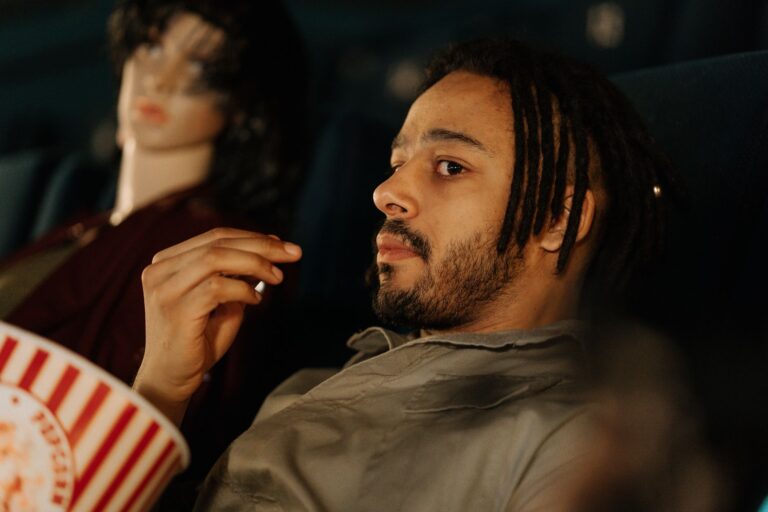
The Lighthouse meaning has puzzled and fascinated audiences since Robert Eggers’ black-and-white psychological horror film premiered at the 2019 Cannes Film Festival.
Shot in a claustrophobic 1.19:1 aspect ratio reminiscent of early cinema, this haunting tale of two lighthouse keepers descending into madness on a remote New England island has sparked countless interpretations, debates, and scholarly analyses.
The film’s deliberate ambiguity, combined with its rich mythological symbolism and career-defining performances from Willem Dafoe and Robert Pattinson, creates a viewing experience that demands multiple watches and deeper examination.
- Lighthouse Meaning Explained: Table of Contents
- What Is the Deeper Meaning Behind The Lighthouse?
- Mythological Symbolism and References in The Lighthouse Explained
- Psychological Interpretations of The Lighthouse's Narrative
- How to Understand The Lighthouse's Ambiguous Ending
- Common Misinterpretations and Overlooked Details in The Lighthouse
- The Lighthouse's Place in A24 Horror and Elevated Genre Filmmaking
- How to Prepare
- How to Apply This
- Expert Tips
- Frequently Asked Questions
- You Might Also Like
Understanding The Lighthouse requires grappling with questions that have troubled humanity for centuries: What happens when isolation strips away the thin veneer of civilization? How do power dynamics corrupt relationships? What secrets can a man truly keep from himself?
Eggers crafts a film that operates simultaneously as a period piece, a Greek tragedy, a Freudian nightmare, and a meditation on artistic obsession. For viewers left bewildered by the film’s ending or uncertain about its deeper themes, this analysis will illuminate the various interpretive layers woven throughout the narrative.
By the end of this exploration, readers will have a comprehensive understanding of the film’s mythological foundations, its psychological dimensions, the significance of its visual symbolism, and the multiple valid interpretations of its cryptic conclusion.
Whether approaching The Lighthouse as a casual viewer seeking clarity or a film enthusiast looking to deepen appreciation for Eggers’ craftsmanship, this analysis provides the context necessary to unlock one of modern cinema’s most enigmatic works.
Table of Contents
- What Is the Deeper Meaning Behind The Lighthouse?
- Mythological Symbolism and References in The Lighthouse Explained
- Psychological Interpretations of The Lighthouse’s Narrative
- How to Understand The Lighthouse’s Ambiguous Ending
- Common Misinterpretations and Overlooked Details in The Lighthouse
- The Lighthouse’s Place in A24 Horror and Elevated Genre Filmmaking
- How to Prepare
- How to Apply This
- Expert Tips
- Frequently Asked Questions
What Is the Deeper Meaning Behind The Lighthouse?
At its core, The Lighthouse explores the destructive nature of forbidden knowledge and obsessive desire. Ephraim Winslow (Robert Pattinson) arrives on the island seeking escape from his past, taking a four-week assignment as assistant to the experienced keeper Thomas Wake (Willem Dafoe).
From the first frame, Wake guards the lighthouse’s lamp with jealous intensity, forbidding Winslow from ever ascending to the top.
This prohibition establishes the central dramatic tension: Winslow becomes increasingly obsessed with the light he cannot access, mirroring countless myths about humanity’s dangerous pursuit of knowledge reserved for gods or higher powers.
The film draws heavily from the Greek myth of Prometheus, who stole fire from the gods and was punished by being chained to a rock while an eagle eternally devoured his liver.
Eggers makes this connection explicit through imagery: Winslow is repeatedly associated with birds, particularly the seagull he brutally kills, and his ultimate fate involves his own entrails being consumed by gulls. The lighthouse’s lamp represents divine fire or forbidden enlightenment, something mortals can serve but never possess.
Wake positions himself as the godlike gatekeeper, the only one worthy of communion with the light, while Winslow remains condemned to menial labor””hauling coal, emptying chamber pots, maintaining the fog horn.
- **Prometheus parallel**: Winslow’s theft of the light leads to eternal punishment, with birds consuming his body just as Zeus condemned Prometheus
- **Forbidden knowledge archetype**: The film suggests some truths destroy those who seek them, a theme echoing Genesis, Faust, and Lovecraftian horror
- **Master-servant dynamics**: The relationship between Wake and Winslow reflects broader questions about authority, labor exploitation, and who determines access to power or enlightenment

Mythological Symbolism and References in The Lighthouse Explained
Eggers saturates The Lighthouse with mythological imagery extending far beyond the Prometheus narrative. The mermaid or siren figure that haunts Winslow’s fantasies connects the film to maritime folklore and Homer’s Odyssey, where sirens lured sailors to destruction with irresistible songs.
Winslow discovers a scrimshaw mermaid figurine belonging to the previous assistant and becomes sexually obsessed with the creature, experiencing hallucinations where she appears both alluring and monstrous. This duality reflects the film’s treatment of desire itself””something that promises fulfillment but delivers madness.
Thomas Wake embodies Proteus, the shape-shifting sea god of Greek mythology who possessed knowledge of all things but would only share it with those who could physically restrain him. Wake constantly shifts between roles: jovial drinking companion, tyrannical boss, paternal figure, possible lover, and vengeful deity.
His lengthy monologue cursing Winslow invokes Triton, Neptune, and the full wrath of ocean gods, blurring the line between a drunken man’s ramblings and genuine supernatural authority. The film never clarifies whether Wake possesses actual power or merely performs it, keeping viewers as uncertain as Winslow about the reality of their situation.
- **Mermaid/siren symbolism**: Represents destructive desire, the feminine as threat, and the dangers lurking beneath beautiful surfaces
- **Protean shape-shifting**: Wake’s inconsistent character reflects both psychological complexity and mythic archetypes of deceptive sea deities
- **Tentacle imagery**: The brief appearance of tentacles suggests Lovecraftian cosmic horror, connecting to stories like “Dagon” and Cthulhu mythos about oceanic elder gods
- **The lighthouse as axis mundi**: The structure functions as a world axis connecting earthly and divine realms, a sacred space where mortal rules don’t apply
Psychological Interpretations of The Lighthouse’s Narrative
Reading The Lighthouse through a Freudian lens reveals a story fundamentally about repressed guilt, sexual anxiety, and the failure of psychological defense mechanisms. Winslow arrives on the island fleeing his past””he later confesses to allowing a man named Ephraim Winslow to die and stealing his identity.
The isolation of lighthouse duty serves as attempted escape from this trauma, but the human psyche cannot outrun itself. Every element of the island becomes a projection of Winslow’s internal conflict: the persecuting seagulls embody his conscience, the mermaid represents his repressed sexuality, and Wake functions as a punishing superego figure.
The confined space and repetitive labor create conditions for psychological breakdown regardless of any supernatural elements. Studies of isolation have documented how sensory deprivation and lack of varied human contact produce hallucinations, paranoia, and identity disturbances even in mentally healthy individuals.
The historical record includes numerous cases of lighthouse keepers experiencing mental health crises, some fatal. Eggers researched actual keeper logs while developing the screenplay, incorporating authentic details about the psychological toll of such work.
The film’s events can be interpreted entirely as Winslow’s mental collapse, with Wake potentially existing only as a manifestation of his guilt.
- **Repression and return**: Winslow’s buried guilt resurfaces through increasingly disturbing hallucinations and eventually direct confession
- **Isolation-induced psychosis**: The film accurately depicts how extended isolation produces paranoid ideation, perceptual disturbances, and violence
- **Identity dissolution**: Winslow’s stolen identity reflects a fragile sense of self that crumbles under pressure, leaving uncertainty about who he truly is
How to Understand The Lighthouse’s Ambiguous Ending
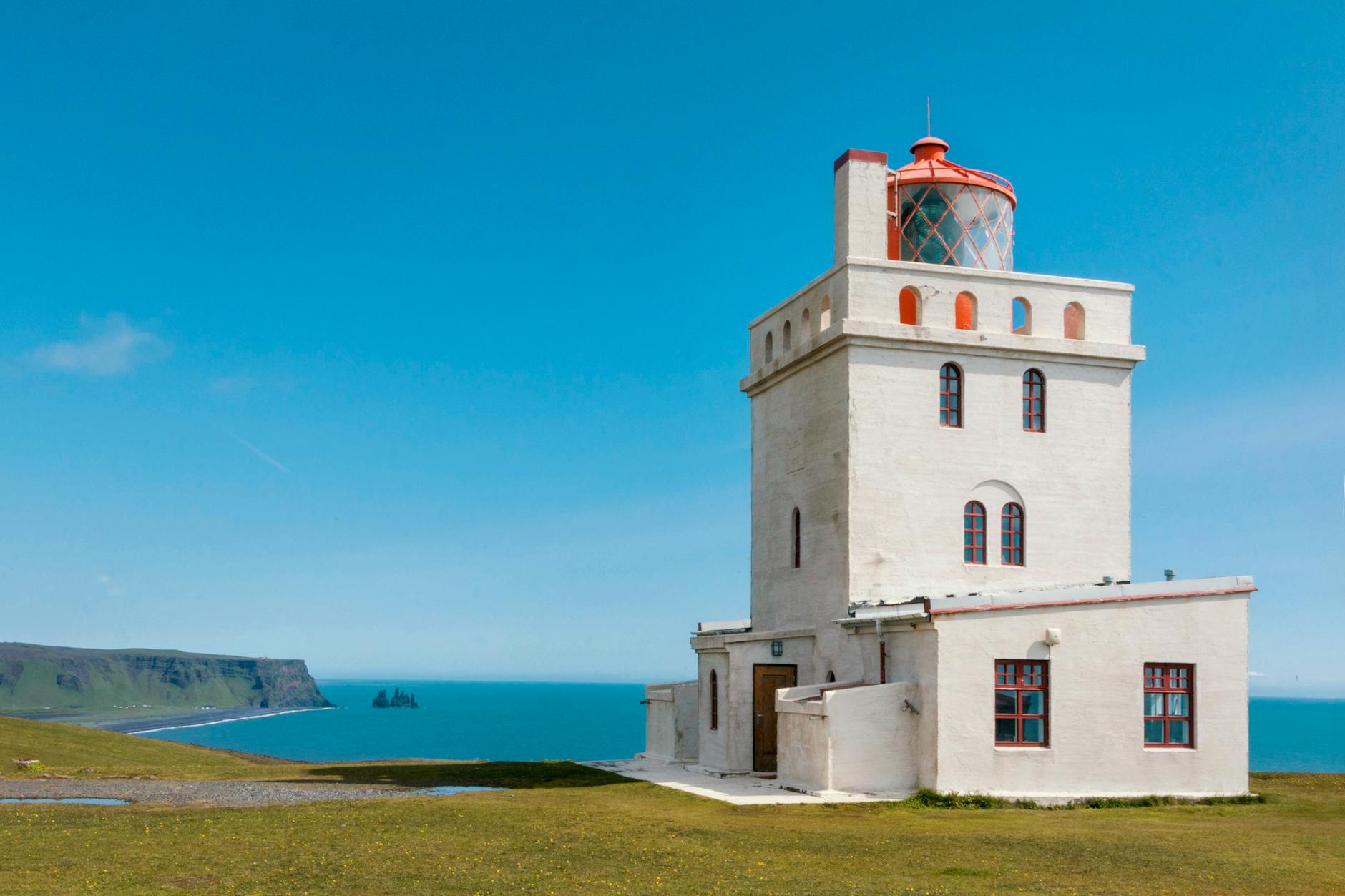
The Lighthouse concludes with Winslow finally reaching the forbidden lamp after apparently killing Wake. Rather than enlightenment, he finds something that makes him scream in horror, tumble down the stairs, and end up spreadeagled on the rocks below while seagulls tear at his flesh.
This ending deliberately refuses closure, offering multiple simultaneous meanings rather than a single definitive interpretation. Eggers has stated in interviews that he considers all thoughtful interpretations valid, intentionally constructing the narrative to support various readings without confirming any.
One interpretation frames the ending as cosmic horror revelation: Winslow glimpses something incomprehensible within the light, a truth too vast for human consciousness to process. This aligns with Lovecraft’s philosophy that knowledge of reality’s true nature would destroy the human mind.
Alternatively, the ending represents the hollowness of achieved obsession””Winslow sacrifices everything to reach the light and discovers it contains nothing worth the cost. The Prometheus reading sees his fall and consumption by birds as mythologically inevitable punishment for transgressing divine boundaries.
Psychological interpretations suggest the light shows Winslow himself, forcing final confrontation with the truth he has fled, resulting in psychic annihilation.
- **Cosmic revelation**: The light contains incomprehensible truth that shatters Winslow’s sanity, echoing Lovecraftian cosmic indifference
- **Empty achievement**: Years of obsession culminate in discovering the goal was never worth pursuing, commenting on destructive ambition
- **Mythic punishment**: The ending completes the Prometheus parallel with literal fulfillment of eternal suffering
- **Self-confrontation**: The light forces Winslow to see himself clearly, and he cannot survive the experience
Common Misinterpretations and Overlooked Details in The Lighthouse
Many first-time viewers miss the significance of the timeline’s unreliability throughout The Lighthouse. What begins as a four-week assignment extends indefinitely when a storm prevents the relief boat’s arrival, but the film provides no clear markers of passing time.
Days, weeks, or months might pass between scenes, and the characters’ conflicting accounts make it impossible to establish objective chronology. This temporal ambiguity serves the larger project of destabilizing viewer certainty””just as Winslow cannot trust his perceptions, audiences cannot trust the narrative itself.
Another frequently overlooked element is the homoerotic subtext permeating Wake and Winslow’s relationship. The men’s isolation forces an intimacy that manifests in dancing, near-kissing, and violent physical confrontations charged with sexual energy. Eggers has acknowledged this dimension, noting that close quarters throughout history have created complicated relationships between men that defy simple categorization.
The mermaid might represent Winslow’s attempt to redirect desire toward an acceptable feminine object, with his fantasies growing more violent as this displacement fails. The film neither confirms nor denies a sexual relationship between the keepers, maintaining ambiguity that enriches rather than confuses the narrative.
- **Unreliable timeline**: The film deliberately obscures how much time passes, preventing viewers from establishing firm reality
- **Sexual tension**: The relationship between Wake and Winslow contains undeniable erotic elements that complicate straightforward readings
- **The dead identity**: Winslow admits his name belongs to a man he let die, but the film never clarifies whether he murdered this person or simply failed to save him
- **Wake’s reliability**: Whether Wake has any genuine supernatural authority or merely performs power remains productively unclear

The Lighthouse’s Place in A24 Horror and Elevated Genre Filmmaking
The Lighthouse exemplifies the “elevated horror” or “art horror” movement that A24 has championed throughout the 2010s and 2020s. These films use genre conventions as vehicles for exploring serious themes, prioritizing atmosphere and psychological complexity over jump scares or graphic violence.
Eggers’ earlier film The Witch (2015) established this approach by treating a colonial New England setting with anthropological precision while telling a story about feminine liberation, religious hysteria, and family dissolution. The Lighthouse continues this methodology with even greater formal experimentation, embracing visual strategies from silent cinema and early talkies.
The film’s technical choices serve its thematic concerns directly. The nearly square aspect ratio creates claustrophobia even in exterior shots, visually confining characters within the frame. Black-and-white photography with orthochromatic sensitivity renders the world in stark contrasts, making human figures appear carved from the same stone as the lighthouse itself.
Sound design emphasizes the fog horn’s persistent drone, establishing an audio environment as oppressive as the visual one.
These formal decisions distinguish The Lighthouse from mainstream horror while connecting it to a lineage including Ingmar Bergman, Carl Theodor Dreyer, and German Expressionism””filmmakers who understood that how a story is told shapes meaning as much as narrative content.
How to Prepare
- **Research the Prometheus myth beforehand**: Understanding the basic story of Prometheus stealing fire and suffering eternal punishment provides essential context for The Lighthouse’s central metaphor. Read a summary of the myth, noting details about the eagle consuming his liver daily, and watch for parallels throughout the film.
- **Familiarize yourself with basic maritime mythology**: The film references mermaids, sirens, Proteus, Triton, and Neptune with varying degrees of explicitness. Brief research on these figures helps identify when Wake’s speeches invoke genuine mythological tradition versus drunken rambling””or recognize that the film may intentionally blur this distinction.
- **Adjust your expectations for ambiguity**: The Lighthouse will not explain itself. Entering with acceptance that multiple interpretations coexist, rather than expecting one correct answer, prevents frustration and opens appreciation for the film’s deliberate complexity. This is not a puzzle to be solved but an experience to be inhabited.
- **Watch in appropriate conditions**: The film’s visual and audio design requires attention that casual viewing environments undermine. A dark room, quality sound system or headphones, and freedom from interruption allow the hypnotic atmosphere to work properly. The aspect ratio also benefits from screen viewing rather than phone watching.
- **Plan for multiple viewings**: First watch often produces confusion that subsequent viewings clarify. Knowing the ending transforms earlier scenes, revealing foreshadowing and irony invisible on initial viewing. Consider spacing viewings to allow processing time between experiences.
How to Apply This
- **Identify which interpretation resonates most strongly**: After watching, reflect on whether the psychological, mythological, cosmic horror, or combination reading feels most compelling. There is no wrong answer, but articulating a position helps organize observations and deepen understanding of personal response to the film.
- **Trace specific symbol patterns through the narrative**: Choose one symbol””the mermaid, the light, the seagulls, the tentacles””and track every appearance throughout the film. Note how its meaning shifts or accumulates across scenes. This focused attention reveals Eggers’ meticulous construction and generates insights that holistic viewing misses.
- **Compare Wake’s and Winslow’s perspectives**: The film primarily aligns viewers with Winslow, but attempting to reconstruct events from Wake’s viewpoint reveals different possibilities. Consider what Wake actually knows, what he suspects, and how his behavior might appear from outside Winslow’s increasingly unreliable perception.
- **Research Eggers’ influences and interviews**: The director has discussed The Lighthouse extensively, citing sources from Milton’s Paradise Lost to Ernst Jentsch’s writing on the uncanny. Exploring these connections expands appreciation for the film’s intellectual architecture without reducing it to mere reference-spotting.
Expert Tips
- **Watch The Witch first if you haven’t**: Eggers’ debut establishes his approach to period research, slow-burn horror, and ambiguous supernatural elements. The Lighthouse extends and intensifies these methods, so familiarity with The Witch provides useful context for his artistic project.
- **Pay attention to food and drink**: Meals structure the film’s rhythm and reveal power dynamics. Wake controls when and what they eat, using food as dominance tool. The quality and quantity of their provisions deteriorates alongside their mental states, creating physical correlates for psychological breakdown.
- **Listen to the dialogue’s rhythm as much as its content**: Eggers wrote Wake’s lines in 19th-century dialect based on period sources, creating a speech pattern that sounds archaic and authoritative. Winslow speaks more plainly, establishing class and generational distance. The language itself performs hierarchy regardless of what characters actually discuss.
- **Consider the mermaid’s duality literally and symbolically**: The creature appears both beautiful and monstrous across different scenes, with sharp teeth and dead eyes contrasting her alluring form. This reflects classical siren mythology but also Winslow’s ambivalent relationship to desire itself””something that attracts and repulses simultaneously.
- **Recognize that “what really happened” may not exist**: The Lighthouse might not have an objective reality beneath its subjective distortions. Rather than treating hallucinations as false and other scenes as true, consider that the entire film might operate in a register where such distinctions don’t apply””more like myth or dream than realist narrative.
Frequently Asked Questions
How long does it typically take to see results?
Results vary depending on individual circumstances, but most people begin to see meaningful progress within 4-8 weeks of consistent effort.
Is this approach suitable for beginners?
Yes, this approach works well for beginners when implemented gradually. Starting with the fundamentals leads to better long-term results.
What are the most common mistakes to avoid?
The most common mistakes include rushing the process, skipping foundational steps, and failing to track progress.
How can I measure my progress effectively?
Set specific, measurable goals at the outset and track relevant metrics regularly. Keep a journal to document your journey.
You Might Also Like
For more on Lighthouse Meaning Explained, see the full breakdown above – the lighthouse meaning explained details cover what most viewers want to know.
Whether you searched for lighthouse meaning explained reviews, lighthouse meaning explained streaming, or lighthouse meaning explained cast, this guide consolidates the relevant lighthouse meaning explained facts in one place.
Steve Levine writes FindThisMovie’s Ending Explained breakdowns, best-of lists, and scene-identification guides — drawing on 20+ years of watching (and re-watching) far too many films. More about Steve →