The Avatar CGI military tech comparison has become one of the most discussed topics in visual effects circles since James Cameron’s groundbreaking 2009 film introduced audiences to an unprecedented fusion of computer-generated imagery and speculative military hardware. From the hulking AMP suits that stomp through Pandoran jungles to the sleek Scorpion gunships that dominate the skies, Cameron’s vision of 22nd-century warfare required Weta Digital and a team of hundreds to create believable, functional-looking military technology that had never existed before. The film’s 2022 sequel, Avatar: The Way of Water, expanded this arsenal considerably, raising questions about how the CGI techniques evolved and how the fictional tech stacks up against both real-world military equipment and other science fiction franchises. Understanding the visual effects methodology behind Avatar’s military hardware matters for anyone interested in film production, VFX artistry, or science fiction worldbuilding.
Cameron and his team didn’t simply design cool-looking weapons and vehicles””they built entire technical manuals, created functional cockpit designs, and ensured every piece of equipment followed consistent internal logic. This attention to detail separates Avatar’s military technology from generic science fiction fare and provides a masterclass in how CGI can serve storytelling rather than distract from it. The comparison between the two films also reveals how real-time rendering, motion capture, and simulation technology advanced over the thirteen years between releases. By the end of this analysis, readers will understand the specific CGI techniques used to bring Avatar’s military hardware to life, how the technology compares between the original film and its sequel, and what design philosophy guided the creation of everything from the SA-2 Samson utility helicopters to the massive Sea Dragon amphibious assault ships. This examination goes beyond surface-level appreciation to explore render times, polygon counts, and the collaborative process between concept artists, military consultants, and digital effects supervisors.
Table of Contents
- What CGI Techniques Bring Avatar’s Military Technology to Life?
- Military Hardware Design Philosophy in Avatar’s CGI Arsenal
- CGI Evolution Between Avatar and Avatar: The Way of Water
- How Avatar’s Military Tech Compares to Other Sci-Fi CGI Franchises
- Technical Challenges in Rendering Avatar’s Military Machinery
- The Role of Practical Reference in Avatar’s CGI Military Design
- How to Prepare
- How to Apply This
- Expert Tips
- Conclusion
- Frequently Asked Questions
What CGI Techniques Bring Avatar’s Military Technology to Life?
The military technology in avatar represents a convergence of multiple CGI disciplines working in concert. Weta Digital employed photorealistic rendering, physics-based simulation, and performance capture integration to create vehicles and weapons that feel grounded despite their fantastical setting. The foundational approach treated each piece of military hardware as a real object that happens to not exist yet””every surface material, from brushed aluminum to carbon fiber composites, received accurate shader work that responded correctly to Pandora’s unique lighting conditions. The bioluminescent environment presented particular challenges, as military vehicles needed to reflect and interact with light sources that had no real-world equivalent.
Hard-surface modeling formed the backbone of the military tech CGI pipeline. Artists created extraordinarily detailed 3D models, with the AMP suit alone containing over 1 million polygons in its hero version used for close-up shots. These models included every rivet, panel line, hydraulic tube, and warning label that would exist on real military equipment. The modeling team worked from concept art by production designer Dylan Cole and others, but also referenced actual military vehicles including the AH-64 Apache, the F-35 Lightning II, and various industrial exoskeletons in development at the time. This referencing ensured mechanical plausibility even when the technology was entirely fictional.
- Subsurface scattering techniques created realistic paint and coating appearances on vehicle hulls
- Procedural damage and weathering systems allowed artists to add wear patterns that matched the implied operational history of each vehicle
- Rigid body dynamics simulations ensured moving parts””cockpit canopies, weapon mounts, landing gear””moved with appropriate weight and mechanical resistance
- Environment interaction systems calculated reflections, ambient occlusion, and light bounce specific to each scene’s conditions
Military Hardware Design Philosophy in Avatar’s CGI Arsenal
James Cameron’s background as a truck driver and his obsessive research tendencies shaped Avatar’s military technology philosophy. The Resources Development Administration’s hardware follows a clear design lineage from contemporary military equipment, extrapolated forward approximately 150 years. This wasn’t arbitrary futurism””Cameron hired military consultants and reviewed Department of Defense research programs to understand where weapons and vehicle technology might actually head. The result is military tech that feels like a plausible evolution rather than fantasy hardware.
The AMP suit exemplifies this philosophy. Standing roughly 4 meters tall, the Amplified Mobility Platform combines elements of forklifts, excavators, and experimental military exoskeletons. Its CGI realization required solving the problem of showing a human pilot’s movements translated through a mechanical frame””the solution involved performance capture of actors in specialized rigs combined with real-time animation systems that applied human motion to the CGI suit with appropriate mechanical delay and limitation. The suits in Avatar: The way of Water received upgraded designs with aquatic variants, requiring entirely new rigging systems that could handle both terrestrial and underwater movement paradigms.
- The Dragon Assault Ship measures 150 meters in CGI scale, with interior spaces modeled to match exterior proportions
- Scorpion gunships draw direct visual lineage from the AH-1 Cobra attack helicopter while incorporating VTOL capability inspired by the V-22 Osprey
- The GAU-90 mounted weapons use real ballistics calculations scaled up to the 30mm caliber specified in the film’s technical documentation
- Ground vehicles like the AT-99 “Hell Truck” combine elements of modern MRAPs with speculative armor composites
CGI Evolution Between Avatar and Avatar: The Way of Water
Thirteen years separated the original Avatar from its sequel, and the military tech CGI reflects massive technological advancement in visual effects capabilities. The original film pioneered virtual camera systems that allowed Cameron to frame and direct scenes within CGI environments in real time, but the sequel pushed these systems far beyond their 2009 capabilities. Military vehicles in The Way of Water interact with water physics, atmospheric moisture, and dynamic weather systems that simply weren’t feasible to render in the original production.
The most significant advancement involved the integration of military hardware with aquatic environments. The Sea Dragon amphibious assault ship required entirely new simulation systems to show its massive hull interacting with ocean waves while simultaneously rendering the aircraft and vehicles it carries. Water simulation””notoriously one of the most computationally expensive aspects of CGI””had to work at multiple scales simultaneously, from ocean swells to splash patterns from landing helicopters. Weta Digital developed proprietary fluid dynamics systems specifically to handle these challenges, with render times for water-heavy military scenes sometimes exceeding 100 hours per frame.
- Polygon counts increased roughly tenfold between films, with hero vehicles now containing upwards of 10 million polygons
- Ray-traced lighting replaced the original film’s hybrid rendering approach, creating more accurate reflections on metallic surfaces
- Real-time virtual production techniques allowed on-set visualization of CGI vehicles during filming
- Machine learning algorithms assisted in generating consistent weathering and damage patterns across the expanded military fleet
How Avatar’s Military Tech Compares to Other Sci-Fi CGI Franchises
Placing Avatar’s military CGI in context requires comparison with other major science fiction franchises. The Marvel Cinematic Universe, Star Wars sequel trilogy, and various Transformers films all feature extensive military hardware CGI, but each takes distinctly different approaches. Avatar occupies a unique position by prioritizing mechanical plausibility over stylistic exaggeration, creating technology that could theoretically function rather than serving purely as visual spectacle. The Star Wars approach to military tech CGI emphasizes visual iconography””the silhouettes of Star Destroyers, TIE fighters, and AT-AT walkers are instantly recognizable but don’t follow consistent internal logic regarding power systems, propulsion, or structural engineering.
Avatar’s RDA hardware, by contrast, includes detailed technical specifications that inform every CGI model. The Valkyrie shuttle has defined fuel capacity, thrust-to-weight ratios, and cargo limitations. This information doesn’t appear on screen but guides how animators move the vehicles and how effects artists show them operating. The Transformers franchise pushes geometric complexity further than Avatar””individual Transformers can contain 50,000+ moving parts””but sacrifices the mechanical coherence that makes Avatar’s technology feel functional.
- Avatar’s vehicle damage follows structural engineering principles, with armor failing along realistic stress points
- The Halo franchise takes a similar approach to mechanical plausibility but with more exaggerated scale
- District 9, created by Weta Digital shortly after Avatar, applied similar techniques to alien military technology
- The Expanse television series achieves comparable mechanical realism with significantly smaller budgets through careful design choices
Technical Challenges in Rendering Avatar’s Military Machinery
Creating photoreal military hardware CGI at Avatar’s scale presented challenges that required developing entirely new rendering and simulation techniques. The interaction between hard-surface mechanical objects and organic Pandoran environments created particular difficulties””military vehicles needed to crush vegetation, disturb bioluminescent plants, and leave tracks in alien soil while maintaining consistent material properties. Each of these interactions required dedicated simulation systems that communicated with each other through Weta Digital’s pipeline infrastructure.
Fire and explosion effects for military weapons posed another significant challenge. The muzzle flashes, tracer rounds, and explosive impacts seen throughout both Avatar films required simulation systems that could handle both the physical dynamics of combustion and the visual characteristics that audiences expect from military hardware. Real explosions behave differently than movie explosions””they’re often faster, smokier, and less photogenic””so VFX artists had to balance physical accuracy against visual clarity. The solution involved creating a library of simulated military ordnance effects that could be art-directed while maintaining physical plausibility, with each weapon system having its own signature muzzle flash, smoke pattern, and projectile trail.
- Rendering the Valkyrie shuttle at maximum detail required approximately 4GB of texture data per vehicle instance
- Motion blur calculations for fast-moving aircraft created aliasing problems that required custom denoising algorithms
- The cockpit HUD displays seen from inside vehicles used separate rendering passes composited with the main vehicle renders
- Atmospheric interaction””vehicles passing through clouds and mist””required volumetric rendering systems running alongside surface renders
The Role of Practical Reference in Avatar’s CGI Military Design
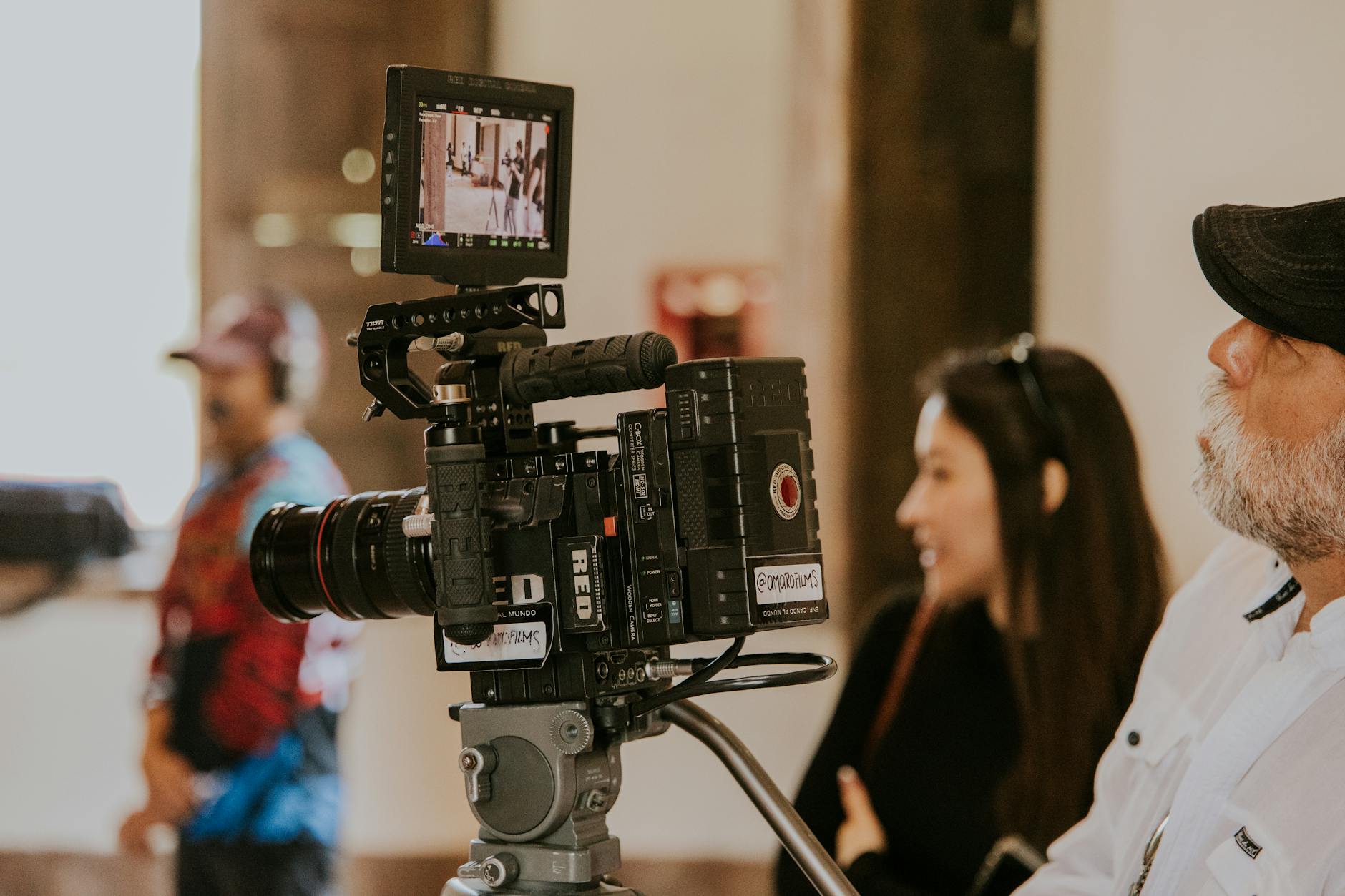
Despite being almost entirely computer-generated, Avatar’s military technology relied heavily on practical reference photography and physical mockups. The production built partial AMP suit cockpits and vehicle interiors that actors could interact with, providing reference for lighting, scale, and mechanical movement that would have been difficult to achieve through pure imagination. These practical elements weren’t intended to appear in the final film but served as crucial guides for the digital artists building the CGI versions.
Cameron also commissioned detailed technical illustrations in the style of military equipment manuals, complete with cross-sections showing internal components, maintenance procedures, and operational specifications. These documents””some of which were published in supplementary materials””gave digital artists consistent reference points and helped maintain design coherence across the hundreds of artists working on military hardware throughout the production. This methodology has influenced subsequent blockbuster productions, with franchises like Star Wars and the MCU adopting similar documentation approaches for their CGI hardware.
How to Prepare
- Study real military equipment first by researching contemporary helicopters, exoskeletons, and armored vehicles to understand the design language Avatar references and extrapolates from””this baseline knowledge makes the fictional technology’s lineage clear and highlights where Cameron’s team innovated versus borrowed.
- Watch behind-the-scenes documentaries, particularly the extended materials on the Collector’s Edition releases, which include detailed breakdowns of specific vehicles and the CGI processes used to create them””these materials feature interviews with VFX supervisors explaining their technical approaches.
- Pause during action sequences to examine individual frames, noting details like reflection accuracy, shadow consistency, and material variation across vehicle surfaces””these micro-details reveal the sophistication of the rendering systems.
- Compare military hardware appearances between the 2009 film and 2022 sequel, noting improvements in lighting integration, surface detail, and environmental interaction””this comparison illustrates how CGI technology advanced over the intervening years.
- Research Weta Digital’s published technical papers and SIGGRAPH presentations, which detail specific algorithms and systems developed for Avatar’s military vehicles””these primary sources provide accurate technical information beyond what making-of documentaries cover.
How to Apply This
- When discussing visual effects quality, reference specific military technology examples from Avatar as benchmarks””the AMP suit’s mechanical movement, the Scorpion gunship’s material accuracy, or the Sea Dragon’s water interaction provide concrete discussion points with measurable qualities.
- Compare military technology design philosophy across franchises by using Avatar’s approach to mechanical plausibility as one end of a spectrum, with more stylized franchises occupying different positions””this framework allows nuanced comparison rather than simple better/worse judgments.
- Apply the concept of “invisible CGI” to military hardware analysis, noting that Avatar’s most successful effects are those viewers accept as real without conscious acknowledgment””identifying where this immersion breaks reveals both technical limitations and artistic priorities.
- Discuss the relationship between military technology CGI and narrative function, examining how Avatar’s hardware designs serve the film’s colonialist allegory””the industrial, utilitarian aesthetic of RDA equipment contrasts deliberately with Na’vi organic design.
Expert Tips
- Focus on cockpit sequences when evaluating military CGI quality, as these close-up shots reveal surface detail, accurate reflections, and proper light transmission through canopy materials that distant shots can fake more easily.
- Pay attention to mechanical joint articulation on vehicles like the AMP suit””convincing CGI machinery shows appropriate looseness, friction, and momentum in moving parts rather than perfectly smooth robotic motion.
- Notice how military vehicles interact with Pandora’s atmosphere, particularly in shots featuring mist, rain, or smoke””these volumetric interactions require sophisticated simulation and often reveal the difference between premium and budget CGI approaches.
- Evaluate color grading choices for military hardware scenes, as improper grading can make otherwise excellent CGI appear artificial””Avatar’s team carefully matched vehicle colors to environmental lighting conditions.
- Consider audio design alongside visual analysis, since Avatar’s military technology includes custom sound design that reinforces mechanical weight and power””this audio-visual combination creates more convincing technology than either element alone.
Conclusion
The CGI military technology in Avatar represents a landmark achievement in visual effects that extends beyond technical prowess into thoughtful design and rigorous worldbuilding. James Cameron and his collaborators at Weta Digital created a fictional military arsenal that functions as believable 22nd-century hardware while serving the film’s narrative about colonialism, corporate exploitation, and ecological destruction. The comparison between the original 2009 film and The Way of Water reveals not just technological advancement but evolving artistic priorities, with the sequel’s aquatic focus requiring entirely new simulation systems and design paradigms. Understanding these technical achievements enriches appreciation of Avatar as a filmmaking accomplishment and provides framework for evaluating CGI military technology across the science fiction genre.
For film enthusiasts interested in visual effects, Avatar’s military hardware offers endless material for analysis and discussion. The franchise’s technical documentation, behind-the-scenes materials, and published research papers provide unusually detailed insight into blockbuster CGI methodology. As James Cameron continues developing additional Avatar sequels, the military technology will undoubtedly evolve further, potentially introducing new vehicle types, weapons systems, and CGI techniques that push the medium forward. Whether approaching from a film studies perspective, a visual effects interest, or simple appreciation for mechanical design, Avatar’s military CGI rewards close attention and repeated viewing.
Frequently Asked Questions
How long does it typically take to see results?
Results vary depending on individual circumstances, but most people begin to see meaningful progress within 4-8 weeks of consistent effort.
Is this approach suitable for beginners?
Yes, this approach works well for beginners when implemented gradually. Starting with the fundamentals leads to better long-term results.
What are the most common mistakes to avoid?
The most common mistakes include rushing the process, skipping foundational steps, and failing to track progress.
How can I measure my progress effectively?
Set specific, measurable goals at the outset and track relevant metrics regularly. Keep a journal to document your journey.