Aaron Sorkin’s *The Trial of the Chicago 7* (2020) stands as one of the most politically charged and dramatically compelling courtroom dramas of the decade, arriving at a moment when its themes of protest, government overreach, and the suppression of dissent felt urgently contemporary. Based on the infamous 1969 trial of seven defendants charged with conspiracy and crossing state lines with intent to incite a riot during the 1968 Democratic National Convention in Chicago, the film transforms a sprawling historical episode into a tightly wound narrative about the collision between activism and institutional power. With a stellar ensemble cast including Sacha Baron Cohen, Eddie Redmayne, Yahya Abdul-Mateen II, and Mark Rylance, the film earned six Academy Award nominations and reignited conversations about civil liberties, political prosecution, and the right to protest. The questions this film addresses remain as pressing today as they were during the turbulent late 1960s: When does legitimate protest cross into criminal territory? How do institutions weaponize the legal system against political opponents? What happens when a trial becomes a theatrical stage for ideological warfare? Sorkin, known for his crackling dialogue and idealistic political dramas, brings his signature style to material that practically demands it.
The historical trial itself was a circus of courtroom drama, featuring a judge who ordered Black Panther co-founder Bobby Seale bound and gagged, defendants who wore judicial robes to mock the proceedings, and testimony from counterculture figures like Allen Ginsberg and Arlo Guthrie. By the end of this review, readers will understand what makes this film succeed as both entertainment and political commentary, where it takes creative liberties with history, and how its examination of politics and protest resonates with contemporary movements. The analysis covers the film’s performances, Sorkin’s directorial choices, its historical accuracy, and its place within the broader tradition of courtroom dramas and political films. Whether approaching this as a casual viewer curious about a critically acclaimed drama or a student of political cinema seeking deeper analysis, this review provides a comprehensive examination of a film that uses the past to illuminate the present.
Table of Contents
- What Makes The Trial of the Chicago 7 a Powerful Political Film?
- The Ensemble Cast and Standout Performances in The Trial of the Chicago 7
- Historical Accuracy and Creative Liberties in the 1968 Chicago Trial Dramatization
- Aaron Sorkin’s Direction and Signature Screenwriting Style
- Themes of Protest, Civil Rights, and Government Overreach in Chicago 7
- The Legacy and Cultural Impact of The Trial of the Chicago 7
- How to Prepare
- How to Apply This
- Expert Tips
- Conclusion
- Frequently Asked Questions
What Makes The Trial of the Chicago 7 a Powerful Political Film?
The power of *The Trial of the Chicago 7* as a political film stems from its refusal to simplify its subjects into heroes or villains, instead presenting the messy reality of a protest movement fractured by ideology, ego, and strategy. Sorkin structures the narrative around the fundamental tension between Tom Hayden (Eddie Redmayne), the cerebral Students for a Democratic Society organizer who believes in working within the system, and Abbie Hoffman (Sacha Baron Cohen), the Yippie provocateur who sees spectacle as a form of resistance. This ideological conflict drives much of the film’s dramatic tension and reflects genuine historical disagreements within the anti-war movement about tactics and goals. The defendants were never a unified front; they ranged from pacifist academics to revolutionary activists, and the film honors this complexity.
What elevates the film beyond standard courtroom procedural territory is its examination of how political trials function as theater for both the prosecution and defense. Judge Julius Hoffman (Frank Langella, delivering a performance of chilling obstinance) transforms the courtroom into an arena where the actual charges become secondary to the symbolic struggle between establishment authority and countercultural resistance. The prosecution, led by Richard Schultz (Joseph Gordon-Levitt), pursues the case under political pressure from the Nixon administration despite harboring doubts about its merits. Sorkin presents this as a prosecution designed not to achieve justice but to punish dissent and send a message.
- The film draws direct visual and thematic parallels to contemporary protest movements, including footage suggesting connections to Black Lives Matter demonstrations
- Sorkin employs his trademark rapid-fire dialogue to convey complex political ideas without sacrificing momentum
- The ensemble structure allows multiple perspectives on protest, patriotism, and the legitimate boundaries of dissent
- By focusing on the personal conflicts among the defendants, the film humanizes historical figures often reduced to icons or caricatures
The Ensemble Cast and Standout Performances in The Trial of the Chicago 7
Sacha Baron Cohen’s portrayal of Abbie Hoffman represents a career-defining dramatic turn for an actor previously known primarily for provocative comedy. Cohen captures Hoffman’s razor-sharp wit, his genuine commitment to the cause beneath the clownish exterior, and his sophisticated understanding that media spectacle could be wielded as a political weapon. His courtroom exchanges with Judge Hoffman crackle with antagonism and dark humor, and Cohen delivers several of the film’s most memorable lines with perfect timing. The performance earned him a Golden Globe nomination and demonstrated range that surprised many viewers familiar only with his comedic work.
Eddie Redmayne provides essential counterbalance as Tom Hayden, playing the intellectual activist as conflicted, calculating, and ultimately principled. Redmayne must convey a character who believes deeply in the cause but disagrees with Hoffman’s methods, who wants to be taken seriously by the establishment while fighting against it. The film’s climactic moment belongs to Hayden, and Redmayne rises to the occasion with restrained emotional power. Mark Rylance as defense attorney William Kunstler brings gravitas and barely contained fury to a role that requires navigating impossible circumstances with dignity. His scenes confronting Judge Hoffman’s prejudicial rulings convey the profound frustration of attempting to conduct a fair defense in an unfair proceeding.
- Yahya Abdul-Mateen II delivers a searing performance as Bobby Seale, whose treatment in the trial exposed its racial dimensions in the most visceral terms
- Frank Langella’s Judge Hoffman is portrayed as neither a cackling villain nor a complex figure, but as a petty bureaucrat wielding enormous power with casual cruelty
- Jeremy Strong brings neurotic energy to Jerry Rubin, Hoffman’s Yippie partner whose commitment to provocation sometimes undermined the defense
- Joseph Gordon-Levitt’s prosecutor Richard Schultz provides the film’s most nuanced authority figure, a man following orders while recognizing their injustice
Historical Accuracy and Creative Liberties in the 1968 Chicago Trial Dramatization
Any dramatization of historical events must balance accuracy with narrative necessity, and *The Trial of the Chicago 7* makes numerous documented choices that historians have both praised and questioned. The broad strokes of the trial are accurately presented: the defendants were indeed charged with conspiracy under the newly passed Anti-Riot Act, Bobby Seale was bound and gagged in the courtroom after demanding his right to self-representation, and the judge’s behavior was genuinely as prejudicial as depicted. The film compresses a five-month trial into two hours, necessarily omitting testimony, legal arguments, and entire subplots that would require a miniseries to fully explore.
Sorkin’s most significant dramatic inventions involve the film’s climax, where Tom Hayden reads the names of american soldiers killed in Vietnam as an act of courtroom defiance. This moment did not occur as depicted; Hayden’s statement was actually delivered earlier in the trial and under different circumstances. The film also creates a scene where Abbie Hoffman explains the origins of the Yippie movement as elaborate performance art, which, while capturing the spirit of Hoffman’s philosophy, represents Sorkin’s interpretation rather than documented testimony. These creative choices serve the narrative by crystallizing themes and providing emotional catharsis, but viewers interested in the historical record should consult documentary sources.
- The depiction of the Chicago police riot is historically supported; subsequent investigations concluded that police violence was primarily responsible for the chaos at the convention
- The film accurately portrays the government’s use of undercover informants who infiltrated protest organizations
- Attorney General John Mitchell’s decision to prosecute was indeed politically motivated, occurring immediately after Nixon took office
- The conspiracy conviction was later overturned on appeal due to Judge Hoffman’s judicial errors and bias
Aaron Sorkin’s Direction and Signature Screenwriting Style
As a director, Sorkin makes efficient rather than innovative choices. The film employs conventional shot-reverse-shot patterns for dialogue scenes, relies on cross-cutting between the trial and flashbacks to the convention, and uses archival footage to ground the drama in historical reality.
Some critics noted that Sorkin’s direction lacks the visual dynamism that a more experienced filmmaker might bring to the material, but others appreciated his workmanlike approach that prioritizes performance and dialogue over stylistic flourishes. The editing rhythm drives momentum, and the two-hour runtime passes quickly despite the procedural complexity.
- The Trial of the Chicago 7* marks Aaron Sorkin’s second directorial effort following *Molly’s Game* (2017), and it demonstrates both growing confidence behind the camera and the inherent challenges of adapting his writing style to visual storytelling. Sorkin’s screenplay existed for over a decade before production, with Steven Spielberg originally attached to direct, and the material suits Sorkin’s strengths perfectly: intelligent characters articulating opposing viewpoints through crackling dialogue, institutional settings where procedure and power intersect, and idealistic underdogs confronting cynical systems. The courtroom provides a natural stage for the verbal duels Sorkin excels at constructing, and the historical characters were themselves articulate and media-savvy.
- Sorkin’s dialogue delivers exposition naturally through character conflict rather than awkward explanation
- The non-linear structure allows Sorkin to juxtapose courtroom testimony with the events being described, creating dramatic irony
- Music by Daniel Pemberton blends period-appropriate elements with contemporary scoring techniques
- The production design accurately recreates the federal courthouse while allowing enough visual interest to sustain long dialogue scenes
Themes of Protest, Civil Rights, and Government Overreach in Chicago 7
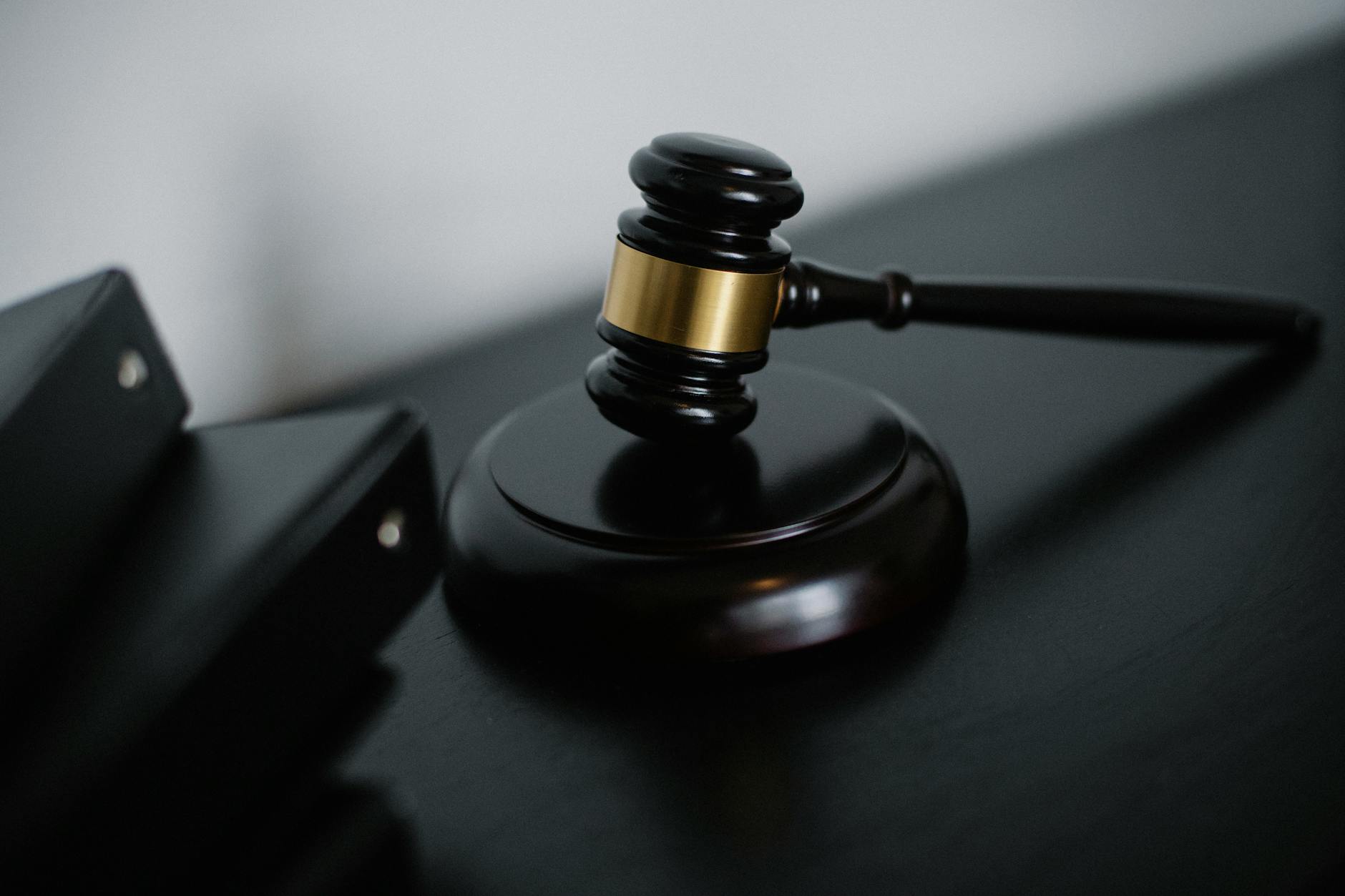
The thematic core of *The Trial of the Chicago 7* concerns the tension between order and justice, between legality and morality. The film presents a legal system weaponized against political dissent, where the process itself becomes the punishment regardless of eventual verdicts. Judge Hoffman’s systematic denial of the defendants’ rights, his refusal to delay proceedings until Bobby Seale’s attorney recovered from surgery, and his contempt citations issued for minor infractions all illustrate how institutional power can maintain the appearance of legitimacy while perpetrating injustice. This theme resonates beyond the specific historical context, speaking to ongoing debates about prosecutorial discretion, judicial bias, and the selective application of laws.
The treatment of Bobby Seale provides the film’s starkest examination of racial injustice within the American legal system. Seale was in Chicago for only four hours, spoke briefly at a rally, and had no connection to the planning of the convention protests, yet he was charged alongside the others and denied his constitutional right to counsel of his choice. When he insisted on representing himself or having his trial postponed, Judge Hoffman ordered him bound, gagged, and chained to a chair in full view of the jury. Sorkin presents this sequence with appropriate horror, though some critics argued the film could have centered Seale’s experience more prominently rather than treating it as one thread among many.
- The film examines how labels like “radical” and “outside agitator” are used to delegitimize protest movements
- Sorkin draws implicit parallels to contemporary debates about protest tactics, peaceful demonstration, and property destruction
- The internal debates among defendants about respectability politics mirror ongoing conversations within activist communities
- The film suggests that the violence at the 1968 convention resulted primarily from police aggression rather than protester provocation
The Legacy and Cultural Impact of The Trial of the Chicago 7
Released in October 2020, during a period of widespread protests following the killing of George Floyd and amid a divisive presidential election, *The Trial of the Chicago 7* achieved cultural relevance that few period dramas manage. Netflix’s acquisition of the film during the pandemic guaranteed wide viewership, and its themes of protest, police violence, and political prosecution resonated with audiences experiencing similar conflicts in real time. The film prompted renewed interest in the historical trial, the figures involved, and the broader context of 1960s activism.
Several participants in the original events, including those who knew the defendants personally, offered perspectives on the film’s accuracy and its contemporary relevance. The film’s awards campaign generated significant attention, culminating in six Academy Award nominations including Best Picture and Best Supporting Actor for Sacha Baron Cohen. While it won only for Best Original Screenplay (losing to *Nomadland* in major categories), the recognition validated Sorkin’s approach to political filmmaking and demonstrated that explicitly political subject matter could succeed both critically and commercially. The Trial of the Chicago 7 joins a tradition of films including *All the President’s Men*, *JFK*, and *Frost/Nixon* that dramatize American political history for mainstream audiences while advancing particular interpretations of contested events.
How to Prepare
- **Understand the 1968 context** by researching the broader events of that tumultuous year: the assassinations of Martin Luther King Jr. and Robert Kennedy, the Tet Offensive in Vietnam, and the global wave of student protests that challenged establishment authority from Paris to Prague to Chicago.
- **Learn about the major defendants** through documentaries or biographical sources, particularly Tom Hayden’s memoir *Reunion* and various books about Abbie Hoffman’s life and philosophy. Understanding their actual personalities helps appreciate both what the film captures and what it simplifies.
- **Watch documentary footage** of the 1968 Democratic National Convention to see the actual violence that occurred. The documentary *Chicago 10* (2007) uses archival footage and animation to tell the story in a different format than Sorkin’s drama.
- **Read about the Anti-Riot Act** (also known as the Rap Brown Law) that provided the legal basis for prosecution, understanding how this represented a new federal approach to criminalizing protest activity.
- **Familiarize yourself with the courtroom transcript excerpts** available in various publications, which reveal that Sorkin’s dialogue, while polished, often draws directly from the actual proceedings.
How to Apply This
- **Recognize patterns in political prosecution** by understanding how the Chicago 7 case established templates still used today, including conspiracy charges that require proving intent rather than actions, and the use of federal resources against local protest movements.
- **Evaluate media coverage of protests** with greater sophistication, understanding how framing and terminology can shape public perception. The film demonstrates how authorities labeled the defendants as “outside agitators” and “revolutionaries” to delegitimize their grievances.
- **Engage with debates about protest tactics** using the Hayden-Hoffman dynamic as a framework for understanding strategic disagreements within movements. Both approaches had validity, and the film resists declaring a clear winner.
- **Support legal defense organizations** that continue the work of attorneys like William Kunstler, who represent defendants in politically charged cases where the establishment has overwhelming advantages.
Expert Tips
- Watch with subtitles enabled, as Sorkin’s rapid dialogue and overlapping conversations can cause viewers to miss key lines, particularly during courtroom exchanges where multiple defendants react simultaneously.
- Pay attention to the differences between testimony and flashback depictions, as Sorkin uses discrepancies between what characters say happened and what the film shows to comment on memory, narrative, and the construction of historical truth.
- Research what happened to the defendants after the trial, as several continued significant public careers while others withdrew from activism. These subsequent trajectories inform retrospective assessments of their strategies and choices.
- Consider the film’s perspective on violence carefully, noting how it distinguishes between property destruction, self-defense, and aggressive assault while questioning whether these distinctions matter to those seeking to suppress dissent.
- Compare this film with other Sorkin works including *A Few Good Men* and *The Social Network* to identify recurring themes about institutional power, individual conscience, and the tension between pragmatism and idealism.
Conclusion
The film’s ultimate argument””that political trials reveal more about the systems conducting them than the defendants being tried””speaks to enduring tensions in American democracy between security and liberty, order and justice.
By depicting how institutional power can maintain the appearance of legitimacy while perpetrating injustice, *The Trial of the Chicago 7* joins a lineage of political films that use specific historical episodes to address timeless questions. For viewers interested in the intersection of law, politics, and activism, the film provides both entertainment and education, prompting the kind of engagement with history that the best political cinema achieves.
Frequently Asked Questions
How long does it typically take to see results?
Results vary depending on individual circumstances, but most people begin to see meaningful progress within 4-8 weeks of consistent effort.
Is this approach suitable for beginners?
Yes, this approach works well for beginners when implemented gradually. Starting with the fundamentals leads to better long-term results.
What are the most common mistakes to avoid?
The most common mistakes include rushing the process, skipping foundational steps, and failing to track progress.
How can I measure my progress effectively?
Set specific, measurable goals at the outset and track relevant metrics regularly. Keep a journal to document your journey.