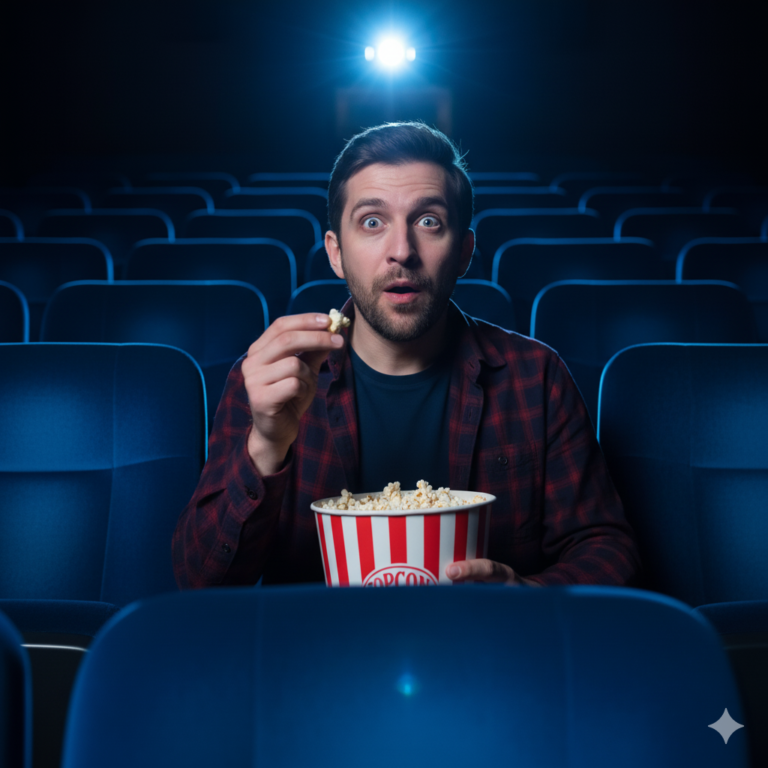
Analyzing cinematic techniques used to create suspense reveals the intricate craftsmanship behind films that keep audiences gripping their armrests. From Alfred Hitchcock’s meticulously constructed thrillers to modern psychological horror, the methods filmmakers employ to generate tension have evolved into a sophisticated visual language that transcends cultural boundaries.
Understanding these techniques transforms passive viewing into active appreciation, allowing audiences to recognize the deliberate choices that manipulate their emotions frame by frame. The question of how films create suspense addresses a fundamental challenge in storytelling: maintaining audience engagement while delaying gratification.
Unlike surprise, which operates on sudden revelation, suspense requires sustained uncertainty””a delicate balance between revealing enough information to generate investment and withholding enough to maintain tension.
- Analyzing Cinematic Techniques: Table of Contents
- What Cinematic Techniques Do Filmmakers Use to Create Suspense?
- The Role of Editing and Pacing in Building Cinematic Tension
- Sound Design and Musical Score as Suspense Mechanisms
- Practical Cinematography Choices for Maximum Audience Anxiety
- Common Mistakes in Suspense Filmmaking and How Directors Avoid Them
- The Psychology Behind Why Cinematic Suspense Techniques Work
- How to Prepare
- How to Apply This
- Expert Tips
- Conclusion
- Frequently Asked Questions
- You Might Also Like
This distinction, famously articulated by Hitchcock himself, separates films that merely startle from those that genuinely unsettle. For aspiring filmmakers, critics, and devoted cinephiles, grasping these mechanisms provides tools for both creation and analysis.
By the end of this exploration, readers will possess a comprehensive vocabulary for discussing suspense techniques, from camera angles and editing rhythms to sound design and narrative structure. The examples span cinema history, demonstrating how foundational techniques continue to influence contemporary filmmaking while new technologies expand the toolkit available to directors.
Whether examining a 1940s noir or a 2020s horror film, these principles remain remarkably consistent, proving that effective suspense relies less on technological advancement than on deep understanding of human psychology and visual storytelling fundamentals.
Table of Contents
- What Cinematic Techniques Do Filmmakers Use to Create Suspense?
- The Role of Editing and Pacing in Building Cinematic Tension
- Sound Design and Musical Score as Suspense Mechanisms
- Practical Cinematography Choices for Maximum Audience Anxiety
- Common Mistakes in Suspense Filmmaking and How Directors Avoid Them
- The Psychology Behind Why Cinematic Suspense Techniques Work
- How to Prepare
- How to Apply This
- Expert Tips
- Conclusion
- Frequently Asked Questions
What Cinematic Techniques Do Filmmakers Use to Create Suspense?
The arsenal of cinematic techniques available for creating suspense encompasses nearly every aspect of filmmaking, from pre-production planning to post-production sound mixing. Camera work forms the foundation, with specific shot types carrying inherent psychological weight.
The extreme close-up isolates details””a twitching eye, a sweating palm, a turning doorknob””forcing audiences to focus on elements that signal danger or emotional intensity.
Wide establishing shots, conversely, can create suspense through what they reveal lurking in the frame’s periphery or through the vulnerability they suggest when a small figure occupies a vast, potentially threatening space.
Camera movement adds another dimension to tension building. The slow push-in draws viewers incrementally closer to a subject, mimicking the uncomfortable sensation of approaching something frightening.
Handheld camera work introduces instability that translates directly to audience unease, while the Steadicam’s smooth, floating movement creates an unsettling sense of surveillance or pursuit.
Directors like Stanley Kubrick employed Steadicam tracking shots in “The Shining” to follow Danny’s tricycle through the Overlook Hotel’s corridors, the camera’s relentless forward motion building dread before any threat appeared on screen.
- **Dutch angles** (tilted camera positioning) signal psychological imbalance and impending danger, appearing frequently in noir and horror
- **Deep focus photography** allows threats to emerge from background to foreground, maintaining tension across the entire frame
- **Rack focus** shifts attention between planes, often revealing previously unseen dangers or directing attention to ominous details
- **Long takes** deny audiences the relief of cutting away, forcing sustained engagement with uncomfortable situations
The Role of Editing and Pacing in Building Cinematic Tension
Editing represents perhaps the most powerful tool for suspense construction, as the rhythm of cuts directly influences audience heart rate and anxiety levels.
The foundational concept here is the Kuleshov Effect, demonstrated in early Soviet cinema: identical footage of an actor’s neutral expression takes on different emotional meanings depending on what images surround it. This principle underlies all suspense editing””juxtaposition creates meaning that individual shots cannot convey alone.
When a film cuts between a character’s worried face and a ticking clock, the editing itself generates urgency that neither image possesses independently.
Pacing manipulation through editing follows identifiable patterns in suspense sequences. Directors typically begin with longer shot durations, allowing tension to accumulate gradually. As danger approaches, cuts become progressively shorter and more frequent, accelerating the visual rhythm to match rising anxiety.
This technique appears consistently across genres and eras, from the shower sequence in “Psycho” (which employed over 70 cuts in under a minute) to the final countdown sequences in modern action thrillers.
The opposite approach””extending a single take beyond comfortable duration””proves equally effective, as seen in the unbroken car conversation in “Children of Men” that stretches tension to nearly unbearable levels.
- **Cross-cutting** between parallel actions (a victim unaware of an approaching threat, the threat itself advancing) multiplies tension through dramatic irony
- **Jump cuts** create disorientation and signal psychological fracturing, particularly effective in horror
- **Match cuts** can connect disparate elements thematically, suggesting relationships between innocuous and threatening imagery
- **Delayed reveals** through strategic editing withhold crucial visual information, forcing audiences to construct threats in their imagination
Sound Design and Musical Score as Suspense Mechanisms
Sound design operates on a primal level, triggering physiological responses that bypass conscious thought. The human auditory system evolved to detect threats, making certain frequencies and patterns inherently unsettling.
Infrasound (frequencies below 20 Hz, at the edge of human hearing) has been documented to cause feelings of unease, disorientation, and even reported supernatural experiences””and filmmakers have exploited this, with films like “Paranormal Activity” reportedly incorporating infrasound elements.
More conventionally, the careful layering of ambient sound creates atmosphere that visual imagery alone cannot achieve. Musical scores provide the most direct emotional manipulation available to filmmakers.
Bernard Herrmann’s string-heavy compositions for Hitchcock’s films established templates still followed today: the shrieking violins of “Psycho,” the spiraling motif of “Vertigo.” These scores work through repetition and variation, establishing musical themes associated with specific threats or emotional states, then manipulating those themes to signal approaching danger.
The absence of score proves equally powerful””many contemporary horror directors, including those behind “A Quiet Place” and “Hereditary,” deploy extended silence to create suspense, understanding that audiences conditioned to expect musical cues become deeply uncomfortable when those cues disappear.
- **Diegetic sound** (sound originating within the film’s world) grounds suspense in physical reality””footsteps approaching, floorboards creaking, breathing in darkness
- **Non-diegetic score** provides emotional instruction, telling audiences how to feel about ambiguous imagery
- **Sound bridges** (audio continuing across visual cuts) create continuity that can be exploited for jarring effect when broken
- **Audio dynamics**””the contrast between loud and quiet passages””enables jump scares while also creating valleys of tension between peaks
Practical Cinematography Choices for Maximum Audience Anxiety
Lighting decisions communicate threat levels before any action occurs. Low-key lighting, characterized by high contrast between light and shadow, creates spaces where danger might lurk unseen. The tradition extends from German Expressionist cinema through film noir to contemporary horror, with deep blacks suggesting concealed threats and harsh highlights isolating vulnerable faces.
Practical lighting sources within the frame””a single lamp, a flashlight, a television’s flicker””limit the visible world to small pools of safety surrounded by threatening darkness.
Color grading and palette selection establish emotional baselines that suspense sequences then disrupt. Many thrillers employ desaturated color schemes, draining vibrancy to create a world that feels inherently threatening. Specific color associations carry psychological weight: sickly greens suggest decay or illness, while deep reds signal danger or passion.
The sudden introduction of saturated color into a desaturated world draws immediate attention, making it effective for revealing threats or marking pivotal moments. Roger Deakins’ cinematography for “Prisoners” demonstrates this approach, with its perpetually overcast skies and muted palette creating an environment where hope feels impossible.
- **Motivated lighting** that appears to originate from realistic sources enhances believability while allowing dramatic shadows
- **Chiaroscuro lighting** (extreme contrast) creates compositional tension and psychological unease
- **Practical effects** captured in-camera often read as more threatening than CGI, as audiences subconsciously recognize authentic danger
- **Lens choice** affects perception””wide-angle lenses distort faces and spaces, while telephoto compression creates claustrophobic flattening
Common Mistakes in Suspense Filmmaking and How Directors Avoid Them
The most frequent failure in suspense construction involves revealing too much too quickly. Audiences fear what they imagine far more than what they see clearly, meaning explicit threat visualization often deflates rather than enhances tension.
The shark in “Jaws” appears on screen for approximately four minutes across a two-hour film, yet the threat feels omnipresent””Steven Spielberg’s mechanical shark malfunctions inadvertently created one of cinema’s most effective suspense mechanisms. Contemporary filmmakers sometimes forget this lesson, over-relying on CGI that allows unlimited creature exposure at the cost of mystery.
Pacing miscalculations represent another common pitfall. Suspense requires oscillation between tension and release; unrelenting intensity leads to audience fatigue and diminishing returns. The concept of “tension and release” mirrors musical composition, with suspense sequences functioning as crescendos that must be preceded by quieter passages.
Films that maintain constant high tension actually achieve lower peak impact than those that provide breathing room. This explains why effective horror films include humor, romance, or mundane domestic scenes””these valleys make the peaks feel higher.
- **Over-explaining** removes ambiguity that fuels imagination-driven fear
- **Telegraphing scares** too obviously through musical cues or camera movement trains audiences to predict rather than dread
- **Inconsistent internal logic** breaks the suspension of disbelief necessary for emotional investment
- **Neglecting character development** reduces audience investment in threatened characters, making suspense sequences feel hollow

The Psychology Behind Why Cinematic Suspense Techniques Work
Understanding why these techniques function requires examining the psychology of fear and anticipation. The brain processes threats through dual pathways: a fast, automatic response through the amygdala and a slower, analytical response through the cortex.
Effective suspense engages both systems””the amygdala responds to low-frequency sounds, shadowy movements, and startling edits, while the cortex engages with narrative tension and dramatic irony. This dual engagement explains why purely intellectual suspense (a chess match) and purely visceral suspense (a monster chase) feel qualitatively different, while films combining both achieve maximum impact.
The concept of “benign masochism” helps explain why audiences seek out suspenseful experiences. Controlled exposure to fear stimuli in a safe environment””knowing the monster cannot actually harm you””provides pleasure through the successful navigation of threatening situations. This explains the recurring popularity of horror and thriller genres across all cultures and time periods.
The techniques discussed throughout this article function by triggering genuine fear responses while maintaining the safety framework that makes those responses enjoyable rather than traumatic.
How to Prepare
- **Watch the film once for pure experience.** Initial viewing should be receptive rather than analytical, allowing yourself to feel the intended emotional effects without intellectual interference. Note moments where you felt genuine tension, anxiety, or dread””these become focal points for subsequent analysis.
- **Research the production context.** Understanding a film’s budget, production challenges, and directorial influences provides context for technical choices. Many iconic suspense techniques emerged from limitations (the malfunctioning shark in “Jaws,” the censorship requirements that shaped Hitchcock’s visual style) rather than unlimited resources.
- **Prepare your analytical vocabulary.** Familiarize yourself with standard cinematography terms (shot types, camera movements, lighting styles), editing concepts (cuts, transitions, pacing), and sound design elements (diegetic/non-diegetic, score, foley). This vocabulary enables precise description of techniques rather than vague impressions.
- **Select specific sequences for close analysis.** Rather than attempting to analyze an entire film at once, identify three to five key suspense sequences for frame-by-frame examination. These should include the film’s primary tension peaks and at least one quieter scene that establishes baseline atmosphere.
- **Gather reference materials.** If available, seek out director commentaries, making-of documentaries, and cinematographer interviews that discuss technical choices. Original scripts or storyboards can reveal how suspense was planned versus how it emerged in execution.
How to Apply This
- **Re-watch selected sequences with specific focus areas.** View each chosen scene multiple times, focusing on a single element per viewing: camera work only, then editing only, then sound only. This separation reveals how each element contributes independently before combining with others.
- **Document technical choices frame by frame.** For the most effective suspense moments, pause frequently to note shot duration, camera distance and angle, lighting conditions, and sound design. Creating a shot list for a 30-second sequence often reveals dozens of distinct choices.
- **Compare techniques across different films and eras.** Analyzing similar suspense scenarios (a character entering a dark room, awaiting test results, being pursued) across multiple films reveals which techniques remain consistent and which vary with genre, era, or directorial style.
- **Practice articulating your analysis.** Whether through written reviews, video essays, or discussion with other film enthusiasts, explaining your technical observations to others clarifies thinking and reveals gaps in understanding that further viewing can address.
Expert Tips
- **Pay attention to what you don’t see.** The most sophisticated suspense often operates through strategic absence””threats kept off-screen, information withheld, sounds without visible sources. Analyzing negative space and deliberate obscurity reveals as much as examining what appears on screen.
- **Listen for silence.** Sound design analysis should include careful attention to what’s absent, not just what’s present. The removal of ambient sound, musical score, or expected diegetic noise often precedes the most effective suspense moments, as audiences unconsciously register the absence as warning.
- **Study the masters chronologically.** Watching Hitchcock’s filmography in order reveals technique development over decades; similarly, tracking a contemporary director like David Fincher or Ari Aster shows how artists refine approaches across multiple films.
- **Consider cultural and historical context.** What frightens audiences varies significantly across cultures and eras. Techniques that generated suspense in 1960 may feel quaint today, while contemporary approaches might confuse audiences from different cultural backgrounds. This context prevents oversimplified claims about “universal” effectiveness.
- **Recognize the collaboration.** Suspense emerges from the combined efforts of directors, cinematographers, editors, sound designers, composers, and actors. Attributing success solely to directorial vision ignores the contributions of specialists whose work often determines a sequence’s effectiveness.
Conclusion
The analysis of cinematic techniques used to create suspense reveals filmmaking as a discipline combining artistic intuition with systematic craft. The methods explored here””camera work, editing rhythms, sound design, lighting, and pacing””function as a toolkit that filmmakers have refined over more than a century of experimentation.
Understanding these techniques enriches viewing experiences, transforming moments of tension from mysterious emotional manipulation into appreciable artistry. The next time you find yourself holding your breath during a film, you now possess the vocabulary and framework to understand exactly how the filmmakers achieved that response.
This knowledge serves multiple purposes beyond enhanced appreciation. For aspiring filmmakers, these techniques provide concrete methods for achieving specific emotional effects. For critics and analysts, this vocabulary enables precise communication about why certain films succeed while others fail.
For general audiences, understanding suspense mechanics need not diminish enjoyment””in fact, recognizing sophisticated technique often increases admiration for films that execute these elements masterfully. The invitation now is to return to favorite suspenseful films with fresh eyes, applying these analytical tools to discover new layers in familiar works.
Frequently Asked Questions
How long does it typically take to see results?
Results vary depending on individual circumstances, but most people begin to see meaningful progress within 4-8 weeks of consistent effort.
Is this approach suitable for beginners?
Yes, this approach works well for beginners when implemented gradually. Starting with the fundamentals leads to better long-term results.
What are the most common mistakes to avoid?
The most common mistakes include rushing the process, skipping foundational steps, and failing to track progress.
How can I measure my progress effectively?
Set specific, measurable goals at the outset and track relevant metrics regularly. Keep a journal to document your journey.
You Might Also Like
For more on Analyzing Cinematic Techniques, see the full breakdown above – the analyzing cinematic techniques details cover what most viewers want to know.
Whether you searched for analyzing cinematic techniques reviews, analyzing cinematic techniques streaming, or analyzing cinematic techniques cast, this guide consolidates the relevant analyzing cinematic techniques facts in one place.