
- Movies 2026 Music: Table of Contents
- Which Major Music Biopics Are Releasing in 2026?
- What Role Are Documentaries Playing in 2026's Music Cinema?
- How Do Narrative and Documentary Approaches Compare in Music Cinema?
- What Makes Mockumentary and Comedy Approaches Valuable?
- Why 2026's Music Cinema Reflects Broader Audience Trends
- How Are Concert Films and Live Documentation Evolving?
- What Does 2026's Music Cinema Signal About the Future?
- You Might Also Like
Is shaping up to be a landmark year for cinema centered on the music industry, with a diverse slate of theatrical releases exploring everything from artist biographies to mockumentaries and concert films.
The year features major studio productions like the Michael Jackson biopic *Michael* alongside independent projects, documentaries tracing decades-long careers, and concert films capturing performances in real time.
This convergence reflects a growing appetite in cinema for music-driven storytelling—whether through the lens of biographical drama, documentary intimacy, or experimental comedy—and signals that filmmakers are increasingly treating the music industry not just as backdrop but as essential subject matter worthy of serious cinematic attention.
The range of approaches on offer this year is particularly noteworthy.
*Michael*, directed by Antoine Fuqua and starring Jaafar Jackson, targets the major theatrical audience with a traditional biopic framework. Meanwhile, A24’s *The Moment*—a mockumentary filmed during Charli XCX’s Brat tour—takes a more unconventional approach to documenting an artist’s creative moment.
Independent productions like *California Schemin’* and *Song Sung Blue* offer genre-bending takes on music world stories, while documentaries centered on figures like Billy Preston and Megadeth provide deep-dive historical perspectives. The article below explores the major releases, their narrative approaches, and what their collective emergence tells us about cinema’s evolving relationship with music and musicians.
Table of Contents
- Which Major Music Biopics Are Releasing in 2026?
- What Role Are Documentaries Playing in 2026’s Music Cinema?
- How Do Narrative and Documentary Approaches Compare in Music Cinema?
- What Makes Mockumentary and Comedy Approaches Valuable?
- Why 2026’s Music Cinema Reflects Broader Audience Trends
- How Are Concert Films and Live Documentation Evolving?
- What Does 2026’s Music Cinema Signal About the Future?
Which Major Music Biopics Are Releasing in 2026?
The most high-profile music industry film of 2026 is *Michael*, arriving on April 24 under the direction of Antoine Fuqua.
The film stars Jaafar Jackson—Michael Jackson’s nephew—in the lead role, with established character actors Colman Domingo and Nia Long portraying the star’s parents. Miles Teller plays John Branca, Jackson’s longtime manager and legal figure, indicating that the film will explore not just the performer but the business machinery surrounding him.
This casting choice—deploying a family member in the lead—creates an interesting structural proximity to the subject; Jaafar Jackson brings inherited familiarity to the role while also carrying the weight of family legacy.
The film’s scale suggests a traditional biopic structure aimed at broad theatrical audiences, though whether it focuses on a specific period of Jackson’s career or attempts a full-life overview remains to be confirmed.
Bruce Springsteen’s creative process gets its own cinematic treatment with *Springsteen: Deliver Me from Nowhere*, a film that chronicles the recording of his 1982 album *Nebraska*.
Unlike a traditional biopic covering an artist’s entire career, this project narrows its focus to a distinct creative moment—Springsteen alone in his New Jersey bedroom with a 4-track recorder, during the period when he was consolidating his status as a major artist.
This approach differs markedly from the Jackson project, prioritizing intimate creative documentation over star biography. The film’s emphasis on the recording process rather than the person offers a model for music cinema that prizes artistic production over lifestyle narrative. Two additional theatrical releases with music industry narratives deserve mention for their generic diversity.
*Song Sung Blue* teams Hugh Jackman and Kate Hudson in a film about a Neil Diamond tribute band, suggesting a comedy-drama exploring legacy, performance, and authenticity.
*California Schemin’*, meanwhile, dramatizes the true story of two Scottish aspiring MCs who pose as Californian hip hop artists to secure a record deal—a concept that blends music world ambition with con-artist comedy. Both films take lateral approaches to music industry storytelling, using humor and unconventional premises rather than straight biographical drama.

What Role Are Documentaries Playing in 2026’s Music Cinema?
Documentary forms constitute a substantial portion of 2026’s music-centered releases, offering a different epistemic approach than narrative films. The Billy Preston Documentary traces six decades in the career of a Grammy-winning keyboardist and stands out for its pedigree—the project was produced by George Harrison, lending it both historical weight and insider perspective.
Preston’s long career, spanning from early session work through his collaborations with The Beatles and beyond, provides rich material for retrospective treatment.
However, documentary filmmaking about musicians can risk becoming hagiographic or overly deferential if not carefully constructed; Preston’s story, being rooted in actual archival materials and first-person testimony, likely sidesteps some of these pitfalls through evidential grounding. Concert films represent another documentary subgenre gaining theatrical prominence.
Billie Eilish’s *Hit Me Hard and Soft: The Tour* arrives as a 3D concert film, a format that has seen periodic revivals when artists and studios believe the scale and spectacle justify the theatrical experience.
Concerts filmed in this format attempt to collapse the distance between audience and performer, using the immersive properties of 3D technology. The choice of 3D here suggests an emphasis on the sensory and spatial dimensions of the live experience—the visceral impact of being in proximity to the performance.
Eilish’s fanbase and the scale of her touring operation make her a plausible candidate for this kind of theatrical concert documentation. The Megadeth Documentary, focusing on Dave Mustaine’s account of the band’s 40-year history, takes yet another approach—the musician-produced or artist-centered documentary where the subject maintains significant narrative control.
This model differs from third-party documentaries constructed by outside filmmakers; when artists curate their own historical narratives, questions arise about selectivity and memory. However, Mustaine’s willingness to participate in long-form filmmaking about his band suggests openness to documented self-examination rather than purely celebratory coverage.
The 40-year span ensures substantial material and multiple era-shifts within which the band’s evolution can be tracked.
How Do Narrative and Documentary Approaches Compare in Music Cinema?
Narrative films like *Michael* and *Springsteen: Deliver Me from Nowhere* license themselves the freedom to construct scenes, imagine internal emotional states, and dramatize events that may lack complete historical documentation.
An actor portraying a musician can embody interpretive choices about motivation, artistic crisis, and relationship dynamics—choices that exist in the realm of dramatic truth rather than historical fact. Narrative cinema trades fidelity to documented record for emotional and thematic coherence; a biopic can be dramatically powerful while compressing, omitting, or dramatizing actual events.
Documentary approaches, meanwhile, constrain themselves to available evidence—footage, recordings, interviews, archival materials. Billy Preston’s documentary and Megadeth’s overview operate within these evidentiary limits.
Yet documentation is not neutral; the choice of which archival materials to include, which interview subjects to prioritize, and how to sequence information shapes narrative. A documentary about Preston’s six-decade career still makes curatorial choices that construct meaning from available materials. Neither approach possesses inherent superiority; they answer different questions.
Narrative biopics explore psychological interiority and dramatic causality; documentaries prioritize historical documentation and evidence-based narrative. What distinguishes 2026’s music cinema is that both approaches are coexisting and gaining theatrical release, suggesting audiences and distributors increasingly recognize these modes as complementary rather than competitive.
The Jackson narrative film and Preston documentary are not in competition for the same audience or interpretive territory—they offer different kinds of engagement with music history.

What Makes Mockumentary and Comedy Approaches Valuable?
These approaches carry a limitation, however: humor about the music industry risks deflating the serious artistic labor and economic stakes involved in musical creation. A mockumentary about a tour can prioritize comedic observation over the genuine exhaustion, financial pressure, and creative intensity that touring actually entails.
Audiences must hold both responses—appreciating the comedic perspective while recognizing what earnest treatment might capture differently. The coexistence of *The Moment* alongside serious documentaries and biopics permits audiences to engage with music industry stories through multiple tonal registers.
- The Moment*, A24’s Charli XCX mockumentary, introduces deliberate fictional framing into music-centered cinema. Shot during Charli’s Brat tour and featuring collaborators like Alexander Skarsgård and Rachel Sennott, the project treats the tour and creative moment as material for comedy rather than earnest documentation. Mockumentary permits reflexivity about the music industry itself—its pretension, its commodification strategies, its aesthetics—in ways that sincere documentary or biopic frameworks often cannot. By positioning the tour and creative process as subjects of gentle comic treatment, the film can observe industry dynamics and artistic self-fashioning without the reverence that biographical approaches typically demand.
- California Schemin’* similarly uses comedy to explore music industry mechanics. A story about two Scottish musicians attempting to fraudulently enter the American hip hop industry through impersonation inherently satirizes industry gatekeeping, regional authenticity claims, and the business machinery that determines access. The con-artist narrative frame permits critique of industry structures that a straightforward industry drama might not articulate as sharply. Both projects recognize that comedy and parody can illuminate music world realities in ways that earnest approaches sometimes obscure.
Why 2026’s Music Cinema Reflects Broader Audience Trends
The concentration of music-centered films in 2026 likely reflects both industry trends and audience appetite. Musicians have become increasingly prominent in film and television as subject matter—whether because of the built-in fanbase they carry, the rich narrative materials their careers provide, or the intersection of music and visual culture becoming more culturally prominent.
Streaming platforms have also democratized documentary production, reducing barriers for music documentaries that might not have achieved theatrical release in previous eras. Yet theatrical releases for music films suggest that studios and distributors perceive sufficient audience interest to invest in theatrical distribution infrastructure.
One cautionary note: music biopics and documentaries can veer toward celebration or mythology if not critically constructed. The Jackson film, for instance, will necessarily confront narratives surrounding Jackson’s legacy that extend well beyond his musical achievements.
Similarly, any Springsteen film must navigate the carefully constructed mythology of Springsteen as working-class hero—a mythology that Springsteen has himself curated. Audiences should approach these films with awareness that they are curated representations rather than transparent windows into their subjects’ lives or careers.
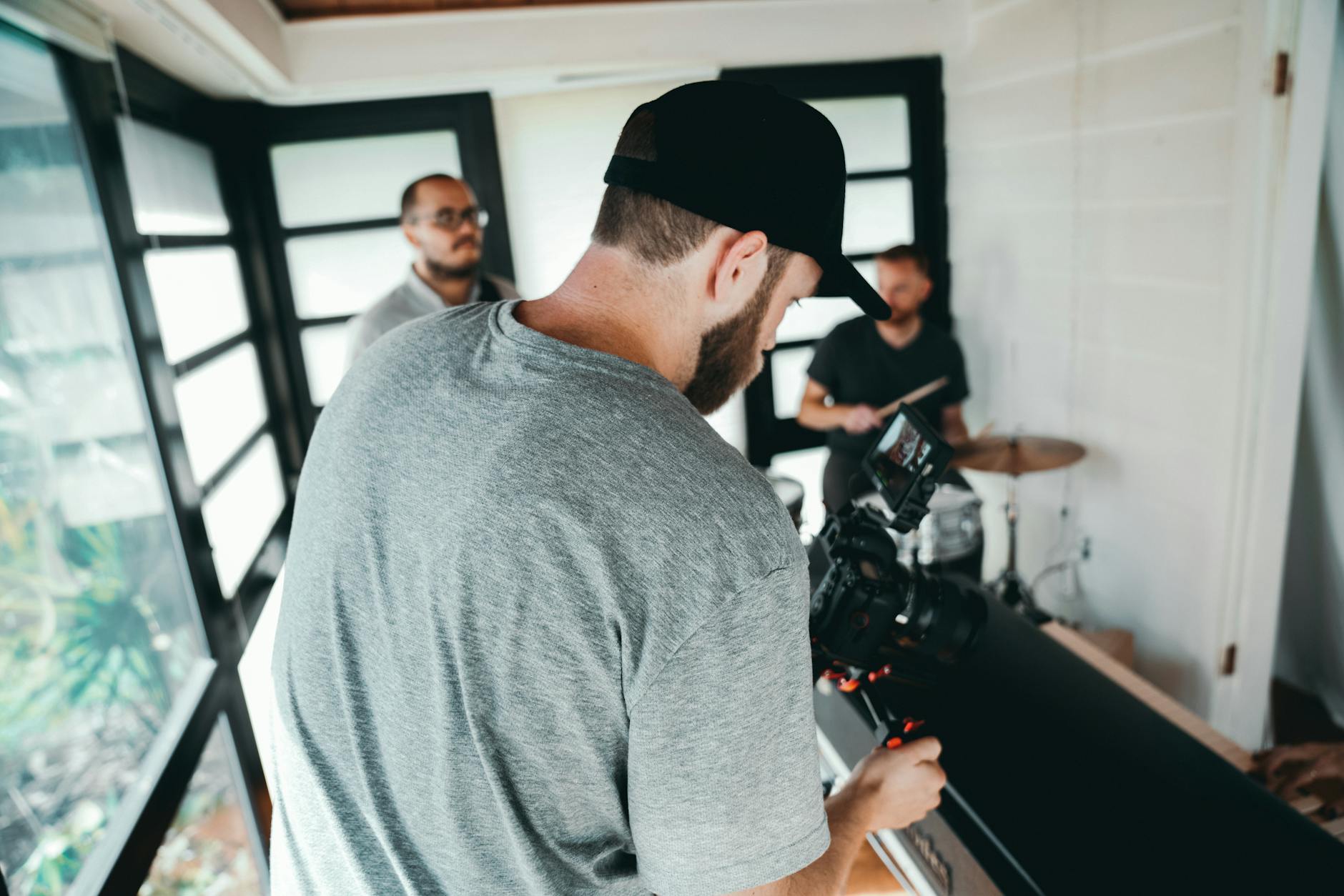
How Are Concert Films and Live Documentation Evolving?
The decision to film Billie Eilish’s tour in 3D represents a specific technological investment in the theatrical concert film format. Concert films have existed for decades, but the addition of 3D technology signals a belief that cinema can meaningfully capture and enhance the experience of live performance in ways that standard cinematography cannot.
The format requires specific distribution infrastructure and audience willingness to experience concert cinema in immersive format.
Eilish’s scale and contemporary popularity suggest a wager that her fanbase will engage with the concert film as a distinct artistic experience rather than a simple substitute for live attendance.
Concert films occupy interesting terrain within the broader music cinema landscape—they document genuine performances while also constructing a mediated experience through camera placement, editing, and technical enhancement. Viewers watch not the concert as they would experience it in attendance but cinema’s interpretation of the concert.
What Does 2026’s Music Cinema Signal About the Future?
The diversity of approaches evident in 2026’s slate—from major studio biopics to independent comedies to artist-driven documentaries—suggests that music cinema is not consolidating around a single model but expanding to encompass multiple modes of engagement.
This pluralism may reflect maturation in the genre; as music biopics and documentaries have become more common, filmmakers and audiences have become more adventurous about formal innovation and tonal variation.
Looking forward, this trajectory suggests that music-centered cinema will remain a significant strand in theatrical and streaming output, with continued experimentation in narrative approach and documentary strategy.
The success or reception of 2026’s releases will likely influence what music stories get greenlit in subsequent years—whether audiences respond to earnest biography, documentary retrospective, or comedic treatment will shape industry investment patterns.
You Might Also Like
- Movies 2026 With Underdog Victory Stories
- Movies 2026 With Technology Impact Stories
- Movies 2026 With Social Media Influence Stories
For more on Movies 2026 Music, see the full breakdown above – the movies 2026 music details cover what most viewers want to know.
Whether you searched for movies 2026 music reviews, movies 2026 music streaming, or movies 2026 music cast, this guide consolidates the relevant movies 2026 music facts in one place.