The role of women in film noir represents one of the most fascinating and complex examinations of gender, power, and morality in American cinema history, with Billy Wilder’s *Double Indemnity* (1944) standing as the definitive case study.
This landmark film introduced audiences to Phyllis Dietrichson, portrayed with chilling precision by Barbara Stanwyck, a character who would come to embody the archetype of the femme fatale and fundamentally reshape how Hollywood depicted female agency, desire, and danger.
Understanding how women function within the noir universe””particularly through the lens of this groundbreaking film””reveals crucial insights about postwar anxieties, shifting gender dynamics, and the enduring tension between attraction and destruction that defines the genre.
- Role Women Film: Table of Contents
- What Defines the Femme Fatale in Film Noir and Double Indemnity?
- Barbara Stanwyck's Performance and the Construction of Phyllis Dietrichson
- How Double Indemnity Subverts Gender Expectations in 1940s Cinema
- The Visual Language of Female Power in Film Noir Cinematography
- The Cultural Context of Women in Film Noir During World War II
- The Legacy of Double Indemnity's Female Characterization in Modern Cinema
- How to Prepare
- How to Apply This
- Expert Tips
- Conclusion
- Frequently Asked Questions
- You Might Also Like
The questions surrounding women in film noir extend far beyond simple character analysis. Why did this particular archetype emerge so powerfully during the 1940s? What cultural anxieties did the femme fatale represent, and how did actresses like Stanwyck transform what could have been one-dimensional villains into multidimensional portraits of ambition and entrapment?
*Double Indemnity* provides a masterclass in answering these questions, offering a narrative where a woman’s intelligence and sexuality become weapons as deadly as any gun, challenging the era’s expectations about feminine passivity and domestic contentment.
By the end of this analysis, readers will understand the historical context that gave birth to the femme fatale, recognize the specific techniques Wilder and Stanwyck employed to create Phyllis Dietrichson, and appreciate how *Double Indemnity* established a template that continues to influence filmmakers today.
The film’s exploration of female power, male vulnerability, and the corruption of the American Dream remains startlingly relevant, making it essential viewing for anyone seeking to understand both classical Hollywood and the ongoing cultural conversation about gender representation in cinema.
Table of Contents
- What Defines the Femme Fatale in Film Noir and Double Indemnity?
- Barbara Stanwyck’s Performance and the Construction of Phyllis Dietrichson
- How Double Indemnity Subverts Gender Expectations in 1940s Cinema
- The Visual Language of Female Power in Film Noir Cinematography
- The Cultural Context of Women in Film Noir During World War II
- The Legacy of Double Indemnity’s Female Characterization in Modern Cinema
- How to Prepare
- How to Apply This
- Expert Tips
- Conclusion
- Frequently Asked Questions
What Defines the Femme Fatale in Film Noir and Double Indemnity?
The femme fatale””literally “fatal woman” in French””represents one of cinema’s most enduring and controversial archetypes, and understanding her characteristics is essential to analyzing women in film noir.
This figure is defined by her ability to use sexuality, intelligence, and manipulation to achieve her goals, typically at the expense of male protagonists who find themselves helplessly drawn into her orbit.
Unlike the supportive wives and innocent sweethearts that populated most 1940s cinema, the femme fatale operates outside conventional morality, pursuing wealth, freedom, or revenge with single-minded determination that both terrifies and fascinates audiences.
In *Double Indemnity*, Phyllis Dietrichson embodies every essential element of the femme fatale while adding layers of complexity that elevate her beyond stereotype.
When insurance salesman Walter Neff first encounters her, wrapped in a towel at the top of a staircase, the visual staging immediately establishes the power dynamic””she looks down on him, literally and figuratively, controlling the encounter from its first moment.
Her dialogue crackles with double meanings, turning mundane insurance talk into seductive wordplay that reveals her intelligence and her awareness of her own effect on men. Billy Wilder and co-writer Raymond Chandler crafted dialogue that allowed Phyllis to telegraph her intentions while maintaining plausible deniability, creating a character who is simultaneously transparent and mysterious.
The femme fatale in film noir differs fundamentally from earlier dangerous women in literature and film because she emerges specifically from postwar American anxieties. As men returned from World War II, they encountered women who had worked in factories, managed households independently, and developed capabilities beyond the domestic sphere.
The femme fatale crystallized fears about what women might do with that newfound agency, transforming cultural anxiety into compelling narrative.
- **Sexual Agency**: Phyllis uses her attractiveness strategically, understanding exactly how to appeal to Walter’s desires and dissatisfaction with his bachelor existence
- **Superior Intelligence**: She has already conceived the murder plot before Walter arrives; she simply needs to recruit the right accomplice
- **Emotional Detachment**: Unlike Walter, who eventually experiences genuine guilt and conflicted feelings, Phyllis remains coldly focused on her objectives until the final confrontation
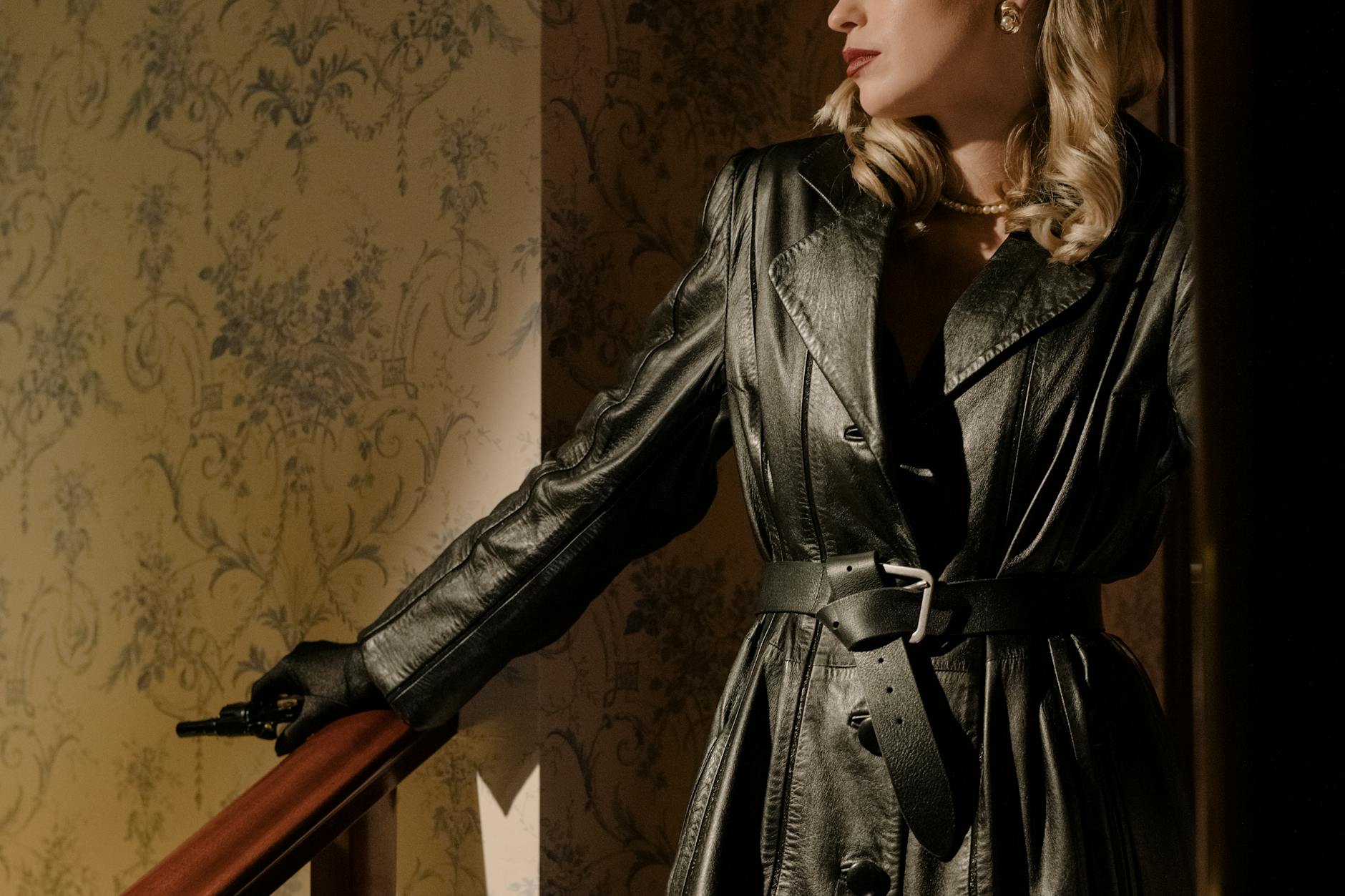
Barbara Stanwyck’s Performance and the Construction of Phyllis Dietrichson
Barbara Stanwyck’s portrayal of Phyllis Dietrichson in *Double Indemnity* remains the gold standard for femme fatale performances, demonstrating how a skilled actress can transform a potentially misogynistic archetype into a complex character study.
Stanwyck, already an established star known for playing tough, independent women in pre-Code Hollywood, brought decades of craft to the role, understanding that Phyllis needed to be genuinely seductive rather than obviously villainous for the film’s moral complexity to function.
Her performance choices””the slightly hardened voice, the calculating pauses, the flashes of vulnerability that might or might not be genuine””created a character that audiences could neither fully trust nor entirely dismiss. The physical transformation Stanwyck underwent for the role speaks to her commitment to creating something distinctive.
The infamous blonde wig, which Stanwyck herself reportedly disliked, distances Phyllis from the actress’s natural appearance, suggesting a woman who has consciously constructed a persona.
Her ankle bracelet, prominently featured in the opening scene, became an iconic symbol of fetishized danger, drawing Walter’s eye and the camera’s attention to her body while marking her as somehow different from respectable women.
Cinematographer John Seitz’s lighting consistently places Stanwyck in shadows or venetian blind patterns, visually encoding her moral ambiguity and the film noir aesthetic’s emphasis on darkness piercing through supposed domestic safety. What elevates Stanwyck’s performance beyond mere villainy is the suggestion of genuine damage beneath Phyllis’s predatory exterior.
The film hints at her unhappy marriage, her isolation, her possible past crimes””creating a portrait of a woman who has learned to survive by any means necessary in a world that offered her limited legitimate options.
Whether this generates sympathy or merely explanation remains deliberately unclear, and Stanwyck resisted the temptation to soften Phyllis for audience approval, delivering one of cinema’s most uncompromising female characters.
- **Vocal Performance**: Stanwyck pitched her voice lower and flatter than her natural speaking tones, suggesting emotional deadness beneath surface charm
- **Physical Stillness**: While Fred MacMurray’s Walter grows increasingly agitated, Phyllis often remains unnervingly composed, her control emphasized through economy of movement
- **Microexpressions**: Careful viewers can catch moments where Stanwyck allows glimpses of calculation to flash across her features, rewarding repeated viewing
How Double Indemnity Subverts Gender Expectations in 1940s Cinema
The murder plot in *Double Indemnity* reverses the typical crime narrative’s gender dynamics. While Walter Neff possesses the technical knowledge of insurance policies that makes their scheme possible, Phyllis has conceived the idea, selected the target, and chosen her accomplice before the film’s story begins.
She manipulates Walter by appearing to defer to his expertise while actually directing his actions toward her predetermined goals. When the murder itself occurs, Phyllis drives the car and provides the crucial signal, maintaining control over the timing and execution.
Walter’s narration, delivered as a confession into a dictaphone, represents his attempt to reclaim authorship of a story that Phyllis actually wrote. The film’s Production Code-mandated ending, where both characters die for their crimes, superficially punishes the transgressive woman.
Yet even here, Phyllis maintains a form of victory: she has escaped her marriage, achieved temporary freedom, and dies on her own terms rather than facing prosecution. Walter, conversely, survives long enough to confess and be caught, his masculine authority completely eroded.
The film’s gender subversion thus persists even through its moralistic conclusion, suggesting that conventional punishment cannot fully contain the anxieties *Double Indemnity* raised about female agency and male vulnerability.
- Double Indemnity* arrived in theaters during a period of significant social upheaval, and its treatment of gender roles both reflected and challenged the anxieties of wartime America. The film systematically inverts traditional gender expectations of 1940s cinema, presenting a woman who thinks, plans, and acts while her male accomplice follows her lead, ultimately proving less capable of sustaining the emotional toll of their crime. This subversion operates on multiple levels, from narrative structure to visual composition, creating a film that remains startling in its implications about power, intelligence, and moral capacity.
- **Intellectual Dominance**: Phyllis consistently outmaneuvers Walter, anticipating obstacles and manipulating his emotions to maintain his cooperation
- **Emotional Reversal**: The traditional feminine quality of emotional vulnerability becomes Walter’s undoing, while Phyllis maintains composure
- **Spatial Control**: Throughout the film, Phyllis commands the significant spaces””her home, Walter’s apartment during their planning sessions””while Walter increasingly becomes an intruder in his own life

The Visual Language of Female Power in Film Noir Cinematography
Film noir’s distinctive visual style serves as more than mere atmosphere””it actively constructs meaning around gender, power, and moral corruption, and *Double Indemnity* exemplifies how cinematography shapes audience perception of women in the genre.
Director Billy Wilder and cinematographer John Seitz employed shadow, light, and composition to create a visual vocabulary where danger is beautiful and domestic spaces become sites of entrapment. Understanding these visual strategies reveals how deeply the portrayal of women in film noir depends on technical choices that extend far beyond performance.
The celebrated opening sequence demonstrates these principles with remarkable economy. When Walter Neff first visits the Dietrichson home, the interior is coded through venetian blind shadows that suggest imprisonment despite the house’s apparent affluence.
Phyllis descends the staircase into these shadows, emerging from the domestic upper floor (traditionally feminine space) into the more public lower level while maintaining visual dominance through her elevated position.
The lighting emphasizes her face while keeping her body partially obscured, creating intrigue and desire simultaneously. This visual staging establishes the film’s central dynamic: Phyllis controls what is seen and when, manipulating perception as skillfully as she manipulates people.
The supermarket scenes where Walter and Phyllis meet to plan their crime offer a contrasting visual environment that reinforces gender themes through different means. These sequences take place in harsh, even lighting that suggests exposure and vulnerability””the fluorescent reality that threatens to reveal their conspiracy.
Phyllis wears dark sunglasses that shield her eyes (and thus her thoughts) from view, maintaining her inscrutability even in spaces designed to eliminate shadow. The visual language of film noir thus proves flexible enough to create meaning through its absence as well as its presence, with the femme fatale remaining enigmatic regardless of lighting conditions.
- **Chiaroscuro Lighting**: The stark contrast between light and shadow creates moral ambiguity, with Phyllis often positioned at the boundary between illumination and darkness
- **Frame Composition**: Doorways, mirrors, and windows frequently frame Phyllis, suggesting multiple layers of reality and the performance of identity
- **Camera Movement**: Seitz’s camera often follows Phyllis’s movements, positioning the viewer within Walter’s desiring gaze while simultaneously revealing his manipulation
The Cultural Context of Women in Film Noir During World War II
The emergence of the femme fatale as a dominant figure in American cinema during the 1940s cannot be understood apart from the massive social transformations occurring simultaneously in American society.
World War II had fundamentally altered gender dynamics, with millions of women entering the workforce, managing households independently, and developing economic agency that would have been unthinkable a generation earlier.
Film noir, and *Double Indemnity* specifically, emerged from this context, processing cultural anxieties about gender through the safe container of genre entertainment while raising questions that transcended their narrative frames. The timing of *Double Indemnity*’s release in 1944 places it at a crucial moment in this social transformation.
Women were working in unprecedented numbers, earning their own wages, and experiencing forms of independence that peacetime America had denied them.
The film’s portrait of Phyllis Dietrichson””a woman trapped in an unhappy marriage, seeking financial independence through violent means””resonated with anxieties about what women might do with their newly demonstrated capabilities.
That her route to freedom involves insurance money specifically connects to broader cultural conversations about economic security, risk, and the American Dream’s accessibility across gender lines. The femme fatale functioned as a cultural safety valve, allowing audiences to explore forbidden possibilities while ultimately witnessing their punishment.
Phyllis Dietrichson represents the nightmare scenario of female independence turned murderous, but her complexity resists simple moralization. She is intelligent, capable, and determined””qualities celebrated in men but requiring punishment in women within the Production Code framework.
The genre’s enduring appeal partly stems from this tension: audiences could simultaneously fear and admire the femme fatale, experiencing transgressive identification while maintaining moral distance through the character’s eventual destruction.
- **Wartime Employment**: By 1944, over 19 million American women were employed outside the home, creating widespread cultural debate about postwar gender arrangements
- **Marriage Instability**: Wartime separations and hasty marriages led to increased divorce rates, challenging assumptions about marital permanence
- **Economic Anxiety**: Questions about whether women would (or should) return to domestic roles after the war pervaded public discourse

The Legacy of Double Indemnity’s Female Characterization in Modern Cinema
The influence of *Double Indemnity* and its portrayal of Phyllis Dietrichson extends far beyond the classical noir period, establishing templates for female characterization that continue to shape contemporary cinema.
From neo-noir revivals to prestige television, the femme fatale archetype that Barbara Stanwyck helped define remains a reference point for creators exploring female ambition, moral complexity, and the relationship between sexuality and power. Understanding this legacy illuminates both the durability and the limitations of the original formulation.
Films like *Body Heat* (1981), *The Last Seduction* (1994), and *Gone Girl* (2014) explicitly engage with the *Double Indemnity* template while updating it for contemporary contexts. Each features a woman who uses intelligence and sexuality to manipulate men toward violent ends, but each also interrogates the archetype’s assumptions in ways that reflect evolving gender consciousness.
*The Last Seduction*’s Bridget Gregory, for instance, succeeds where Phyllis fails, escaping punishment and achieving her financial goals””a revision that suggests changing cultural attitudes toward female agency even within transgressive frameworks.
Television series like *Killing Eve* and *House of Cards* similarly draw on femme fatale iconography while complicating its gender politics through longer narrative formats that allow for greater character development. The ongoing relevance of *Double Indemnity*’s female characterization reflects both achievements and unresolved tensions in how cinema portrays women.
Phyllis Dietrichson remains compelling because she refuses reduction to simple villainy or victimhood, maintaining her enigmatic quality across eight decades of viewership. Contemporary filmmakers continue returning to this template because it offers a rare space for female characters to exercise genuine agency, even when that agency operates through morally questionable means.
The challenge for modern interpreters lies in expanding the femme fatale’s possibilities without losing the archetype’s essential edge””its willingness to present women as capable of genuine darkness, a capability that paradoxically represents a form of equality often denied to female characters in other genres.
How to Prepare
- **Watch the film without distractions in its original aspect ratio**: *Double Indemnity*’s visual compositions depend on careful framing that pan-and-scan or distracted viewing destroys. The film’s 1.37:1 aspect ratio uses the full frame to position characters in meaningful relationships to their environments, and attention to these details reveals how thoroughly the filmmakers encoded gender dynamics into visual design.
- **Research the Production Code context**: Understanding that *Double Indemnity* pushed against strict censorship regulations illuminates its achievement. The Production Code Administration initially rejected the script entirely, and Wilder made numerous compromises to secure approval. Knowing what couldn’t be shown directly helps viewers recognize the sophisticated techniques used to suggest forbidden content.
- **Familiarize yourself with Barbara Stanwyck’s career**: Stanwyck’s pre-Code work in films like *Baby Face* (1933) established her as Hollywood’s preeminent portrayer of ambitious, morally complex women. Understanding her screen history enriches appreciation of how she drew on and departed from established persona in creating Phyllis Dietrichson.
- **Read or skim James M. Cain’s source novel**: The 1943 novella differs from the film in significant ways, particularly in its portrayal of Phyllis. Comparing the two versions reveals deliberate choices made by Wilder and Chandler to shape the character for screen adaptation.
- **Consider contemporary 1944 cultural context**: Research what daily life looked like for American women during the war years””employment statistics, cultural debates about women’s roles, popular entertainment. This context transforms the film from historical artifact to living document of social anxiety.
How to Apply This
- **Apply visual analysis to other noir films**: Practice identifying how lighting, framing, and camera movement create meaning around gender in films like *The Postman Always Rings Twice* (1946), *Out of the Past* (1947), and *Sunset Boulevard* (1950). Note patterns and variations in how different filmmakers approached the femme fatale visually.
- **Compare femme fatale portrayals across decades**: Watch neo-noir films featuring dangerous women and analyze how they reference, revise, or reject the template *Double Indemnity* established. Consider what cultural changes each revision reflects.
- **Examine contemporary media for femme fatale elements**: Identify how current television, streaming content, and film incorporate or respond to the archetype. Consider whether modern iterations address the problematic gender politics of the original formulation.
- **Use *Double Indemnity* as a teaching text**: The film’s clear visual style and concentrated narrative make it ideal for introducing concepts of film analysis, gender representation, and historical context to new students of cinema.
Expert Tips
- **Pay attention to what characters don’t say**: Wilder and Chandler’s dialogue operates through implication and double meaning. Phyllis rarely states her intentions directly, yet attentive viewing reveals her manipulation in real time. Practice reading subtext as carefully as text.
- **Notice the mirror shots**: *Double Indemnity* uses mirrors repeatedly to suggest duplicity, split identity, and the performance of self. When Phyllis appears in mirrors, consider what the visual choice communicates about her authenticity or lack thereof.
- **Consider Walter Neff as an unreliable narrator**: The entire film is Walter’s confession, shaped by his desire to explain and justify his actions. His characterization of Phyllis necessarily reflects his own needs and biases, raising questions about how much we can trust his portrait of her.
- **Compare Phyllis to Lola Dietrichson**: Phyllis’s stepdaughter Lola represents the “good” woman against whom the femme fatale is defined. Examining how the film constructs this contrast reveals underlying assumptions about female virtue and danger.
- **Watch the final confrontation multiple times**: Phyllis’s last scene contains crucial ambiguities. Does she genuinely feel something for Walter in her final moments, or is this one last manipulation? Stanwyck’s performance deliberately refuses clear answers, and different interpretations yield different understandings of the character’s depths.
Conclusion
The analysis of women in film noir through *Double Indemnity* reveals how a single film can crystallize cultural anxieties, establish enduring archetypes, and complicate simplistic readings of gender in classical Hollywood cinema.
Phyllis Dietrichson remains compelling because she refuses easy categorization””neither simply villain nor victim, neither purely symbolic nor merely realistic, she embodies contradictions that continue generating critical discussion eight decades after her creation.
Barbara Stanwyck’s performance, Billy Wilder’s direction, and the film’s precise visual construction created a character who transcends her era while remaining deeply embedded in its specific concerns about gender, power, and the corruption of American domestic ideals.
Understanding how *Double Indemnity* portrays women equips viewers to engage more critically with film history and contemporary representation alike. The femme fatale template the film helped establish continues influencing how cinema imagines female agency, ambition, and danger, making its study essential for anyone interested in gender and media.
Rather than accepting the archetype uncritically or dismissing it as mere misogyny, thoughtful engagement with *Double Indemnity* models how to appreciate complex, problematic texts””recognizing their achievements, interrogating their assumptions, and understanding their ongoing cultural work.
The film rewards repeated viewing and continued analysis, offering new insights with each return to its shadow-filled world of desire, betrayal, and moral collapse.
Frequently Asked Questions
How long does it typically take to see results?
Results vary depending on individual circumstances, but most people begin to see meaningful progress within 4-8 weeks of consistent effort.
Is this approach suitable for beginners?
Yes, this approach works well for beginners when implemented gradually. Starting with the fundamentals leads to better long-term results.
What are the most common mistakes to avoid?
The most common mistakes include rushing the process, skipping foundational steps, and failing to track progress.
How can I measure my progress effectively?
Set specific, measurable goals at the outset and track relevant metrics regularly. Keep a journal to document your journey.
You Might Also Like
- Film Forum History of Consumer Class Action Claims Related to Online Ticket Sales and Disclosures
- ATG Ticketing Overview of Prior Class Action Lawsuits Related to Ticketing Fees and Refund Policies
- Regal Unlimited Historical Class Action Claims Involving Subscription Billing Terms and Cancellations
For more on Role Women Film, see the full breakdown above – the role women film details cover what most viewers want to know.
Whether you searched for role women film reviews, role women film streaming, or role women film cast, this guide consolidates the relevant role women film facts in one place.