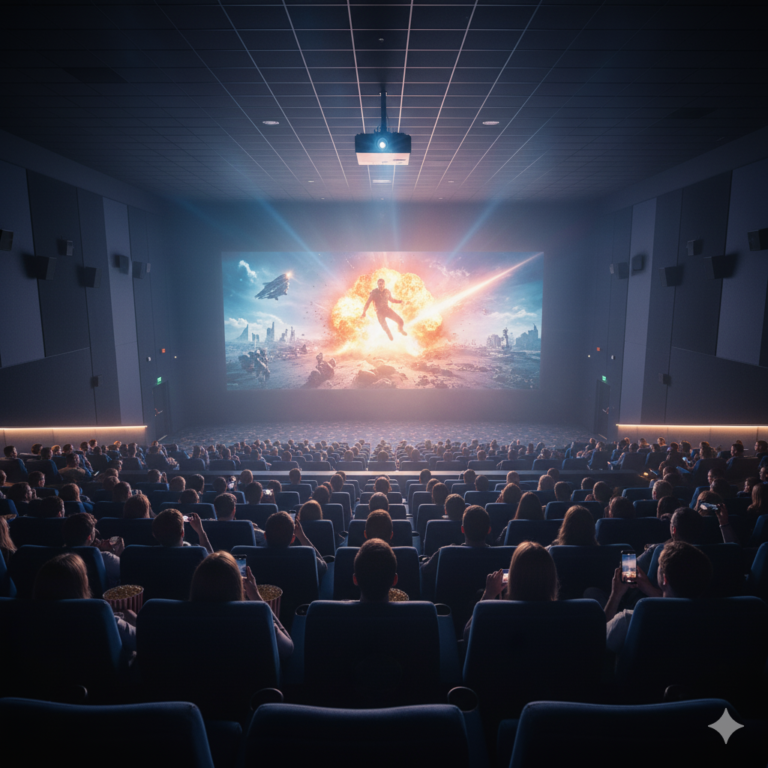
The top 15 visual effects innovations expected for movies in 2025 represent a watershed moment in cinematic history, marking the convergence of artificial intelligence, real-time rendering technology, and volumetric capture systems that are fundamentally reshaping how filmmakers bring impossible visions to life. From neural radiance fields that can reconstruct entire environments from minimal footage to machine learning algorithms that generate photorealistic digital humans, the VFX industry stands at the threshold of capabilities that would have seemed like science fiction just five years ago. Studios including Industrial Light & Magic, Weta FX, and Framestore have invested hundreds of millions of dollars in research and development, racing to deploy tools that promise to reduce production timelines while simultaneously expanding creative possibilities. This transformation addresses several persistent challenges that have plagued visual effects production for decades. The uncanny valley effect that makes digital humans appear subtly wrong has been a barrier to fully realized performances, while the astronomical costs of traditional VFX work have limited ambitious projects to only the most well-funded productions.
Environmental sustainability concerns have also emerged as a pressing issue, with energy-intensive render farms consuming electricity equivalent to small cities. The innovations arriving in 2025 tackle these problems through more efficient computational approaches, democratized tools, and hybrid workflows that blend practical effects with digital enhancement in ways previously impossible. By the end of this article, readers will understand the specific technologies driving this revolution, from Gaussian splatting techniques that accelerate scene reconstruction to AI-powered de-aging systems that preserve actor performances while transforming their appearances. The piece examines which studios are pioneering particular approaches, what films will showcase these innovations, and how these developments will cascade through the industry to affect everything from independent productions to theme park attractions. Whether approaching this topic as a filmmaker, student, industry professional, or simply a curious moviegoer, the following sections provide a comprehensive roadmap to the visual effects landscape of 2025.
Table of Contents
- What Are the Most Significant Visual Effects Innovations Coming to Movies in 2025?
- How AI and Machine Learning Are Transforming VFX Production Workflows
- Real-Time Rendering and Virtual Production Advances in 2025
- Practical Applications of 2025 Visual Effects Technology for Filmmakers
- Common Challenges and Limitations in Next-Generation Visual Effects
- The Future of Digital Human Technology in Cinema
- How to Prepare
- How to Apply This
- Expert Tips
- Conclusion
- Frequently Asked Questions
What Are the Most Significant Visual Effects Innovations Coming to Movies in 2025?
The visual effects innovations arriving in 2025 cluster around several transformative technologies that address different aspects of the production pipeline. Neural radiance fields, commonly called NeRFs, have matured from experimental curiosities into production-ready tools capable of capturing and reconstructing three-dimensional environments with unprecedented fidelity. This technology works by training neural networks on multiple photographs or video frames of a scene, learning to predict what any viewpoint would look like based on the captured data. studios can now scan practical sets, locations, or even entire city blocks, then manipulate these digital reconstructions in ways that seamlessly blend with live-action footage.
Real-time rendering engines, particularly Unreal Engine 5 and its competitors, have reached a sophistication level where final-quality visual effects can be achieved without traditional offline rendering passes. The implications are enormous: directors can see finished shots while still on set, making creative decisions with immediate feedback rather than waiting months for post-production to reveal problems. Productions like The Mandalorian pioneered this approach with LED volume stages, but 2025 iterations feature dramatically improved lighting simulation, more accurate reflections, and better integration between physical and virtual elements. The processing power required has also decreased, bringing these capabilities within reach of productions with modest budgets.
- Gaussian splatting technology offers faster scene reconstruction than NeRFs while maintaining high visual quality, with some implementations achieving real-time playback of captured environments
- Generative adversarial networks specifically trained on film footage can now predict and fill in visual information between frames, enabling ultra-high-resolution upscaling of archival material
- Physics-based simulation systems leverage machine learning to predict fluid dynamics, cloth behavior, and destruction effects at a fraction of traditional computational costs
- Volumetric video capture has progressed from requiring warehouse-sized installations to deployable systems that fit in standard production trailers

How AI and Machine Learning Are Transforming VFX Production Workflows
Artificial intelligence has moved beyond the hype cycle to deliver measurable improvements in visual effects production speed and quality. Machine learning models trained on millions of hours of footage can now perform rotoscoping tasks that previously required weeks of painstaking manual work by skilled artists. These systems identify the boundaries between subjects and backgrounds with remarkable precision, tracking complex elements like individual hair strands or semi-transparent materials that challenged earlier automated approaches. What previously demanded a team of rotoscope artists working for months can now be accomplished in days with minimal human oversight.
The training of AI systems specifically for visual effects applications has created specialized tools that understand the unique requirements of film production. Unlike general-purpose image generation systems, these VFX-focused models maintain temporal consistency across sequences, ensuring that generated elements do not exhibit the flickering or morphing artifacts that plague consumer-grade AI tools. Companies including Runway, Stability AI, and dedicated VFX-focused startups have developed models trained exclusively on high-quality film footage, learning the specific characteristics that make visual effects believable. These systems can generate background elements, extend sets, and even create crowd simulations that respond appropriately to foreground action.
- De-aging technology has progressed from the labor-intensive approaches seen in The Irishman to largely automated systems that preserve actor performances while transforming facial geometry
- AI-assisted color grading tools can analyze reference footage from classic films and apply similar aesthetic choices while adapting to the specific characteristics of new material
- Automated match-moving systems track camera motion through complex scenes with minimal manual intervention, reducing a historically time-intensive process to near-instantaneous analysis
- Style transfer networks can apply the visual characteristics of particular cinematographers or film stocks to footage, enabling consistent looks across material shot in varying conditions
Real-Time Rendering and Virtual Production Advances in 2025
Virtual production technology has evolved significantly since the LED volume stages introduced in recent Disney productions. The 2025 generation of these systems features dramatically expanded wall resolutions, with micro-LED panels achieving pixel densities that remain invisible even to high-resolution cinema cameras positioned close to the screens. This advancement eliminates the moire patterns and pixel visibility issues that limited earlier implementations, enabling tighter shots and more intimate scenes within virtual environments. Studios including Disney, Warner Bros., and Sony have invested in permanent virtual production facilities featuring these upgraded specifications.
The integration between game engines and traditional VFX software has reached a level of interoperability that enables artists to move assets and scenes between platforms without the format conversion headaches that previously complicated workflows. Universal scene description formats, particularly Pixar’s USD standard, have achieved widespread adoption, creating a common language that different software packages can read and write. A digital asset created in Maya can be imported into Unreal Engine, modified, and exported back without losing critical information about materials, rigging, or animation data. This interoperability accelerates iteration cycles and enables hybrid workflows where different aspects of visual effects work can proceed in parallel.
- Camera tracking systems now achieve sub-millimeter accuracy in real-time, enabling virtual backgrounds to respond instantly to even the subtlest camera movements
- LED volumes have expanded beyond wall configurations to include ceiling panels that create accurate environmental lighting on practical elements and actors
- Cloud-based rendering services allow virtual production stages to access processing power far exceeding local hardware capabilities
- Motion prediction algorithms compensate for the latency inherent in rendering complex scenes, ensuring backgrounds and foreground elements remain synchronized
Practical Applications of 2025 Visual Effects Technology for Filmmakers
Filmmakers seeking to leverage these innovations face a landscape where the boundaries between budget tiers have blurred considerably. Technologies that commanded premium prices two years ago have cascaded into affordable tiers, while genuinely new capabilities arrive at the high end. Independent productions with budgets under five million dollars can now access virtual production stages on a rental basis, with facilities in Atlanta, London, Mumbai, and Sydney offering daily rates that fit modest production schedules. These stages come equipped with technical staff familiar with the workflows, reducing the learning curve for productions new to the technology.
The democratization extends to post-production capabilities as well. Software subscriptions costing hundreds of dollars monthly now include AI-powered tools that replicate functions previously requiring enterprise-level solutions. Compositing packages have integrated rotoscoping automation, color matching, and even basic object removal capabilities that would have required dedicated plugins or external services. For filmmakers willing to invest time in learning these tools, the gap between what a well-funded studio can achieve and what an independent filmmaker can accomplish has narrowed substantially, at least for certain categories of visual effects work.
- Smartphone-based photogrammetry applications can capture objects and environments with sufficient quality for background elements in professional productions
- Cloud rendering services offer pay-per-frame pricing models that eliminate the capital expenditure of building and maintaining render farms
- Pre-built digital asset libraries include photorealistic environments, vehicles, and architectural elements licensed for commercial use at accessible price points
- Online training resources and certification programs prepare emerging artists to work with 2025-generation tools and workflows
Common Challenges and Limitations in Next-Generation Visual Effects
Despite the impressive capabilities arriving in 2025, significant challenges remain that temper unrealistic expectations. The training data requirements for AI-powered tools create substantial upfront costs in time and resources before production benefits materialize. A machine learning model trained to recognize and track a specific actor’s face requires thousands of reference images captured under controlled conditions, a process that adds days to production schedules and requires specialized equipment. Studios that have already captured this data for recurring franchise performers have advantages that newcomers cannot easily replicate.
The computational infrastructure required to deploy these technologies at scale remains concentrated in major production centers. While cloud services theoretically enable global access, the data transfer requirements for high-resolution footage create practical limitations for productions in regions with limited bandwidth. A single day of 8K footage generates terabytes of data that must travel to processing centers before AI-powered tools can operate on it. Latency-sensitive applications like real-time rendering require local hardware that many facilities cannot afford to maintain or update as technology evolves.
- Legal frameworks around AI-generated content remain unsettled, creating potential liability issues for productions that deploy these tools extensively
- The energy consumption of training and running large AI models has drawn environmental scrutiny that may result in regulatory constraints
- Quality control for AI-assisted work requires skilled human oversight to catch errors that automated systems cannot self-identify
- Integration with existing union agreements and artist workflows continues to generate friction as job categories shift

The Future of Digital Human Technology in Cinema
Digital human technology represents perhaps the most visible frontier of visual effects innovation, with 2025 bringing capabilities that challenge fundamental assumptions about performer identity and longevity. The systems arriving this year can capture an actor’s performance through minimal markers or even markerless computer vision approaches, then map that performance onto digital doubles with preservation of subtle micro-expressions that convey emotional authenticity. This goes beyond the de-aging applications that have received the most public attention, enabling performances to be modified, combined, or created in ways that raise profound questions about authorship and authenticity.
The ethical frameworks surrounding these technologies remain in active development. Major studios have established internal review boards to evaluate proposed uses of digital human technology, while guilds including SAG-AFTRA have negotiated contractual protections governing how performer likenesses can be manipulated or synthesized. The technology itself remains agnostic to these concerns, advancing regardless of whether social consensus about appropriate use has crystallized. Productions planning to deploy digital human effects extensively must navigate not only technical requirements but also evolving standards for consent, compensation, and creative attribution.
How to Prepare
- **Assess project requirements against technology capabilities** by creating detailed breakdowns of visual effects needs before selecting specific tools or vendors. Consider which sequences genuinely benefit from cutting-edge approaches versus those where established techniques remain more reliable and cost-effective.
- **Invest in foundational training** for key creative and technical personnel on new software platforms and workflows. Online courses from providers including fxphd, CGMA, and Gnomon cover 2025-generation tools, while vendor-specific certifications demonstrate competency to potential collaborators and employers.
- **Build relationships with technology providers and facilities** before production timelines create pressure. Virtual production stages, specialized capture services, and AI processing vendors all operate with limited capacity; productions that establish relationships early secure better scheduling options and often negotiate more favorable terms.
- **Develop internal pipelines and standards** for handling the increased data volumes and format complexities that new technologies generate. Establish naming conventions, backup protocols, and quality control checkpoints before production begins rather than improvising solutions under deadline pressure.
- **Create contingency plans** acknowledging that emerging technologies carry higher failure risks than established approaches. Budget additional time and resources for troubleshooting, and identify fallback options if primary approaches prove unworkable.
How to Apply This
- **Begin pre-production with technology scouting** by scheduling demonstrations with visual effects facilities and vendors to evaluate capabilities against specific project requirements, bringing reference materials and detailed breakdowns to enable meaningful assessments.
- **Integrate visual effects supervision from earliest development stages** rather than treating VFX as a post-production concern, ensuring that scripts, storyboards, and production designs account for both capabilities and limitations of planned approaches.
- **Establish data management infrastructure** before principal photography, including sufficient storage capacity, transfer protocols, and backup systems to handle the substantial data volumes that modern capture and processing workflows generate.
- **Conduct technical tests** during pre-production that replicate challenging conditions expected during actual shooting, identifying potential problems when solutions remain feasible rather than discovering limitations after irreplaceable footage has been captured.
Expert Tips
- Prioritize technologies that offer graceful degradation paths, meaning approaches where partial failure still yields usable results rather than all-or-nothing propositions that could derail entire sequences.
- Build relationships with vendor technical staff rather than relying solely on sales representatives, as the engineers and artists doing actual work provide more accurate assessments of what is genuinely achievable versus marketing aspiration.
- Document everything extensively, recognizing that the rapid pace of technology change means institutional knowledge becomes obsolete quickly; detailed records of what worked and what failed inform future decisions and preserve hard-won lessons.
- Maintain skepticism toward vendor claims about automation fully replacing human artists, as most production-ready implementations require skilled oversight and intervention that sales materials minimize or ignore entirely.
- Consider long-term implications of format and platform choices, recognizing that proprietary approaches may offer short-term advantages but create dependencies and compatibility challenges as technology continues evolving.
Conclusion
The visual effects innovations arriving in 2025 represent genuine advances rather than incremental improvements, offering filmmakers capabilities that fundamentally expand what stories can be told and how they appear on screen. From AI-powered automation that compresses months of work into days, to real-time rendering that enables immediate creative feedback, to digital human technologies that challenge assumptions about performer identity, these developments reward filmmakers who invest time in understanding their capabilities and limitations. The productions that deploy these tools most effectively will be those that approach them strategically, recognizing that technology serves storytelling rather than existing as an end in itself.
The landscape rewards preparation, relationship-building, and realistic assessment of what emerging technologies can and cannot accomplish. Productions that rush to adopt the newest approaches without adequate planning risk discovering limitations at the worst possible moments, while those that dismiss innovations entirely cede competitive advantages to more adventurous rivals. The path forward lies in informed evaluation, strategic adoption where appropriate, and continued investment in the human expertise that transforms technological capability into compelling cinema. The tools have never been more powerful, but the creative vision and skilled execution that bring audiences into imagined worlds remain irreducibly human contributions.
Frequently Asked Questions
How long does it typically take to see results?
Results vary depending on individual circumstances, but most people begin to see meaningful progress within 4-8 weeks of consistent effort.
Is this approach suitable for beginners?
Yes, this approach works well for beginners when implemented gradually. Starting with the fundamentals leads to better long-term results.
What are the most common mistakes to avoid?
The most common mistakes include rushing the process, skipping foundational steps, and failing to track progress.
How can I measure my progress effectively?
Set specific, measurable goals at the outset and track relevant metrics regularly. Keep a journal to document your journey.