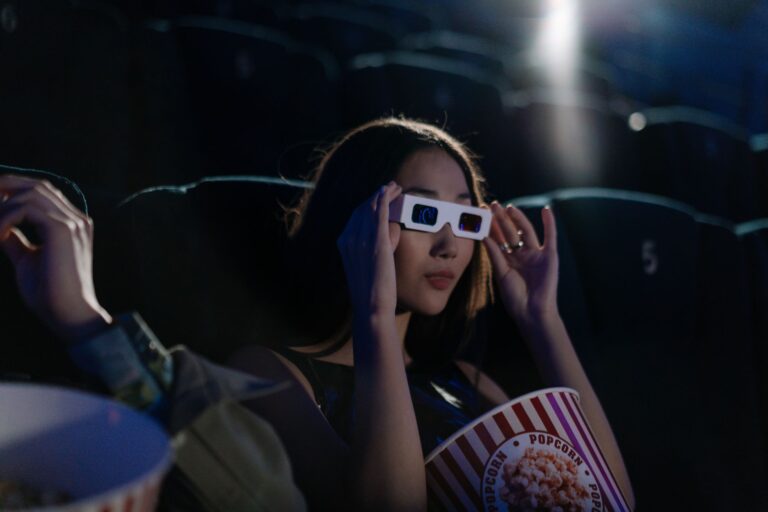
Learning how to encourage deeper questions during movie discussions transforms casual viewing into meaningful intellectual exchange. Too often, conversations about films stall at surface-level observations: “I liked it” or “The acting was good.” While these reactions have their place, they barely scratch the surface of what cinema offers as an art form and cultural artifact.
The gap between passive consumption and active engagement often comes down to the quality of questions being asked”and whether the discussion environment supports genuine inquiry. The challenge facing film enthusiasts, educators, and discussion group leaders is multifaceted. Many participants feel intimidated by the prospect of appearing uninformed or pretentious.
Others simply lack the vocabulary or frameworks to articulate what they noticed but cannot name.
- Table of Contents
- Why Do Surface-Level Movie Discussions Fail to Encourage Deeper Questions?
- Building a Question-Rich Environment for Film Analysis
- Question Frameworks That Deepen Movie Discussion
- Practical Techniques to Encourage Deeper Questions During Film Conversations
- The Role of Preparation in Generating Thought-Provoking Film Questions
- How to Prepare
- How to Apply This
- Expert Tips
- Conclusion
- Frequently Asked Questions
- You Might Also Like
Some discussions devolve into plot recaps or devolve into debates about personal taste rather than analytical exploration. These patterns prevent groups from accessing the richer rewards of film discourse: understanding directorial choices, unpacking thematic layers, recognizing cultural contexts, and connecting cinematic techniques to emotional responses.
By the end of this guide, readers will possess concrete strategies for cultivating discussion environments where deeper questions emerge naturally. The techniques covered span preparation methods, facilitation approaches, question frameworks, and ways to handle common obstacles.
Whether leading a formal film studies class, hosting a movie club, or simply wanting better conversations with friends after screenings, these principles apply across contexts. The goal is not to turn every viewer into a professional critic but to unlock the analytical potential that already exists in attentive audiences.
Table of Contents
- Why Do Surface-Level Movie Discussions Fail to Encourage Deeper Questions?
- Building a Question-Rich Environment for Film Analysis
- Question Frameworks That Deepen Movie Discussion
- Practical Techniques to Encourage Deeper Questions During Film Conversations
- The Role of Preparation in Generating Thought-Provoking Film Questions
- How to Prepare
- How to Apply This
- Expert Tips
- Conclusion
- Frequently Asked Questions
Why Do Surface-Level Movie Discussions Fail to Encourage Deeper Questions?
Surface-level discussions persist because they require no risk and minimal cognitive investment. Saying “the cinematography was beautiful” feels safe”it expresses appreciation without demanding justification. But this safety comes at the cost of discovery.
When discussions remain at the surface, participants miss opportunities to understand why certain images affected them, how visual choices served narrative purposes, or what cultural assumptions informed their reactions. The conversation becomes a series of verdicts rather than an exploration.
The structure of most informal film discussions actively discourages depth. Without designated pauses for reflection, conversations race from topic to topic. Without prepared frameworks, participants default to evaluation rather than analysis. Without psychological safety, people withhold tentative observations that might lead somewhere interesting.
The result is discussions that feel complete in twenty minutes because no one knows how to go further. Understanding these failure modes reveals the intervention points:.
- **Lack of shared vocabulary** prevents precise discussion of technique, forcing vague impressions
- **Fear of being wrong** stops participants from offering interpretive risks
- **Absence of guiding questions** leaves groups without direction after initial reactions
- **Rushed timing** prevents the slow thinking that deeper analysis requires
- **Evaluation focus** makes conversations about judgment rather than understanding

Building a Question-Rich Environment for Film Analysis
Creating conditions where deeper questions emerge requires intentional environmental design. Physical and social factors significantly influence discussion quality. A comfortable setting where participants can see each other”rather than staring at a screen”signals that conversation matters as much as viewing.
Adequate time allocation communicates that thoughtful exchange is valued; scheduling only fifteen minutes after a two-hour film practically guarantees superficiality.
The social environment matters even more than the physical. Participants need to trust that tentative ideas will be received generously, that “wrong” interpretations lead to learning rather than embarrassment, and that expertise differences are assets rather than hierarchies.
Building this trust happens through explicit norm-setting and consistent facilitation behavior. When discussion leaders model intellectual humility”admitting uncertainty, changing positions based on evidence, valuing contributions from all experience levels”others follow. Practical elements of question-rich environments include:.
- **Designated reflection time** between viewing and discussion, even just five minutes of silent note-taking
- **Explicit invitation of minority perspectives** to counteract groupthink tendencies
- **Physical arrangement** supporting eye contact and equal participation
- **Prohibition of devices** during discussion to maintain focus
- **Rotating facilitation** so leadership becomes a shared responsibility
Question Frameworks That Deepen Movie Discussion
Not all questions serve the same function in discussion. Some questions close inquiry (“Did you like the ending?”), while others open it (“What choices did the filmmaker make in the final scene, and what alternatives existed?”). Understanding question types allows facilitators and participants to consciously select those that promote deeper engagement.
The most productive questions share several characteristics: they cannot be answered with yes or no, they assume multiple valid responses exist, and they connect specific observations to larger patterns or meanings. The distinction between evaluative and analytical questions proves crucial.
Evaluative questions ask for judgments: good or bad, successful or failed, liked or disliked. While these have their place, they tend to end conversations rather than extend them.
Analytical questions ask about relationships: how does this connect to that, what function does this element serve, what would change if this were different. These questions generate rather than conclude. Effective question frameworks for film discussion include:.
- **Observation questions**: “What specific visual or audio details did you notice in that scene?”
- **Interpretation questions**: “What meaning might those details carry, and what evidence supports that reading?”
- **Connection questions**: “How does this scene relate to earlier moments or broader themes?”
- **Craft questions**: “What technical choices did the filmmaker make, and what alternatives existed?”
- **Context questions**: “What historical, cultural, or genre knowledge changes how we understand this?”

Practical Techniques to Encourage Deeper Questions During Film Conversations
Moving from theory to practice requires concrete techniques applicable across discussion contexts. One effective approach involves the “notice and wonder” protocol, borrowed from mathematics education. Participants first share observations without interpretation”purely what they saw and heard. Then they articulate questions those observations raise. This sequence prevents premature interpretation and generates questions organically from attentive viewing.
Another powerful technique is the “evidence chain.” When someone offers an interpretation, the facilitator asks them to trace the evidence backward: what specific moments support that reading, what alternative interpretations those moments might support, and what additional evidence would strengthen or weaken the claim.
This process teaches participants to ground interpretations in textual evidence while remaining open to revision. Consider these additional practical techniques: ## Common Obstacles to Deeper Movie Discussion Questions and How to Overcome Them Even well-designed discussion environments encounter predictable obstacles.
Dominant voices can crowd out quieter participants who may hold valuable perspectives. Groups sometimes converge prematurely on interpretations, closing off exploration. Personal taste conflicts can derail analytical discussion into defensive arguments. Recognizing these patterns allows facilitators to intervene constructively. Dominance dynamics require active management.
Techniques include round-robin contributions where everyone speaks before anyone speaks twice, written submission of ideas before discussion, and explicit invitation of perspectives from those who have not yet contributed. The goal is not to silence enthusiastic participants but to ensure that participation reflects the full range of perspectives present. Addressing common obstacles effectively:.
- **Pause and process**: Stop the film at key moments for immediate micro-discussions, building interpretive momentum
- **Written before spoken**: Have participants write responses before verbal discussion to prevent anchoring on first speakers
- **Devil’s advocate assignment**: Designate someone to argue against emerging consensus, ensuring alternative readings receive attention
- **Question generation rounds**: Dedicate time exclusively to generating questions without attempting answers
- **Connection mapping**: Visually diagram relationships between characters, themes, or scenes to reveal patterns
The Role of Preparation in Generating Thought-Provoking Film Questions
Preparation dramatically influences discussion quality, though different contexts allow different preparation levels. For scheduled discussions of specific films, participants can research director backgrounds, production contexts, critical reception, and thematic precedents. This knowledge provides raw material for more sophisticated questions.
Someone who knows that a director’s previous films explored similar themes can ask how this film extends or revises that exploration. Preparation also involves developing personal frameworks for film analysis. Participants who understand basic concepts”mise-en-scène, diegetic versus non-diegetic sound, narrative structure types”can formulate more precise questions.
They can ask not just “Why did that scene feel tense?” but “How did the combination of tight framing, low-key lighting, and absence of music create tension?” This precision opens richer discussion possibilities.

How to Prepare
- **Research the film’s production context** by reading about when and where it was made, what challenges emerged during production, and what the director and key collaborators intended. This context transforms many surface observations into meaningful data points.
- **Review the director’s previous work** to identify recurring themes, techniques, and preoccupations. This knowledge enables questions about continuity and evolution within an artistic career, moving beyond the single-film frame.
- **Read two or three critical perspectives** that disagree with each other. Encountering conflicting interpretations generates questions about what evidence supports each reading and what assumptions underlie the disagreements.
- **Prepare specific observations** by noting memorable moments, confusing elements, and technical choices during viewing. These concrete details become the seeds from which questions grow.
- **Draft three to five open-ended questions** in advance, focusing on questions you genuinely want to explore rather than questions with predetermined answers. Authentic curiosity generates better discussion than Socratic performance.
How to Apply This
- **Open with observation rounds** before interpretation, asking participants to share specific details they noticed without yet explaining what those details mean. This grounds subsequent discussion in shared evidence.
- **Deploy prepared questions strategically** when discussion stalls or remains at surface level, treating them as catalysts rather than checkboxes to complete.
- **Follow emergent threads** even when they diverge from prepared questions, recognizing that the best discussions often travel unexpected routes while maintaining analytical depth.
- **Close with reflection** on what questions remain unanswered and what new questions emerged, treating the discussion as a beginning rather than a conclusion.
Expert Tips
- **Embrace productive silence** after asking questions, waiting at least ten seconds before speaking again. Deeper thinking requires time, and rushing to fill silence prevents the cognitive work that generates insight.
- **Model question-asking yourself** rather than primarily answering. When participants see discussion leaders genuinely puzzled and curious, they recognize that not knowing is acceptable and even valuable.
- **Track question types consciously** during discussion, noticing when the group defaults to evaluation and redirecting toward analysis. This metacognitive awareness improves over time.
- **Use specific film vocabulary** while also defining terms when introducing them. Precision enables depth, but jargon without explanation excludes participants and shuts down inquiry.
- **Revisit rejected interpretations** later in discussion when new evidence emerges. Showing that ideas remain alive even after initial challenges demonstrates the provisional nature of interpretation and encourages intellectual risk-taking.
Conclusion
Cultivating deeper questions during movie discussions is fundamentally about creating conditions where genuine inquiry can flourish. This requires attention to environment, preparation, question design, facilitation technique, and obstacle management. None of these elements alone suffices; depth emerges from their combination.
The discussions that feel most rewarding”where participants leave with new understanding and lingering questions”result from intentional cultivation rather than luck.
The rewards of this cultivation extend beyond individual discussions. Participants who experience deep film analysis develop transferable skills: close attention to evidence, comfort with ambiguity, ability to articulate complex responses, and appreciation for multiple valid perspectives. These capacities serve well beyond cinema contexts.
More immediately, they transform film from entertainment into a site of ongoing discovery, where each viewing offers new questions to pursue. The effort invested in building question-rich discussions pays dividends across every subsequent film experience.
Frequently Asked Questions
How long does it typically take to see results?
Results vary depending on individual circumstances, but most people begin to see meaningful progress within 4-8 weeks of consistent effort.
Is this approach suitable for beginners?
Yes, this approach works well for beginners when implemented gradually. Starting with the fundamentals leads to better long-term results.
What are the most common mistakes to avoid?
The most common mistakes include rushing the process, skipping foundational steps, and failing to track progress.
How can I measure my progress effectively?
Set specific, measurable goals at the outset and track relevant metrics regularly. Keep a journal to document your journey.
You Might Also Like
- Why do James Cameron Films Always Have Legs?
- Tron Ares Age Rating Explained
- The Dark Knight Joker Philosophy Explained