The scariest haunted house movies tap into something primal”the violation of our most sacred space. Home represents safety, comfort, and refuge from the outside world, which makes the corruption of that sanctuary particularly devastating on a psychological level. When filmmakers transform domestic spaces into sites of supernatural terror, they exploit one of humanity’s oldest fears: that we are never truly safe, not even behind locked doors. From creaking floorboards to spectral apparitions materializing in hallways, the haunted house subgenre has produced some of cinema’s most enduring and genuinely frightening experiences. This guide examines 15 essential haunted house horror films that have defined and redefined the subgenre across decades of filmmaking.
Whether you’re a seasoned horror enthusiast seeking overlooked gems or a newcomer looking to understand why these films resonate so deeply with audiences, this comprehensive exploration covers the critical elements that separate merely spooky films from genuinely terrifying ones. You’ll discover what makes certain haunted house movies work on a deeper psychological level, how filmmakers create sustained dread without relying on cheap jump scares, and which films deserve their reputations as genuine landmarks in horror cinema. The haunted house movie has evolved significantly since its early roots in Gothic literature and expressionist cinema. What began with atmospheric slow-burns like “The Haunting” (1963) has expanded to include found-footage nightmares, possession hybrids, and films that use supernatural frameworks to explore trauma, grief, and family dysfunction. Understanding this evolution helps viewers appreciate both the classic techniques that continue to work and the innovations that have kept the subgenre vital. By the end of this article, you’ll have a curated watchlist of films that represent the absolute best the haunted house genre has to offer, along with the context to understand why each one earns its place among the scariest ever made.
Table of Contents
- What Makes Haunted House Movies So Terrifying for Horror Audiences?
- Classic Haunted House Horror Films That Defined the Genre
- Modern Haunted House Movies That Reinvented Supernatural Terror
- Essential International Haunted House Films Worth Discovering
- Found Footage and Documentary-Style Haunted House Horror
- Psychological Haunted House Films That Blur Reality and Madness
- How to Prepare
- How to Apply This
- Expert Tips
- Conclusion
- Frequently Asked Questions
What Makes Haunted House Movies So Terrifying for Horror Audiences?
The effectiveness of haunted house horror stems from a fundamental psychological principle: the uncanny. Sigmund Freud defined the uncanny as something that is simultaneously familiar and foreign, creating cognitive dissonance that manifests as fear. A haunted house literalizes this concept”the home remains recognizable in its basic structure but becomes alien through supernatural intrusion. Every familiar object, every known corner, transforms into a potential source of threat. This subversion of domestic security attacks viewers on a visceral level because it suggests that nowhere is truly safe.
Haunted house films also exploit the human tendency toward pareidolia and hypervigilance. When watching these movies, audiences become acutely aware of negative space, shadows, and background details. Filmmakers leverage this heightened attention by planting subtle visual threats that the eye catches before the conscious mind processes them”a face in a window, movement in a mirror, a figure standing in a doorway. This technique creates participatory dread where viewers essentially scare themselves by scanning every frame for danger. The best haunted house movies understand this dynamic and use it masterfully to build sustained tension rather than relying solely on loud noises and sudden reveals.
- **Architectural anxiety**: Houses contain inherent creepiness through basements, attics, closets, and dark hallways that suggest hidden spaces and unknown threats
- **Isolation factor**: Haunted house narratives typically strand characters in remote locations where help cannot reach them, amplifying vulnerability
- **Historical trauma**: Many haunted house stories involve buildings with violent pasts, suggesting that evil can become embedded in physical spaces and persist across generations
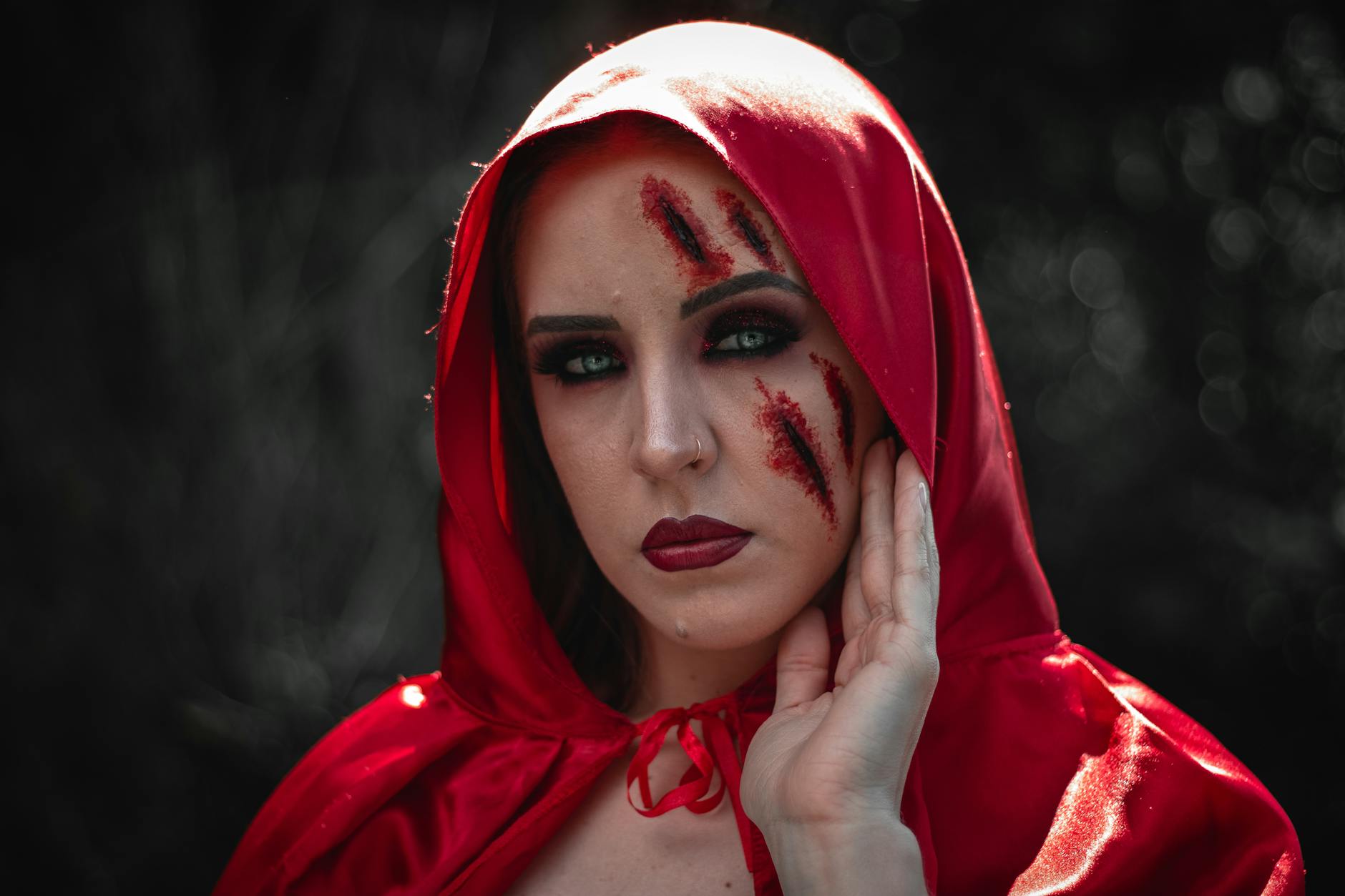
Classic Haunted House Horror Films That Defined the Genre
“The Haunting” (1963), directed by Robert Wise, remains the gold standard against which all subsequent haunted house films are measured. Adapted from Shirley Jackson’s “The Haunting of Hill House,” the film follows a group of paranormal investigators who spend time in a notoriously haunted mansion. What makes this film so effective is its almost complete reliance on suggestion rather than explicit supernatural imagery. The house itself seems alive”walls breathe, doors bulge, and corridors appear to shift and distort. Wise achieved these effects through Dutch angles, fisheye lenses, and meticulous sound design that created an atmosphere of constant wrongness without ever showing a ghost directly.
“The Changeling” (1980) represents another pinnacle of the classic approach. George C. Scott plays a composer who, grieving the death of his wife and daughter, moves into a Victorian mansion that harbors the secret of a murdered child. The film’s most famous sequence”a bouncing ball returning to Scott after he disposed of it in a river”demonstrates how simple imagery can generate profound unease when properly contextualized. Director Peter Medak understood that restraint amplifies horror; the ghost child appears only briefly and indirectly, yet the film’s investigation of institutional evil and buried crimes gives the haunting genuine moral weight.
- **”The Innocents” (1961)**: Jack Clayton’s adaptation of Henry James’s “The Turn of the Screw” uses gorgeous black-and-white cinematography to create ambiguity about whether the governess is witnessing actual ghosts or experiencing psychological breakdown
- **”The Legend of Hell House” (1973)**: A more explicit take on the paranormal investigation premise, this British production features Richard Matheson’s screenplay and an oppressively malevolent atmosphere
- **”Burnt Offerings” (1976)**: Karen Black and Oliver Reed star in this underseen film about a house that literally feeds on its inhabitants, restoring itself while draining their life force
Modern Haunted House Movies That Reinvented Supernatural Terror
The 2000s and 2010s brought significant innovations to haunted house cinema, beginning with the Spanish film “The Orphanage” (2007). Produced by Guillermo del Toro and directed by J.A. Bayona, the film follows a woman who returns with her family to the orphanage where she grew up, only to have her adopted son begin communicating with invisible friends. What elevates “The Orphanage” beyond standard genre fare is its emotional devastation”the film functions as a meditation on motherhood, loss, and the lengths parents will go to protect their children.
The final revelation recontextualizes everything that came before, transforming horror into tragedy. James Wan’s “The Conjuring” (2013) revitalized mainstream interest in haunted house horror by combining classical techniques with modern production values. Based loosely on cases investigated by Ed and Lorraine Warren, the film follows a family terrorized after moving into a Rhode Island farmhouse with a dark history. Wan’s direction demonstrates masterful control of frame composition”he consistently places viewers’ eyes exactly where he wants them, then either delivers or withholds the expected scare. The film’s success spawned multiple sequels and spinoffs, establishing an entire cinematic universe built around supernatural threat.
- **”Insidious” (2010)**: Wan’s earlier film, which combined haunted house elements with astral projection mythology, helped establish the modern template for PG-13 horror that still delivers genuine scares
- **”The Babadook” (2014)**: Jennifer Kent’s Australian film uses a malevolent storybook creature to explore maternal depression and the darker aspects of grief, earning widespread critical acclaim
- **”Hereditary” (2018)**: Ari Aster’s devastating debut blends haunted house elements with family trauma and cult horror, creating one of the most emotionally punishing horror films in decades
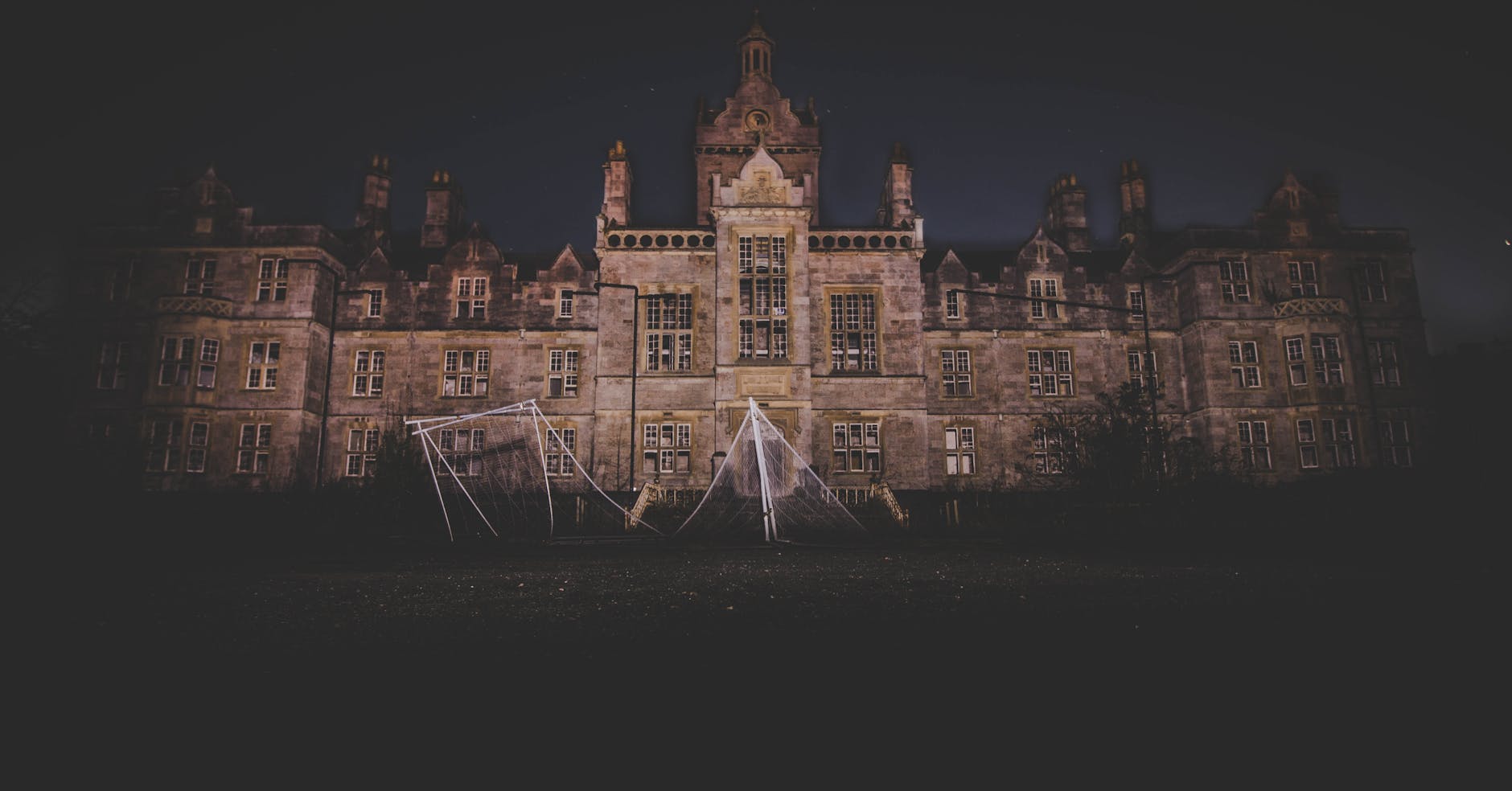
Essential International Haunted House Films Worth Discovering
Horror cinema has always been international, and some of the scariest haunted house movies originate from outside Hollywood. The Japanese film “Ju-On: The Grudge” (2002), directed by Takashi Shimizu, introduced Western audiences to distinctly Asian supernatural aesthetics”the pale, contorted ghost, the croaking death rattle, the curse that spreads like a virus to anyone who enters the contaminated space. The film’s non-linear structure and implacable supernatural threat created a template that influenced countless subsequent productions, including an American remake and multiple sequels.
“The Others” (2001), a Spanish-American co-production directed by Alejandro Amenábar and starring Nicole Kidman, demonstrated that classical Gothic atmosphere could still captivate modern audiences. Set in a fog-shrouded Jersey mansion at the end of World War II, the film follows a mother raising two photosensitive children while waiting for her husband’s return. The deliberate pacing and period setting evoke classic ghost stories, while the famous twist ending forces viewers to reconsider everything they’ve witnessed. The film grossed over $200 million worldwide, proving the commercial viability of sophisticated, slow-burn horror.
- **”A Tale of Two Sisters” (2003)**: Kim Jee-woon’s Korean psychological horror film layers family trauma, mental illness, and supernatural elements into a narratively complex mystery that rewards careful attention
- **”Lake Mungo” (2008)**: This Australian mockumentary about a family processing a daughter’s drowning death builds its scares through accumulating dread rather than conventional horror sequences
- **”The Devil’s Backbone” (2001)**: Guillermo del Toro’s Spanish-language ghost story set during the Spanish Civil War demonstrates how political horror and supernatural horror can reinforce each other
Found Footage and Documentary-Style Haunted House Horror
The found footage format, though not originated by horror films, found its perfect expression in haunted house narratives. “Paranormal Activity” (2007), made for approximately $15,000, grossed nearly $200 million worldwide and spawned a franchise through its simple but effective premise: a couple sets up cameras to document increasingly aggressive supernatural activity in their suburban home. The static camera setup forces viewers to scan the frame for anomalies, creating participatory tension that traditional cinematography cannot replicate.
Director Oren Peli understood that what we don’t see is often scarier than what we do. “Grave Encounters” (2011), while less commercially successful, pushed the found footage haunted house concept further by trapping ghost-hunting television producers in an abandoned psychiatric hospital where time and space become unreliable. The film works as both effective horror and meta-commentary on the paranormal investigation genre, suggesting that seekers of the supernatural might find more than they bargained for. The format’s inherent limitations”shaky cameras, night vision imagery, in-camera effects”become assets rather than liabilities when properly deployed.
- **Documentary-style horror**: Films like “The Poughkeepsie Tapes” and “Hell House LLC” use faux-documentary framing to create verisimilitude that makes supernatural events more disturbing
- **Found footage evolution**: Later entries like “Host” (2020), set entirely during a Zoom séance, demonstrate how the format continues to adapt to contemporary technology and social anxieties

Psychological Haunted House Films That Blur Reality and Madness
Some of the most effective haunted house movies refuse to confirm whether the supernatural events are real or products of psychological breakdown. “Session 9” (2001), directed by Brad Anderson, follows an asbestos removal crew working in an abandoned psychiatric hospital. As one worker listens to therapy session recordings involving a patient with dissociative identity disorder, the crew begins experiencing strange phenomena that may or may not be supernatural.
The film’s ambiguity is essential to its impact”it functions equally well as a ghost story or as a portrait of mental disintegration. “The Shining” (1980), Stanley Kubrick’s adaptation of Stephen King’s novel, has generated decades of analysis precisely because it refuses easy interpretation. Is the Overlook Hotel genuinely haunted, or is Jack Torrance’s descent into homicidal madness purely psychological? Kubrick layers the film with visual puzzles, impossible architecture, and continuity errors that may be deliberate, inviting viewers to construct their own theories. The documentary “Room 237” catalogued the most elaborate interpretations, but the film’s power derives from its fundamental ambiguity rather than any single explanation.
- **Unreliable narration**: Films like “The House That Jack Built” and “1408” use protagonists whose perceptions cannot be trusted, creating additional layers of uncertainty
- **Trauma manifestation**: Contemporary haunted house films increasingly use supernatural phenomena as metaphors for processing grief, abuse, or mental illness, adding thematic depth to genre conventions
How to Prepare
- **Create the right viewing environment** by watching at night with minimal lighting. Natural darkness enhances the contrast between light and shadow that filmmakers use to create tension. Avoid watching on phones or tablets; haunted house films rely on peripheral visual information that small screens cannot adequately convey.
- **Start with classical films before modern entries** to understand how the genre evolved. Watching “The Haunting” (1963) before “The Conjuring” allows appreciation of how contemporary filmmakers both honor and innovate upon established techniques. This chronological approach also prevents modern pacing from making older films feel slow.
- **Research minimal plot information beforehand** because haunted house films often rely on reveals and twists that become less effective when anticipated. Read only enough to confirm the film matches your interests, then go in as blind as possible.
- **Plan viewing in appropriate emotional states**”intense haunted house films can be genuinely disturbing, especially those dealing with child endangerment or family trauma. Films like “Hereditary” or “The Babadook” should not be approached casually; they require emotional preparation and may affect sensitive viewers deeply.
- **Consider thematic pairings** when watching multiple films. Grouping movies by theme (possession versus non-possession hauntings, for example) or national origin reveals interesting patterns in how different cultures approach supernatural domestic horror.
How to Apply This
- **Build a comprehensive watchlist** working through the 15 essential films mentioned in this guide before expanding to adjacent recommendations. Track your responses to different approaches”do you prefer ambiguous psychological horror or explicit supernatural threat?
- **Analyze what specific techniques affect you most strongly** as you watch. Some viewers respond more to sound design, others to visual composition or narrative dread. Understanding your personal fear responses helps identify which additional films will likely work for you.
- **Explore the source material** for films adapted from novels. Reading Shirley Jackson’s “The Haunting of Hill House” or Richard Matheson’s “Hell House” provides additional context and often offers different interpretations than their film adaptations.
- **Engage with critical analysis** through essays, podcasts, and video essays that examine these films in depth. Horror scholarship has become increasingly sophisticated, and understanding filmmakers’ techniques enhances rather than diminishes the viewing experience.
Expert Tips
- **Pay attention to negative space**”the best haunted house filmmakers compose shots that draw attention to empty doorways, dark corners, and background details where threats may or may not materialize. Training yourself to notice these compositional choices reveals how meticulously these films are constructed.
- **Sound design often matters more than visuals** in effective haunted house horror. Films like “The Haunting” and “A Tale of Two Sisters” use sound to suggest threats that never appear on screen, creating dread that explicit imagery cannot match.
- **Avoid the temptation to check your phone** during slow sequences. Haunted house films use deliberate pacing to build tension, and breaking that tension through distraction undermines the cumulative effect these movies achieve.
- **Recognize that sequels and remakes rarely match originals**”while exceptions exist, films like “The Haunting” (1999) or “Poltergeist” (2015) demonstrate how misunderstanding what made originals effective leads to inferior results. Prioritize original versions before considering remakes.
- **Understand that effective horror requires vulnerability**”if you approach these films determined not to be scared, you probably won’t be. The transaction requires willingness to suspend disbelief and inhabit the protagonists’ fear rather than maintaining ironic distance.
Conclusion
The 15 scariest haunted house movies explored in this guide represent distinct approaches to a fundamental human fear: the corruption of safe spaces. From the elegant restraint of “The Haunting” to the emotional devastation of “Hereditary,” these films demonstrate the remarkable range possible within a focused subgenre. What unites them is not specific imagery or technique but rather a serious commitment to creating genuine unease”they treat horror as worthy of artistic investment rather than merely delivering cheap thrills.
Approaching these films with openness and attention rewards viewers with experiences that linger far beyond the end credits. The best haunted house movies don’t just scare us during their runtime; they make us see our own homes differently, noticing shadows and sounds we previously ignored. This lasting effect distinguishes great horror from forgettable entertainment. Whether you work through this list over weeks or months, each film offers something unique, and together they constitute a comprehensive education in how cinema can transform architecture into nightmare.
Frequently Asked Questions
How long does it typically take to see results?
Results vary depending on individual circumstances, but most people begin to see meaningful progress within 4-8 weeks of consistent effort.
Is this approach suitable for beginners?
Yes, this approach works well for beginners when implemented gradually. Starting with the fundamentals leads to better long-term results.
What are the most common mistakes to avoid?
The most common mistakes include rushing the process, skipping foundational steps, and failing to track progress.
How can I measure my progress effectively?
Set specific, measurable goals at the outset and track relevant metrics regularly. Keep a journal to document your journey.