The 15 iconic masks in slasher films represent more than mere costume pieces””they have become cultural touchstones that define an entire genre of horror cinema. From the stark white visage of Michael Myers to the decayed burlap of Leatherface, these masks transform ordinary actors into legendary screen villains capable of haunting audiences for decades. The slasher film mask serves a dual purpose: it strips away human identity from the killer while simultaneously creating an unforgettable brand for the franchise, turning anonymous murderers into merchandising gold and Halloween costume staples. The fascination with masked killers in horror films addresses fundamental questions about identity, anonymity, and the nature of evil. When a killer’s face remains hidden, audiences project their deepest fears onto that blank canvas.
The mask becomes a mirror reflecting our anxieties about violence lurking beneath ordinary surfaces. This psychological dimension elevates the best slasher masks beyond simple props into genuine icons of popular culture, recognized instantly by people who have never even watched the films they originate from. By exploring the history, design philosophy, and cultural impact of these fifteen legendary masks, readers will gain a deeper appreciation for the artistry behind horror cinema’s most memorable villains. This examination covers the creative decisions that birthed each design, the practical effects work that brought them to life, and the lasting influence these masks have exerted on filmmakers, artists, and popular culture at large. Whether you are a dedicated horror enthusiast or a casual viewer curious about what makes these images so enduring, understanding these masks illuminates a crucial aspect of how slasher films generate and sustain terror.
Table of Contents
- Why Do Slasher Film Masks Create Such Lasting Terror in Horror Cinema?
- The Original Slasher Masks That Defined Horror Movie History
- How Jason Voorhees’ Hockey Mask Became Horror’s Most Recognized Symbol
- Practical Design Elements That Make Slasher Masks Cinematically Effective
- Lesser-Known Iconic Masks From Cult Slasher Films
- The Cultural Impact of Slasher Masks Beyond Horror Films
- How to Prepare
- How to Apply This
- Expert Tips
- Conclusion
- Frequently Asked Questions
Why Do Slasher Film Masks Create Such Lasting Terror in Horror Cinema?
The psychological impact of masks in slasher films operates on multiple levels that tap into primal human fears. Research in cognitive psychology suggests that the human brain is hardwired to read faces for emotional cues and intentions. When that information is obscured or distorted, it triggers an uncanny valley response””the face appears almost human but wrong enough to generate profound discomfort. The fixed expression of a mask also creates an unsettling contrast with violent action, as the killer’s face shows no emotion while committing horrific acts, suggesting either inhuman detachment or suppressed pleasure that viewers cannot read.
The anonymity provided by masks transforms individual characters into archetypal figures of death itself. Unlike killers with exposed faces who can be psychologically analyzed and potentially understood, masked slashers become elemental forces of destruction. This shift from character to symbol is what allows franchises to continue across multiple films and even survive recasting. The mask becomes the true star, carrying the mythology forward regardless of who wears it. Michael Myers has been portrayed by numerous actors and stuntmen since 1978, but audiences perceive a single, continuous presence because the mask remains consistent.
- **Dehumanization effect**: Masks remove empathy cues, making killers appear more threatening and unpredictable
- **Symbolic resonance**: Fixed expressions can represent specific fears””death masks, corrupted innocence, industrial horror
- **Practical filmmaking benefits**: Masks allow for stunt doubles, multiple performers, and consistent iconography across sequels
The Original Slasher Masks That Defined Horror Movie History
The birth of the modern slasher mask can be traced to two films released in the 1970s that established templates still followed today. Tobe Hooper’s “The Texas Chain Saw Massacre” (1974) introduced Leatherface wearing masks made from human skin””a concept based loosely on real-life killer Ed Gein. The design immediately distinguished itself by being organic and handmade rather than manufactured, suggesting a crude folk-art quality that made the horror feel more authentic and disturbing. Leatherface’s masks changed throughout the film based on his emotional state and social role, including a feminine “pretty woman” mask for domestic scenes, adding unexpected depth to a seemingly mindless killer.
John Carpenter’s “Halloween” (1978) took the opposite approach with Michael Myers’ mask””a mass-produced William Shatner mask painted white and modified to remove human features. This transformation of something mundane into something terrifying exemplifies the film’s overall thesis about evil hiding in plain sight within suburban America. Production designer Tommy Lee Wallace purchased the mask for approximately two dollars from a costume shop, proving that iconic status depends more on context and cinematography than expensive design. The pale, expressionless face became a template for countless imitators and established the “blank slate” approach to slasher villain design.
- **Leatherface’s masks**: Handcrafted from latex to simulate human skin, with three distinct versions representing different personalities
- **Michael Myers’ mask**: Modified Captain Kirk mask, spray-painted white with widened eye holes and teased hair
- **Budget origins**: Both iconic masks were created with minimal resources, demonstrating that effectiveness trumps expense
How Jason Voorhees’ Hockey Mask Became Horror’s Most Recognized Symbol
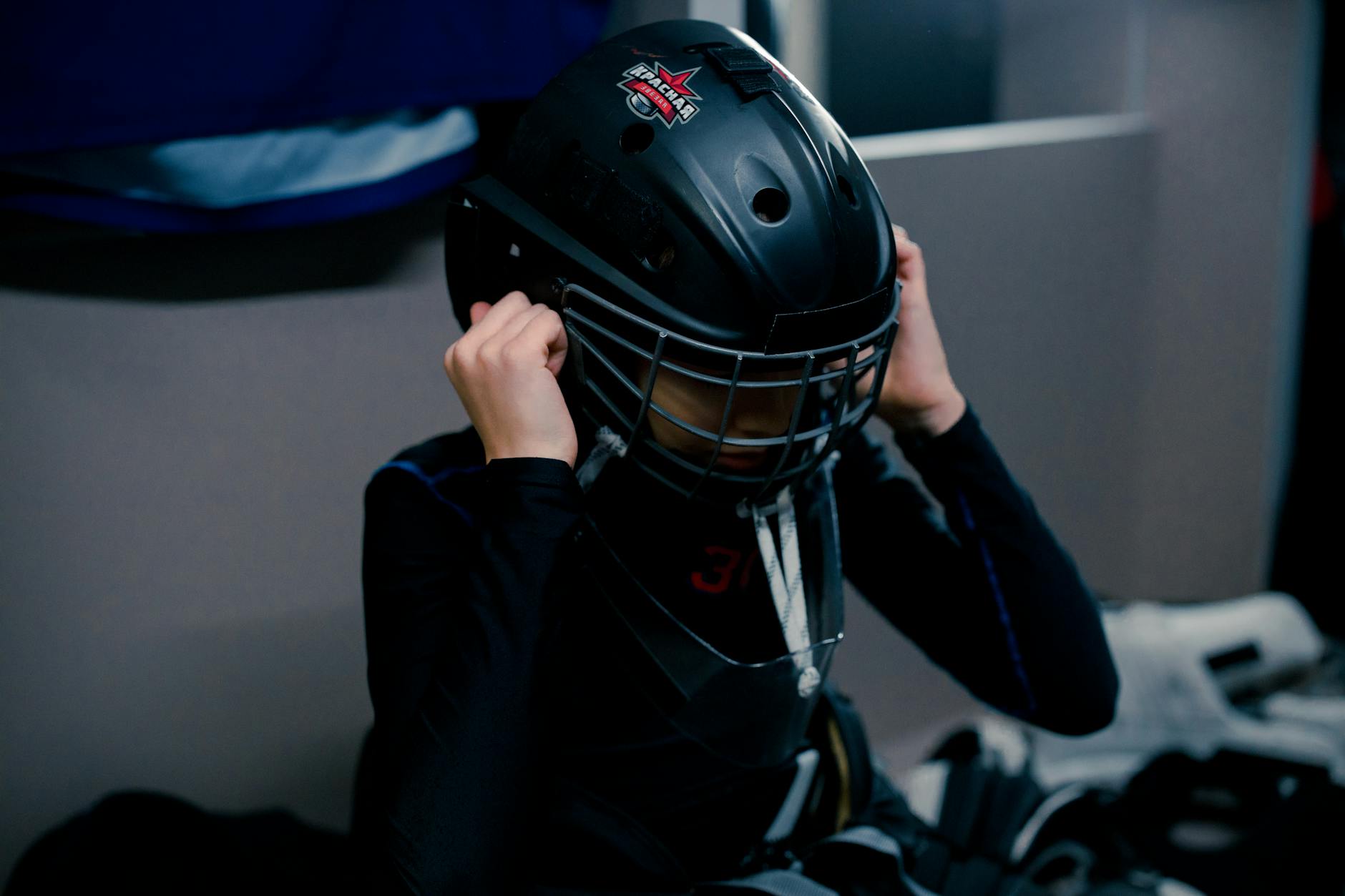
Jason Voorhees did not receive his signature hockey mask until the third film in the Friday the 13th franchise, released in 1982. The original 1980 film featured his mother as the killer, while “Friday the 13th Part 2” showed Jason wearing a burlap sack over his head””an homage to “The Town That Dreaded Sundown” (1976). The hockey mask was introduced almost accidentally when 3D effects supervisor Martin Jay Sadoff happened to have a Detroit Red Wings goalie mask in his bag during production. Director Steve Miner immediately recognized its potential, and after modifications including added red triangular markings, horror history was made.
The genius of the hockey mask lies in its cultural associations and design efficiency. Hockey masks already carried connotations of violence and protection, worn by athletes in one of sports’ most physical games. The face guard’s cage-like structure suggests imprisonment while the smooth white surface echoes the blank menace of Michael Myers. Unlike Leatherface’s organic horror or Myers’ suburban uncanny, Jason’s mask positions him as an industrial-age monster””a product of mid-century american recreation culture turned deadly. The design is so effective that it has appeared in every subsequent Friday the 13th film and has become synonymous with the slasher genre itself.
- **Evolution across films**: The mask design has varied slightly between sequels, with damage accumulating to reflect Jason’s battles
- **Cultural penetration**: The hockey mask is now universally recognized, appearing in everything from hip-hop album covers to political protests
- **Merchandising impact**: The simple, reproducible design has generated hundreds of millions in merchandise sales since 1982
Practical Design Elements That Make Slasher Masks Cinematically Effective
Creating a successful slasher mask requires balancing multiple practical and aesthetic concerns that filmmakers have refined over fifty years of the genre. Visibility ranks among the primary challenges””performers must see well enough to navigate sets, perform stunts, and hit precise marks while their faces remain obscured. The hockey mask solves this with obvious eye holes, while Michael Myers’ mask uses stretched, thinned latex around the eye openings. Ghostface’s mask from “Scream” (1996) presented particular difficulties because the flowing black fabric obscured peripheral vision, requiring stunt coordinator Dane Farwell to develop modified versions with hidden mesh panels.
Durability and continuity present additional production challenges for slasher masks. Latex and rubber deteriorate under hot film lights and through repeated use, meaning production teams typically create multiple identical copies for each shoot. The original Michael Myers mask from 1978 was stored improperly between the first film and its sequel, deteriorating so badly that it had to be re-sculpted for “Halloween II” (1981). Modern productions create silicone molds allowing for dozens of identical copies, and digital scanning now preserves exact specifications for sequels made decades later.
- **Material evolution**: Early masks used latex and rubber; modern designs incorporate silicone, foam, and 3D-printed components
- **Breathing considerations**: Masks must allow adequate airflow during physically demanding scenes
- **Expression through body language**: Performers must convey emotion through posture and movement when facial expressions are hidden
Lesser-Known Iconic Masks From Cult Slasher Films
Beyond the famous trinity of Leatherface, Michael Myers, and Jason Voorhees, numerous slasher films have contributed memorable mask designs that deserve recognition. The chromatic killer from “The Strangers” (2008) wears a simple cloth sack with eye holes cut out, returning to the crude aesthetic of early slasher films while adding contemporary suburban menace. The design’s effectiveness stems from its handmade quality””it looks like something anyone could create in minutes, suggesting the killers could be ordinary neighbors rather than supernatural entities.
“Hush” (2016) introduced a crossbow-wielding killer wearing a white mask that deliberately evokes but differs from established designs. The mask features a frozen smile and hollow eyes, creating what director Mike Flanagan described as a “death’s-head” appearance. Leslie Vernon from “Behind the Mask: The Rise of Leslie Vernon” (2006) offers meta-commentary on slasher mask traditions by showing his protagonist deliberately selecting and crafting his mask as part of becoming a killer, exposing the mythology-building process that real franchises obscure. The “Terrifier” films (2016, 2022) feature Art the Clown, whose makeup rather than mask design creates one of the decade’s most disturbing slasher visages.
- **The Strangers’ trio**: Three distinct masks including “Man in the Mask,” “Dollface,” and “Pin-Up Girl”
- **Chromeskull from “Laid to Rest”**: Chrome-plated skull mask reflecting high-tech horror aesthetics
- **The Collector’s mask**: Modified gimp mask adding fetishistic undertones to home invasion horror

The Cultural Impact of Slasher Masks Beyond Horror Films
Slasher masks have transcended their genre origins to influence fashion, music, visual art, and political movements in ways their creators never anticipated. The hockey mask worn by Jason Voorhees has been adopted by musicians including Eminem, who referenced Friday the 13th imagery in multiple music videos, and the hip-hop group Insane Clown Posse, whose entire aesthetic draws from horror imagery. High fashion has also embraced slasher iconography, with designers like Alexander McQueen and Maison Margiela incorporating horror mask elements into runway collections that comment on anonymity and violence in contemporary society.
Political protesters have adopted slasher masks as symbols of resistance and anonymity, though none more famously than the Guy Fawkes mask from “V for Vendetta” (2005)””technically not a slasher film but drawing from the same visual vocabulary. The Ghostface mask from “Scream” has appeared at protests worldwide, its association with subversive violence making it an appropriate symbol for movements challenging established power. This cultural diffusion demonstrates how effectively these designs communicate complex ideas about identity, threat, and the relationship between individuals and systems of control.
How to Prepare
- **Study the genre’s evolution chronologically**: Begin with proto-slashers like “Psycho” (1960) and “Black Christmas” (1974), then trace how mask design developed through the golden age of 1978-1984 and into the self-aware era initiated by “Scream” in 1996. This timeline reveals how each era’s masks reflected contemporary anxieties and built upon predecessor designs.
- **Research production histories and design origins**: Many iconic masks have fascinating behind-the-scenes stories that illuminate how constraints breed creativity. Reading interviews with designers like Tom Savini, who created numerous slasher effects, provides insight into the problem-solving that produces memorable imagery.
- **Examine psychological literature on face perception**: Academic research on the uncanny valley, prosopagnosia (face blindness), and evolutionary responses to masked figures offers frameworks for understanding why certain designs prove more disturbing than others. This scientific grounding strengthens analytical arguments.
- **Compare masks across cultural traditions**: Japanese horror employs mask imagery differently than American slashers, while European horror has its own distinct approaches. Cross-cultural comparison reveals how horror mask design reflects specific cultural fears and aesthetic traditions.
- **Document your observations systematically**: Create a reference system cataloging mask designs, noting materials, expressions, cultural references, and your emotional responses. This database becomes invaluable for comparative analysis and tracking design evolution across franchises.
How to Apply This
- **For film criticism and academic writing**: Reference specific design elements when analyzing how slasher films generate fear. Discuss how Michael Myers’ expressionless mask creates different effects than Leatherface’s grotesque visage, using precise terminology about materials, construction, and symbolic associations.
- **For creative projects and filmmaking**: Study how lighting, camera angles, and editing enhance mask effectiveness before designing original masked characters. The same mask can appear terrifying or ridiculous depending on cinematographic treatment, so visual context matters as much as design.
- **For Halloween costumes and cosplay**: Research screen-accurate details if pursuing faithful recreations, or understand design principles well enough to create original variations that capture the essence of classic masks while adding personal interpretation.
- **For understanding broader cultural phenomena**: Apply knowledge of slasher mask psychology to analyze how anonymity functions in online spaces, protest movements, and everyday social interactions where people metaphorically “wear masks” to conceal true identities.
Expert Tips
- **Study masks in motion, not just still images**: A mask’s true effect emerges through how it moves on screen. Watch how performers like Nick Castle (the original Michael Myers) used body language to animate an expressionless face, creating menace through subtle head tilts and deliberate pacing.
- **Pay attention to sound design accompanying masks**: The most effective masked killers have signature sounds””heavy breathing, mechanical wheezing, or deliberate silence””that work synergistically with visual design. The Ghostface mask is always accompanied by the voice changer’s distinctive rasp.
- **Notice how masks are revealed and concealed**: Skilled directors build tension around when and how masks appear. The first full reveal of a killer’s mask typically occurs at a carefully chosen moment for maximum impact, and many films tease partial glimpses before the complete unveiling.
- **Consider what masks hide as much as what they show**: The best slasher masks imply damaged or inhuman features beneath while never fully confirming what lies underneath. This ambiguity generates more fear than explicit revelation.
- **Track mask damage as narrative device**: Many franchises use accumulating mask damage to convey story information. Jason’s hockey mask gains new cracks and marks across sequels, creating visual continuity and suggesting the violence he has survived.
Conclusion
The fifteen masks examined throughout this analysis represent the pinnacle of visual horror design, each contributing unique approaches to the fundamental challenge of creating memorable screen villains. From the crude leather of Leatherface to the manufactured anonymity of Ghostface, these masks demonstrate how effective horror emerges from the intersection of practical craftsmanship, psychological insight, and cultural timing. Understanding their origins and impact enriches appreciation not only for slasher films specifically but for visual storytelling more broadly, revealing how much meaning a single image can carry when thoughtfully designed and skillfully deployed.
These masks continue to influence contemporary horror filmmakers, fashion designers, and visual artists because they tap into something fundamental about human psychology and social experience. As long as people wear metaphorical masks in daily life””presenting curated personas, hiding vulnerabilities, obscuring true intentions””the slasher mask will retain its power as a symbol of the terrifying potential lurking beneath familiar surfaces. For those interested in horror cinema, film history, or visual design, studying these iconic masks offers a gateway into understanding how images shape culture and why certain symbols achieve immortality while countless others fade into obscurity.
Frequently Asked Questions
How long does it typically take to see results?
Results vary depending on individual circumstances, but most people begin to see meaningful progress within 4-8 weeks of consistent effort.
Is this approach suitable for beginners?
Yes, this approach works well for beginners when implemented gradually. Starting with the fundamentals leads to better long-term results.
What are the most common mistakes to avoid?
The most common mistakes include rushing the process, skipping foundational steps, and failing to track progress.
How can I measure my progress effectively?
Set specific, measurable goals at the outset and track relevant metrics regularly. Keep a journal to document your journey.